If you're running an online store, you've probably joined a dozen loyalty programs yourself and wondered which ones actually pay off. Your customers are asking the same question.
The US loyalty market is expected to reach $27,26 billion in 2025 and $44,73 billion by 2029. But most of that money isn't creating loyalty. It's creating confusion. Companies that get it right see 2-2,5x revenue growth from repeat customers. The ones that don't? They're just adding to the noise.
We dug into 19,000+ customer reviews and financial data to rank the top US loyalty programs by real ROI. This isn't a generic "best of" list. We're ranking programs by hard numbers and breaking down what makes some stick (paid tiers, dividends, zero-friction redemption).
I. The State of US Loyalty: Why Most Programs Fail
Loyalty programs are everywhere. Walk into any store, buy anything online, and you'll get asked to join. The problem? Most programs feel like work, not rewards.
Customers face three main problems:
- Transparency issues: You sign up, share your email and phone number, maybe even your birthday. Then you realize the program is tracking your purchases, selling your data to third parties, or making you jump through hoops to redeem a $5 reward. Some programs are genuinely worthwhile. Most feel stingy or invasive.
- Value comparison difficulty: How do you compare a coffee shop's "buy ten, get one free" punch card to a credit card's travel points? One program gives you 2% cashback. Another offers a tiered membership with "exclusive perks." Without doing the math yourself, it's impossible to know which one actually saves you money.
- Program complexity: Points expire. Tiers reset annually. Redemption requires minimum thresholds. You need to download an app, create an account, remember your login, and check your balance before checkout. By the time you figure it out, you've forgotten why you joined.
That said, some programs work incredibly well. They're simple to understand, easy to use, and deliver obvious value without requiring a spreadsheet to calculate ROI.
To separate winners from losers, we looked at three factors: customer satisfaction scores from over 19,000 evaluations (Newsweek data), financial ROI from cashback and rewards data (Qualtrics analysis), and technological innovation, such as AI-driven personalization and mobile UX ratings.
II. How We Ranked These Programs: The 3-Factor Framework
When most people rank loyalty programs, they look at brand recognition or total members, like Amazon Prime has 200 million members, so it is the best. But that doesn't help you build YOUR program.
You need to know: What makes customers actually join? What keeps them coming back? And what can you realistically implement in your store?
That's why we, at Joy Loyalty, focused on three specific factors:
Factor 1: Consumer Satisfaction & Trust
Based on over 19,000 customer evaluations (using the Newsweek methodology), we measured ease of use, perceived value, and data privacy.
You can offer 10% cashback, but if customers don't trust your program or find it confusing, they won't join. A program with poor trust scores won't drive repeat purchases, no matter how generous the rewards. Customers need to feel good about joining, not nervous about what happens to their data.
Factor 2: Financial ROI
We calculated actual cashback percentages, points-to-dollar ratios, and redemption friction. Free programs like Target Circle give you 1% back automatically. Paid programs like Amazon Prime cost $139 upfront but save members an average of $1,400 per year in shipping alone.
Some programs sound generous but deliver minimal value. Others require upfront investment but pay for themselves in two purchases. We broke down the average annual value for three customer types: light users (under $500 in annual spending), medium users ($500-$2,000), and heavy users ($2,000+).
A program that delivers strong ROI for heavy spenders might be worthless for someone who shops twice a year.
Factor 3: Technological Innovation
Mobile app ratings, AI-driven personalization, and ease of redemption set good programs apart from great ones. We looked at whether programs use staff-driven signups or self-service, how easy they make cancellation (ease of leaving actually builds trust), and whether they personalize rewards based on behavior.
Two programs can offer identical 5% cashback, but one takes 30 seconds to redeem while the other requires downloading an app, creating an account, and calling customer service. Technology determines whether customers actually USE the program or forget about it.
III. The ROI Leaderboard: Top 13 US Loyalty Programs by Industry
For each program below, you'll see all three factors in action: satisfaction scores from customer evaluations, actual ROI calculated for different spending levels, and technology innovation that separates good programs from forgettable ones.
The "E-commerce takeaway" shows how you can apply these patterns to your own store, regardless of size or budget. We've organized programs by industry because what succeeds in food and beverage looks completely different from what works in travel or apparel.
Food & Beverage
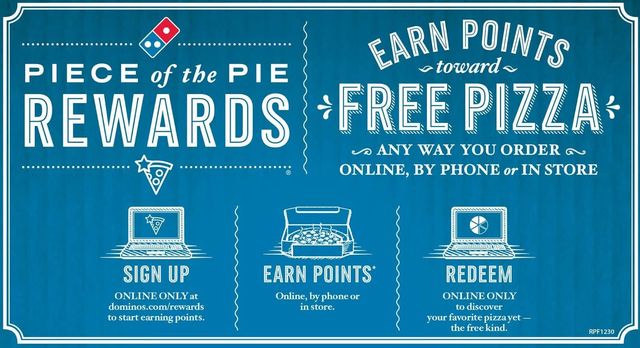
1. Domino's Piece of the Pie Rewards
ROI: Ten points per order, free pizza (worth ~$12) every 60 points = roughly $12 per six orders = 2% return on average $10 orders
Satisfaction: 75/100 (Comparably)
Innovation: Scan any pizza receipt, even from competitors, to earn points. Zero-friction mobile ordering means you can reorder your last pizza in three taps.
E-commerce takeaway: Remove barriers to entry. Domino's accepts competitor receipts, creating goodwill without major cost. If you sell consumables with frequent purchases, make enrollment effortless and redemption automatic.
2. Starbucks Rewards
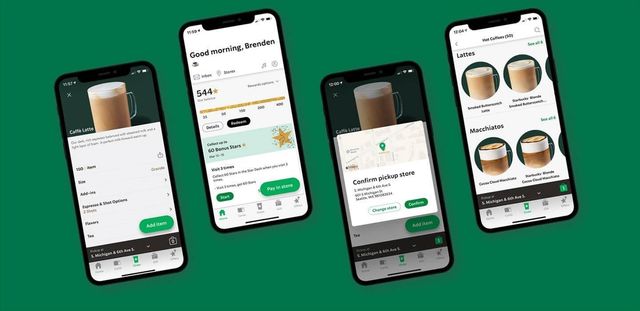
ROI: Two stars per $1 spent, 25 stars = free drink (~$5) = 5% effective return
Satisfaction: 8/10 in 2024 (Statista)
Innovation: Gamification with bonus star challenges. Mobile payment integration handles 40% of all transactions. The app knows your order history and suggests reorders.
E-commerce takeaway: Mobile-first experience drives frequency. Starbucks proves app UX is worth the investment. If customers visit weekly or more, build your loyalty program into your checkout flow, not as a separate step.
3. Panera Bread MyPanera
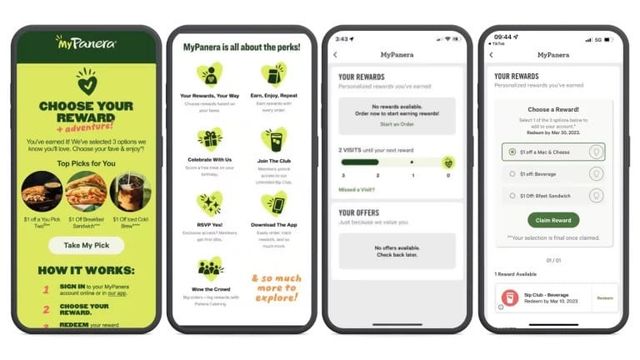
ROI: Personalized rewards (no point accumulation), average member saves $50/year based on visit frequency
Satisfaction: 7.9/10 (Newsweek)
Innovation: AI-driven personalization. The system learns your preferences and surprises you with relevant freebies, rather than making you track points.
E-commerce takeaway: Paid tiers aren't always necessary. Panera's free model with personalization creates stickiness. If you have purchase history data, surprise rewards feel more valuable than predictable point accumulation.
Retail
4. Target Circle
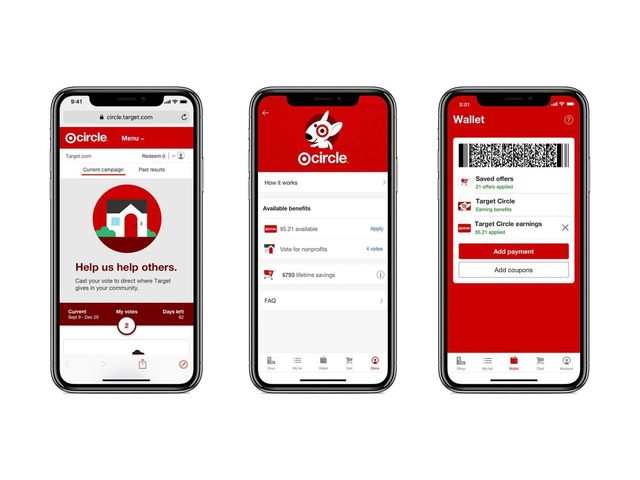
ROI: 1% cashback + 5% with RedCard = 6% total for card users
Satisfaction: 8.4/10 (Newsweek)
Innovation: Seamless integration with the RedCard credit card. Rewards apply automatically at checkout with zero redemption friction.
E-commerce takeaway: Stack programs. Target combines loyalty with payment methods for higher perceived value. If you can integrate rewards with checkout (auto-apply at cart), do it. Manual redemption kills usage.
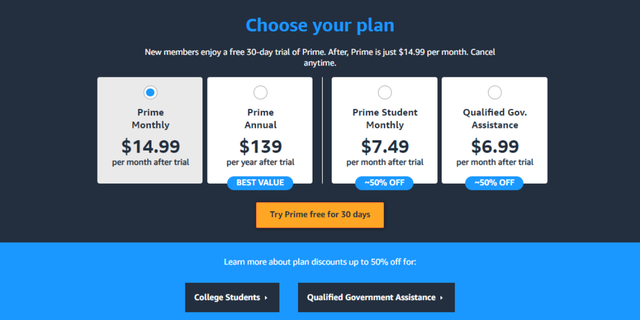
5. Amazon Prime
ROI: $139/year fee. Average member saves $1,400/year in shipping + streaming value ($120) = 10.9x return
Satisfaction: 9.1/10 (highest in study) (Newsweek)
Innovation: Paid tier creates commitment. Free two-day shipping removes all purchase friction. Members shop without calculating shipping costs.
E-commerce takeaway: Paid programs work when upfront value is obvious. Amazon's shipping benefit pays for itself in two to three orders for most users. Consider paid tiers only if you have a high purchase frequency or can bundle significant perks.
6. Costco Membership (Dividends)
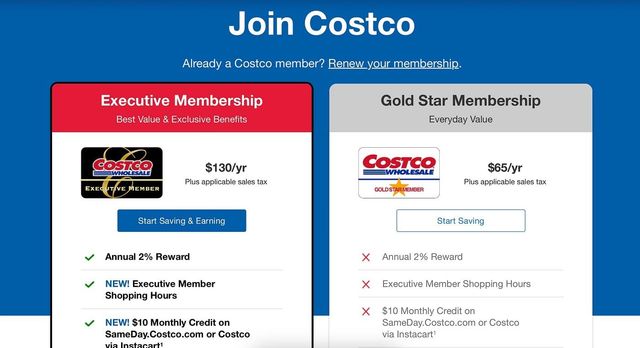
ROI: $60-$120/year fee. Executive members get 2% cashback on purchases. Average executive member spends $5,000/year = $100 cashback + gas savings (~$200/year).
Satisfaction: 8.9/10 (Newsweek)
Innovation: Annual dividend checks create a "win" moment. Gas station integration drives visit frequency beyond grocery shopping.
E-commerce takeaway: Annual payout creates anticipation. Instead of constant small rewards, consider yearly bonus checks. Customers remember one $100 reward more than fifty $2 discounts.
Apparel
7. The North Face XPLR Pass
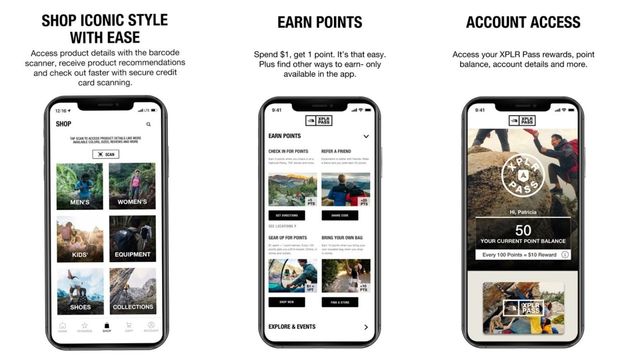
ROI: Free to join, ten points per $1 spent, 100 points = $10 reward = 10% return. Satisfaction: 8.1/10 (Newsweek)
Innovation: Experiential rewards, including early access to products and invites to outdoor events. The app includes trail maps and outdoor content beyond shopping.
E-commerce takeaway: Non-monetary perks matter. North Face's event access drives brand affinity beyond discounts. If you have a lifestyle brand, offer experiences or content, not just a percentage off.
8. Sephora Beauty Insider
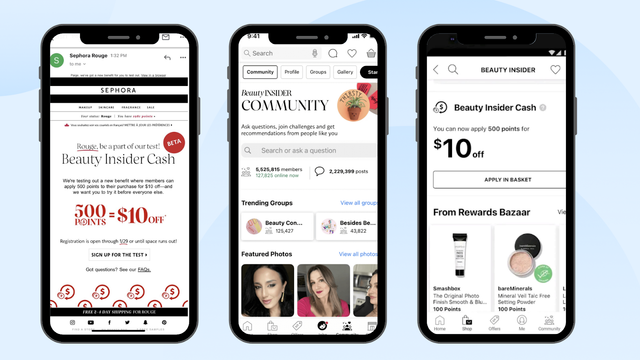
ROI: One point per $1 (baseline tier), 500 points = $10 = 2% return. VIB Rouge members (top tier) get 20% off sales = effective 15%+ return for heavy users
Satisfaction: 8.6/10 (Newsweek)
Innovation: Three-tier system (Insider, VIB, Rouge) with experiential perks. Free birthday gifts and early product access create aspiration.
E-commerce takeaway: Tiers create aspiration. Sephora's Rouge tier ($1,000+ annual spend) drives higher basket sizes. Clear spending thresholds ($350 for VIB, $1,000 for Rouge) give customers targets to reach.
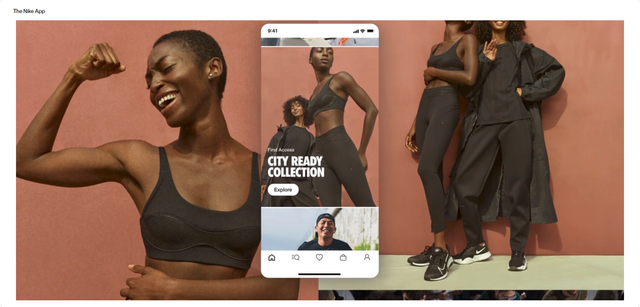
9. Nike Membership
ROI: Free to join, no point system. Perks include free shipping, a 30-day wear test, and exclusive product drops.
Satisfaction: 8.0/10 (Newsweek)
Innovation: No points, all perks. Focus on experience through access to the Nike Training Club app and expert styling sessions.
E-commerce takeaway: Not all loyalty needs points. Nike proves perks plus content can drive retention without cashback. If your brand has expertise to share (fitness, cooking, style), package it as a membership value.
Travel & Hospitality
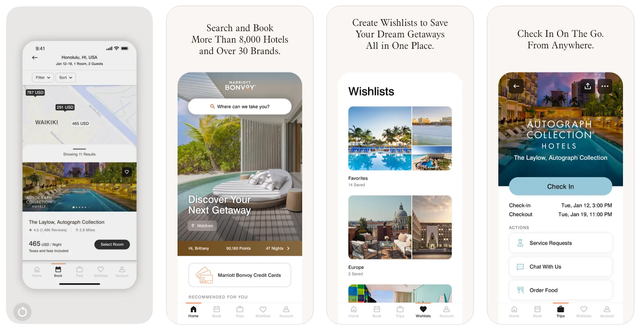
10. Marriott Bonvoy
ROI: Ten points per $1 spent, 25,000 points = free night (~$200 value for typical hotel) = effective 8% return
Satisfaction: 7.6/10 (Newsweek)
Innovation: Dynamic pricing for redemptions. Mobile check-in with digital room keys eliminates front desk interaction.
E-commerce takeaway: Redemption flexibility matters. Marriott's variable point pricing lets customers optimize value. If you offer rewards, let customers choose when and how to redeem rather than forcing fixed thresholds.
11. Southwest Rapid Rewards
ROI: Six points per $1 spent, 7,000 points = one-way flight ($150) = roughly 2% return (varies by route)
Satisfaction: 8.3/10
Innovation: Points never expire. No blackout dates. Companion pass for heavy users (fly with someone free after earning enough points).
E-commerce takeaway: Remove expiration anxiety. Southwest's no-expiry policy keeps members active without urgency pressure. If you must expire points, give at least 12 months and send reminders.
Financial
12. American Express Membership Rewards
ROI: One point per $1 (base card), transfer partners increase value to roughly 1.5-2 cents per point = 1.5-2% return
Satisfaction: 8.5/10 (Newsweek)
Innovation: Point transfers to airlines multiply value three to five times for savvy users. Premium tiers offer concierge services beyond rewards.
E-commerce takeaway: Partner integrations multiply value. Amex's airline transfers create perceived value beyond face value. If you can partner with complementary brands, shared rewards programs amplify worth.
13. Chase Ultimate Rewards
ROI: Similar to Amex, 1-2% base return with transfer partners boosting to 2-3%
Satisfaction: 8.4/10 (Newsweek)
Innovation: Shopping portal with bonus points (three to ten times) at partner stores. "Pay Yourself Back" feature during COVID let customers redeem points for groceries.
E-commerce takeaway: Partner ecosystems amplify perceived value. Chase's shopping portal turns 1% into 10% with strategic partnerships. Consider co-marketing with complementary brands for bonus earning opportunities.
IV. Industry ROI Benchmarks: What "Good" Actually Means
Loyalty program ROI varies dramatically by industry. A 5% return might be excellent for food and beverage but mediocre for travel. You can't compare Starbucks' 5% ROI directly to Marriott's 8% ROI without understanding each company's business model.
V. Build Your Loyalty Program with Joy Loyalty
You've seen what works across fifteen different programs, from Amazon Prime's 10.9x ROI to Starbucks' mobile-first experience to Sephora's tiered aspiration model. The patterns are clear: high trust scores, frictionless technology, and clear value propositions drive repeat purchases.
Joy Loyalty gives you these same tools without the enterprise development cost. Set up point-based rewards like Starbucks, create VIP tiers like Sephora, or build milestone programs like The North Face, all within your Shopify store.
What you get:
- Quick setup: Install and configure in under ten minutes
- Flexible models: Start with free point-based programs, add paid VIP tiers as you scale
- Auto-apply rewards: Like Target Circle (8.4/10 trust), rewards appear automatically at checkout
- Mobile-optimized: Built directly into your theme, no separate app required
- ROI tracking: Built-in analytics show repeat purchase rates, redemption percentages, and revenue from loyalty members
The programs ranked highest in our analysis share one trait: customers understand the value before joining. Joy Loyalty helps you communicate that value clearly, whether you're offering 5% cashback, tiered membership benefits, or milestone rewards.
Start with a simple points-per-dollar program. Test what works for your purchase frequency. Add tiers when you're ready. The technology handles the complexity while you focus on designing rewards your customers actually want.