Points for purchases. A birthday discount. Maybe a referral bonus.
If that sounds like your loyalty program, you're not alone. But your customers have seen it all before. They're enrolled in dozens of programs that look exactly like yours.
The numbers tell the story. According to SAP Emarsys' 2025 Customer Loyalty Index, 67% of consumers belong to at least three loyalty programs, but only 24% actively engage with them. Meanwhile, programs that break the mold are thriving. Starbucks Rewards now has 35.5 million active U.S. members, driving 59% of total sales through personalized experiences.
This guide shares six loyalty program ideas that go beyond the basics. You'll find real examples, practical implementation tips, and how Joy's features can help you build a program customers actually want to join.
I. Why Traditional Loyalty Programs Are Losing Steam
The classic loyalty formula is simple: spend money, earn points, redeem for discounts. It worked for years. But customer expectations have shifted, and programs built on this model are showing cracks.
- The engagement gap is real. Antavo's Global Customer Loyalty Report 2025 found that 78.6% of loyalty program owners plan to revamp their programs in the next three years. That's not minor tweaking. That's a fundamental rethink. Why? Because the old approach treats loyalty as a transaction, not a relationship.
- Points alone don't create a connection. When every store offers "1 point per dollar," there's nothing to remember. Customers sign up, forget, and move on. The program becomes background noise. According to Bond's Loyalty Report, only 44% of loyalty program members are satisfied with their experience. More than half feel indifferent or disappointed.
- Discounts train customers to wait. If your only reward is "10% off your next order," you're teaching people to hold off until they have enough points. That's not loyalty. That's bargain hunting. And it erodes your margins without building lasting preference.
- One-size-fits-all doesn't fit anyone. A first-time buyer and a five-year customer have different needs. Traditional programs treat them the same. No recognition for loyalty depth. No personalization based on behavior. Just the same points ticker for everyone.
The merchants, seeing better results, have moved past this model. They're building programs that reward more than purchases, create status worth pursuing, and connect to what customers actually value.
II. What Makes a Program "Innovative"?
Before diving into specific ideas, it helps to define what "innovative" actually means here. It's not about flashy technology or complex setups.
An innovative loyalty program does at least one of these things differently:
It rewards behavior beyond purchases. It creates emotional connection, not just transactions. It gives customers a reason to choose you over competitors offering the same discounts. It fits naturally into how people already shop and interact with your brand.
III. Six innovative ideas to reset your loyalty programs
This section breaks down six approaches that do exactly that. Each one addresses a specific gap in the traditional model, with real examples and practical ways to implement them.
Idea 1: Paid Memberships
Most loyalty programs are free to join. That's the default. But what if customers paid for the privilege?
Paid memberships flip the traditional model. Instead of earning rewards over time, members get immediate access to exclusive benefits. They're invested from day one, which changes how they engage with your store.
Why it works: When someone pays for membership, they're committing. They want to get value from that investment, so they shop more often and spend more per order. It's the same psychology behind Amazon Prime or Costco. The upfront cost creates a reason to keep coming back.
The results speak for themselves: REI's Co-op membership costs $30 for a lifetime. One payment, permanent access. They now have 23 million members who receive 10% back annually on eligible purchases, plus early access to gear and member-only events. The program funds itself while building a community of committed outdoor enthusiasts.
Restaurant chain HuHot tried a different approach: a $9.99 monthly BOGO subscription. Members who joined visited three times more often and spent six times more than non-members. The subscription paid for itself within weeks.
What makes paid memberships work:
- Immediate, tangible value (free shipping, exclusive discounts, member pricing)
- Benefits that justify the cost within one or two purchases
- A sense of belonging to something exclusive
This isn't right for every store: Paid memberships work best when you have products customers buy repeatedly, strong brand affinity, and clear benefits you can deliver consistently. If customers only purchase once a year, the math doesn't add up.
How Joy helps: Joy's membership program feature lets you create paid tiers with recurring or one-time fees. You can offer member-only rewards, exclusive point multipliers, or special perks that free members don't see.
Combine it with Shopify Flow to auto-tag paying members and trigger personalized experiences across your store.
Idea 2: Experiential Tiers (Reward Status, Not Just Spending)
Here's what most VIP programs get wrong: they reward spending with... more ways to spend less.
Hit Gold tier? Get 15% off. Reach Platinum? Get 20% off. The "reward" for loyalty is a slightly better discount. That's not status. That's a coupon with extra steps.
The shift: experiences money can't buy.
The programs creating real loyalty offer something different at the top. Not bigger discounts. Access. Belonging. Things that feel exclusive because they actually are.
What experiential tiers look like in practice:
Sephora's Rouge tier doesn't just offer better discounts. Rouge members get first access to new launches, invitations to exclusive events, and early entry to annual sales before anyone else. The value isn't the savings. It's being first.
Outdoor brand REI gives members access to classes, gear rentals, and adventure trips that non-members can't book. The membership isn't about discounts. It's about doing things together.
Streetwear brands take this further. Top customers get invited to product co-creation sessions, voting on upcoming designs, or private shopping events. The reward is influence, not a percentage off.
Why this works better than discounts:
Discounts train customers to wait for sales. Experiences create stories that they tell others. "I got 20% off" isn't a conversation. "I got to preview the collection before it launched." is.
According to Program data, experiential rewards cost 40-60% less than discounts while driving a stronger emotional connection. You protect margins and build loyalty.
What belongs in the top tiers:
- Early access to launches or restocks
- Exclusive products that only members can buy
- Behind-the-scenes content or founder access
- Input on future products or collections
- Invitations to virtual or in-person events
How Joy helps: Create VIP tiers with exclusive rewards visible only to top members. Use Joy's dedicated loyalty page to showcase tier benefits and progress. Combine with Shopify Flow to trigger early access emails or unlock hidden products when customers reach new tiers.
Idea 3: Predictive Rewards
Most reward catalogs look the same. Free shipping. $10 off. A mystery gift. Customers scroll past because nothing feels relevant.
The problem isn't the rewards. It's the assumption that one list works for everyone.
Predictive rewards flip the approach. Instead of offering the same options to all customers, you use what you already know about them to surface rewards they'll actually use.
This isn't complicated personalization. You're not building AI models. You're paying attention. A customer who buys the same protein powder every month doesn't want a discount on vitamins. They want points toward their next tub of the thing they already love.
How brands do this well:
Starbucks Rewards tracks what each member orders most. Their app suggests bonus star challenges based on individual behavior. If you always order iced drinks, you won't see a challenge for hot lattes. According to their latest earnings, the program now has 35.5 million active U.S. members, driving 59% of company sales. That's not loyalty to a brand. That's loyalty to a program that knows you.
Beauty subscription service Birchbox built its entire model on this. Members set preferences. Rewards reflect those preferences. The result: customers feel understood, not marketed to.
What makes predictive rewards work:
- Rewards match purchase history (offer free refills of products they've bought three times)
- Timing aligns with behavior (points bonus right before their usual reorder window)
- Options feel curated, not random (three relevant choices beat twenty generic ones)
The data you already have is enough. Purchase frequency. Product categories. Average order value. Time between orders. You don't need complex tools. You need to use what Shopify already tracks.
How Joy helps. Use Joy's Shopify Flow integration to trigger rewards based on customer behavior. Set up automations that offer bonus points on products customers have purchased before.
Combine with Klaviyo to send personalized reward reminders when customers are most likely to buy again.
Idea 4: Shared Outcome Referrals
Most referral programs pit two people against each other. You get $10. Your friend gets $10. Separate rewards. Separate motivations.
It works, but it feels transactional. You're not sharing something. You're trading favors.
Shared outcome referrals change the dynamic. Instead of individual rewards, both people work toward the same goal. Or the referral contributes to something bigger than either person.
Why shared outcomes feel different:
When you tell a friend, "We both get $20 when you order," the language shifts. It's not "I get paid if you buy." It's "We both win." That small reframe changes how the conversation feels. Less salesy. More like sharing a good deal you found.
Take it further with collective goals:
Some brands tie referrals to community outcomes. "Every 50 referrals this month, we donate $500 to ocean cleanup." Or "100 referrals unlock early access to our new collection for all members."
Now referrals aren't just about personal gain. They contribute to something customers care about. That's a different motivation entirely.
Examples of shared referral structures:
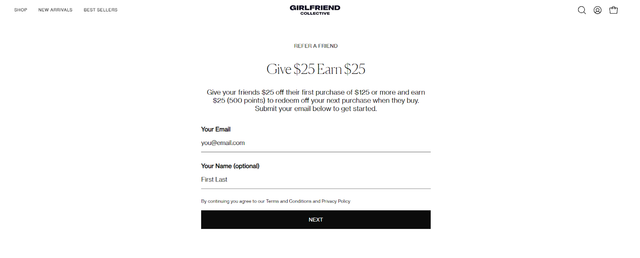
Girlfriend Collective, the sustainable activewear brand, leans into values-based referrals. Both referrer and friend get rewarded, and the brand's environmental mission makes sharing feel aligned with identity, not just incentives.
Mental health app Headspace donates a free membership for every new subscription. Referring someone means giving access to someone who might need it. The referrer gets nothing tangible. The reward is impact.
What makes shared referrals work:
- Equal rewards for both parties (not referrer-heavy)
- Language that emphasizes "we" and "together."
- Collective goals that align with brand values
- Visible progress toward community milestones
The psychology: People share more when it feels generous, not self-serving. Shared outcomes remove the awkwardness of "I'm getting paid to recommend this."
How Joy helps. Joy's referral program lets you set equal rewards for both referrer and friend. Combine with your loyalty page to display the progress of community referrals. Use Shopify Flow to trigger announcements when collective milestones are hit.
Most loyalty programs only notice customers when they buy something.
That's a problem. Customers interact with your brand in dozens of ways before and between purchases. They follow your Instagram. They read your emails. They leave reviews. They share products with friends. None of that earns them anything in a typical program.
Idea 5: Non-transactional engagement rewards the relationship, not just the receipt.
When you reward actions beyond purchases, you're telling customers their attention matters. Not just their money.
What this looks like in practice:
e.l.f. Cosmetics' Beauty Squad awards points for following on social media, writing reviews, and even just browsing the website. Purchases still earn points, but they're not the only way in. Customers engage more because engagement itself is recognized.
Skincare brand OSEA Malibu rewards reviews, social follows, and referrals alongside purchases. Customers who redeem rewards show a 77% repeat purchase rate with an average order value 40% above the site's average. Engagement drives spending, not the other way around.
Why this works:
Customers who engage more, buy more. But they won't engage if there's nothing in it for them. Rewarding non-purchase actions creates a habit loop. Follow, earn points, check back, see new products, buy. The program pulls them closer without asking for their wallet every time.
Actions worth rewarding:
- Writing product reviews
- Following social media accounts
- Signing up for SMS or email
- Completing a profile or quiz
- Sharing products on social
- Celebrating a birthday or anniversary with your brand
The balance matters. Non-transactional points should complement purchases, not replace them. A review might earn 50 points. A purchase might earn 500. The ratio keeps the program sustainable while still rewarding engagement.
How Joy helps. Joy offers 30+ customizable touchpoints for earning points beyond purchases. Reward social follows, reviews, birthdays, and more. Integrate with review apps like Judge.me, Loox, or Okendo to auto-award points when customers leave feedback.
Idea 6: Values-Based Loyalty (Make Your Program Mean Something)
Points expire. Discounts get forgotten. But identity sticks.
When customers choose your brand because it reflects who they are, that's loyalty that competitors can't copy with a better coupon.
Values-based loyalty ties your program to what customers believe in. Not just what they buy.
This goes beyond "we donate to charity." It means building loyalty mechanics around the values your customers already hold. Sustainability. Social impact. Community support. The program becomes proof that shopping with you means something.
Brands building loyalty through values:
Patagonia's Worn Wear program rewards customers for trading in used gear instead of buying new. You get store credit. The planet gets less waste. The program reinforces why Patagonia customers chose Patagonia in the first place. It's not about points. It's about identity.
H&M's loyalty program gives points for recycling old clothes at its stores. Over 200 million members participate. The program connects shopping to sustainability in a tangible way. Every bag of recycled clothing earns rewards and reduces guilt about buying new.
Coffee giant Starbucks awards bonus stars when customers bring reusable cups. Small action. Clear message. Your habits matter here.
Why values-based loyalty works:
Comarch's 2025 research found 31% of consumers want sustainability-focused rewards in loyalty programs. Among Gen Z and Millennials, that number climbs higher. These customers actively seek brands aligned with their beliefs. A values-based program signals you're one of them.
What makes this work:
- Rewards tied to actions that reflect shared values (recycling, reusing, donating)
- Visible impact (show what customer actions have achieved collectively)
- Authenticity (the program matches what your brand actually does, not just marketing)
The risk: If your brand doesn't genuinely hold these values, customers will notice. Values-based loyalty only works when it's real.
How Joy helps. Create custom earning rules that reward sustainable actions like recycling or reusing. Use Joy's loyalty page to showcase collective impact. Combine with Shopify Flow to trigger program updates when community milestones are hit.
IV. How to Choose the Right Approach
Six ideas. You don't need all of them.
The right approach depends on where your store is now, not where you want it to be eventually. A brand-new shop shouldn't launch with paid memberships. A store with 50,000 loyal customers shouldn't settle for basic points-per-dollar.
Start by asking three questions:
1. How often do customers buy from you?
High frequency (monthly or more): Predictive rewards and non-transactional engagement keep them connected between purchases.
Low frequency (a few times per year): Experiential tiers and identity-based programs give them reasons to stay loyal without constant transactions.
2. How strong is your brand relationship?
Still building trust: Start with shared referrals and non-transactional rewards. Let customers engage without big commitments.
Already have loyal fans: Consider paid memberships or experiential tiers. They're ready to invest.
3. What does your brand stand for?
Clear values (sustainability, community, craftsmanship): Build identity-based loyalty that reflects those values.
Product-focused (quality, selection, price): Focus on predictive rewards and experiential perks tied to what you sell.
Six ideas. You don't need all of them.
Look at how often your customers buy. Monthly buyers respond well to predictive rewards and non-transactional engagement because those keep the relationship warm between orders. But if people only shop with you a few times a year, experiential tiers or values-based loyalty do more heavy lifting. They give customers something to care about when there's nothing in their cart.
Then ask how strong your brand relationship actually is. Still earning trust? Start with shared referrals. Already have fans who'd pay for access? That's when paid memberships make sense.
Pick one. Run it for a few months. Watch what your customers do, not just what they say. Then build from there.