
The Christmas shopping season brings one of the strongest waves of demand, but winning those customers has become much harder for most merchants. In the past, deep discounts and unconscious buying were enough to move stock. Now, customers focus more on value, pay close attention to prices, and look for gifts that feel useful instead of random.
In this blog, I will walk you through twelve days of Christmas promotion ideas that match what customers want. After many seasons of helping merchants grow revenue and keep it steady after the rush, I have seen that heavy discounts are no longer as effective as they once were. They also train customers to act like deal hunters who only show up for sales.
The ideas that follow focus on value and relevance. They offer actionable guidance for merchants in categories such as clothing, toys, beauty, media, and books, so every promotion feels meaningful rather than empty.
Key findings:
About 38% of gift card spending at toy stores happens in December and January, showing how strongly gifting peaks in this period.
Around 35% of Americans identify as vibe shoppers, meaning they buy gifts whenever inspiration strikes.
About 58% of people would rather receive cash than a wrapped gift, since it lets them pay for essentials.
12 days of Christmas promotion ideas
Day 1: Warm-up offer
Day 1 is your opening scene. The objective isn’t to “sell hard” yet - it’s to announce the 12-day series, reward early attention, and make the campaign feel easy to join.
To put Day 1 into action, you can:
- Choose one storewide, low-friction reward and make it as easy as possible to claim.
- Feature it in the first section of your homepage with a clear headline, for example, “12 days of easier Christmas gifting.”
- Send an announcement email when the 12 days of Christmas campaign starts, and briefly explain how customers can claim the discount.
- Share the launch on your main social channels and clearly state the rules for claiming the discount.
Day one sets the story and rewards customers who pay attention from the start, making them more likely to return for the next eleven days.
Day 2: Spend more, get more
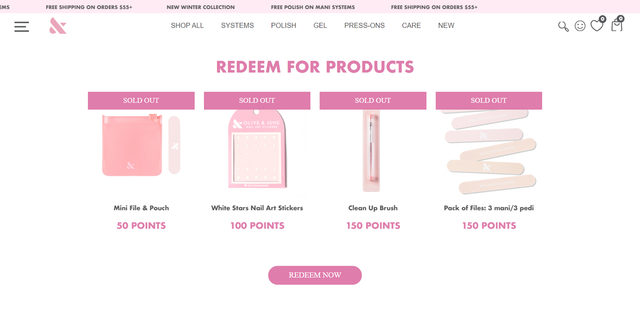
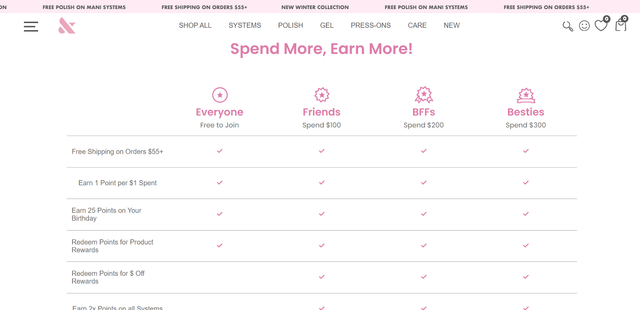
Day 2 is designed to turn strong gifting intent into larger, more confident orders. Instead of pushing customers to buy more, you’re giving them a transparent reason to lift their cart value. Tiered rewards - when kept simple- help shoppers immediately see the upside: “If I add one more item, I unlock more value.”
To put this into action, you can:
- Install Joy Loyalty
- Set a clear rule, for example, “Spend $100 and save 15 bonus points, spend $150 and save 30 points,” or “Spend $100 and receive a free premium add-on gift.”
- If your theme or app supports it, enable a progress bar or cart goal meter that updates in real time. For example: You are $18 away from your next reward.
- Promote the tiered rewards through Homepage banners, Cart drawer notes, and Email.
Day two encourages shoppers to add a little more to their cart, making higher spending feel like a smart move, not a pushy upsell.
Day 3: Christmas gift guide collections
Most shoppers don’t arrive on your site knowing exactly what to buy. They land on a homepage full of products and instantly feel overwhelmed, “Where do I even start?”
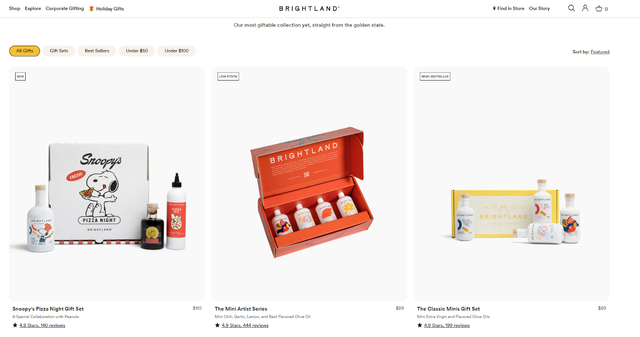
Day 3 solves that by turning your store from a catalogue into a guide. When you curate gift collections, you reduce friction, help shoppers match gifts to people in their lives, and create a smoother path to checkout.
To put this into action, you can:
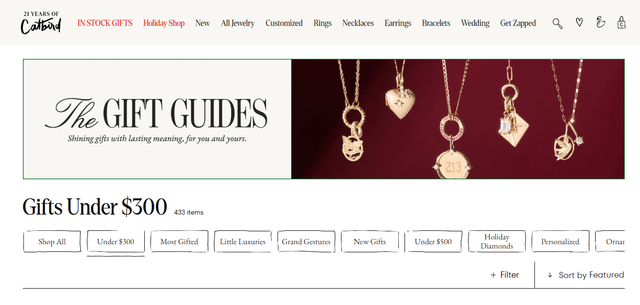
- Create simple, decision-friendly gift collections. Build curated groups that help customers shop by need, not by category. Examples:
- Gifts under $25 / $50 / $100; Gifts for family (parents, siblings, kids)
- Gifts for coworkers or work friends
- Last-minute gifts (fast shipping, easy picks)
- Self-care gifts (customers often buy for themselves, too).”
- Attach a clear reward to those gift collections. Set a rule that gives shoppers extra value when they buy from these groups, such as:
- A saving on any item inside a gift collection
- A saving when they buy two or more items from the same group
- Make the gift guide highly visible
- Send an email that shows the collections, explains who each one is for, and clearly mentions the deal on those items.
Day three gives shoppers ideas when they feel stuck and makes your store feel like a helper they can trust, not another place to scroll without direction.
Day 4: Most gifted favourites
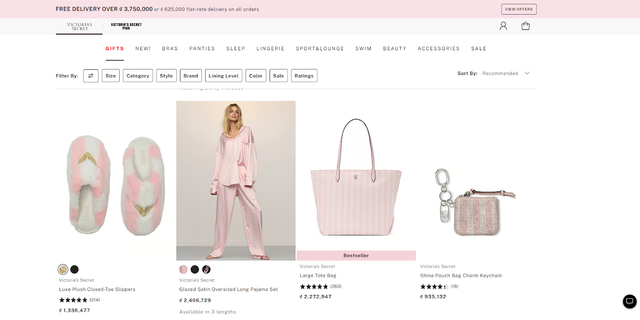
By day four, many shoppers feel the pressure to choose gifts that will not disappoint. Featuring your most gifted favourites and top-rated products gives them a clear shortcut.
These items already have proof from other customers, so they feel like safe, trusted choices for both new and returning buyers.
To put this into action, start by:
- Picking your best-selling or highest-rated products of each category in case. Then group them into a single group.
For example:
- Best-selling Christmas shocks
- Highest-rated warm sweaters
- Tag these groups so you can run focused promotions and make them visible.
In case you want promotions to apply only to a specific group. And then they use that tag inside your promotion or loyalty app to create a rule for this set only
For example:
- Save on any item with the “most gifted” tag
- Save when the cart includes two or more “customer favourite” items
- Earn double loyalty points on all “customer favourite” products
- Promote the favourites with a focused email group. You turn this collection into a simple story for your list.
For example:
- Show a small selection of the strongest items with their badges and a short benefit line in emails
- Explain in one sentence why these products are in the list, such as “These are the products customers keep buying again and again for winter gifting”
- Add a clear call to action button that links straight to the “Most gifted” or “Customer favourites” collection
Day four gives social proof and tells unsure shoppers that these are safe choices, which lowers the fear of making a bad gift decision.
Day 5: Sets and bundles
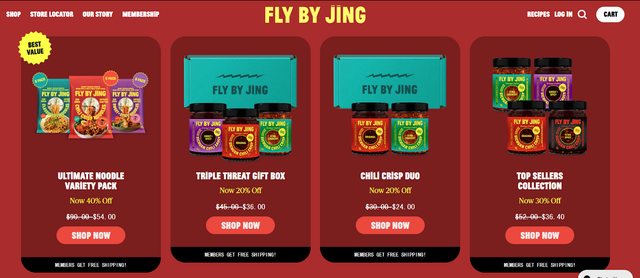
If Day 4 is about pushing one hero product, Day 5 is about going one step further and selling ready gifts that need almost no thought. This meets a customer desire: “I want a finished present that looks thoughtful without spending extra time.”
To put this into action, you can:
- Choose bundle ideas that match real gifting needs. These gifts are decided based on the top items from analytics and review data with themes.
For example:
- Family sock packs
- Warm cable knit sweater
- Tag and highlight bundles for purchasers, easy finding by attaching the badges “best value”, “best selling”, etc.
- Give bundles prime positions on the site by adding a “ready to gift sets” section on the navigation bar or menu.
Day 6: Shipping and cut-off confidence
During the rush hours of Christmas sale days, customers expect more than heavy discounts. They look for free shipping and clear delivery information to feel confident about buying gifts on time.
Creating a Christmas-themed shipping perk with a spending threshold helps customers shop faster while encouraging higher order value.
To put this into action, start by:
- Confirm with your carrier the last safe shipping date for delivery before Christmas.
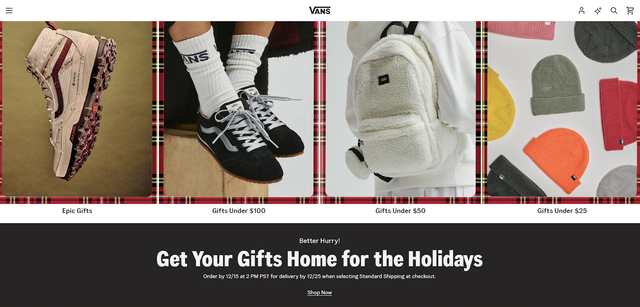
- Set rules for the day, such as free express shipping or free standard shipping, paired with a clear delivery promise. For example:
- Order before 12/17 at 3 PM PST for arrival by 12/24 when you choose Standard Shipping at checkout.
- Add a banner that says “Order today, we deliver before Christmas” and include the exact date.
Day six removes the fear of late delivery and meets a common Christmas concern: “If I order now, will this arrive in time for Christmas?”
Day 7: Free Christmas extra
By day seven, many customers have already placed their first Christmas orders and are still browsing for more. This is a good moment to surprise them with a small free extra that feels like a present from your brand.
To put this into action, start by:
- Choosing a small item that fits the Christmas theme, such as tree ornaments, LED candles, or garland for stairs, etc.
- Setting an automatic rule for orders over a set amount.
- Adding clear messages on product pages and in the cart. For example, spend $50 and get a free Christmas mini tree.
- Promoting the extra visuals in email and social with a message such as “Day seven, a little extra under the tree.”
Day seven adds festive joy and makes customers feel your brand is giving as well as selling, especially for those who choose to shop early in the season.
Day 8: Extended Christmas returns
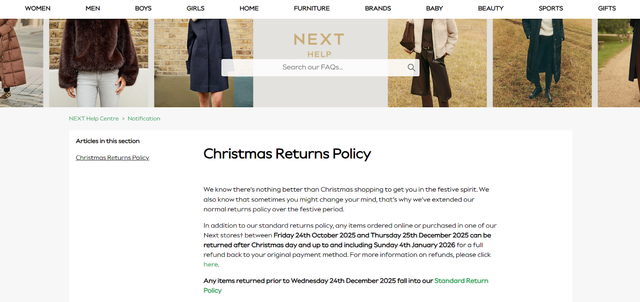
By day eight, another fear grows just as strong: “What if they do not like the gift?” Extending your Christmas return or exchange policy removes that pressure.
It tells customers they can choose more freely, because there is room to fix a wrong size or style later.
To put this into action, start by:
- Deciding on an extended return deadline for all orders placed during your 12-day campaign, such as until 31 January.
- Updating your policy page with a “Christmas returns” section that spells out dates, conditions, and how to start a return.
- Adding a short line on product pages and in the cart that mentions the extended period so shoppers see it at the decision point. For example:
- In the cart: Buying a gift. Returns open until 31 January
- On the product pages: Order now. Returns allowed until 31 January
- Writing an email that explains the Christmas return rules in a short question and answer format, focusing on common worries about size, colour, or gifting.
Day 9: Hidden gems and new finds
By day nine, you can surprise purchasers with hidden gems that feel fresh, thoughtful, and a little unexpected. Highlighting under-exposed products gives curious shoppers a reason to keep browsing and helps you shift attention beyond the usual safe gifts.
To put this into action, start by:
- Picking a small group of products you wish more customers would try, such as niche favourites or quietly strong performers. For example, these products are not the top sellers, but the people who buy them speak very well of them.
- Offering a saving on these items or bundling them with a popular product at a special price so the value is easy to see. For instance, the Starry mug values $54, but in Starry Night, you save $46 when you pick this discovery set.
- Creating a “Hidden Christmas gems” section or row on your site to bring them together in one clear place.
- Sending an email that introduces each product with a short, one-line story about why customers love it or when it is most useful.
Day nine keeps your campaign feeling fresh and shows that your store holds more than the obvious gifts, inviting shoppers to explore once they feel safe about delivery and returns.

Day 10: Last day for Christmas delivery
On day ten, the spotlight is on urgency. This is the final safe day for Christmas delivery, when shoppers who value physical gifts make their last decisions.
By pairing a clear cut-off message with a small perk, you reduce anxiety about late arrival and give customers a strong reason to complete their carts now instead of waiting.
To put this into action, start by:
- Confirm with your carrier the real last day and time you can ship orders that will arrive before Christmas.
- Setting a clear countdown message across your site, such as a bar that says “Order within six hours for delivery before Christmas.”
- Adding a small perk for orders placed before the cut-off, for example, a free upgrade to faster shipping.
- Sending a morning email that announces the last day for Christmas delivery, followed by a short reminder later in the day for shoppers who have not checked out.
Day ten becomes your peak urgency moment, turning trust and value built earlier into decisive, on-time Christmas orders.
Day 11: Gift cards or digital gifts
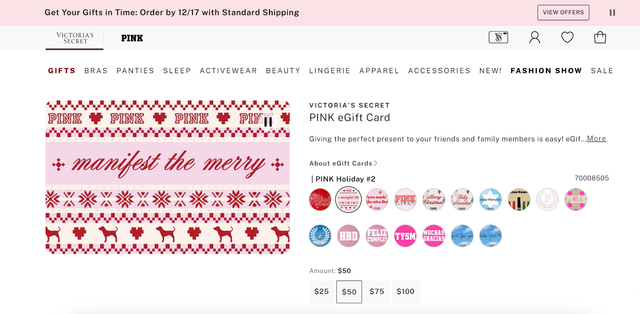
In the final days before Christmas, many customers still want to give something thoughtful, but they know physical delivery may not arrive in time.
Gift cards and digital gifts let you keep selling without shipping risk while still helping the giver look considered, not rushed. A clear digital gift offer turns last-minute pressure into confident, easy sales.
To put this into action, start by:
- Checking with your carrier for the last safe pre-Christmas shipping date so you know when to shift focus to digital gifts.
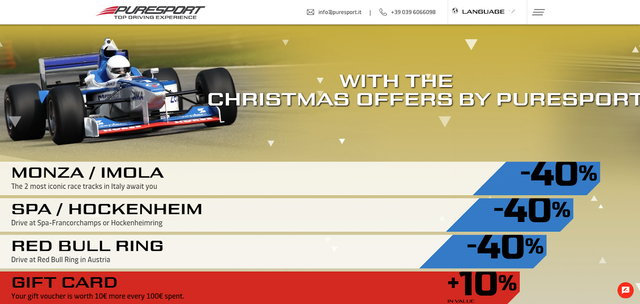
- Setting an offer on gift cards, for example, “Buy a $100 gift card and receive 10 extra credits as our Christmas thank you.”
- Making the purchase flow easy so shoppers can choose an amount, add a message, and send the gift in a few clicks.
- Creating a gift card page that explains how the card works, how it is delivered, and how the recipient redeems it, then highlighting it with a banner such as “Gifts that arrive in seconds.”
Day eleven reassures late shoppers that you still have them covered and keeps your Christmas sales moving even after shipping cut-offs.
Day 12: Thank you and new year bridge
Day twelve is when you stop selling and start deepening the relationship. After days of offers and reminders, customers need to feel more than “pushed to purchase.”
A sincere thank you and a small future reward turn your Christmas campaign into the start of a longer story, not just a one-time sale. You close the season by saying, “We saw you. We appreciate you. We will take care of you next year, too.”
To put this into action, you can:
- Write a short thank you message that sums up the twelve days, highlights one or two moments you are proud of, and speaks directly to your customers.
- Add a gentle reward for January, such as a small code valid in the first week or early access to a new collection, so customers have a reason to return.
- Publish a brief recap on your site and send an email that feels more like a letter than a standard promotion, focusing on gratitude rather than urgency.
- Share a thank you post on social that closes the Christmas series and reminds people about their January perk.
Day twelve closes the story with appreciation and creates a clear bridge into the new year, so Christmas purchases become the first step in an ongoing relationship with your brand.
FAQs
Do my twelve days have to start on a specific date?
No. Your twelve days do not have to follow a fixed calendar. Many brands start in early December, but you can run your series whenever your audience is most active. What matters is that the days are clearly numbered, the schedule is consistent, and customers know when the next offer arrives.
Can a tiny business run a 12-day campaign without overwhelming the team?
Yes, if you keep the structure simple. Reuse the same core layout for banners and emails, and plan your twelve ideas in one sitting instead of inventing them day by day. You can also choose a few lighter days, such as content-driven ideas or softer perks, to protect your team’s time.
Is it better to run twelve small offers or fewer bigger ones?
It depends on your goal. Twelve smaller offers work well when you want daily visits, more touches, and a sense of ongoing discovery. Fewer, bigger offers work when you want to push volume on specific days. A good middle path is to anchor three or four strong days and keep the rest simple but consistent.
How can I use a loyalty program to make a 12-day promotion more effective?
Use the series to pull customers into your loyalty touch points. For example, give extra points on selected days, unlock a member-only perk, or let members see the next day’s offer early. This turns one-time Christmas traffic into a base of customers who come back after the season ends.
What if a day underperforms? Should I change the plan mid-series?
A slow day is normal. Look at simple signals first, such as click-through and how clearly the offer was explained. If several days in a row underperform, adjust by simplifying the message, making the value clearer, or boosting visibility in your store and email. The key is to protect the overall story of the twelve days while making small, practical improvements as you go.