Walk into any Malaysian mall, and you'll notice something: nearly every F&B brand now asks you to scan a QR code before ordering. Not for the menu. For their loyalty app.
That shift happened fast. Between 2020 and 2024, Malaysia's loyalty market grew at 18.2% CAGR. By 2029, it's projected to hit US$784 million. The reason is simple: acquiring new customers keeps getting more expensive, and discounts alone train people to wait for the next sale.
The businesses winning right now aren't offering bigger discounts. They're building programs that reward behavior, not just transactions.
This guide gives you everything you need to capitalize on that growth:
- Hard market data to justify your loyalty investment to stakeholders
- Five proven Malaysian loyalty programs with specific mechanics you can replicate
- A clear breakdown of tiered vs points vs earn-and-burn models to protect your margins
You'll walk away knowing exactly which loyalty structure fits your industry and what earn rates and tier thresholds actually drive repeat purchases.
Key Takeaways
- Malaysia's loyalty market is growing at 18.2% CAGR, projected to hit US$784 million by 2029. 88% of Malaysians now use e-wallets.
- F&B leads loyalty adoption, with coffee chains and QSRs driving mobile-first programs. Retail, fuel, and mall ecosystems follow.
- GrabRewards' 6x earning multiplier between base and Platinum tiers is the key psychological driver for engagement.
- The window to build loyalty equity is now. Customers who commit to a program consolidate spending there.
- Points-per-ringgit models outperform flat-rate discounts because they reward frequency, not just transaction size.
I. Why Malaysian Businesses Are Going All-In on Loyalty
The numbers back up what Malaysian businesses are already feeling: loyalty programs aren't optional anymore.
The most important number to understand is this: 88% of Malaysians now use e-wallets. That's not a tech-forward niche. That's the mainstream. Your customers already expect to earn and redeem rewards from their phones.
F&B leads the growth, with coffee chains and QSRs driving adoption through mobile-first apps and points-per-ringgit programs. Retail, fuel, and mall ecosystems follow close behind.
The window to build loyalty equity is now. Businesses that wait will find themselves competing for customers who've already committed their wallets elsewhere.
II. 5 Loyalty Programs Malaysian Businesses Should Study
Before launching your own program, study what's already working. These five Malaysian loyalty programs span F&B, retail, fuel, and tech. Each uses different mechanics, yet all drive measurable repeat behavior.
The goal isn't to copy them. It's to understand why they work and adapt the mechanics that fit your margins and customers.
1. GrabRewards: The "Everyday Super App" Model
Industry: Multi-service (rides, food, payments, groceries) Core mechanic: Tiered points with earning acceleration
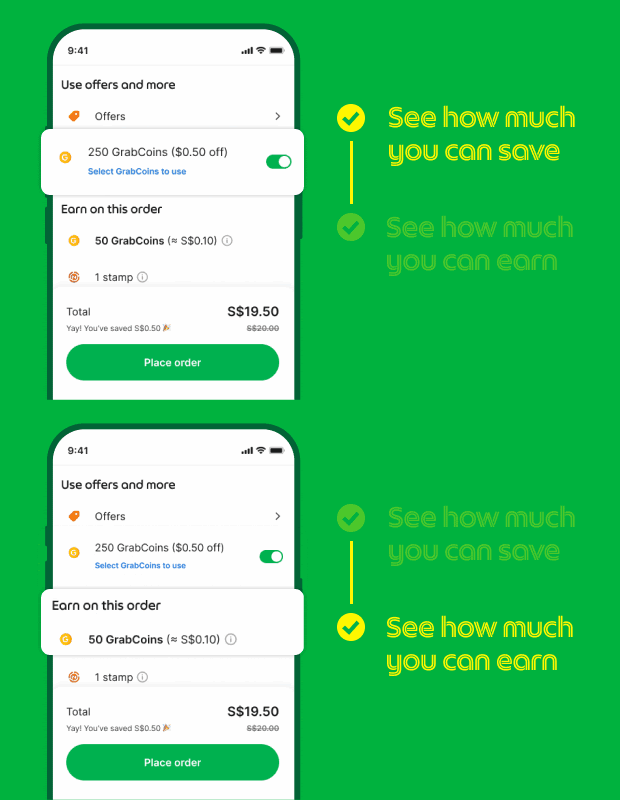
GrabRewards runs on a simple premise: the more you spend, the faster you earn. The program has four tiers, and the spread between them is dramatic.
Platinum members earn 6x more points than base Members on the same transaction. That 6x spread is the psychological driver. Customers don't just want rewards. They want status.
These tier thresholds are designed to feel achievable but require commitment. A customer ordering GrabFood twice weekly at RM50 per order (RM400/month) reaches Gold within three to four months. That's intentional. Realistic targets drive engagement.
Why it works:
GrabRewards doesn't rely on a single earning trigger. It offers eight or more: rides, food delivery, GrabPay wallet, breakfast/teatime bonuses (5% back during 8-10 am or 2-4 pm windows), group orders (3% back with three or more participants), and Grab Signatures premium restaurants (5% back).
This variety keeps the program engaging. There's always another way to earn bonus points.
The program also uses 6-month tier cycles instead of annual resets. Shorter cycles create higher urgency. Customers check their tier status regularly, order strategically to hit milestones, and feel pressured to maintain their status before the reset.
The results:
Here's the number that matters most: GrabUnlimited subscribers spend 3.8x more on food delivery than casual users. This premium tier accounts for nearly one-third of Grab's Deliveries GMV. Premium subscribers grew 43% year over year during Grab's revenue turnaround in Q2 2023.
That's not incremental growth. That's a loyalty program pulling a business out of a four-quarter decline.
What you can adapt:
- Tiered earning acceleration works even for standalone F&B. However, 6-month cycles may feel too aggressive for smaller businesses. Annual cycles are simpler and still effective.
- Multiple earning triggers keep customers engaged beyond basic purchases. Consider referrals, off-peak ordering, or minimum spend bonuses.
- Progress visibility matters. Show customers exactly how close they are to the next tier. The goal gradient effect (people accelerate behavior as they approach a goal) is real.
- Premium tiers can reverse declining revenue. If your business is struggling with repeat purchases, a well-designed loyalty tier can turn things around.

Recent update: In November 2025, GrabRewards rebranded to GrabCoins with a new instant redemption toggle launching in January 2026. Instead of accumulating points to a threshold, customers can apply coins immediately at checkout. This reduces redemption friction significantly.
2. Tealive: F&B Mobile-First Done Right
Industry: F&B (bubble tea chain) Core mechanic: Tiered points with day-of-week discounts
GrabRewards works because it's embedded in a super app. But what if you're a standalone F&B brand? Tealive proves the same mechanics work at a single-category scale.
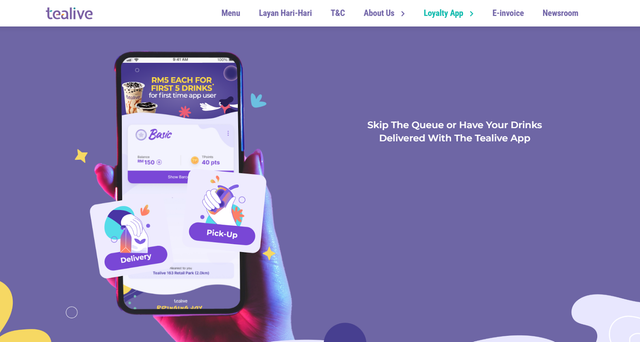
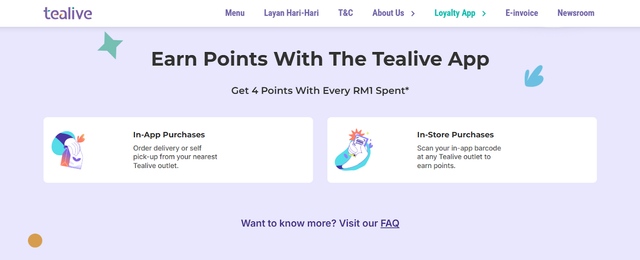
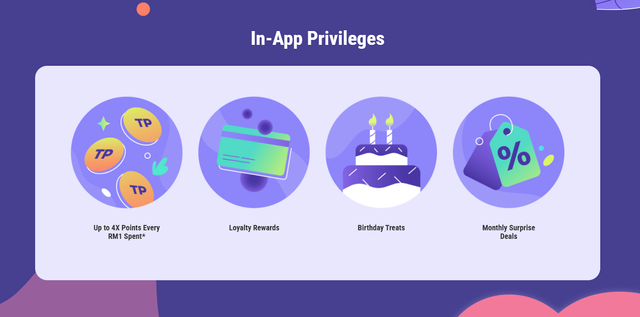
Tealive built its entire loyalty program around Malaysia's mobile-first reality. No physical cards. No separate loyalty app. Everything lives in a single mobile experience where customers order, pay, and earn rewards in one flow.
The structure: simple and achievable
Where GrabRewards has four tiers with a 6x earning spread, Tealive runs three tiers with a 2x spread. Easier to understand, easier to achieve.
A regular customer ordering twice weekly hits Silver within two weeks. That's intentional. The "impossible tier" problem kills engagement in programs with five or more levels.
Why it works:
Tealive's secret weapon isn't the points. It's the day-of-week tiering.
Bronze members get 15% off on Mondays. Silver gets 20% off on Tuesdays. Gold gets 30% off on Wednesdays. This creates purchase compression. Customers don't just buy when they're thirsty. They develop a reflex: "I order on Tuesdays."
The psychology is layered. Loss aversion kicks in ("Don't miss my discount day!"). Social comparison motivates upgrades (Bronze members see they'd save more as Silver). And habit formation locks in weekly visits.
3-month cycles keep urgency high:
Annual tier programs create engagement cliffs. Customers disengage from September to November, thinking "I'll lock in January." Tealive's 3-month maintenance cycles create four reset moments per year instead of one.
- Silver: Must earn 300+ Tpoints every three months or demote to Bronze
- Gold: Must earn 700+ Tpoints every three months or demote to Silver
More touchpoints mean stronger habit loops.
The business impact:
Tealive's FY2024 revenue RM591.24 million. Their limited-time offerings (launched every four to six weeks) contribute 10-15% of total POS sales. The company attributes a 400% revenue uplift to combining loyalty with gamification, though the 15.5% top-line growth is the more verifiable figure.
What you can adapt:
- Mobile-native from the start. With 88% of Malaysians using e-wallets, customers expect to earn and redeem from their phones. Bolting loyalty onto an existing system creates friction. Building it into your ordering flow removes it.
- Three-tier structures are simpler than four- or five-tier structures. Customers can visualize the path from Bronze to Gold without feeling overwhelmed.
- Day-of-week discounts create predictable purchase windows. This works especially well for F&B, where impulse buying is common.
- 3-month cycles may feel aggressive for smaller businesses. Consider 6-month cycles as a middle ground between Tealive's quarterly resets and traditional annual programs.
3. BonusLink: The Coalition Model That's Lasted 28 Years
Industry: Coalition (fuel, retail, banking, travel, e-commerce) Core mechanic: Multi-merchant points earning with 2-month tier cycles
GrabRewards is a super app. Tealive is a single brand. BonusLink is something different: a coalition program where Shell, AmBank, Parkson, and 20+ partner brands share one points currency.
BonusLink has been running since 1998. That's 28 years and 14.9 million members, making it Malaysia's largest loyalty program. You don't survive that long with bad unit economics.
Why coalition works:
Members earn points everywhere. Fill up at Shell, shop at Parkson, book on Agoda, pay with an AmBank card. One points balance across fuel, retail, dining, travel, and e-commerce. Maximum flexibility means maximum reasons to stay in the ecosystem.
For merchants, a coalition spreads acquisition costs. Shell doesn't build a loyalty program on its own. They share infrastructure, share members, and share data. The result is a lower cost per member than standalone programs.
The structure: 2-month cycles create urgency
BonusLink runs the most aggressive tier cycle among Malaysian programs. Where GrabRewards resets every six months and Tealive every three months, BonusLink resets every two months. That's six engagement moments per year.
Platinum members earn 3x as many points per liter as base Members. The 5x bonus multiplier on top significantly accelerates earnings for heavy users.
Mobile-first features (hybrid execution):
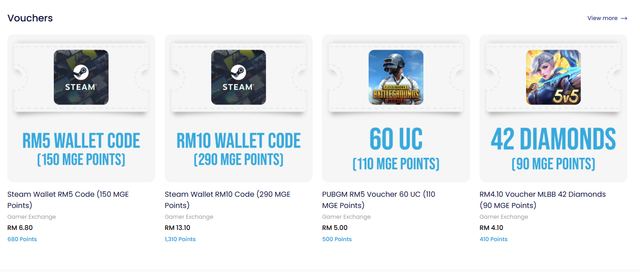
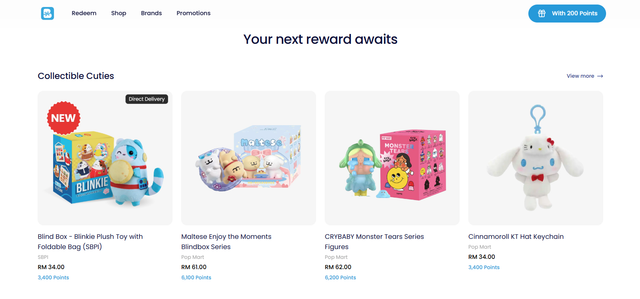
BonusLink launched in 1998 with physical cards. But the BLINK App now offers mobile-first capabilities: real-time point tracking, instant earn + burn via BLINKIT QR Pay at 200+ merchants, app-exclusive multipliers, points-to-cash conversion through AmBank, and cross-program exchange to AirAsia Rewards, Enrich, or PLUSMiles.
The hybrid approach is intentional. Physical cards remain for older demographics. App features attract younger users. BonusLink bridges both without forcing adoption.
What you can adapt:
- Coalition economics work when you can share infrastructure costs. Consider partnering with complementary (non-competing) businesses to create a shared points currency.
- 2-month cycles are aggressive but effective for high-frequency categories like fuel. For lower-frequency businesses, 3-month or 6-month cycles may be more appropriate.
- Hybrid physical + digital removes friction for non-app users. If your customer base spans multiple demographics, don't force app-only adoption.
- Points liquidity matters. BonusLink's points-to-cash and cross-program exchange create real value. Members never feel trapped with unusable points.
4. AirAsia Xchange: The "Points Aggregator."
Industry: Aviation and digital lifestyle (super app) Core mechanic: Multi-source points exchange into airline currency
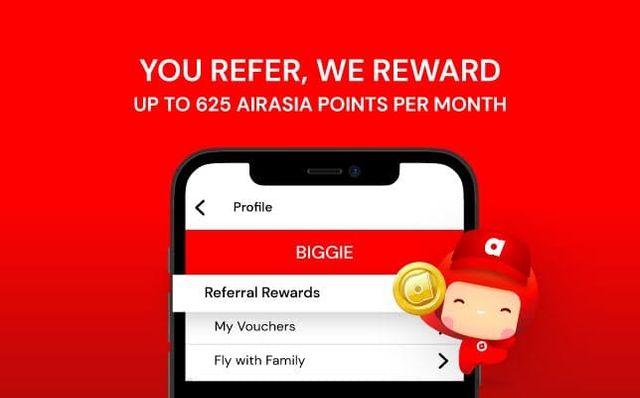
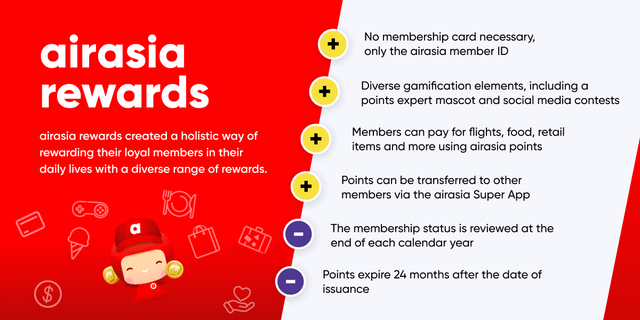
AirAsia Xchange doesn't reward spending within its own ecosystem. It pulls value in from everywhere else. The platform lets members convert points from banks, fuel cards, telcos, and retail programs into AirAsia points through a single mobile interface.
Southeast Asian consumers hoard small balances across a dozen loyalty programs, most of which go unused. AirAsia solved that problem by becoming the place where scattered points become something worth having: flights.
Why it works:
The partner network is the moat. In Malaysia alone, AirAsia connects with virtually every major retail bank: Maybank, Public Bank, CIMB, UOB, Standard Chartered, Citibank, and more. The network extends across Thailand, Indonesia, and the Philippines.
This breadth creates a flywheel. More partners mean more conversion paths. More paths mean more members. More members make AirAsia a more attractive partner for the next bank. The program doesn't compete on reward generosity. It competes on reach.
The results:
Capital A's Q3 2024 results showed the loyalty segment delivering 29% year-over-year revenue growth, fueled by higher gross billing, greater points issuance, and improved redemption rates.
What you can adapt:
- Make it easy to bring value in. You don't need an exchange platform. Accepting competitor loyalty points, gift cards, or credit card rewards as partial payment removes friction and captures spend you'd otherwise lose.
- Conversion spreads are a margin lever. AirAsia pays nothing for incoming points but gains a touchpoint worth more than the redemption cost. Even small businesses can offer "trade-in" value on competitor balances.
- Focus on activation, not sign-ups. Vanity metrics don't drive revenue. A program with fewer members who actually redeem will outperform one with millions of dormant accounts.
5. Kinokuniya Privilege Card: The "Paid Membership."
Industry: Specialty book retail
Core mechanic: Paid annual membership with instant discount
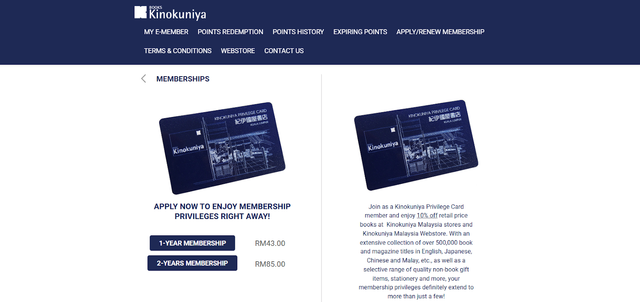
Most loyalty programs are free. Kinokuniya charges RM43 upfront. That's the point.
The fee isn't a revenue play. It's a filter. By asking customers to pay before they earn anything, Kinokuniya self-selects for committed buyers. Casual browsers don't sign up. Serious readers do. And once people pay to join, they feel compelled to justify the cost by shopping more.
What RM43/year gets you:
- 10% off retail-priced books, in-store and webstore
- 1 point per RM10 spent in-store
- Double points during birthday month
- Points redeemable for e-vouchers and gifts
- Physical card or E-Member Card with QR code
Why it works:
The break-even is low enough that most members clear it, but the fee is high enough to filter out non-buyers. That's the entire strategy.
A McKinsey survey found that paid loyalty members are 60% more likely to increase spending after joining than free program members. Kinokuniya's RM43 (around US$9.50) sets a far lower barrier, making break-even achievable with just six to nine book purchases.
The results:
Kinokuniya doesn't disclose cardholder numbers or renewal rates. What we can observe: a 20+ year program with no structural changes to its fee or discount, a flagship at Suria KLCC still going strong since 2001, and a second full bookstore opened at Pavilion Damansara Heights in September 2025. The model works quietly and consistently.
What you can adapt:
- Paid membership works when customers are already committed. Kinokuniya's fee succeeds because serious readers already spend RM400+/year. If you have a clear segment of heavy repeat buyers, a paid tier can identify and reward them.
- Set the break-even low. RM430 (about six to nine books) feels like a no-brainer. If break-even requires heroic spending, the fee becomes a deterrent.
- Use exclusions to protect the margin. Discount the category that builds loyalty (books), not the category that drives margin (stationery, lifestyle goods).
- Limited editions create urgency without discounting. Collectible card designs cost almost nothing but drive sign-ups during key periods.
III. Choosing Your Model: Which Structure Fits Your Business?
Five programs. Three different approaches. GrabRewards runs tiered acceleration across a super app. Tealive uses day-of-week discounts for a single F&B brand. BonusLink builds coalition economics across 20+ merchants.
Which one fits your business? That depends on three factors: how often customers buy, how many products you sell, and whether you can partner with other brands.
The decision framework:
Choose tiered acceleration (GrabRewards model) if:
You offer multiple products or services that customers use weekly. You can invest in app infrastructure with real-time tracking. You want earning triggers beyond basic purchases (referrals, off-peak bonuses, minimum spend rewards). Your goal is ecosystem lock-in, where switching costs keep customers loyal.
This model requires the most setup but delivers the highest engagement. GrabUnlimited subscribers spend 3.8x more than casual users. However, it works best when customers already transact frequently across multiple touchpoints.
Choose day-of-week tiers (Tealive model) if:
You're a single-category business (one product line, one brand). You want predictable traffic patterns you can staff around. You need mechanics simple enough to explain in one sentence. Your customers buy on impulse and respond to time-limited offers.
Tealive's "15% off Mondays for Bronze, 20% off Tuesdays for Silver, 30% off Wednesdays for Gold" is instantly understandable. No complex earning calculations. Customers know exactly when to show up and what they'll save.
Choose coalition (BonusLink model) if:
You can partner with non-competing businesses to share infrastructure costs. Your customers value points flexibility (earn here, redeem there). You want to tap into an existing member base rather than build from scratch. You're willing to trade some control for shared economics.
Coalition programs take longer to set up because they require partner alignment. But 14.9 million members and 28 years of continuous operation show the model scales. The tradeoff: you share customer data and revenue with partners.
Before you decide, answer these questions:
- What's your transaction frequency? Weekly buyers suit aggressive cycles (two to three months). Monthly buyers need gentler cycles (six to twelve months).
- What's your average order value? Higher AOV gives more margin room for points. An RM50 coffee order has less flexibility than an RM500 grocery cart.
- What's your current acquisition cost? If your CAC has been climbing, retention becomes the more sustainable path.
The honest caveat:
None of these programs published complete ROI data. GrabRewards is the most transparent (3.8x spending multiplier for premium subscribers). Tealive shows revenue correlation. BonusLink demonstrates longevity but keeps financials private.
What this means for you: start small. Test with 10% of your customer base before full rollout. Measure repeat purchase rate, average order value change, and program costs. Scale what works. Cut what doesn't.
Loyalty programs excel at retention. They won't solve acquisition. Build your loyalty program alongside your acquisition strategy, not instead of it.
Ready to Build Your Loyalty Program?
You don't need to build from scratch. Joy Loyalty gives you the mechanics covered in this guide: tiered memberships, referral programs, and VIP tiers. It's built natively to Shopify, so points sync with your orders, customers, and checkout automatically.
Setup takes weeks, not months. Start with a simple points program. Add tiers when you're ready. The flexibility is there when you need it.
Whether you model after GrabRewards' earning acceleration, Tealive's day-of-week structure, or BonusLink's coalition approach, the best time to start was yesterday. The second-best time is now.