South Africa's loyalty market has grown from 3.6 programs per person to 10.3 programs in 2024. 82% of South Africans now use loyalty programs, up from 67% in 2015. That makes this one of Africa's most competitive loyalty landscapes.
For merchants designing or refining a loyalty program, the question isn't whether to have one. It's the mechanics that actually drive repeat purchases in this market.
We've analyzed the top-ranked programs from the Truth & BrandMapp survey of over 35,000 South African adults to break down what each one does, how its mechanics work, and what makes it succeed.
You'll walk away with a clear picture of the earn rates, redemption models, and program structures that South African consumers respond to, so you can benchmark against what's working and spot gaps in your own program.
I. Why Loyalty Programs Matter in South Africa Right Now
South Africa is one of the most loyalty-saturated markets in the world. 82% of South Africans now use loyalty programs, up from 67% a decade ago. The average consumer actively uses 10.3 programs, up from 3.6 in 2015. That's not passive membership. That's intense competition for wallet share.
For merchants, this means your customers already expect a loyalty program. The question is whether yours gives them a reason to stay?
The data offers useful design intelligence for merchants building or refining their programs. Specifically, cashback remains the number one loyalty benefit across all ages, income levels, and genders, meaning programs built around cashback mechanics see the broadest engagement.
But the picture gets more nuanced when you look at how consumers want to receive those rewards. When asked whether they prefer saving points for bigger rewards or getting instant gratification, consumers split into three groups: savers, instant redeemers, and those who want both. Of these, the "want both" group is the largest at 47%, and also the most demanding to satisfy.
One design consideration worth noting: 66% of South African consumers still prefer to swipe a physical card, versus 34% who prefer using an app. Accessibility in your enrollment and identification method still matters.
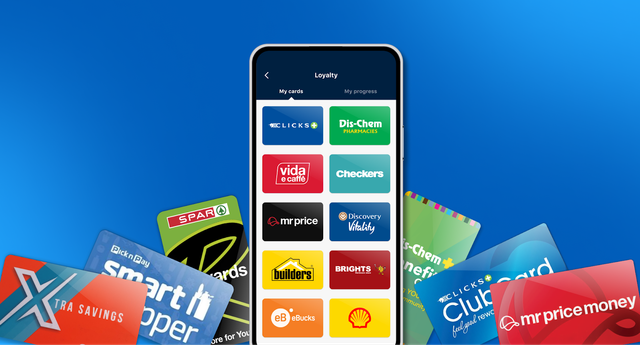
II. The Top 5 Loyalty Programs in South Africa & What Makes Them Work
So which programs are actually winning in this competitive landscape?
These rankings come from the Truth & BrandMapp 2024/25 South African Loyalty Whitepaper, based on a survey of over 35,000 economically active South Africans, with additional insight from a large mass-market sample. One thing to keep in mind: these rankings shift year to year as consumer behavior and program mechanics evolve. For example, Clicks ClubCard regained the #1 "most used" position this year after Checkers Xtra Savings held the top spot in 2023/24.
To help you benchmark, we'll break down each program using the same framework:
- Program mechanic type (points, instant discount, hybrid)
- Earn rate structure
- Redemption model
- What drives customer stickiness
- Key takeaway for merchants
Let's start with the current leader.
#1. Clicks ClubCard
Quick facts:
- Mechanic type: Points-to-cashback (delayed cashback)
- Earn rate: 1 point per R5 spent (10 points = R1, roughly 2% baseline value)
- Redemption model: 2-month earning cycle; cashback loaded after reaching 50 points (R250 spend)
- Category: Pharmacy, health & beauty
Clicks ClubCard has regained its position as South Africa's most used loyalty program, marking the fifth time it has held the top spot since the series began. After losing the title to Checkers Xtra Savings in 2023/24, ClubCard bounced back with a reach that's hard to ignore: about 79% of South Africans who use loyalty programs say they use Clicks ClubCard.
The mechanic is straightforward. Members earn 1 point for every R5 spent. Once they accumulate at least 50 points within a 2-month qualification period, those points are converted to cashback and automatically loaded onto the card. From there, members can redeem on any future visit, with cashback remaining valid for 12 months.
This delayed cashback model creates a built-in loop for return visits. Unlike instant discount programs, which offer savings at checkout and end the transaction, ClubCard gives customers a reason to come back. And because pharmacy and health & beauty are high-frequency categories, the 2-month wait rarely feels long in the customer's natural shopping rhythm.
The economic context makes this even more relevant. As Dr Melanie Van Rooy, CMO at Clicks Group, puts it: "Clicks ClubCard cashback is used as a currency for financial survival, and we see redemption of cashback at an all-time high. Members don't just spend their cashback on luxuries, but often on staples like soap and toilet paper." That insight reveals something important: customers aren't treating this as a nice-to-have perk. They're relying on it.
That said, the delayed cashback model may frustrate shoppers who prefer instant savings at checkout. If your customers expect immediate gratification, this structure might feel slow by comparison.
Merchant takeaway: A flat earn rate plus delayed cashback works best in high-frequency categories, where a 2-month earning cycle still aligns with how often customers naturally shop. The simplicity of "R5 = 1 point" also makes the value proposition easy to communicate, which reduces friction at enrollment.
#2. Checkers Xtra Savings
Quick facts:
- Mechanic type: Instant discount at checkout (no points accumulation)
- Earn rate: Product-specific price cuts on Xtra Savings-marked items
- Redemption model: Immediate; savings reflected on till slip at point of sale
- Category: Grocery, FMCG
If Clicks ClubCard represents the delayed cashback model, Checkers Xtra Savings sits at the opposite end of the spectrum. There are no points, no tiers, no levels; just instant cash savings on groceries and drinks. You swipe, you save, done. Discounts appear on your till slip immediately.
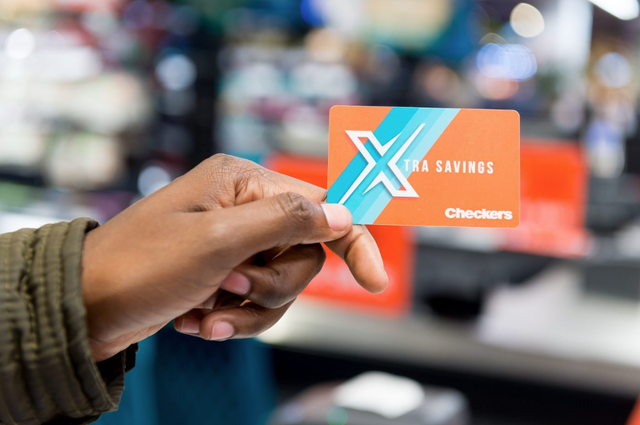
This mechanic eliminates the "when do I get my reward?" friction entirely. For shoppers who want to see value right now, that simplicity is powerful.
Free tier vs. Xtra Savings Plus (paid subscription):
The paid tier creates a compelling lock-in effect. According to Reveal's analysis, among Plus subscribers, Checkers' share of grocery spend climbed to 50% of their monthly basket (up 7 percentage points year-on-year). Average spend at Checkers rose 28% to R5,617 per month, and Sixty60 orders increased 44%. That's a significant behavioral shift from a R99 subscription.
From a business model perspective, Xtra Savings Plus turns the loyalty program into a revenue stream rather than just a cost center. Subscribers pay for deeper commitment, and Checkers captures a larger share of their grocery wallet in return.
One important note: unlike some international grocery loyalty programs, Xtra Savings does not natively include a "cents per litre" fuel discount based on grocery spend. In South Africa, fuel rewards typically come through separate bank-fuel partnerships rather than through retailer programs.
Merchant takeaway: Instant-discount programs eliminate redemption friction and create immediate perceived value, appealing strongly to the 41% of South African consumers who prefer instant rewards.
Adding a paid subscription tier on top of a free program can deepen loyalty and turn your most engaged customers into recurring revenue, but it requires a strong delivery infrastructure (like Sixty60) to justify the subscription cost.
#3. Pick'n Pay Smart Shopper
Quick facts:
- Mechanic type: Points-to-cash vouchers (delayed reward)
- Earn rate: Points earned on qualifying spend, convertible to cash-off vouchers
- Redemption model: Convert points to vouchers redeemable at Pick n Pay and select partners
- Category: Grocery, fuel, banking, lifestyle partners
What sets Smart Shopper apart from Clicks and Checkers is its coalition model. Rather than operating as a standalone program, Smart Shopper functions as a hub that connects multiple partner brands into a single earning ecosystem.
Members earn points not only at Pick'n Pay stores but also with partners like BP (fuel), TymeBank (banking), NetFlorist (gifting), and Europcar (car rental). On top of that, rewards overlay programs from Discovery, Momentum Multiply, FNB eBucks, Absa Rewards, and Standard Bank UCount can multiply earn rates significantly. For example, TymeBank customers earn double Smart Shopper points when they swipe at Pick n Pay, plus 10 points per litre at BP.
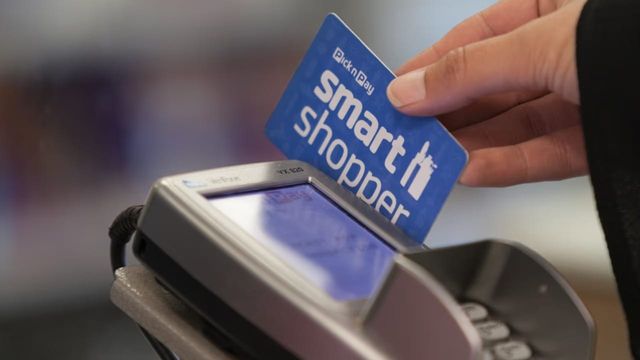
Points convert into cash-off vouchers that can be spent at Pick n Pay or switched for partner vouchers at Spur, Ster-Kinekor, NetFlorist, Intercape, and others. This flexibility gives customers more ways to extract value, but it also adds complexity compared to simpler instant-discount or pure-cashback models.
The app plays a central role in driving engagement. Customers can link their card, view and activate personalised offers and partner deals before they shop, then have those offers apply automatically when they swipe or shop online.
Pick'n Pay's Wine Club, Baby Club, Pet Club, and Coffee Club layer additional benefits on top, offering triple points on category purchases plus exclusive monthly discounts.
One thing to watch: Smart Shopper points are valid for 12 months from the month they are earned, after which older points expire on a rolling monthly basis. This is not "12 months from last activity" but rather a hard countdown from the earn date. Customers need to convert points to vouchers or cash before they expire.
Merchant takeaway: A coalition model lets you share the economics of rewards with partner brands while giving customers more ways to earn and spend. This can drive cross-category engagement and attract partner co-funding.
However, coalition programs require significant infrastructure for partner management, data reconciliation, and point-of-sale tracking. This model works best for larger retailers with the scale and tech capability to manage the complexity.
#4. Dis-Chem Better Rewards
Quick facts:
- Mechanic type: Instant discount at checkout (no points accumulation)
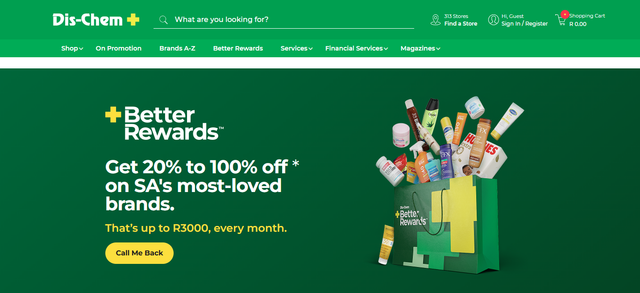
- Base discount: 10% off on 140+ brands across 10,000+ products
- Tiered by health, not spend: 10% (base) → 20% (Dis-Chem insured) → up to 100% (health-rated, capped at R3,000/month)
- Category: Pharmacy, health & beauty
For 23 years, Dis-Chem ran a tiered points program. Then, in October 2025, they threw it out and launched Better Rewards, a completely different model built on instant discounts.
Instead of tying discounts to how much you spend, Dis-Chem ties them to how well you manage your health. Members with Dis-Chem insurance get 20% off, and those who complete annual HealthChecks can unlock up to 100% off on qualifying brands (capped at R3,000/month). There's also a "Pharmacy Boost", fill a prescription, gets an extra 5% off for 30 days. And if you're one of Capitec's 25 million customers, you get another 5% on top (15% total). All nine million existing members were auto-migrated to the new program, with old points valid for six months after switchover.
Merchant takeaway: If your loyalty program isn't delivering, don't patch it, rebuild it. Dis-Chem shows that a full mechanical overhaul is possible, and you can still differentiate (health-based tiers, bank partnerships) while giving customers the instant value they now expect.
#5. Woolworths WRewards / MyDifference
Quick facts:
- Mechanic type: Instant discount on selected items (not points-based)
- Base discount: 10% on specially marked WRewards items
- With Store/Credit Card: Additional 5% off (15% total)
- Credit Card earn-back: 2-3% back in vouchers on Woolworths purchases
- Category: Premium grocery, fashion, homeware
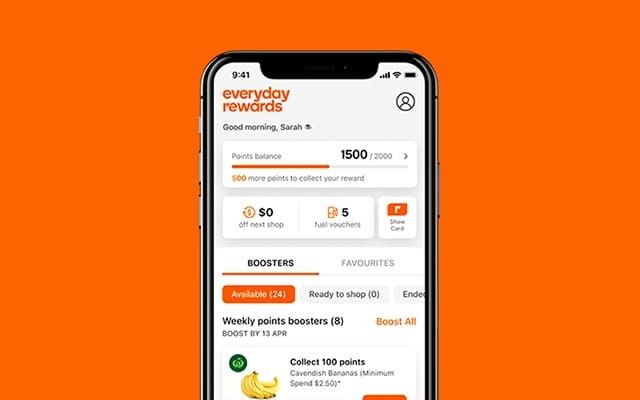
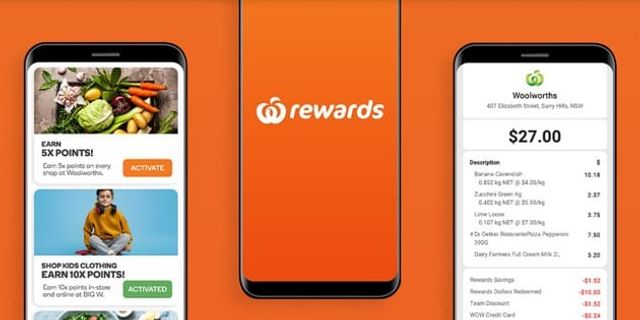
There's a common misconception that Woolworths runs a points program. It doesn't. Rewards work on instant savings: "No points. No waiting. No fuss." Members swipe their card and get product-specific discounts (typically 10%) directly at the till on marked items. Pay with a Woolworths Store Card or Credit Card, and you get an extra 5% off.
Where Woolworths differs from Checkers or Dis-Chem is in its financial services integration. Woolworths Financial Services (WFS), a joint venture with Absa Bank, offers Store Cards, Credit Cards (Gold and Black tiers), personal loans, and insurance. Credit Card holders earn 2-3% back in vouchers on Woolworths purchases. This creates a separate loyalty loop through the financial services relationship rather than through the retail program itself.
The program is also in transition. Woolworths is migrating from WRewards to a new platform called MyDifference, which combines WRewards, MySchool, and Discovery Miles into one program. Through the Discovery partnership, members can earn up to 25% back in Discovery Miles on HealthyFood items, boosted to 75% with Discovery Bank. The new program introduces spend-based tiers (Loyal, Ambassador, VIP) with different benefit levels. WRewards cards will stop working from July 2025.
This is a different strategic play than Clicks or Checkers. Woolworths isn't competing on price for mass-market shoppers. Instead, the loyalty model reinforces premium positioning by integrating financial services, health rewards, and cause-based giving (MySchool donations) into one ecosystem.
Merchant takeaway: If you're a premium brand, your loyalty program doesn't need to compete on earn rates or discount depth. Focus instead on integrating financial services and lifestyle benefits that reinforce your brand positioning. Woolworths shows how loyalty can be a relationship-building tool rather than just a discount mechanism.
III. Common Loyalty Program Mistakes to Avoid
These five design pitfalls show up across South African programs. Each connects to a real example from the programs above.
- Don't overcomplicate your earn structure. Clicks' straightforward R5 = 1 point helped it become the most-used program in South Africa. Dis-Chem's former tiered system (with multiple earn rates by category and spend level) ranked it #4. The complexity gap was so stark that Dis-Chem abandoned tiering entirely in October 2025, pivoting to instant discounts instead.
- Don't set punitive expiry windows. Points expiring before members can use them is a top consumer complaint in South African loyalty research. Pick'n Pay Smart Shopper uses a 12-month rolling expiry (points expire monthly from date earned, not a fixed calendar cutoff), which gives active shoppers more flexibility than shorter fixed windows.
- Don't ignore the app experience. Clicks' CMO reports that loyalty members who engage via the app spend 3.7 times more than non-app users. Pick'n Pay's app lets customers view and pre-load personalised deals before shopping, turning browsing into intentional purchasing. A clunky app drives program abandonment.
- Don't launch without measuring active-use rates. South Africans belong to an average of 10.3 loyalty programs, but there's a significant gap between enrollment and engagement. Track active redemption rates, transaction frequency, and app engagement rather than sign-up numbers. Membership counts don't tell you if your program is actually working.
- Don't copy a mechanic that doesn't match your category. Delayed cashback works for Clicks because the pharmacy is a high-frequency category. The 2-month earning cycle feels natural when customers visit weekly or biweekly. A furniture retailer with once-a-year purchase cycles would frustrate customers with the same mechanic. Match your reward timing to your natural shopping rhythm.
If you're a Shopify merchant looking to build a loyalty program with these proven features, points-based rewards, instant discounts, VIP tiers, referral programs, or app integration, Joy Loyalty can help you set it up.