A points program that works for a beauty brand will fall flat for an electronics store. The best online loyalty scheme for your business depends on your industry, your margins, and how often your customers come back to buy.
The stakes are real. According to Bain & Company research by Frederick Reichheld , a 5% increase in customer retention can drive 25% to 95% more profit. That's not a rounding error. That's the difference between a store that grows and one that keeps bleeding money on acquisition.
So this article doesn't waste your time with theory. It covers six industries, six specific loyalty scheme recommendations, each with a real brand example (and hard performance data), practical setup steps on Shopify, and an honest caveat about what can go wrong. If you're new to loyalty programs entirely, start there first, then come back here to find the right fit for your store.
I. What Makes an Online Loyalty Scheme Work
Not every loyalty program fits every business. Three factors decide which type works best: purchase frequency, average order value (AOV), and what drives loyalty in your industry.
| Industry | Purchase Frequency | AOV | What Drives Loyalty |
|---|---|---|---|
| Beauty & Skincare | High (every 4-8 weeks) | Medium ($40-80) | Routine + identity ("this is my skincare brand") |
| Fashion & Apparel | Medium (seasonal) | Medium ($50-100) | Peer influence + trend cycles |
| Food & Beverage | Very High (weekly) | Low ($10-30) | Habit + convenience |
| Health, Fitness & Supplements | High (every 30-60 days) | Medium ($40-70) | Goals + community identity |
| Electronics & Tech | Low (a few times/year) | High ($100-500+) | Price + convenience (low brand attachment) |
| Pet Supplies | High (every 30-45 days) | Medium ($30-60) | Deep emotional bond (pet as family member) |
How to Match Your Scheme to Your Business
The Data Advantage Most Stores Miss
The best online loyalty schemes collect zero-party data: information customers share willingly, like their skin type, pet's breed, or fitness goals. This lets you personalize rewards in ways that feel helpful, not intrusive. You'll see this play out in the industry sections ahead.
This is a starting framework, not a rigid rule. Your customers might behave differently. Use the table as a baseline, then adjust once you have real program data.
II. How Much Should You Budget for Rewards?
This is the question most loyalty guides skip. You can design the perfect scheme, but if your reward rate eats your margins, it won't last.
The general rule: most ecommerce loyalty programs allocate 2-5% of revenue toward rewards. The exact number depends on your margins and industry.
| Industry | Typical Reward Rate | Example |
|---|---|---|
| Beauty & Skincare | 3-5% | $1 spent = 1 point, 100 points = $5 off |
| Fashion & Apparel | 3-4% | $1 spent = 1 point, 200 points = $10 off |
| Food & Beverage | 2-3% | $1 spent = 1 point, 100 points = $3 off |
| Health & Supplements | 3-4% | $1 spent = 1 point, 150 points = $5 off |
| Electronics & Tech | 1-2% | $1 spent = 1 point, 200 points = $10 off |
| Pet Supplies | 3-4% | $1 spent = 1 point, 100 points = $4 off |
A Quick Way to Check Your Math
If you give 1 point per $1 spent and 100 points = $5 off, your effective reward rate is 5%. For a brand with 50% gross margins, that's manageable. For a brand with 20% margins, that's a problem.
The fix is simple: adjust either the earning rate (points per dollar) or the redemption value (points needed per reward). Small changes make a big difference to your bottom line. Compare the full cost of retention against your reward spend to find the right balance.
Start conservative. You can always increase reward rates later. Cutting them after launch frustrates customers and damages trust.
III. Best Online Loyalty Scheme for Beauty & Skincare
If you're running a beauty or skincare brand, you've probably noticed your best customers already buy on a cycle. Every four to eight weeks, they're back for refills, new shades, or that serum they can't live without. That buying pattern is exactly why a tiered points program with experiential rewards is the best fit for this space.
Why This Scheme Works for Beauty
Points alone aren't enough. Beauty customers form identity-level connections with their brands. A tiered program taps into that by creating aspirational status. Customers don't just earn rewards. They earn rank. And experiential perks (early access to launches, exclusive events, birthday gifts) build the kind of emotional loyalty that discounts can't match.
Real Example: Sephora Beauty Insider
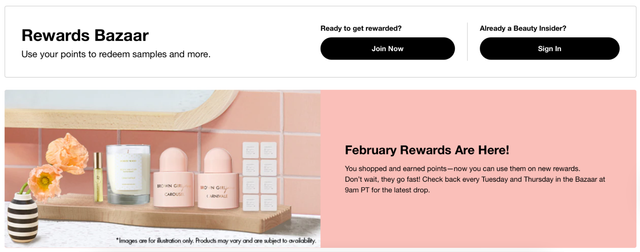
Sephora's Beauty Insider program is the benchmark for a reason.
The program keeps evolving, too. In January 2026, Sephora refreshed its birthday gift lineup with rotating online-exclusive gifts for VIB and Rouge members, featuring brands like Jo Malone London, K18, and Gisou. Members can also swap physical gifts for 250 bonus points. It's a small detail, but it shows how Sephora keeps the program feeling fresh without overhauling the core structure.
The numbers back it up. The program hit a record-breaking 45 million members in North America in 2025. As a result, members are responsible for 80% of the company's sales, and the program has driven a 22% increase in cross-sell revenue.
How to Build It on Shopify
Use Joy's VIP Tiers to create three tiers based on annual spend. Set up birthday rewards differentiated by tier (Joy supports this natively). Add earning programs for writing reviews and social shares to drive engagement between purchases.
Industry-Specific Tip
Beauty brands should reward product reviews and social sharing. User-generated content is high-value in this space. Points for writing a detailed review or sharing a purchase on Instagram turns loyal customers into your marketing team.
Here's the Catch
Tiered schemes add complexity. If you're a small beauty brand with fewer than 500 customers, start with a simple points program and add tiers once you have data on purchasing patterns. You need enough customers in each tier for the status element to feel real.
IV. Best Online Loyalty Scheme for Fashion & Apparel
If you're in fashion, you already know the challenge: customers love your brand during a sale, then disappear until the next one. Seasonal buying cycles, trend-driven purchases, and heavy peer influence define this space. That's why a points program with strong referral bonuses and seasonal multiplier events is the best fit.
Why This Scheme Works for Fashion
Fashion customers don't buy on a fixed cycle like beauty customers do. They buy when something catches their eye, when a friend recommends a brand, or when seasons change. The right scheme matches those triggers:
Real Example: H&M Membership
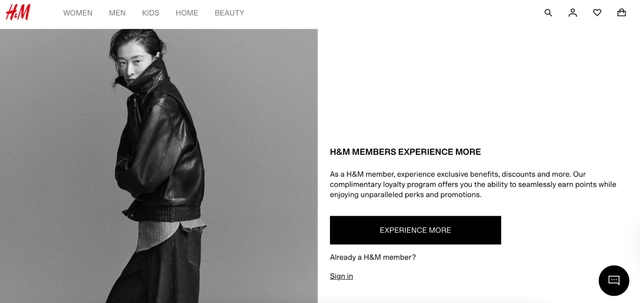
H&M gets the foundation right with a simple, scalable structure.
| Element | Details |
|---|---|
| Tiers | Core (free) and Plus (500 points to qualify) |
| Earning | 1 point per $1 spent |
| Rewards | $5 for every 250 points |
| Extras | Points for recycling clothes, bringing reusable bags |
| Perks | Exclusive member prices, early access to drops and sales |
According to Marketing Week , H&M Membership reached over 120 million members across 26 markets, with 71% year-over-year growth in 2021.
What H&M doesn't do (and you should): H&M doesn't lean into referral bonuses or seasonal multipliers. They don't need to. They have 120 million members and global brand awareness. You probably don't. A Shopify store can take H&M's points foundation and layer referral rewards and timed multiplier campaigns on top for a much stronger result.
How to Build It on Shopify
Set up Joy's points program as your base, then add two things H&M skips. First, create a referral program with a "Give $15, Get $15" structure. Second, use Joy's rule engine (Advanced plan) to run 2x point campaigns during peak shopping periods.
Industry-Specific Tip
Fashion has high return rates. Set up pending points that only confirm after the return window closes. Joy supports this natively, so points aren't awarded until the order is fulfilled. This protects your margins without punishing honest customers.
Here's the Catch
A well-run loyalty scheme in fashion might move your retention rate from 15% to 25%. That's a real revenue impact, but don't expect 80% retention like Sephora. Fashion loyalty is a slow build, not an overnight win.
V. Best Online Loyalty Scheme for Food & Beverage
If you sell food or drinks online, you have one big advantage: customers buy often. Weekly, sometimes daily. That high frequency means a simple points-to-discount scheme with low redemption thresholds and gamification elements is the best fit. Keep it easy. Keep it rewarding. Keep them coming back.
Why This Scheme Works for F&B
When someone buys coffee or snacks every week, they don't want to wait six months for a reward. Low redemption thresholds give instant gratification. Gamification (bonus challenges, progress tracking, double-points days) keeps engagement high between purchases and turns routine buying into something that feels fun.
Real Example: Starbucks Rewards
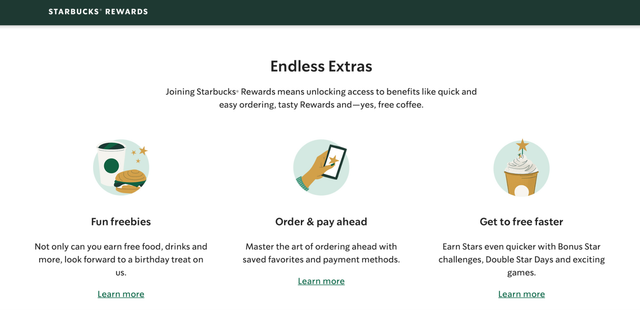
Starbucks Rewards is the gold standard for F&B loyalty, and it just got a major upgrade.
| Element | Details |
|---|---|
| Tiers (March 2026) | Green, Gold (500 Stars/year), Reserve (2,500 Stars/year) |
| Earning | 1 Star per $1 (Green), 1.2 Stars (Gold), 1.7 Stars (Reserve) |
| Redemption | Multiple levels: 60 Stars for $2 off, up to 400 Stars for merchandise |
| Gamification | Double Star Days, bonus challenges, Free Mod Mondays |
| New perks | Stars that never expire for Gold/Reserve, extended birthday reward windows |
The numbers are hard to ignore. According to Starbucks' press release , the program has 35.5 million active U.S. members. Indeed, Starbucks Rewards members drove nearly 60% of U.S. company-operated revenue in fiscal year 2025, equating to more than $13 billion in spend. And Rewards members visit stores 5.6 times more often than non-members.
The March 2026 redesign is worth noting. Starbucks moved from a flat structure to three tiers, rewarding higher engagement with faster Star earning and better perks. That's a signal: even the world's biggest F&B loyalty program sees value in adding tiers as the program matures.
How to Build It on Shopify
Use Joy's basic points program with a simple earn-and-redeem structure. Keep the redemption threshold low (100 points = $5 off).
The goal: customers should feel progress after one or two purchases, not ten. Add bonus points for subscription orders using Joy's Recharge integration if you sell consumables.
Industry-Specific Tip
Food brands thrive on subscriptions. If you sell coffee, snacks, supplements, or anything customers reorder regularly, add bonus points for recurring purchases. Your loyalty scheme should reward the behavior that matters most for your business: repeat buying on autopilot.
Here's the Catch
If your average order is under $20, watch your point-to-dollar ratio carefully. You need customers to feel they're earning something meaningful without destroying your margins. Run the math on your reward rate before launch (see our budgeting section above and the full breakdown of cashback loyalty programs ).
VI. Best Online Loyalty Scheme for Health, Fitness & Supplements
If you sell supplements, fitness gear, or wellness products, your customers are goal-driven. They track progress, follow routines, and identify with a community. That's why a points program with milestone rewards and community-based perks is the best fit for this space.
Why This Scheme Works for Fitness
Fitness customers already think in milestones. Personal bests, streaks, progress goals. A loyalty program that mirrors that psychology (celebrating the 5th order, the 10th order, the one-year anniversary) feels natural, not forced. Community perks like exclusive content, member events, or early access to new products create emotional stickiness that pure discounts can't.
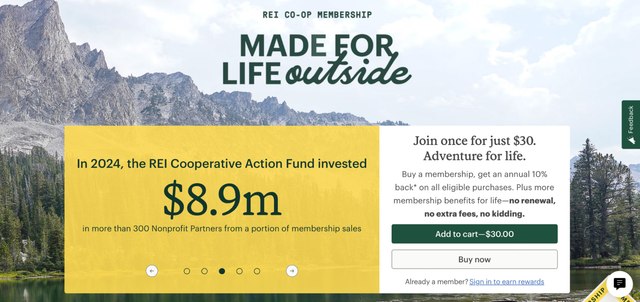
Real Example: REI Co-op Membership
REI takes a different approach: a paid lifetime membership that builds community identity.
| Element | Details |
|---|---|
| Model | Paid lifetime membership ($30 one-time fee) |
| Core reward | ~10% back annually on eligible full-price purchases |
| Perks | Free shipping, used gear access (Re/Supply), member-only sales, 20% off shop services |
| Community | $5 donated to REI Cooperative Action Fund per membership, member events, board voting rights |
According to REI's 2025 annual meeting , REI is a growing community of 25 million members. The co-op's goal: 50 million members by 2030.
What makes REI's model powerful: the membership isn't just about saving money. It's about belonging to a community of outdoor people. That identity-driven loyalty is exactly what fitness and supplement brands can tap into.
How to Build It on Shopify
Use Joy's milestone rewards to celebrate customer progress (5th order, 10th order, one-year anniversary). Combine with points earned for purchases and social engagement. If your brand has a strong community identity, consider adding a paid membership tier using Joy's membership features. For most supplement stores, though, a standard points program with subscription rewards is the safer starting point.
Industry-Specific Tip
Supplements have strong repeat purchase behavior (every 30-60 days). Use point expiration strategically to create urgency. 90-day expiration windows work well here. Customers who know their points expire are more likely to reorder on schedule. Joy supports configurable point expiration per program, so you can fine-tune this to match your product cycle.
Here's the Catch
Not every fitness brand needs a paid membership. That model works when your brand has a strong community identity (like REI's outdoor community). For most supplement and wellness stores , a standard points program with subscription bonus points is less risky and easier to launch. Add community elements later once you have an engaged base.
VII. Best Online Loyalty Scheme for Electronics & Tech
If you sell electronics or tech products, you face a different challenge than every other industry on this list: customers buy rarely. Maybe a few times a year at most. But when they buy, they spend a lot. That pattern means a paid membership or value-based loyalty program makes more sense than points.
Why This Scheme Works for Tech
A points program fails here because the gaps between purchases are too long. Customers forget they have points. They lose interest. A paid membership flips the dynamic. When someone pays for a membership upfront, they've pre-committed to your store.
They'll come back because they want to get their money's worth. Tangible perks like free shipping, extended warranties, and early access to product drops provide immediate, ongoing value between purchases.
Real Example: Walmart+
Walmart+ isn't a pure electronics retailer, but its paid membership model shows how value-based loyalty works for high-AOV, low-frequency categories.
| Element | Details |
|---|---|
| Model | Subscription: $12.95/month or $98/year |
| Core perks | Free delivery, fuel savings (up to 10¢/gallon), early access to Black Friday and product drops |
| Extras | Paramount+ or Peacock streaming, contact-free checkout, partner perks |
| Value claim | "Save $1,300+ per year" (stated on sign-up page) |
According to CIRP data via Retail Brew , Walmart+ members spend roughly $79 per online visit, compared to $62 for non-members. Members also shop 11 more times per year (29 visits vs. 18 for non-members). And according to CNBC's reporting , Walmart+ members now account for nearly 50% of spending across Walmart's website and app.
The takeaway: a paid membership doesn't just generate revenue from the fee itself. It changes customer behavior, driving higher spend and more frequent visits.
How to Build It on Shopify
A full paid membership like Walmart+ isn't practical for most Shopify stores. Instead, adapt the model. Use Joy's tiered program with a free base tier and a premium VIP tier that unlocks free shipping and exclusive access. Reward product reviews heavily (500 points for a detailed review with photos). This gives you the "pre-commitment" effect of a membership without asking customers to pay for it.
Industry-Specific Tip
Tech buyers rely on reviews more than almost any other category. Points for detailed reviews (with photos) build your content library and loyalty at the same time. Every review is a piece of free marketing that helps the next customer decide to buy from you instead of Amazon.
Here's the Catch
If you sell only one or two product categories, a paid membership might not offer enough value to justify the fee. Customers won't pay $98/year for free shipping on a store they visit twice. Consider a free tier with a premium upgrade instead, or focus on a simple rewards program that makes each purchase feel worthwhile.
VIII. The One Perk That Works Across Every Industry: Exclusive Access
Across every industry we've covered, one perk shows up again and again: exclusive access. Early access to sales, first dibs on new products, members-only events. It's the single most common reward among top loyalty programs, and there's a good reason for that.
According to Queue-it's analysis of top loyalty programs , 91% of America's top apparel loyalty programs offer early or exclusive access to sales and new products.
Why Exclusive Access Works
It costs you nothing in margin. Unlike discounts (which eat into profit) or free products (which have a hard cost), exclusive access creates perceived value from something you're already doing: launching products and running sales. You're just changing when certain customers get to participate.
The psychology is simple. Members feel like insiders. That feeling of belonging drives emotional loyalty that outlasts any coupon.
What It Looks Like by Industry
| Industry | Exclusive Access Example |
|---|---|
| Beauty & Skincare | Early access to new product launches |
| Fashion & Apparel | Members-only sales and limited drops |
| Food & Beverage | First access to seasonal or limited-edition items |
| Health & Fitness | Exclusive content, events, or community challenges |
| Electronics & Tech | Early access to product drops and pre-orders |
How to Add This to Your Store
Even if you're a small Shopify store, you can create exclusive access. Use Joy's VIP tiers to gate early access to new collections or sales for your top-tier members. The setup is straightforward: launch a product or sale to members 24-48 hours before opening it to the public. That window alone is enough to make membership feel valuable.
The best part: you can add this perk to any loyalty scheme type, whether you're running points, tiers, or a paid membership. It works everywhere because the core principle is universal. People want to feel like they matter more than the average customer.
IX. Common Mistakes When Setting Up an Online Loyalty Scheme
Before you launch, avoid these four mistakes that trip up stores across every industry.
1. Making rewards too hard to earn. If a customer needs to spend $500 before getting $5 off, they'll never engage. The first reward should feel reachable within one or two purchases. Otherwise, the program feels like a marketing gimmick, not a genuine benefit.
2. Ignoring redemption. Points earned but never redeemed don't build loyalty. They build frustration. Track your redemption rate. If it's below 20%, your thresholds are too high or your rewards aren't appealing enough. A program where nobody redeems is a program nobody cares about.
3. Not promoting the scheme. A loyalty program buried in the footer doesn't exist. Use your widget, product pages, and checkout to surface it. Mention it in post-purchase emails. If customers don't know about it, it can't work.
4. Copying a competitor's scheme without understanding your own data. Sephora's program works for Sephora. H&M's works for H&M. What works for you depends on your margins, your customers, and your product cycle. Use the framework in this article to find your fit, then adapt as you learn from your own retention data and results.
Build the Right Online Loyalty Scheme for Your Store
The right online loyalty scheme for your store depends on how often your customers buy, how much they spend, and how emotionally connected they are to your brand. There's no universal template. But there is a clear path: pick the scheme type that matches your industry, start simple, and add complexity as your data tells you what's working.
Joy Loyalty lets you build points programs, tiered schemes, referral programs, and milestone rewards, all from one Shopify app. Start free and add complexity as you grow.
If you're a smaller store and want to keep things simple first, check out our guide to loyalty programs for small businesses .