Not every loyalty program in the UAE delivers on its promises.
68% of Middle Eastern consumers have stayed loyal to or switched brands based on sustainability, according to the Comarch & Global Loyalty Organization. Your loyalty program isn't just competing on discounts anymore. It's competing on values.
We rated six major UAE programs on a question most articles skip: Does this program reward sustainable behavior, or just spending?
Two get it right. Four have the infrastructure but haven't connected sustainability to their loyalty mechanics. If you're building your own program, that gap is your opportunity.
I. How the Six Programs Compare
Before we break down each program, here's a quick overview of where they stand.
The pattern is clear. Etihad and SHARE actively reward sustainable choices. The rest reduce waste structurally (digital cards, app-only programs) but don't give members a reason to choose greener options. That distinction matters if you're designing your own program.
1. Etihad Guest: The Green Loyalty Pioneer
Etihad markets this as the "world's first green loyalty program." Unlike most airline programs that slap a sustainability badge on their website and call it a day, Etihad built green behavior directly into its earning mechanics.
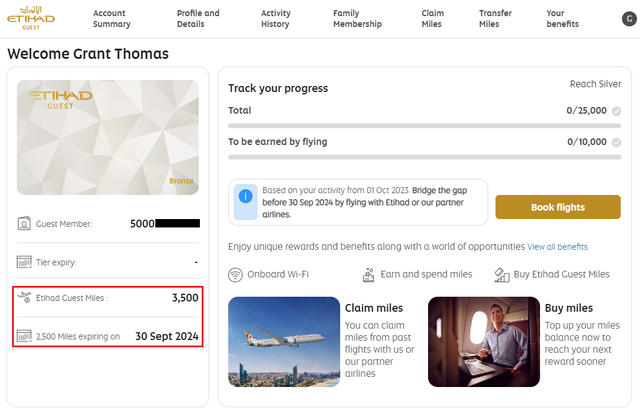
The program runs on two currencies: Guest Miles for redemptions and Tier Miles for status. You earn Guest Miles from flights, credit card spending, and partners. Tier Miles come primarily from flying. But here's what sets Etihad apart: you can also earn Tier Miles through sustainable actions.
The Conscious Choices Program
Members earn Tier Miles for eco-friendly behavior beyond flying. Offset your flight emissions and earn 25 to 100 Tier Miles depending on distance. Offset a full year of car emissions for 500 Tier Miles. Offset a year of everyday personal emissions for 1,000 Tier Miles. Donate miles to environmental causes and earn 100 Tier Miles. Travel with hand baggage only and collect a Green Fare badge.
These aren't token gestures. The Tier Miles from Conscious Choices count toward status qualification, which means sustainable behavior actually helps you reach Silver or Gold faster.
Miles for Bottles
In 2024, Etihad ran a Miles for Bottles pilot. Members recycled bottles at reverse vending machines and received Etihad Miles instantly. Over 5,200 bottles were recycled, and 80% of participants chose miles as their reward over other incentives. That's a strong signal: customers want to earn rewards for green behavior when you make it easy.
Best for: Frequent flyers through Abu Dhabi. Business travelers, expats, and nationals who fly six or more segments annually will hit Silver or Gold status. The Conscious Choices badges help accelerate that path.
Limitation: If you fly Etihad fewer than four times a year, miles accumulate too slowly to matter. Guest Miles also expire after 18 months of inactivity. For occasional flyers, this program underwhelms despite its sustainability features.
What merchants can learn: Etihad proved that customers will engage with green rewards when the mechanism is simple and the incentive is real. You don't need a carbon offset program. Even something as small as bonus points for choosing eco-friendly packaging at checkout gives customers a reason to feel good about buying from you.
2. SHARE (Majid Al Futtaim): Experiences Over Discounts
Most loyalty programs reward you for buying more stuff. SHARE takes a different angle: it rewards experiences.
The program covers Majid Al Futtaim's entire ecosystem, including Carrefour, VOX Cinemas, Mall of the Emirates, Ski Dubai, and Magic Planet. With over 3 million active members, it's one of the most widely used programs in the UAE.
You earn 2.5 to 30 points per 100 AED, depending on the brand and product category. Points can be redeemed for discounts, but the real draw is experiential rewards: movie tickets at VOX, ski passes at Ski Dubai, BOGO deals at Magic Planet.
Choose Better: Sustainability at the Shelf
SHARE introduced the "Choose Better" program at COP28 in December 2023. Members earn bonus SHARE points when purchasing from 680+ products labeled as healthier, locally sourced, or eco-friendly. The app displays sustainability ratings from HowGood, so you can see the environmental footprint before you buy.
This isn't marketing fluff. The Consumer Goods Forum called it "a brilliant example of combining commitments to health, wellness, and sustainability, for other companies to follow."
What makes Choose Better work is its simplicity. You don't have to opt in, activate a boost, or scan a separate card. You buy a labeled product. You get bonus points. Done.
Best for: Families and entertainment seekers in the UAE. If your weekends involve Carrefour runs, cinema trips, and mall visits, points stack quickly. The experiential redemptions give your family something to do together rather than just another discount.
Limitation: SHARE only works within the Majid Al Futtaim ecosystem. You can't transfer points to airlines or use them outside MAF properties. If you don't shop at Carrefour or visit MAF malls regularly, the program offers little value.
What merchants can learn: SHARE's Choose Better works because it rewards behavior at the moment of purchase with zero extra steps. If you sell eco-friendly products alongside conventional ones, give bonus points on the green options automatically. Most modern loyalty platforms let you assign different earn rates to specific product collections, so you can give 2x points on your sustainable line without changing your base program.
3. Shukran Rewards (Landmark Group): Scale Without Sustainability
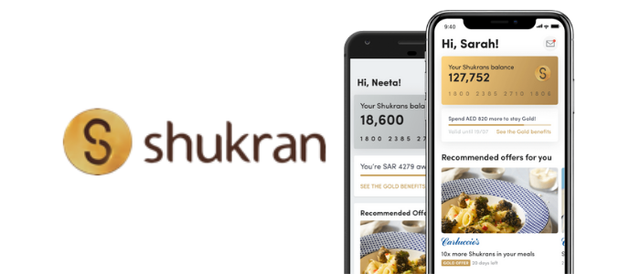
Shukran is the largest loyalty program in the region with 14 million members globally, seven million in the UAE alone. If you've shopped at Centrepoint, Max, Splash, Home Centre, or any of Landmark Group's 40+ brands, you've likely been asked to join.
A Smart Shift to Frequency Tiers
The program recently shifted from spend-based tiers to purchase frequency tiers. Silver status now requires just three purchases of AED 250+ over 12 months. That's smarter than it sounds. A customer who buys three times a year is more valuable than one who makes a single big purchase and disappears. Frequency builds habits. Spend thresholds reward wallets.
You earn 19 to 23 points per 100 AED, depending on your tier. Points expire after 24 months, and membership auto-cancels after 12 months of inactivity.
The Sustainability Gap
Here's where Shukran falls short. The program doesn't reward sustainable choices. No carbon offsets. No eco-friendly product bonuses. No experiential redemptions.
The corporate commitment exists. In December 2024, Landmark Group opened Circulife, a textile recycling facility in Dubai capable of processing 2,000 metric tons of old clothes annually. Customers who bring old garments to Centrepoint, Max, or Home Centre receive Shukran points through a takeback program. Splash now makes 90% of its products sustainably, using 85% less water for denim production.
But these efforts haven't translated into loyalty mechanics yet. The infrastructure is there. The connection to the rewards program is missing.
Best for: Budget-conscious shoppers and families across the UAE. The brand range covers fashion, home, and jewelry at accessible price points.
Limitation: Traditional points-for-discounts model with strong coverage but no innovation. If sustainability matters to you, Shukran doesn't reward it yet.
What merchants can learn: Shukran's frequency-based tiers are worth copying. Rewarding how often someone buys, not just how much, builds stronger habits. If your loyalty platform supports it, set tier qualifications based on purchase count, total spend, or both. For a mid-sized ecommerce store, requiring three to five purchases for Silver status is a good starting point.
4. Amber (Al Tayer Group): Luxury Goes Digital-First
Amber serves the premium segment. The program covers 40+ luxury and lifestyle brands under Al Tayer Group: Giorgio Armani, Gucci, Dolce & Gabbana, Harvey Nichols, Bloomingdale's, and Mamas & Papas, among them.
From Plastic Cards to App-First
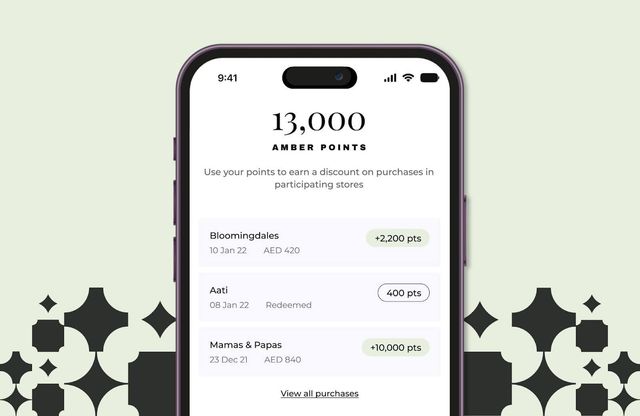
Amber launched in 2013 with physical cards. By August 2016, it rolled out a mobile app across the UAE, Saudi Arabia, Qatar, Kuwait, and Bahrain. Members could enroll from anywhere, view offers in-app, and show a digital barcode to earn points. No plastic card needed.
After a major app redesign in 2024, Amber saw a 13x increase in total digital users and an 8x growth in daily active users. That kind of jump shows what happens when you remove friction from the loyalty experience.
The Environmental Angle
Going digital-first cuts waste that most brands don't think about. Each plastic loyalty card requires water, chemicals, and energy to produce. By eliminating card production for new enrollments, Amber reduced material waste across thousands of members.
The catch: Al Tayer doesn't position this as sustainability. The messaging focuses on convenience and luxury experiences. It's a missed opportunity to connect with the growing number of UAE consumers who factor sustainability into their brand choices.
Best for: Affluent shoppers in the UAE who buy luxury fashion, beauty, and lifestyle products. The AED 1,000 minimum spend to join sets a high bar, but if you already shop at these brands, the tier benefits add up.
Limitation: No explicit sustainability rewards. No carbon offsets, no recycling programs, no eco-friendly product bonuses. The shift to digital delivers environmental benefits, but the program doesn't reward members for making sustainable choices.
What merchants can learn: Amber's 13x digital user growth proves that going digital isn't just a nice-to-have. It's an acquisition multiplier. If you're still asking customers to carry a card or remember a code, you're losing members to friction. A floating widget on your store and checkout redemption gives customers a digital-first experience without building a standalone app.
5. Tickit (Dubai Holding): Zero-Friction Loyalty
Tickit does loyalty differently. No app to present at checkout. No barcode to scan. No card to carry.
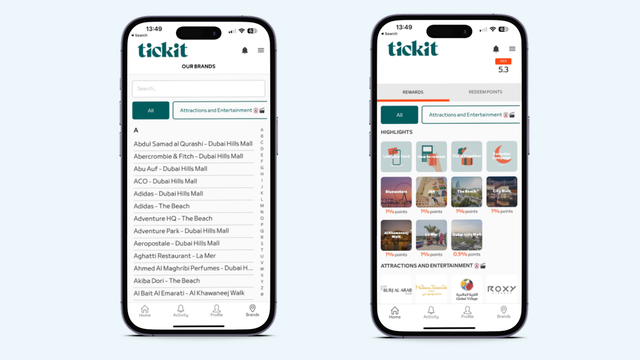
The program uses card-linking technology. You download the app, link your UAE Visa or Mastercard, and earn points automatically whenever you pay at participating outlets. A push notification confirms your points. That's it.
Launched in March 2022, Tickit became the second-largest loyalty program in the UAE by participating outlets within its first year. It now covers 3,500 locations across 300+ brands: Decathlon, Virgin Megastore, Roxy Cinemas, Dubai Parks & Resorts, Rove Hotels, and destinations like City Walk, Bluewaters, and La Mer.
How Points Work
You earn 0.5% to 5% per transaction, depending on the category. No minimum spend. No earning caps. Redemption happens through a virtual payment card you can add to Apple Pay, Samsung Wallet, or Google Pay.
The Environmental Angle
Card-linking eliminates physical loyalty cards. No plastic production. No distribution logistics. No cards ending up in landfills. That's a structural environmental benefit, even though Dubai Holding doesn't market it as sustainability.
But passive earning doesn't encourage sustainable choices. You earn the same rate whether you buy fast fashion or eco-friendly products. The program reduces waste by design, but it doesn't reward members for making greener decisions.
Best for: People who forget to scan loyalty cards. If you shop across Dubai Holding destinations regularly and want points without the effort, Tickit delivers.
Limitation: Passive earning means no behavioral nudge. You earn the same rate regardless of what you buy. The program is convenient, but it doesn't encourage better choices.
What merchants can learn: Tickit's rapid growth proves one thing: every step you remove from the earning process increases sign-ups. Auto-apply rewards wherever possible. Tier-based discounts should hit at checkout without any action from the customer. No codes to remember. No buttons to press. That's how you reduce friction.
6. Careem Rewards: Mobility Meets Green (Almost)
Careem isn't a retailer. It's a mobility app. But in a region where ride-hailing, food delivery, and digital payments overlap daily, Careem Rewards is surprisingly relevant.
The program launched in February 2019 to 33 million users across the Middle East. You earn points on Careem Rides, wallet top-ups, and partner services. The base rate sits at 15 points per AED 1 spent. Hit 15 rides in a calendar month, and you reach Gold status with 50% bonus points and priority support.
The Sustainability Angle
Careem operates the largest electric and hybrid ride-hailing fleet in the Middle East. As of 2023, 53% of all Careem rides in the UAE were completed with hybrid or electric vehicles.
In November 2023, Careem introduced eco-friendly rides timed with COP28. Users pay a small premium, and the funds go toward verified carbon removal projects like mangrove planting in the UAE.
The missed opportunity: eco-friendly rides earn the same points as regular rides. Careem could give bonus points for choosing electric vehicles and change rider behavior overnight. They haven't yet.
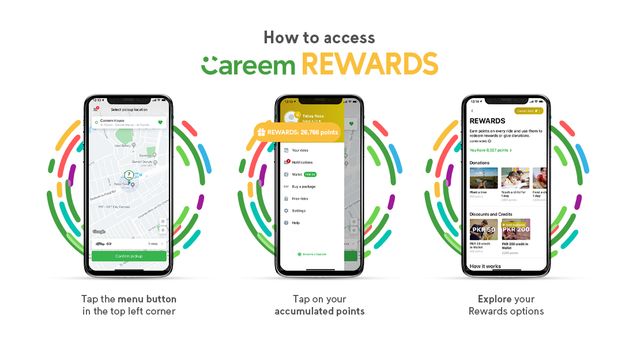
Best for: Urban residents without cars who use Careem regularly for rides, food, or payments. Daily commuters hit Gold status easily and build meaningful rewards.
Limitation: Value depends entirely on how often you use Careem. Points expire within six to 12 months. Casual users who take five rides a month won't build enough to matter, and if you switch to another ride-hailing app, your points stay locked in Careem's ecosystem.
What merchants can learn: Careem's frequency-based Gold tier (15 rides per month) works because it matches how heavy users already behave. It doesn't ask them to change. It rewards what they're already doing. When you set up your own tiers, look at your actual customer data. What does your average loyal customer already do? Set your first tier just slightly above that.
II. What Merchants Can Take From These Programs
These six programs serve millions of customers at scales most ecommerce merchants won't reach. But the principles behind their success and failure apply at any size.
1. Reward sustainable behavior. Etihad's Miles for Bottles pilot proved that customers will choose green rewards when the mechanism is simple. Consider offering bonus points for eco-friendly purchases, product returns, or reusable packaging. If you sell a mix of conventional and sustainable products, give the green options a higher earnings rate.
2. Add experiential rewards. SHARE's cinema tickets and Ski Dubai passes shift customers from discount-hunting to genuine anticipation. Think beyond percentage-off coupons: exclusive access, early product drops, members-only content, partner perks. The best rewards make customers feel something, not just save something.
3. Base tiers on purchase frequency, not just spend. Shukran's Silver tier requires three purchases of AED 250+, not one large transaction. Frequency builds habits. Spend thresholds reward wallets. A customer who buys three times is more valuable than one who spends the same amount once and disappears.
4. Remove friction at every step. Tickit became the second-largest UAE loyalty program within a year by eliminating cards, barcodes, and manual check-ins. Every extra step costs you members. Auto-apply discounts at checkout. Show points balance on every page. Make redemption one click, not five.
5. Go digital-first. Amber's app redesign drove 13x growth in digital users. Plastic cards and manual punch cards signal a program stuck in the past. Your loyalty experience should live natively in your store, not in a customer's wallet.
6. Set fair expiration rules. Too short (six months) frustrates customers. Too long (never) removes motivation. Most successful programs here use 12 to 24 months. Rolling expiration, where points expire based on when they were earned rather than a fixed window, is the fairest approach.
7. Be honest about who you serve. Etihad Guest works best for frequent flyers and says so. Shukran fits budget-conscious families and owns that positioning. Clarity builds trust. Overpromising builds churn. Your loyalty page should tell customers exactly who this program is for and what they'll get.
III. What This Means for Your Program
The pattern across all six programs comes down to three things.
First, reward what you want to see more of. Etihad and SHARE proved that customers will choose green options when the incentive is clear and the process is simple. If you sell eco-friendly products, give them bonus points. If you offer carbon-neutral shipping, reward customers who pick it.
Second, remove steps. Tickit grew faster than programs with decades of head start because it eliminated every manual action from the earning process. Every tap, scan, or code entry you ask for costs you members.
Third, match your structure to your customer's actual behavior. Shukran's frequency tiers work because they reward how often people shop, not just how much they spend. Careem's Gold tier works because 15 rides per month is what heavy users already do. Look at your data before you design your tiers.
Sustainability in loyalty isn't a trend. It's a filter your customers are already applying. The brands that build it into their programs now will keep the customers that the rest lose later.
IV. FAQs
Do loyalty program points expire in the UAE?
Most do. Etihad Guest Miles expire after 18 months of inactivity. Shukran points expire after 24 months, and your membership cancels after 12 months with no purchases. Careem points expire within six to 12 months. Tickit and SHARE have their own expiration windows. Always check the terms before you let points sit.
Which programs reward sustainable behavior?
Only two out of the six we reviewed. Etihad Guest rewards carbon offsets, bottle recycling, and light packing with Tier Miles. SHARE gives bonus points on 680+ eco-friendly and locally sourced products through its Choose Better program. The other four reduce waste structurally (digital cards, app-only access) but don't give you extra rewards for making greener choices.
Are UAE loyalty programs worth it for tourists?
For short visits, most programs won't pay off. Etihad Guest only makes sense if you're flying Etihad. Shukran and SHARE require regular shopping to build meaningful balances. Tickit is the exception: link your card, earn automatically at tourist destinations like City Walk, Bluewaters, and La Mer, and redeem through Apple Pay or Google Pay before you leave.