Most banks think their customers are loyal. The data says otherwise.
Only 19% of banking customers qualify as "truly loyal," according to Deloitte research. The rest are staying out of habit, not preference. And that habit is breaking. Fintechs have made switching easy. The median churn rate in financial services is 19%, and banks without binding contracts experience attrition rates of 25-30%.
A well-designed loyalty program gives customers a reason to stay, not just a reason they haven't left yet. This article covers the program types that:
- Reduce churn
- The design principles behind the ones that work
- The common mistakes that kill them
I. Why Bank Loyalty Programs Matter More Than Ever
Customer churn costs U.S. banks an estimated $195 billion annually. That's not a typo. That's the price of customers walking out the door.
The math behind it is simple. Acquiring a new banking customer costs around $390. Retaining an existing one costs about $75. Every customer you lose costs five times as much to replace as to keep.
The customers leaving first are the ones worth the most. J.D. Power found that 36% of affluent millennials with $1M or more in investable assets said they'd "probably" or "definitely" switch financial firms within a year. 70% already use a secondary investment firm. They're not thinking about leaving. They've already started.
Rewards can change this. According to Collinson Group research, 70% of customers say rewards from financial institutions influence their decisions. That's not a soft preference. That's a deciding factor.
The upside is real. EY's 2025 analysis of bank loyalty transformation found one leading U.S. bank hit 99% annual customer retention in Q4 2024, against an industry average of 75%.
And the demand is there: 77% of banking consumers expect to be rewarded for their loyalty, per Mintel's 2025 financial services research. Banks that treat loyalty programs as optional are betting their most valuable customers won't notice what competitors are offering. That bet isn't paying off.
II. Types of Bank Loyalty Programs
| Program Type | How It Works | Best For | The Catch |
|---|---|---|---|
| Points-Based | Earn points per transaction, redeem for rewards | Credit card portfolios | Generic if not differentiated |
| Cashback | Direct % back on purchases | Mass-market checking/debit | Easy to undercut by competitors |
| Tiered Rewards | Benefits increase at balance/spending thresholds | Banks with broad product lines | Alienates bottom-tier customers |
| Subscription | Customer pays a monthly fee for premium perks | Digitally engaged customer bases | Perceived value must exceed the fee |
III. What Makes a Bank Loyalty Program Actually Work
Mechanism matters less than design. Three principles show up in every program that actually changes customer behavior.
- Reward relationships, not just transactions: Discovery Bank tiers customers by health and financial behaviors, not balances. That builds emotional loyalty ("I feel valued") instead of just rational loyalty ("the deal is good").
- Personalize: 61% of customers want more innovative rewards, per KPMG. Start simple: segment customers by spending profile, match rewards to each. Clean transaction data beats AI.
- Make progress visible: "You're $2,000 from Platinum" drives behavior. A vague "keep spending" doesn't. 96% of banks invest in digital platforms. Use them for loyalty dashboards, not just balance checks.
IV. 5 Bank Loyalty Programs Worth Studying (And What You Can Steal)
Most "best bank loyalty programs" lists give you fifteen names with a paragraph each. That's a logo parade, not analysis. Here are five programs that teach distinct strategic lessons.
1. Bank of America - Preferred Rewards
The program
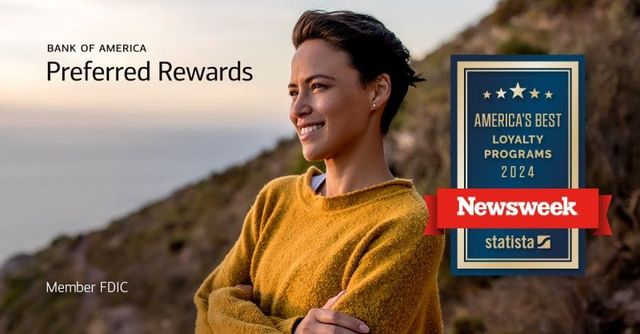
Four tiers based on combined balances across BofA deposit accounts and Merrill Lynch investments. Gold ($20K), Platinum ($50K), Platinum Honors ($100K), Diamond Honors ($1M+). Benefits include a 25-75% boost to credit card rewards, higher savings interest rates, reduced mortgage origination fees, and waived ATM fees. No enrollment fee. Members keep their tier for a full 12 months even if balances dip temporarily.
Why it works
The balance calculation spans banking and investment accounts. That's the key design choice. A customer earning tier credit across checking, savings, and a Merrill portfolio has a switching cost that no single-product program can match. You'd have to move your entire financial life to leave.
The tier thresholds are well-calibrated. $20K for Gold is high enough to filter for valuable customers but low enough for a mid-income household to reach. On average, members increased their overall benefits to $500 a year, which makes the value tangible without being extravagant.
Worth noting
BofA is rebranding this program as BofA Rewards in May 2026, with updated tier names and a new entry-level Member tier requiring no minimum balance. The Preferred Honors tier (previously Platinum Honors) will see its credit card bonus reduced from 75% to 50%. The restructuring signals BofA is widening the funnel at the bottom while trimming benefits for the upper-middle tier.
What's replicable
Cross-product balance aggregation. Any bank with multiple product lines can weigh loyalty across them. A checking + savings + auto loan calculation achieves the same principle. Reward the relationship, not the product.
2. Discovery Bank (South Africa) - Vitality Money
The program
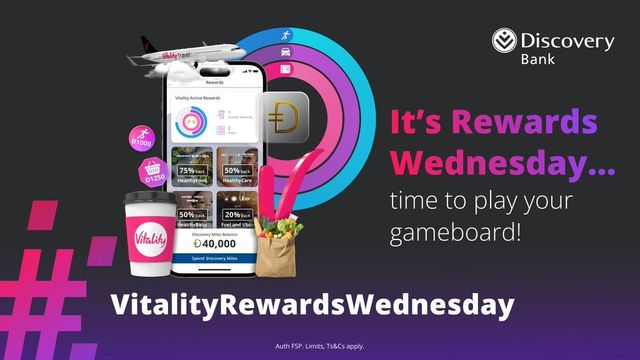
Links financial rewards to customer behavior across three dimensions: financial management (paying bills on time, saving consistently), physical health (exercise, preventive screenings), and responsible driving (via telematics). Higher behavioral scores earn better deposit interest rates and lower loan rates. The program integrates with Discovery's broader Vitality ecosystem, which spans insurance, health, and banking.
Why it works
Discovery didn't build a loyalty program. They built an identity system. Customers don't just use Discovery Bank. They identify with it. The program says, "We care about the same things you care about." That's emotional loyalty at scale, and it's hard for competitors to replicate because it's rooted in years of behavioral data.
The economics align naturally, too. Customers who exercise, manage their money well, and drive safely are statistically at lower risk. Discovery rewards good behavior and simultaneously selects for profitable customers. The incentives aren't at odds. They reinforce each other.
The data flywheel matters here. More engagement generates more behavioral data, enabling more personalized rewards, which drive more engagement. A competitor can't copy this by launching a similar program tomorrow because the value compounds over time.
What's replicable
Reward one non-transactional behavior. A bank could reward customers for completing financial literacy modules, setting up auto-save rules, or hitting savings milestones. You don't need Discovery's health ecosystem. You need one behavior that signals long-term customer value and costs almost nothing to reward.
3. Zions Bank - Pays for A's
The program
Gives students $1 per A on their report card, plus entry into a $1,000 scholarship lottery. Runs across Zions Bank's footprint in the western United States. Students bring their report cards to a branch. The interaction is in person and intentionally low-tech.
Why it works
This isn't about today's customers. It's about tomorrow. A parent walks into a branch with their kid's report card. The kid gets $5 for five A's. The parent has a positive experience with the bank. The family associates Zions with education and community.
When that student turns 18 and needs a checking account, Zions is the name they know. The program creates a customer pipeline that takes years to mature but costs almost nothing to maintain. A few dollars per student per semester. The community goodwill and local press coverage alone would justify the spend.
There's also a subtle operational benefit: it drives foot traffic to branches. In an era when digital banking is reducing in-person visits, Pays for A's gives families a reason to walk through the door.
What's replicable
Community-focused programs that target future customers. Sponsor local school programs, youth financial literacy workshops, or college savings matches. These cost a fraction of a traditional rewards budget but build the kind of brand affinity that points programs never will. Especially valuable for regional and community banks competing against national brands on something other than interest rates.
4. Capital One - Purchase Eraser
The program
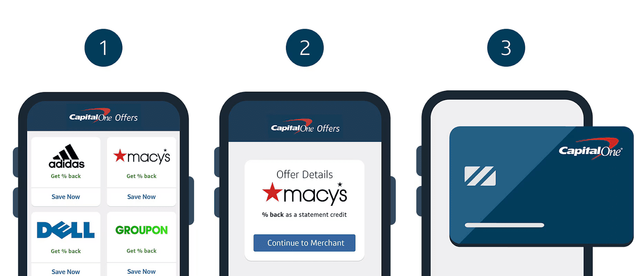
Let's customers use accumulated miles to "erase" specific travel purchases from their credit card statement. Instead of browsing a generic rewards catalog, customers select a real purchase they've already made (flights, hotels, rental cars) and apply it to their bill at 1 cent per mile.
Why it works
Redemption feels personal. The customer chooses what to erase. That sense of control makes the reward feel more valuable than a generic gift card of the same dollar amount. It also keeps the reward tied to the customer's actual spending, reinforcing the behavior Capital One wants: using this card for travel.
The UX is clean. Eligible purchases show up in the app. Tap to erase. No conversion calculators. No point-to-dollar math. No waiting for a catalog shipment. This simplicity drives higher redemption rates, which, in turn, drive higher engagement, which, in turn, drives more spending on the card. The loop is tight.
Capital One also benefits from a psychological effect: erasing a purchase you already made feels like "getting your money back," which registers as a stronger reward than receiving the same value as a future discount.
What's replicable
Tie redemption to real purchases. Instead of a points catalog, let customers offset specific transactions. This works for any spending category, not just travel. A bank could let customers erase grocery bills, gas purchases, or subscription charges. The principle: make redemption feel like a personal choice, not a generic exchange.
5. Citi - ThankYou Rewards
The program
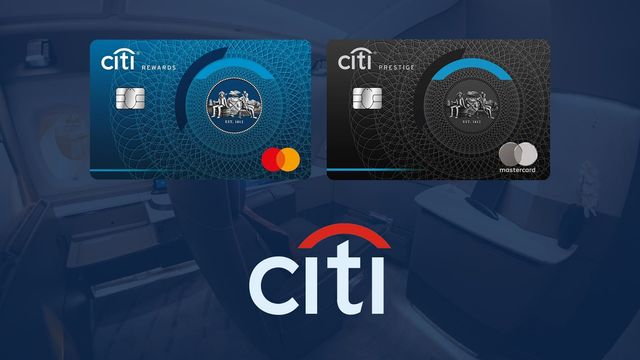
A unified points currency across Citi's credit card portfolio. Points earned on any eligible Citi card pool into one ThankYou balance. Citi has 22 transfer partners, split between 15 airline loyalty programs, five hotel programs, the Virgin Red rewards club, and one retail program. Premium cardholders (Strata Premier, Strata Elite) transfer at 1:1 ratios to most partners.
Why it works
The single currency across products reduces confusion. A customer with two Citi cards doesn't manage two separate points balances. Everything pools into one number. That simplicity drives engagement because customers see a single growing balance rather than scattered small ones.
The transfer partner network is what separates this from a basic points program. Points can be transferred to airlines such as Singapore Airlines, JetBlue, Turkish Airlines, and (as of July 2025) American Airlines AAdvantage at competitive ratios. This gives points an aspirational value well beyond their cash redemption rate. Citi points are worth 1.9 cents each when transferred to the right partner, versus one cent through the standard travel portal.
For a banking audience, the strategic lesson is about currency design. Citi created a single ecosystem where earning more cards doesn't fragment the experience. It concentrates it.
What's replicable
Unify your rewards currency. If your bank offers multiple products with separate reward structures, consolidate them into a single reward structure. One balance, one dashboard, one redemption experience. Customers engage more when they see one number growing. Fragmented programs fragment attention.
Why These Five
| Program | Strategic Lesson | What It Builds |
|---|---|---|
| Bank of America | Cross-product balance aggregation | Deep switching costs |
| Discovery Bank | Behavioral rewards beyond transactions | Emotional loyalty and identity |
| Zions Bank | Community investment in next-gen customers | Long-term brand affinity |
| Capital One | Personal, frictionless redemption | Higher engagement loops |
| Citi | Unified currency across products | Concentrated customer attention |
A note on Chase Ultimate Rewards: It's conspicuously absent from this list. Chase has the highest-volume points program in the U.S. by most measures, and its co-brand card ecosystem is the strongest example of the unified-currency lesson covered in the Citi section.
The reason it's not here is that its strategic lesson (one currency, concentrated spend) is the same lesson, just at larger scale. If you want the full picture, Chase is worth studying. But if you're trying to extract a distinct mechanic, Citi's ThankYou architecture teaches the same principle in a more analyzable form.
V. Common Mistakes That Kill Bank Loyalty Programs
Here's the uncomfortable context: 97% of loyalty programs fail because they focus on transactional rewards instead of genuine engagement, according to loyalty researcher Mack Collier. The 3% that succeed build programs that customers actually identify with. Every mistake below is a path toward the 97%.
- Rewards are too hard to reach: If most customers stay in the bottom tier and never move, the program demoralizes rather than motivates. Build a quick win in the first 30 days.
- Redemption friction: Points that expire silently or need a phone call to redeem create frustration. Three taps or fewer in the app.
- Copying competitors: If your program looks like everyone else's, customers have no reason to prefer yours. Survey your customers. Build from their answers.
- Untrained staff: If a teller can't answer "how do I earn points?", the program stalls at launch.
- No measurement: Track enrollment rate, active participation, and incremental revenue per member vs. non-member. If you're not measuring, you're guessing.
- Skipping compliance: Bank rewards have regulatory dimensions that retail programs don't. Involve legal from day one.
VI. Why Credit Unions Have a Loyalty Advantage Big Banks Don't
Credit unions are structurally built for loyalty in a way that megabanks aren't. They're member-owned, which means surplus earnings can go back to members as loyalty bonuses rather than to shareholders. That's not a philosophical point, as it produces measurable results.
UCCU returned $135,000 in interest rebates to members in a single month in early 2025. Community Choice Credit Union's GetBigReward$ referral program has returned $31 million to members since 2013, a staggering number for a regional institution. Both programs succeed for the same reason: members trust that the institution is acting in their interest, which makes every loyalty interaction feel like a genuine benefit rather than a retention tactic.
For regional banks and community banks competing against national brands, this is the angle worth copying. You can't outspend Chase on card rewards. You can out-trust them on community commitment. Sponsor financial wellness workshops. Run savings milestone rewards. Build referral programs that let existing members recruit new members. The switching cost you're building isn't points; it's about identity and belonging, which is far harder to replicate.
The Shopify parallel: independent brands running against Amazon face the same structural disadvantage. You can't outspend them on acquisition. You can build tighter community loyalty, and that's exactly what Joy's behavioral triggers and referral tools are designed to support.
VII. What Ecommerce Brands Can Learn from Bank Loyalty Programs
The principles that work in banking also work in ecommerce. Shopify brands face the same retention challenge: high acquisition costs, low repeat-purchase rates, and customers who can switch in 2 clicks.
What banking does well that ecommerce can steal: tiered loyalty based on relationship depth, rewarding behaviors beyond purchases, and making progress visible in real time.
What ecommerce does better: speed of implementation, flexibility in reward design, and the ability to personalize at smaller scale.
If you're running a Shopify store, the five steals above aren't hypothetical. They're directly applicable to how you design your loyalty program.
VIII. Build a Bank Loyalty Program Customers Actually Care About
Bank loyalty programs aren't about rewards. They're about giving customers a reason to stay when leaving has never been easier.
The banks winning at retention aren't the ones with the biggest budgets. They're the ones who understand what their specific customers value and build programs around that. Reward the relationship. Reward identity. Make redemption personal. Keep it simple.
Those principles work whether you're running a bank or a Shopify store.
Read more: How To Create A Loyalty Program: A Beginner Guide