In 2024, not a single major US airline turned a profit from flying alone. Strip out loyalty revenue, and Delta, United, American, Alaska, and Southwest all go negative, according to One Mile at a Time's October 2025 analysis.
The flights are the loss leader. The loyalty program is the profit center.
This article covers the revenue data behind the top four airline loyalty programs of 2026, the specific strategies that earned their rankings, and the design principles any brand can apply.
I. What Airline Loyalty Programs Actually Generate
The five largest US airlines generated $28 billion in loyalty revenue in 2024. The primary driver? Co-branded credit cards, not ticket sales.
Delta's loyalty program alone brought in $3.8 billion in FY2024, up 11% from the year before.
But the real story isn't the top-line number. It's what happens when you subtract loyalty from the balance sheet.
| Airline | Loyalty Revenue as % of Total Revenue | Operating Margin WITH Loyalty | Operating Margin WITHOUT Loyalty |
|---|---|---|---|
| Delta | 10.8% | +10.5% | -2.5% |
| United | 12.9% | +8.9% | -1.9% |
| American | 13.1% | +4.8% | -8.3% |
| Alaska | 16.3% | +4.9% | -11.4% |
| Southwest | 21.1% | +1.2% | -19.9% |
Source: One Mile at a Time analysis, Oct 2025
Southwest loses nearly 20% of its revenue without its loyalty program. Alaska swings from a 4.9% profit to an 11.4% loss. Every single airline on this list goes negative.
These are airlines, but the math applies everywhere. If your loyalty program generates even 10-15% of total revenue, it's likely the difference between healthy margins and breakeven.
One thing to understand: these figures include deferred revenue and breakage (accounting treatments that can inflate reported loyalty margins). The underlying cash flows are real, but the reported margins depend on how airlines book point liabilities. The directional story, though, is clear. Loyalty isn't a perk. It's the business model.
II. Top 4 Best Airline Loyalty Programs
| Program | Ranking (point.me 2025) | Best For | Partner Count | Notable Stat |
|---|---|---|---|---|
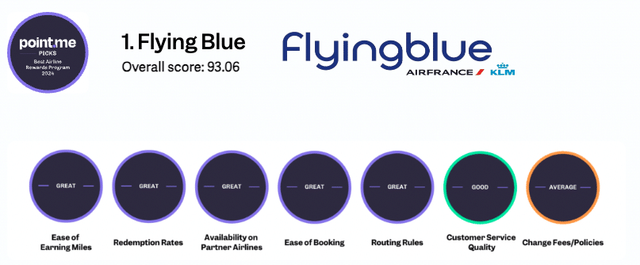
| Flying Blue | #1 (2nd year) | Partner ecosystem earners | 4 major card issuers, 19 airlines | "Great" in 5 of 8 categories |
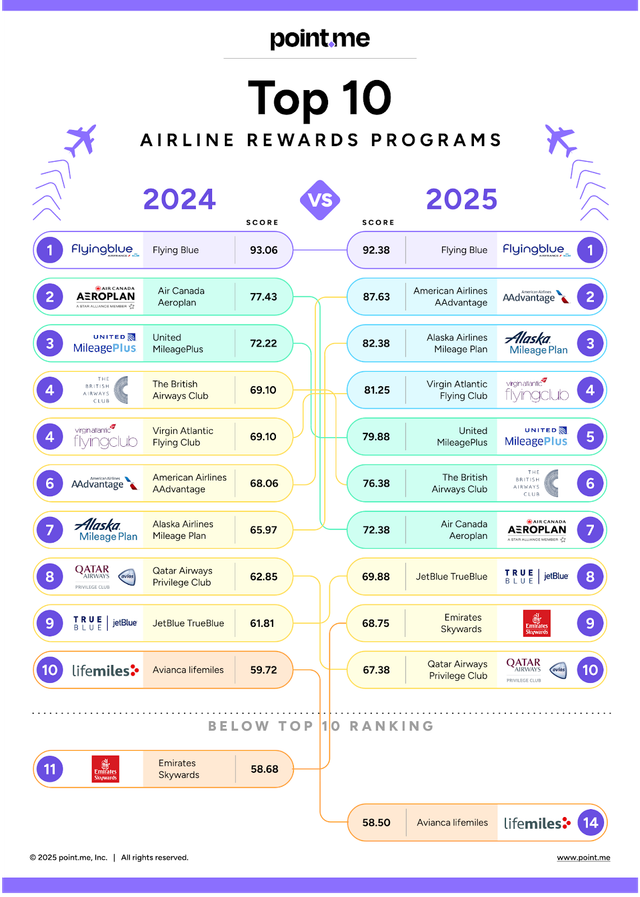
| AAdvantage | #2 (up from #6) | Citi ThankYou holders | Barclays + Citi (new) | $1B operating income Q3 2024 |
| Delta SkyMiles | Top 5 by financial value | AmEx cardholders | AmEx exclusive | Program valued at ~$28B |
| Atmos Rewards | New 2025 | Frequent short-haul flyers | Alaska + Hawaiian network | 3 earning paths, 1.2¢/point |
What about United and Southwest? United MileagePlus ranks #2 in U.S. News 2025-2026 and #5 globally (point.me). Southwest Rapid Rewards ranks top 5 in most U.S. lists. Both are left out of the deep analysis because they teach the same strategic lessons covered below: United mirrors Flying Blue's network scale, Southwest mirrors the fixed-value currency model covered in the devaluation section. But if you're choosing a program to join, both belong on your shortlist.
1. Flying Blue: Best Airline Loyalty Program for Partner Ecosystems
Why Flying Blue Ranks #1
Flying Blue (Air France-KLM) ranked #1 globally for the second consecutive year in point.me's 2025 rankings. The evaluation covered 59 programs using data from 22M+ searches and 500M+ search results, according to point.me. It scored "Great" (the top rating) across five of eight categories, including ease of earning, redemption rates, and partner availability, according to Business Traveller.
Flying Blue doesn't rank #1 because Air France-KLM flies the most routes. It ranks #1 because of its deep connections with external partners.
How Earning Works
Flying Blue has transfer partnerships with every major US credit card issuer: Chase, AmEx, Citi, and Capital One. Millions of cardholders who have never flown Air France can funnel points into Flying Blue.
This changes the acquisition model. Flying Blue doesn't need to compete on airfare to grow its membership. The credit card companies do that work for them. The program acquires members through financial partners, not ticket sales.
How Redemption Works
Members redeem across the entire SkyTeam alliance: 19 airlines, 1,000+ destinations. A member earning through a Chase card in New York can redeem on a Kenya Airways flight to Nairobi or a Korean Air flight to Seoul.
The breadth matters. When members have more ways to use their points, they earn more aggressively. That drives more partner revenue back into the program.
Why the Structure Matters
Air France-KLM restructured Flying Blue as a "dedicated operating affiliate" with its own autonomy, pricing, and revenue targets. This isn't cosmetic.
When a loyalty program operates as a semi-independent business unit, it can negotiate its own partner deals, set its own point valuations, and optimize for program profitability rather than just seat fill rates. Delta and United run similar structures. The pattern is consistent across top performers.
The #1 loyalty program in the world isn't the one with the best core product. It's the one that built the widest earning and redemption network.
2. AAdvantage: Best Airline Loyalty Program Comeback of 2025
The Jump: #6 to #2
American Airlines AAdvantage jumped from #6 to #2 in the point.me 2025 global rankings. Tiffany Funk, Co-Founder of point.me: ",When we see a program like American Airlines jump from sixth to second place, it shows that airlines are listening and evolving their approach" according to Fast Company.
AAdvantage didn't redesign its program. It didn't overhaul its tier structure. It added one major partner.
What the Citi Deal Actually Did
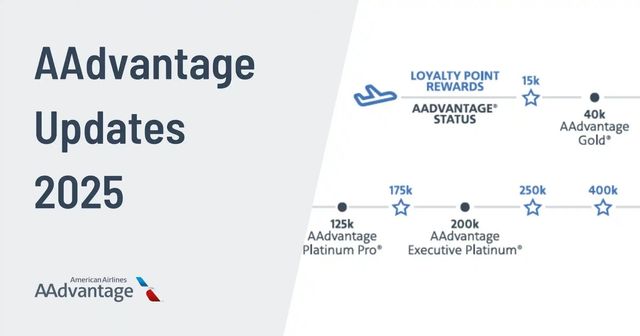
AAdvantage launched a new transfer partnership with Citibank. Members holding Citi ThankYou points can now convert them directly into AAdvantage miles.
Non-airline partners now account for over 70% of loyalty income at major US carriers. AAdvantage's operating income from loyalty hit $1B in Q3 2024 alone, according to AInvest.
Before this deal, AAdvantage was primarily accessible through flying American or using its co-branded Barclays card. A closed loop. Citi blew it open.
ThankYou is one of the largest transferable points currencies in the US. Overnight, AAdvantage became reachable for millions of Citi cardholders who previously had no reason to engage with American Airlines' loyalty program.
Why It Moved the Rankings
point.me ranks programs partly on "earning accessibility": how many ways a non-flyer can accumulate miles. Adding a major transfer partner directly improves that score.
The ranking jump wasn't just perception. It was a structural change in how the program scores on independent evaluation criteria.
One partnership. Four ranking spots.
That said, point.me evaluates eight categories. AAdvantage likely improved across multiple areas. But the Citi partnership is the most visible structural change between the 2024 and 2025 rankings, and the timing lines up.
3. Delta SkyMiles: Best Airline Loyalty Program by Financial Value
A Program Worth More Than the Airline
Delta's SkyMiles program is valued at roughly $28 billion. At certain points, that figure has exceeded the airline's entire market capitalization, according to The Wise Marketer.
The loyalty program is worth more than the airline itself.
Where the Money Comes From
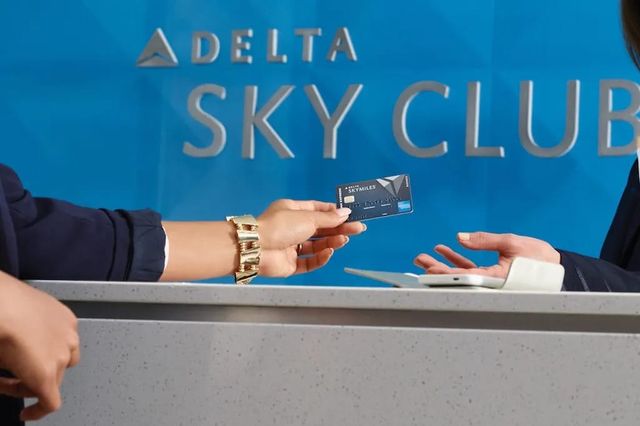
The engine: Delta's exclusive partnership with American Express, which delivered $7.4 billion in 2024 with a target of $10 billion annually by 2029.
Every time a consumer opens a Delta-branded AmEx card, AmEx pays Delta. Every time that cardholder spends on anything (not just flights), AmEx pays Delta a share. Every time miles are purchased for a promotion, AmEx pays Delta.
The revenue isn't tied to how many seats Delta fills. It's tied to how many people carry the card and how much they spend each day. That's why the number keeps growing even when air travel dips.
Why Banks Bet on Points, Not Planes
When air travel collapsed in 2020, Delta borrowed $9 billion using SkyMiles as collateral. American secured $10 billion against AAdvantage. United raised $6.8 billion on MileagePlus.
Why points and not planes? Because the loyalty revenue kept flowing while flights were grounded. Cardholders were still spending on groceries, gas, and online shopping. Every swipe generated revenue for Delta through the AmEx partnership.
The planes sat idle. The loyalty program kept earning.
What This Proves About Program Value
A loyalty program built on deep financial partnerships generates predictable, recurring revenue that isn't tied to the core product's performance.
When that revenue stream is stable enough for banks to lend billions against it, the program isn't a feature. It's the most valuable asset in the company.
4. Atmos Rewards: Best Airline Loyalty Program for Flexible Earning
A Merger That Created Something New
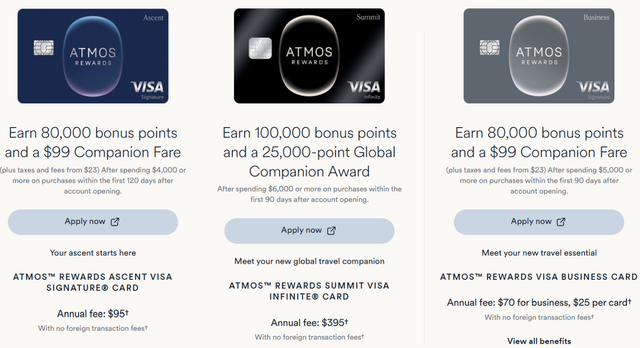
When Alaska and Hawaiian Airlines merged their loyalty programs into Atmos Rewards in 2025, they didn't just combine two point pools. They built a program that lets members choose how to earn status, according to The Points Guy.
Three earning paths. Three different customer types. One program.
How the Three Paths Work
Atmos Rewards offers three distinct ways to earn elite status, each targeting a different customer type:
- Miles/Segments path - 500 status points per flight segment, regardless of ticket price. Built for high-frequency short-haul travelers who fly often but spend little per ticket.
- Miles/Dollars path - status credit proportional to ticket spend. Built for the premium buyer who books business class and wants spend recognized directly.
- Miles/Distance path - status credit based on miles flown. Built for the occasional long-haul traveler who takes fewer flights but covers more ground.
NerdWallet values Atmos points at 1.2 cents each, according to NerdWallet. But the point value isn't what makes Atmos interesting. It's the earning structure.
Why the Segment Path Is the Standout
Most loyalty programs use a single rule: spend more, earn more. That works for one customer type and ignores the rest.
Take the segment-based path. A business traveler who flies four inter-island Hawaiian routes per week on 45-minute hops spends little per ticket. In a dollar-based system, they'd barely register. But they fly 200+ times a year. Deeply habitual. Highly retainable.
The segment path gives them 500 status points per flight regardless of ticket price. It recognizes frequency as a form of value in its own right.
The Design Question Behind It
Atmos didn't just ask "who spends the most?" It asked, "Who is most valuable, and how do they behave?"
The distance path serves the once-a-month long-haul traveler. The dollar's path captures the premium buyer who books business class regardless of distance. The segment path captures the high-frequency commuter.
Each path maps to a specific value signal. That's a segmentation decision, not just a points calculation.
The Tradeoff
Multi-path earning adds complexity. It works for Atmos because airline customers already understand tiers and status qualification. The three paths map to three behaviors that are easy to measure and easy to explain.
For products where customer behavior is less clearly segmented, one well-designed earning path might outperform three confusing ones. The lesson isn't "add more paths." It's "match earning rules to how your most valuable customers actually behave."
III. What the Best Airline Loyalty Programs Still Get Wrong
Even the top-ranked programs have blind spots. Roughly two-thirds of established loyalty programs fail to deliver value, and many actually erode it (McKinsey). These three gaps show up across the industry, including in programs that rank in the top 10.
Before getting into the mistakes, here's the current redemption value landscape - what a mile is actually worth across the major programs:
| Program | Est. Value (cents/mile) | Pricing Model |
|---|---|---|
| Southwest Rapid Rewards | 1.5¢ | Fixed (no blackouts) |
| Air France Flying Blue | 1.5¢ | Dynamic |
| Delta SkyMiles | 1.2¢ | Dynamic |
| Alaska Atmos Rewards | 1.1¢ | Dynamic |
| American AAdvantage | 1.0¢ | Dynamic |
| United MileagePlus | 0.9¢ | Dynamic |
Source: Bankrate, March 2026. Premium cabin redemptions via partner airlines (ANA, Aeroplan) can reach 10–11¢
Honestly, these numbers have been falling for years. The average domestic redemption now costs 20,930 miles, up from 17,000 in 2019: a 23% devaluation in six years, according to IdeaWorks' 2025 US Domestic Reward Report.
1. Devaluation With No Warning
Airlines regularly increase the points required for the same flight. A Tokyo round-trip that cost 70,000 miles last year might cost 85,000 today. No announcement. No transition period. Members find out when they try to book.
The result: members disengage. A customer who spent months earning toward a specific reward discovers their balance is no longer enough. Why keep earning if the target keeps moving?
In ecommerce, the same thing happens when brands cut point values after a promotion. Members who earned at one rate suddenly redeem at a lower one. The math changes, and trust goes with it.
2. Family and Group Pooling
Most airline programs are built for individual travelers. Pooling points across a household is either absent or heavily restricted. A family of four flying together earns four separate balances, each too small to be useful on its own.
The result: fragmented value. Points sit unused across multiple accounts instead of adding up toward a meaningful reward. The program generates less engagement than the household's total spending deserves.
For B2B, this gap is even more relevant. Brands selling household products often have one buyer but multiple consumers. A loyalty program that only tracks one account misses the household's full value. The same applies to purchasing teams where multiple people influence the buying decision, but only one person holds the account.
3. Redemption Friction
Finding available reward seats on airlines is so difficult that point.me built an entire business around solving it. Members earn points for months, then hit a wall of blackout dates, limited inventory, and confusing search tools.
The result: members stop trying. Breakage (unredeemed points) goes up, which looks good on a balance sheet but destroys long-term engagement. A member who can't use their rewards is a member who stops caring about your program.
In ecommerce, redemption friction shows up when checkout doesn't auto-apply points, the rewards catalog is buried three clicks deep, or the redemption process requires a separate login. Every extra step between "I have points" and "I used my points" costs you engagement.
Avoiding these mistakes in your Shopify loyalty program? Joy auto-applies points at checkout, supports household account structures, and keeps redemption to one step. See how it works.
IV. What the Best Airline Loyalty Programs Prove About Program Design
Six principles, each backed by a specific program and a measurable result from the data above.
- Loyalty revenue can be the business model. Southwest gets 21.1% of revenue from loyalty. Delta's program is worth more than the airline. This isn't a marketing add-on.
- Partner ecosystems beat standalone programs. Flying Blue ranks #1 because of its partner network, not its flight schedule. Over 70% of US airline loyalty income comes from non-airline partners.
- One strategic partnership can reshape perception. AAdvantage jumped four spots from one Citi deal. No redesign. No rebrand. One integration.
- Program valuation can exceed company valuation. Program valuation can exceed company valuation. Delta used SkyMiles as collateral to secure $9 billion during the pandemic. Banks didn't bet on the planes. They bet on the points.
- Flexible earning captures more high-value segments. Atmos Rewards' three earning paths serve three customer types. One earning model can't fit every valuable customer.
- Bad execution cancels good design. Two-thirds of loyalty programs fail to deliver value. Points and perks don't matter if the experience around them breaks down.
Replace "flights" with "products," "miles" with "points," and "co-branded credit cards" with "partner integrations," and you're looking at the same playbook. The question is whether your program captures these dynamics or leaves them on the table.
V. Conclusion
The airline industry has spent decades proving what works in loyalty design: measurable point values, partner ecosystems, flexible earning, and relentless attention to the member experience. These aren't theoretical frameworks. They're in the revenue reports.
Start with one principle from this list. Map your current loyalty program against the six patterns above. Where does your program align? Where are the gaps? That's your next project.