
How to Retain Customer Loyalty: 7 Proven Strategies
Acquiring a customer costs 5 to 25x more than keeping one — yet most brands keep pouring budget into acquisition. Here are seven proven strategies to retain customer loyalty, each with action steps and real metrics, plus a Day 0 to 60 playbook you can run immediately.
Summarize this post with AI
If you want to retain customer loyalty, you need more than a great product. The brands that keep customers coming back aren't lucky. They have a system, a repeatable set of strategies that turn first-time buyers into lifelong advocates.
Consider the math: acquiring a new customer costs 5 to 25 times more than retaining an existing one (Harvard Business Review). Yet most ecommerce brands pour their budget into acquisition while ignoring the customers they already have. That's where the real money leaks.
This guide breaks down seven proven strategies to retain customer loyalty, with specific action steps, real metrics, and a Day 0 to 60 playbook you can implement immediately. Each strategy stands on its own, but the real power comes when all seven work together.
What Is Customer Retention?
Customer retention is the ability of a business to keep existing customers buying over time rather than losing them to competitors or inaction. It measures how well you maintain relationships after that first purchase.
Retention and loyalty are related, but they're not the same thing (and this distinction matters). Retention means customers keep buying. Loyalty means they choose you over alternatives, even when competitors offer similar products at similar prices. The strategies in this guide drive both.
So why does retention deserve this much attention? Because retained customers spend more per order, refer more friends, and cost less to serve. A 5% increase in retention can increase profits by 25 to 95% (Bain & Company). And brands with strong retention consistently outgrow those focused solely on acquisition.
For a deeper look at Shopify-specific retention tactics, see our guide on ecommerce customer retention.
1. Personalize Every Experience Through Segmentation
Seventy-two percent of customers rate personalization as "highly important" (Capco), and 76% expect it from the brands they buy from (Epsilon). Yet most stores still send the same email blast to every customer on their list.
The fix isn't complicated. It starts with building the right segments.
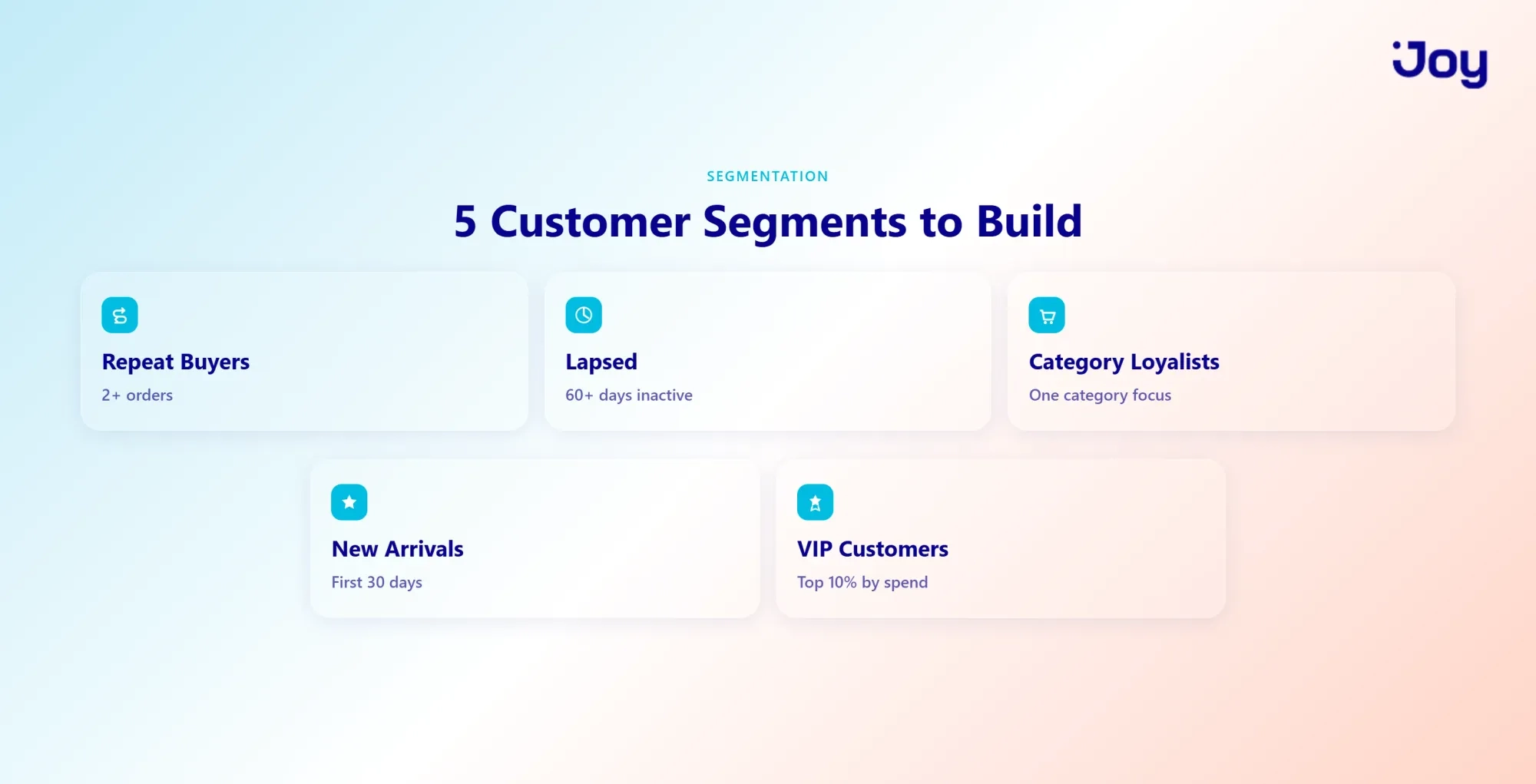
Build these five customer segments immediately
- Repeat Buyers (2+ orders): Offer exclusive member pricing and early product access. These customers already trust you, so reward that trust with perks that feel earned.
- Lapsed Customers (bought once, no return in 60+ days): Send "we miss you" campaigns with a targeted incentive. The longer you wait, the harder they are to win back.
- Category Loyalists (repeatedly buy from one product category): Cross-sell within that category first before branching out. They've already told you what they like.
- New Arrivals (first-time buyers in their first 30 days): Focus entirely on onboarding and driving that critical second purchase.
- VIP Customers (top 10% by spend or engagement): Give them tier status, exclusive perks, and early sale access. These are the customers keeping your business alive.
For more on turning first-time buyers into loyal repeat customers, see our repeat customer strategies guide.
Assign different incentives to each segment
Not every customer responds to the same offer. Here's what actually moves the needle for each group:
- Repeat Buyers: 10 to 15% member discount, tier progression rewards
- Lapsed: One-time 20% "comeback" offer, limited to 30 days
- Category Loyalists: 5 to 10% discount on related products they haven't tried
- New Arrivals: Welcome points (100 to 200 points) plus a first discount (10%)
- VIP: First access to sales, exclusive product launches, surprise bonuses
Automate segment routing
The real power of segmentation comes from automation. Set purchase history rules so customers auto-move into segments as their behavior changes:
- Day 30 after purchase without a repeat? Move to Lapsed and trigger a recovery campaign.
- Second purchase completed? Move to Repeat Buyer and apply member pricing automatically.
Personalized experiences increase repeat purchase rate by 20 to 30% (McKinsey). That's not a small improvement. That's the difference between a customer who buys once and one who buys five times.
2. Listen to Your Customers and Act on Their Feedback
Collecting feedback isn't the hard part. Acting on it is. And the brands that close this loop? They're the ones customers stay loyal to.
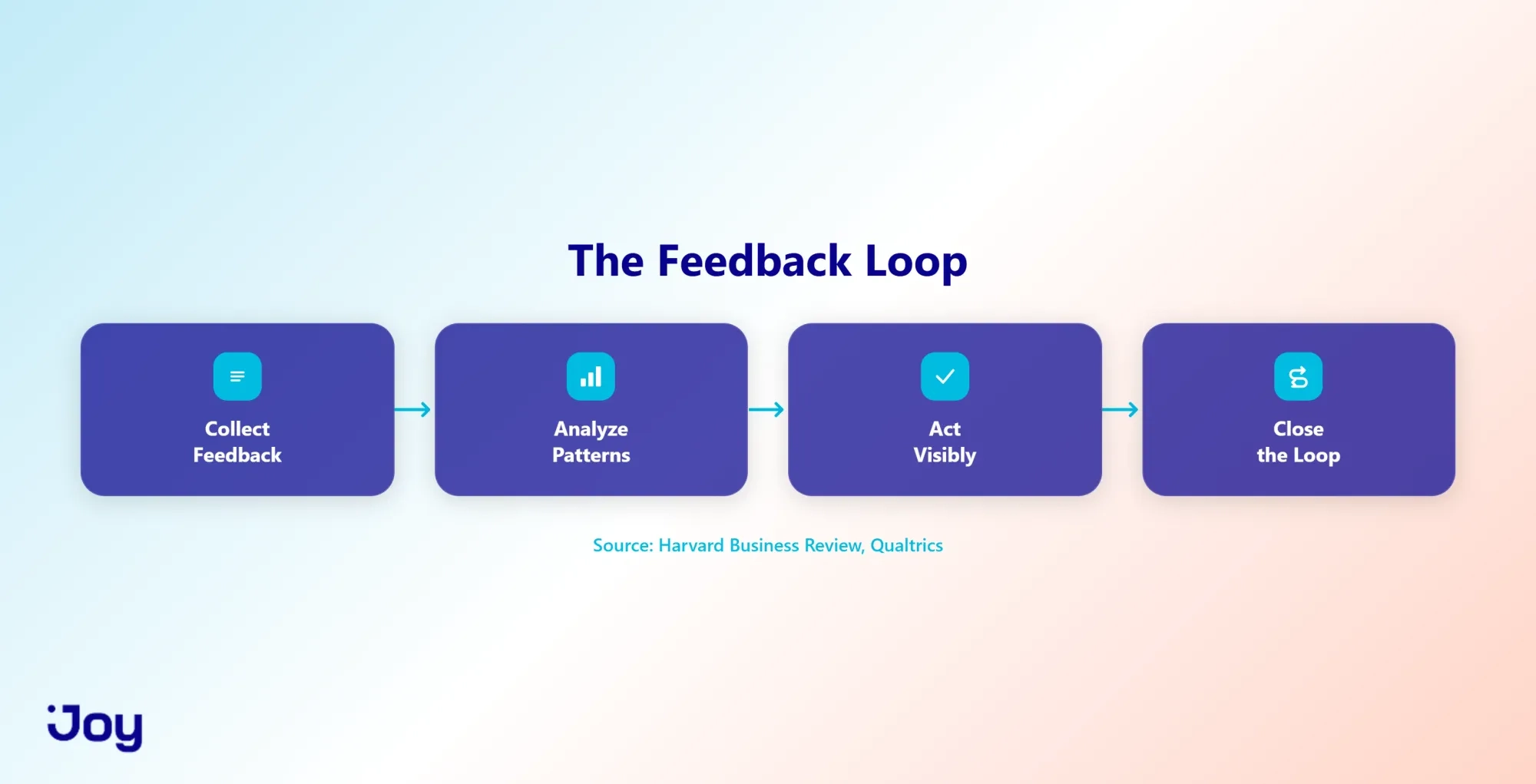
Collect feedback at every touchpoint
Set up these four feedback channels from day one:
- Post-purchase survey (Day 2 to 3): A simple "What could we improve?" paired with an NPS question. Keep it short. Two to three questions maximum.
- Product reviews: Encourage detailed feedback, not just star ratings. A written review tells you far more than a number.
- Support tickets: Every complaint is a churn signal in disguise. Track patterns, not just individual tickets.
- Email engagement data: Opens and clicks reveal which messaging resonates and which falls flat.
Analyze patterns weekly
Individual feedback is useful. Patterns are powerful. Look for these:
- Repeated complaints: "sizing runs small," "slow shipping," "confusing returns process." If three customers mention it, thirty more thought it.
- Segment-specific issues: VIP customers complain about different things than new buyers. Analyze feedback by segment, not just in aggregate.
- At-risk signals: negative feedback combined with 30+ days of inactivity. That's a customer about to walk. Trigger a recovery campaign before they do.
Act visibly and close the loop
This is where most brands fail. They collect feedback, file it away, and never tell the customer what happened next.
Do the opposite:
- Respond publicly: "We heard you. We fixed X."
- Update product descriptions based on real feedback (for example, "customers asked for sizing guidance, so we added a fit chart").
- Tell customers you acted: "50 customers asked for size XL. We now offer it. Thank you."
- Offer bonus points to customers whose feedback led to a change.
Customers who provide feedback are two times more likely to become repeat buyers (Harvard Business Review). And 92% of customers trust a brand more when it visibly collects and acts on feedback (Qualtrics).
The feedback loop isn't optional. It's the intelligence system that makes every other strategy smarter.
3. Use Loyalty Mechanics to Keep Customers Coming Back
Customers with active loyalty memberships are significantly less likely to switch brands. But the key isn't just having a program. It's using the right mechanics to make leaving feel costly.
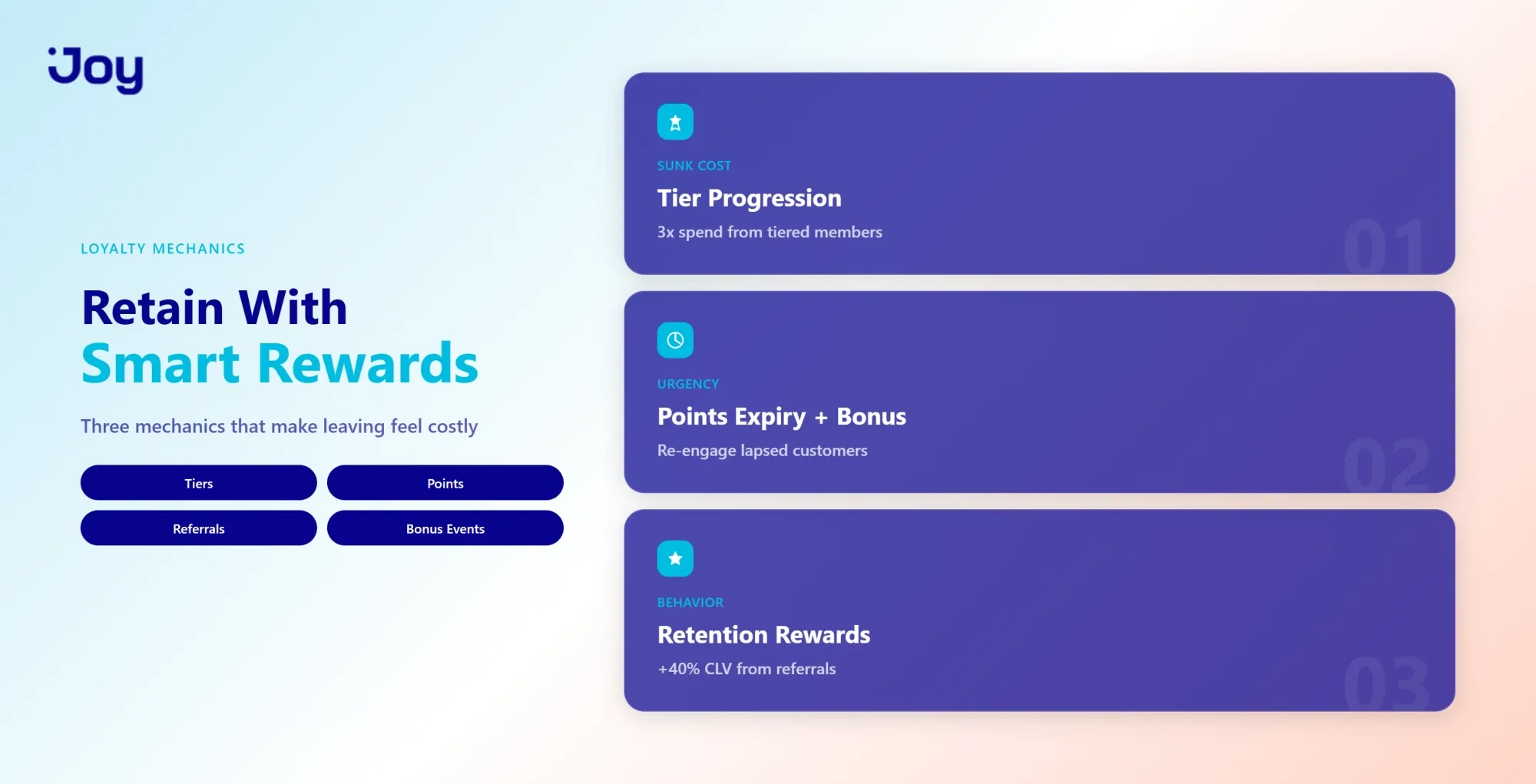
Create sunk cost through tier progression
Tiered programs (Bronze, Silver, Gold) make customers reluctant to leave because they've already invested effort to reach their status. That psychological investment creates a retention barrier that discounts alone can't match.
Display tier status visibly: "You're Silver, 200 points from Gold." That forward momentum keeps customers buying. Not because of a discount, but because they don't want to lose what they've already earned.
Customers in tiered loyalty programs spend three times more than basic program members (Forrester). The retention power isn't the discounts. It's the progression.
Use points expiry and bonus events to re-engage
Points that expire in 90 days create urgency to return: "Use your 350 points before they expire Dec 31." This pulls customers back without resorting to a blanket discount.
And periodic bonus events are powerful reactivation tools:
- "Double points for 48 hours" pulls lapsed customers back for a quick purchase.
- "Spend $100, get 100 bonus points" drives repeat orders from existing customers, not just new spend.
Reward the behaviors that signal retention
Not all customer actions are equal. Focus your point structure on the behaviors that actually predict long-term retention:
- Repeat purchases: 1 point per dollar. The baseline that keeps the flywheel spinning.
- Referrals: 50 to 100 bonus points. Retained customers who refer others stay even longer themselves. Referral rewards increase customer lifetime value by up to 40% (Nielsen).
- Reviews: 25 to 50 points. Customers who write reviews develop ownership bias toward your brand.
Make redemption frictionless
Points should auto-apply as a discount at checkout, with no separate "redeem" button required. And show the total redemption value prominently: "You've earned $47 in loyalty rewards." That number reminds customers exactly what they'd lose by leaving.
For a step-by-step setup guide, see our article on how to create a loyalty program. And if you're new to the concept entirely, start with what is a loyalty program.
Joy lets you configure these retention mechanics from one dashboard: tier progression, points expiry rules, bonus campaigns, and referral rewards. You can track which mechanics drive the most repeat purchases without jumping between tools.
4. Build Trust Through Superior Support
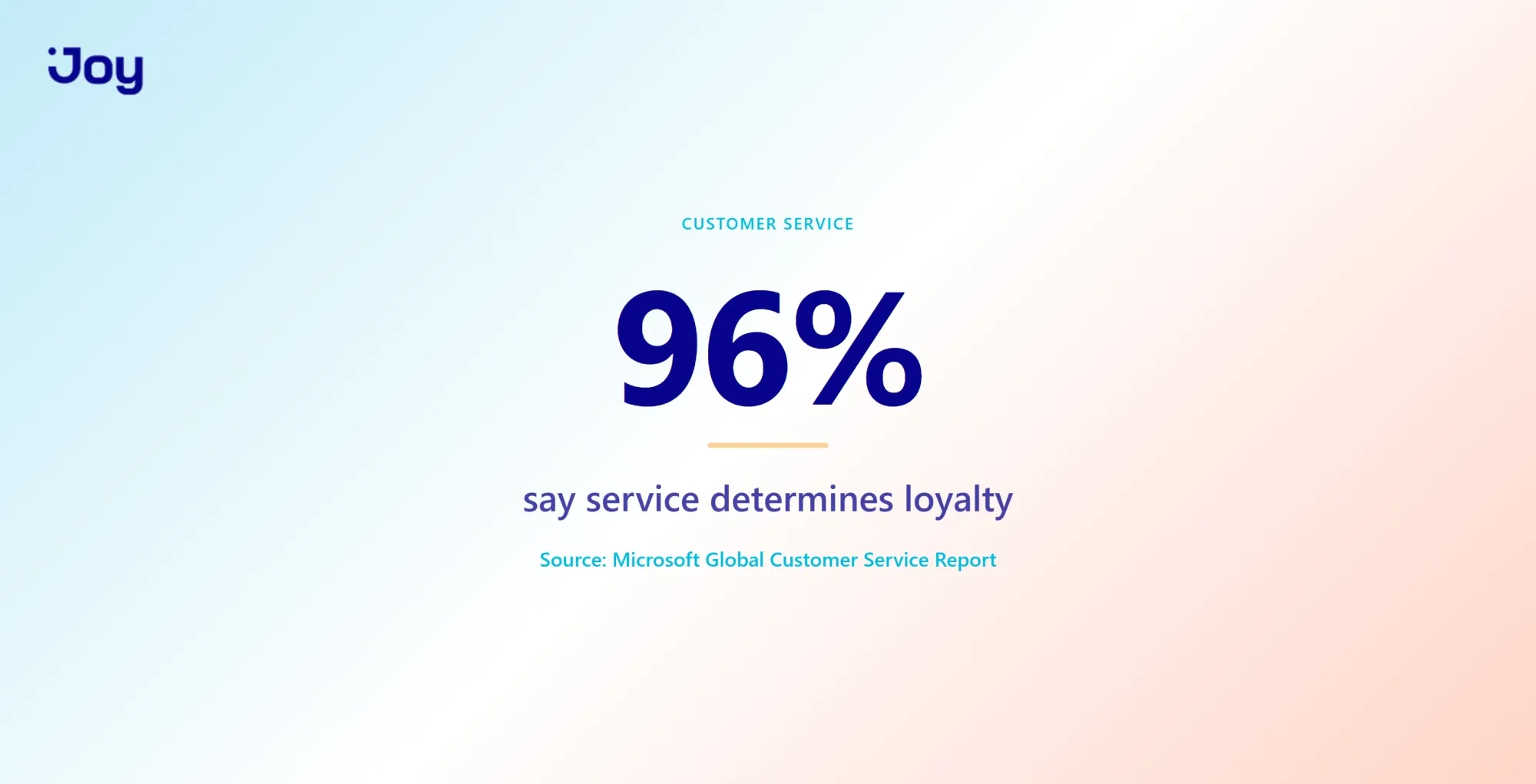
Ninety-six percent of customers say customer service determines their brand loyalty (Microsoft). That single stat should change how you think about support entirely. It's not a cost center. It's a retention engine.
Set a 24-hour response time target
Customers waiting three or more days feel ignored. Speed signals respect. Assign support staff to shifts so no ticket sits for more than 24 hours, even on weekends.
Empower support to solve problems without escalation
Train staff to offer refunds, discounts, or replacements without needing approval. Autonomy builds trust on both sides of the conversation.
Set clear thresholds: support can issue up to $100 refunds without escalation. A frustrated customer who receives an immediate resolution often becomes a repeat buyer. But a frustrated customer who's told, "Let me check with my manager"? Often becomes a lost one.
Reach out proactively to at-risk customers
Don't wait for complaints. Anticipate them:
- Damaged shipment? Reach out before the customer complains: replacement plus 15% off next order.
- Bad support experience? Follow up with a loyalty bonus as an acknowledgment.
- 60+ days inactive? Send a "How can we help?" message, not a discount code.
Customers who receive exceptional support spend 23% more over their lifetime (Zendesk). One great experience can save a relationship. One bad experience can end it permanently.
5. Build Community Around Your Brand
Community creates emotional switching costs. Customers who build relationships with other customers through your brand don't just lose a product when they leave. They lose a group. And that's a retention barrier no discount can replicate.
Brand communities increase customer retention by up to 37% (Harvard Business Review). Even a simple Facebook group or loyalty member forum for your top customers creates peer bonds that make switching brands feel like a social loss. Not just a shopping decision.
Start small: invite your VIP tier customers into an exclusive group. Let them connect with each other first. The community grows from there.
6. Nail Onboarding in the First 30 Days
Customers who engage with onboarding in the first 30 days have two times higher repeat purchase rates (Klaviyo). That makes onboarding the single highest-leverage window in the entire customer lifecycle.
So what does a high-performing onboarding sequence actually look like?
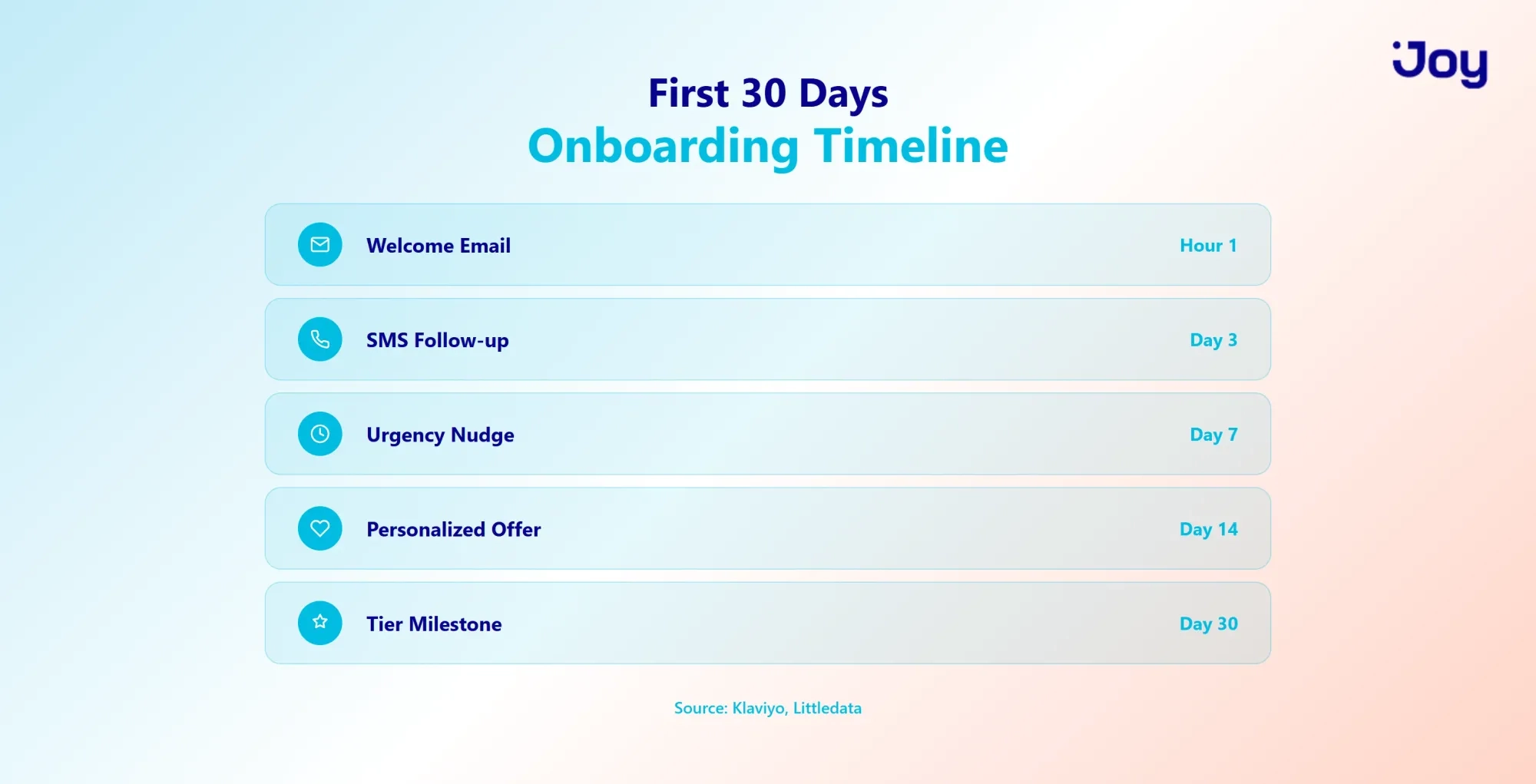
Hour 1: Welcome email
Send within one hour of the first purchase. Subject: "Welcome! Here's your 100 bonus loyalty points."
Keep the body short. Explain what membership means: earn points, get discounts, unlock VIP access. Timing matters because delaying to Day 2 drops engagement by 40%.
Day 3: SMS follow-up
"You have 100 points. Use them on your next order. [Link]"
SMS gets a 98% open rate versus email's 20 to 25%. Your highest-reach channel for early engagement, full stop.
Day 7: Urgency nudge
"100 bonus points expire in 7 days. Use them now!"
This pushes the second purchase before time decay kills engagement. The window between Day 5 and Day 10 is critical.
Day 14: Personalized incentive
If they bought a sweater: "Customers who bought this also loved our cardigans. 20% off, members only."
Personalization at this stage is crucial. Generic offers bounce off because the customer hasn't built enough connection yet. But a recommendation based on their actual purchase? That feels like you're paying attention.
Day 30: Tier milestone
"You're one purchase away from Silver tier. Silver means free shipping on every order."
Progress visibility creates forward momentum. A welcome sequence with a bonus incentive increases second-purchase rate by 34% (Littledata).
The first 30 days determine whether a customer buys again. Make that decision easy.
The Complete Playbook: How All Strategies Work Together (Day 0 to 60)
Here's what a complete retention system looks like in action. One customer. All strategies work together. Automated.
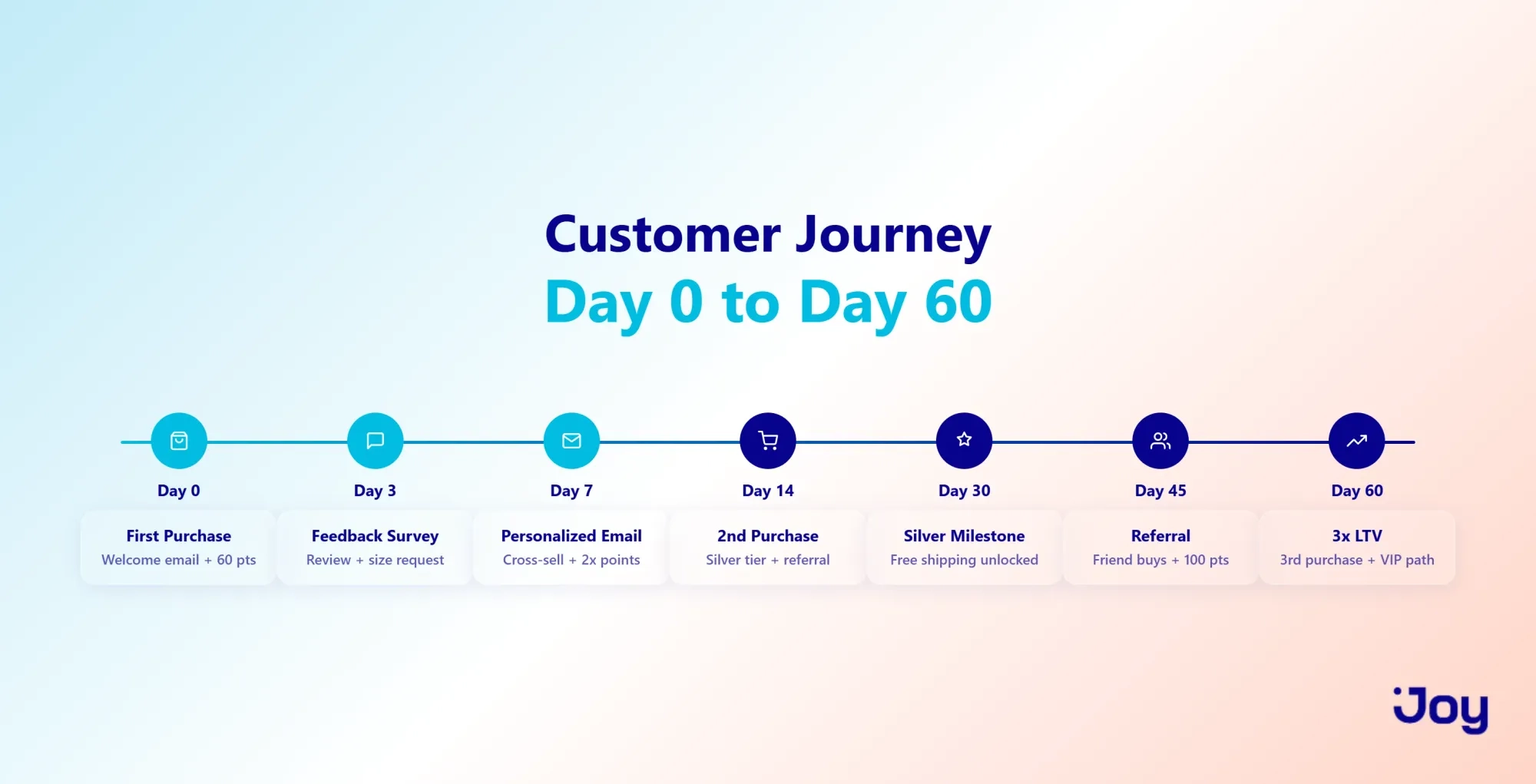
Day 0 (First Purchase): A customer buys a blue sweater for $60. The onboarding welcome email triggers automatically. Sixty points are awarded to their new loyalty account.
Day 3: A post-purchase feedback survey arrives. The customer leaves a five-star review and mentions, "wish it came in size XL." You flag this feedback and note the size gap.
Day 7: A personalized email lands in their inbox. "Customers who bought your sweater also loved our cardigans. See our XL selection. Members get 15% off." Meanwhile, a double points event kicks off for 48 hours.
Day 14: The customer purchases a cardigan for $80. Second order, done. A referral invite goes out: "Share the love, get 100 bonus points." Their tier status updates to Silver (500 points reached).
Day 30: The Silver tier milestone message arrives. "You're Silver now! Free shipping, early sale access, and VIP support unlocked."
Day 45: The customer refers a friend who completes a purchase. The referrer receives 100 bonus points and moves closer to the Gold tier.
Day 60: As a Silver member, the customer gets 48-hour early sale access. They purchase again at their member discount. Their lifetime value is now three times the first-order value. All in 60 days.
What makes this work:
- Each strategy triggers the next: feedback leads to personalization, which leads to a purchase, which triggers a reward, which generates a referral.
- The customer feels understood and valued. Not manipulated.
- After initial setup, the system runs on automation. No manual intervention required.
- One customer generated 3+ purchases plus one referral in 60 days.
This entire journey runs automatically on Joy. Set up your loyalty rules, point structures, and tier thresholds once, and Joy handles every touchpoint, every reward, every tier upgrade. Points program, referral program, VIP tiers, and 30+ integrations (Klaviyo, Judge.me, Gorgias) work together from one platform.
Avoid These 6 Mistakes That Kill Customer Loyalty
Even a well-designed retention system can fail if you make these errors. Six common traps, and how to fix each one.
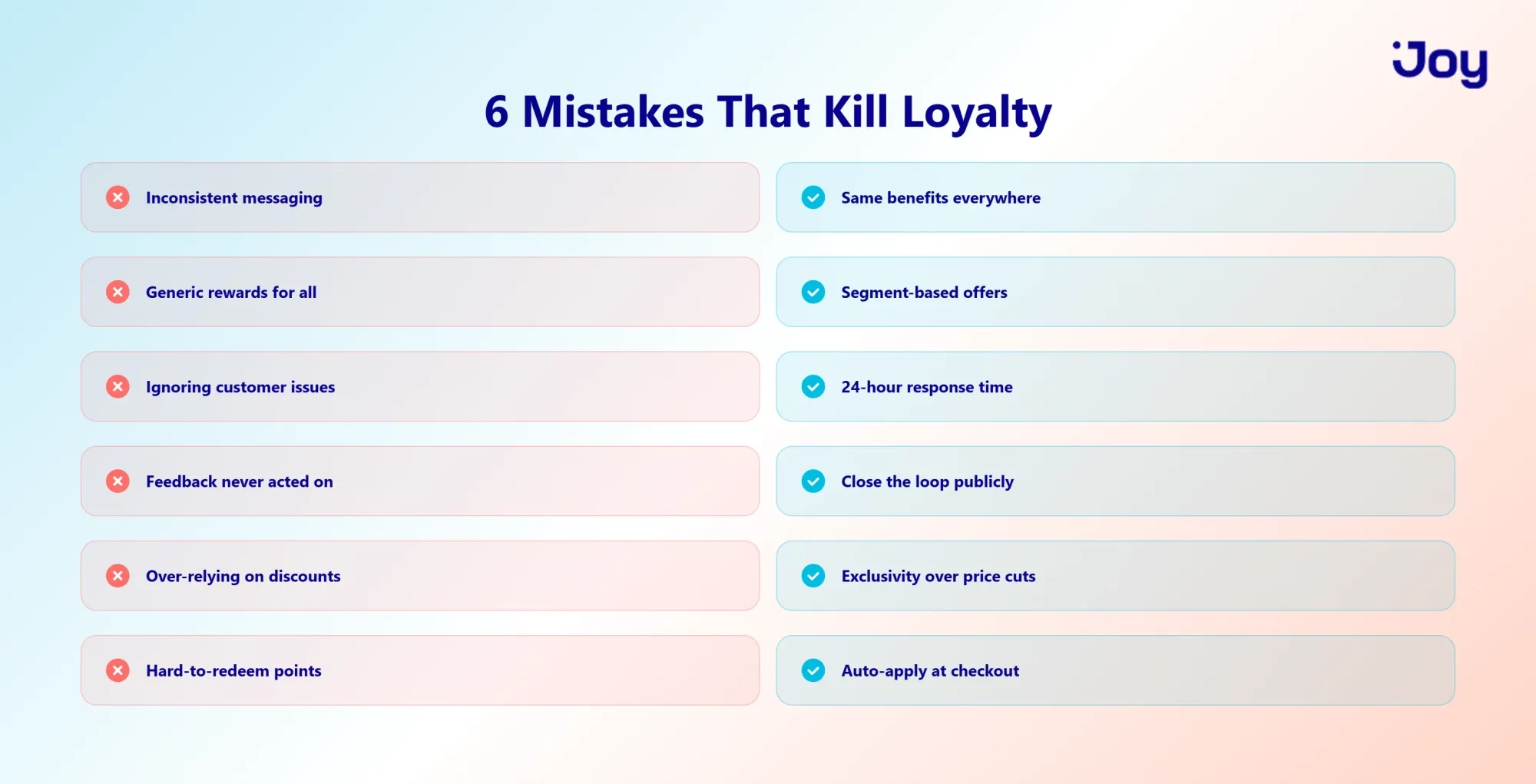
1. Inconsistent messaging across channels
The mistake: VIP treatment in the email, but ignored on your website. The fix: same tier benefits, same offers, everywhere. Consistency builds trust. Inconsistency destroys it.
2. Generic rewards (same offer for everyone)
The mistake: 10% off for everyone. Nobody feels special. The fix: segment first. VIPs get 15%, new customers get 10%. Personalization applies to rewards, too.
3. Ignoring customer issues
The mistake: a customer reports a problem in Week 1 and still hasn't heard back by Week 2. The fix: 24-hour response minimum. Even if you're still investigating, acknowledge the issue immediately.
4. Collecting feedback but never acting
The mistake: surveys go to a spreadsheet, and nothing changes. The fix: close the loop publicly. "50 customers asked for XL. We now offer it."
5. Over-relying on discounts
The mistake: training customers to only buy during sales. The fix: use exclusivity and early access more than price cuts. Status and access are more powerful than percentages.
6. Hard-to-redeem loyalty points
The mistake: confusing the redemption process. Customers give up and forget about the program entirely. The fix: auto-apply points at checkout. Show the value clearly: "You have $12 in rewards. Applied automatically."
Each of these mistakes is fixable. But you'll only catch them if you're measuring the right things.
7. Measure and Optimize Your Retention
You can't improve what you don't measure. Three metrics every brand should track:
Customer Retention Rate (CRR): (Customers at end minus new customers) divided by customers at start, multiplied by 100. The average ecommerce retention rate is around 31% (Shopify). If you're above that, you're ahead. If you're below, the strategies in this guide will close the gap.
Customer Lifetime Value (CLV): Average order value multiplied by purchase frequency, multiplied by customer lifespan. This shows the long-term revenue impact of your retention improvements and helps justify investment in loyalty programs.
Churn Rate: The percentage of customers who stop buying in a given period. If your annual churn exceeds 70%, your retention strategies need immediate attention.
Measure monthly. Compare before and after implementing each strategy. Even small CRR improvements of 5% compound into significant profit gains over time.
For a deeper dive into loyalty measurement, see our guide on customer loyalty analytics.
Build Your Retention System Today
Retaining customer loyalty isn't about finding one perfect tactic. It's a system: Personalize, Listen, Reward, Support, Build Community, Onboard, and Measure. Each piece reinforces the others.
Start with one strategy. Master it. Then add another. You don't need perfect execution. You need consistent execution.
The brands that retain their best customers aren't doing anything magical. They're doing the basics well, over and over, with a system that runs even when they're not watching.
Ready to see how points, VIP tiers, and referral programs work together to keep your customers coming back? Start a free trial of Joy and build your retention system today.
Frequently Asked Questions
What is the difference between customer retention and customer loyalty?
Retention is behavioral. Loyalty is emotional. Retention means customers continue buying. Loyalty means they choose you over alternatives, even when competitors offer similar products. The best strategies build both simultaneously.
How long does it take to build customer loyalty?
Most brands see measurable retention improvements within 30 to 60 days of implementing a structured loyalty program. True emotional loyalty, though, takes six to twelve months of consistent, positive experiences.
What is a good customer retention rate for ecommerce?
Around 31% is average. Top-performing brands achieve 40 to 60%. Even small improvements of 5% can increase profits by 25 to 95%, which makes retention one of the highest-ROI investments you can make.
How do loyalty programs help retain customers?
They give customers tangible reasons to return: points, discounts, tier perks, and exclusive access. Tiered programs are especially effective because they create progression. Customers want to reach the next level, and that forward momentum keeps them coming back.
What causes customers to lose loyalty?
Poor customer service tops the list (96% say it determines loyalty). After that: inconsistent experiences across channels, ignored feedback, confusing reward redemption, and over-reliance on discounts instead of genuine value.
How do you measure customer loyalty?
Track retention rate (CRR), customer lifetime value (CLV), repeat purchase rate, Net Promoter Score (NPS), and referral rate. Together, these metrics reveal whether customers are staying, spending more, and recommending you to others.
Can small businesses build customer loyalty without a big budget?
Yes. Start with one strategy: a simple points program or a personalized email sequence. Consistency matters more than budget. The brands that win at retention aren't always the ones spending the most. They're the ones showing up reliably.
What role does personalization play in customer retention?
It increases repeat purchase rate by 20 to 30% (McKinsey). Segment customers by behavior and match your offers accordingly. Generic discounts don't change buying behavior. Targeted ones do.
How often should you communicate with existing customers?
Weekly or bi-weekly for email. SMS only for high-impact messages: welcome sequences, expiring rewards, and tier milestones. Over-communication drives unsubscribes. Under-communication leads to being forgotten. Find the balance by watching your engagement metrics.
What is the most effective customer retention strategy?
No single strategy works alone. The most effective approach combines personalization, feedback loops, and structured loyalty programs into one system. Brands implementing a multi-strategy retention system see 25 to 40% improvement in retention within six months (Bain & Company).

Written by
Thomas Nguyen is the CEO & Co-founder of Joy, a loyalty solution for Shopify and eCommerce brands. With years of experience building high-performance Shopify apps, Thomas aims to help merchants grow through customizable and retention-focused tools.
Related reading
 Loyalty Strategy
Advantages of Customer Loyalty: 7 Data-Backed Benefits for Ecommerce Growth
Customer loyalty isn't a feeling — it's a financial asset that compounds. A 5% retention bump drives 25–95% more profit; emotionally connected customers deliver 306% higher LTV. This guide covers all 7 data-backed advantages and the 3 mistakes that kill programs before the compounding kicks in.
 Thomas Nguyen
 Loyalty Strategy
Customer Acquisition vs Retention: Where to Put Your Next Dollar
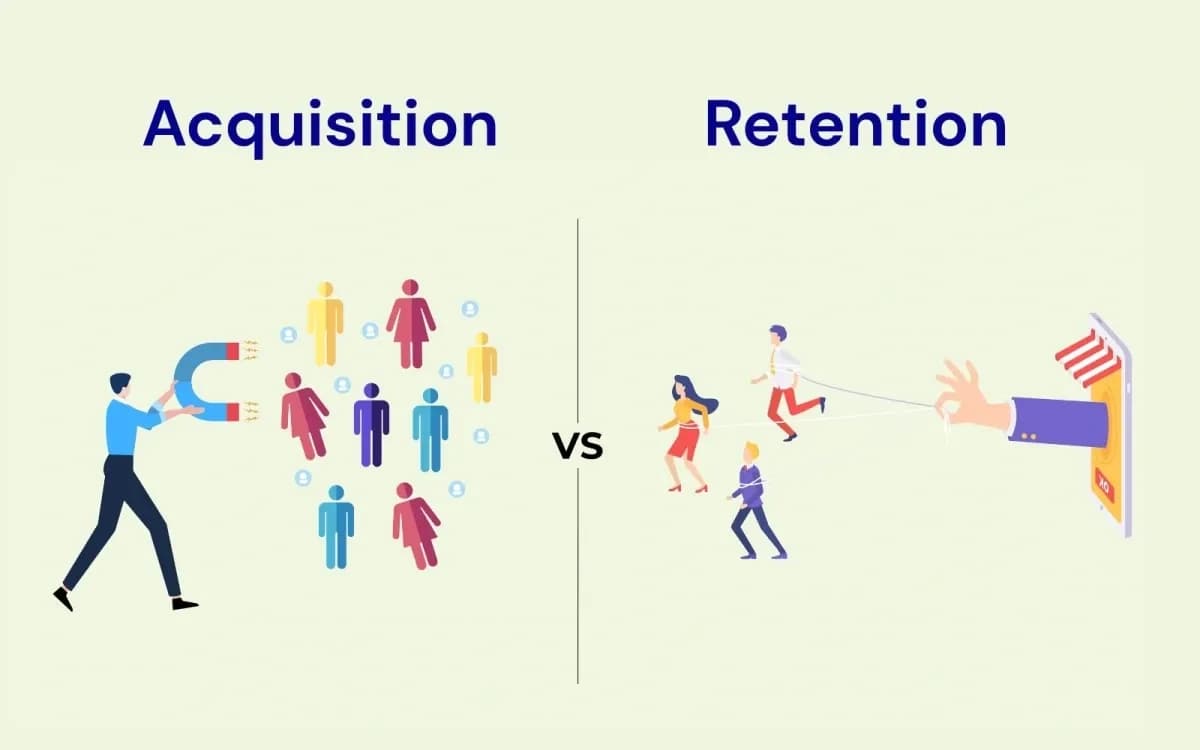
Customer acquisition and retention aren't a contest. Here's what each really costs, when to prioritize which, and a simple LTV:CAC way to decide your split.
Thomas Nguyen Loyalty Strategy
The Customer Loyalty Loop: Why Retention Beats Acquisition
More than half of loyalty memberships sit inactive — the fix isn't a better funnel, it's a loop. Here's the 4-stage customer loyalty loop framework, where most Shopify programs break down, and how to diagnose which stage yours is missing.
Thomas Nguyen Loyalty Strategy
Customer retention benchmarks for ecommerce: What's a good rate?
A clear-eyed look at ecommerce retention benchmarks: the one number worth trusting, why most by-industry tables mislead, and how to benchmark against yourself.
Thomas Nguyen Loyalty Strategy
Ecommerce Customer Retention: Everything You Need To Know & 8 Strategies To Boost It
Customer retention in ecommerce is a business's ability to encourage existing customers to continue purchasing over time. You can boost ecommerce customer retention by offering excellent customer support, personalizing the customer experience, implementing a loyalty program, etc
Thomas Nguyen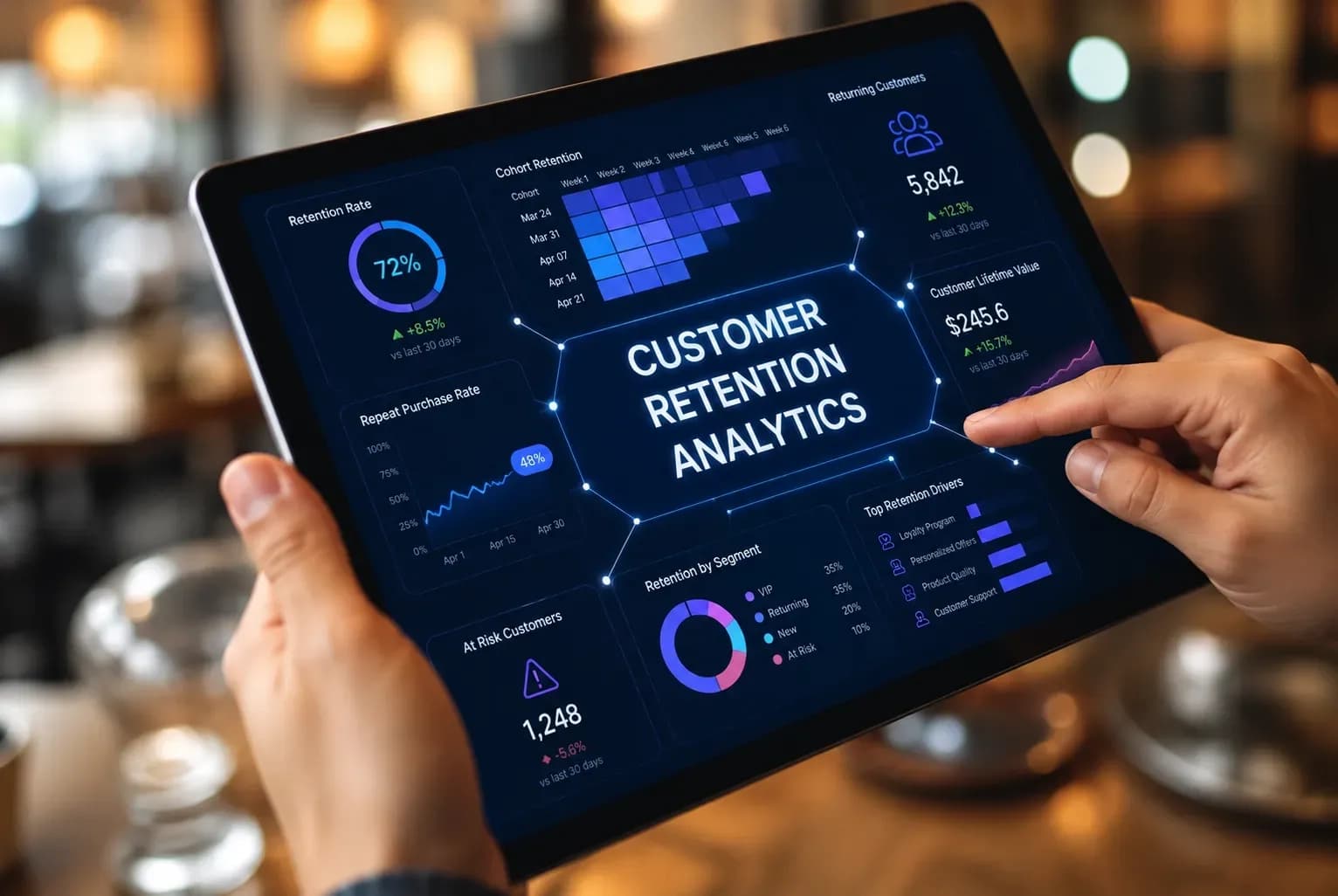 Loyalty Strategy
Customer Retention Analytics: Turn Your Data Into Retention Action
Most retention guides stop at the numbers. This one shows how to read your retention data and turn each metric into a concrete loyalty play for your Shopify store.
Thomas Nguyen