
Mall Loyalty Program: 7 Best Examples + How to Build Your Own
How 7 malls from Dubai to Hong Kong to Europe built loyalty programs that work. Plus a 6-step playbook for operators.

Summarize this post with AI
If you run a mall, you likely know your tenants better than your shoppers. Ask who your top visitors are, how often they return, or what they buy across stores, and most malls are still piecing together the answers.
That is what a loyalty program changes. It does not just reward purchases. It connects them. A shopper who buys shoes on one floor and coffee on another stops looking like two unrelated transactions and becomes one customer.
That visibility matters. Deloitte found that 72% of consumers say loyalty programs make them more likely to spend with their preferred brands, while Bain’s retention research, cited by Harvard Business Reviews, shows that even a 5% increase in retention can raise profits by 25% to 95%.
Mall loyalty programs may look enterprise-only, but the mechanics behind them, like coalition rewards, tiers, and linked payment data, are highly transferable. Later in this guide, we’ll break down what modern retail and DTC brands can take from them.
Key Takeaways
- Without a loyalty program, mall operators are blind. Tenants see every sale. Operators see nothing: no name, no spend history, no visit pattern.
- Zero friction drives participation. Westfield's card-linking model reaches 55% shopper participation. Receipt scanning, the cheapest alternative, barely clears 20% in most programs.
- Scarcity outperforms status. ION Orchard's invite-only top tier, capped at exactly 100 members, creates more aspiration than any open-ended Platinum tier can.
- VIA Outlets Fashion Club members show up to 70% higher average transaction value than non-members across 11 centres and 9 countries.
- Most mall programs fail before year two. The ones that survive share three traits: tenant buy-in from day one, frictionless earning, and rewards shoppers can understand immediately.
I. 7 Best Mall Loyalty Programs (and What to Steal from Each)
The seven programs below do not all solve the same problem first.
Some win on the reward itself: travel miles, cash back, exclusive perks. Others win on the mechanic: less friction, easier redemption, stronger cross-property reach. A few stand out because of the data layer behind the experience.
That difference matters.
A loyalty program works best when it is built around the bottleneck it is actually trying to solve. Before you look at the examples, use this quick reference to see what each program does well and what you can borrow from it.
| Program | Model | Earn Mechanism | Scale | Best For | Key Limitation |
|---|---|---|---|---|---|
| Dubai Mall Rewards | Partner ecosystem | Receipt scan → airline miles | 1 property, tourist-driven | Travel-heavy markets | Requires airline/travel partner |
| Westfield Plus | Coalition + offers | Card linking (zero friction) | Multi-property, US/UK/AU | High-participation goals | Dependent on corporate strategy |
| The Point by SHKP | Multi-property coalition | Electronic payment, 1pt/HK$1 | 27 malls, 900K+ members | Portfolio operators | Doesn't scale to single properties |
| ION+ Rewards | Tiered + scarcity | Spend-based, invite-only top tier | 1 luxury property | Luxury positioning | App quality issues |
| VIA Fashion Club | Cross-border coalition | Spend credits (up to 5%) | 11 centres, 9 countries | Outlet/travel shoppers | Separate sign-up at some centres |
| Shukran Rewards | Instant cashback | Points → cash, no minimum wait | Multi-brand group (UAE/GCC) | Frequent shoppers | Requires owning the brands |
| Caruso Signature | Lifestyle ecosystem | Retail + hospitality + residential | Portfolio (US) | Mixed-use properties | Needs diversified portfolio |
1. Dubai Mall Rewards Program (Dubai, UAE)
Dubai Mall partnered with Emirates Skywards to launch a loyalty program that lets shoppers earn airline miles instead of mall points. Scan any receipt worth AED 100+ through the Dubai Mall app, and you get Skywards Miles you can spend on flights, hotel upgrades, and travel perks.
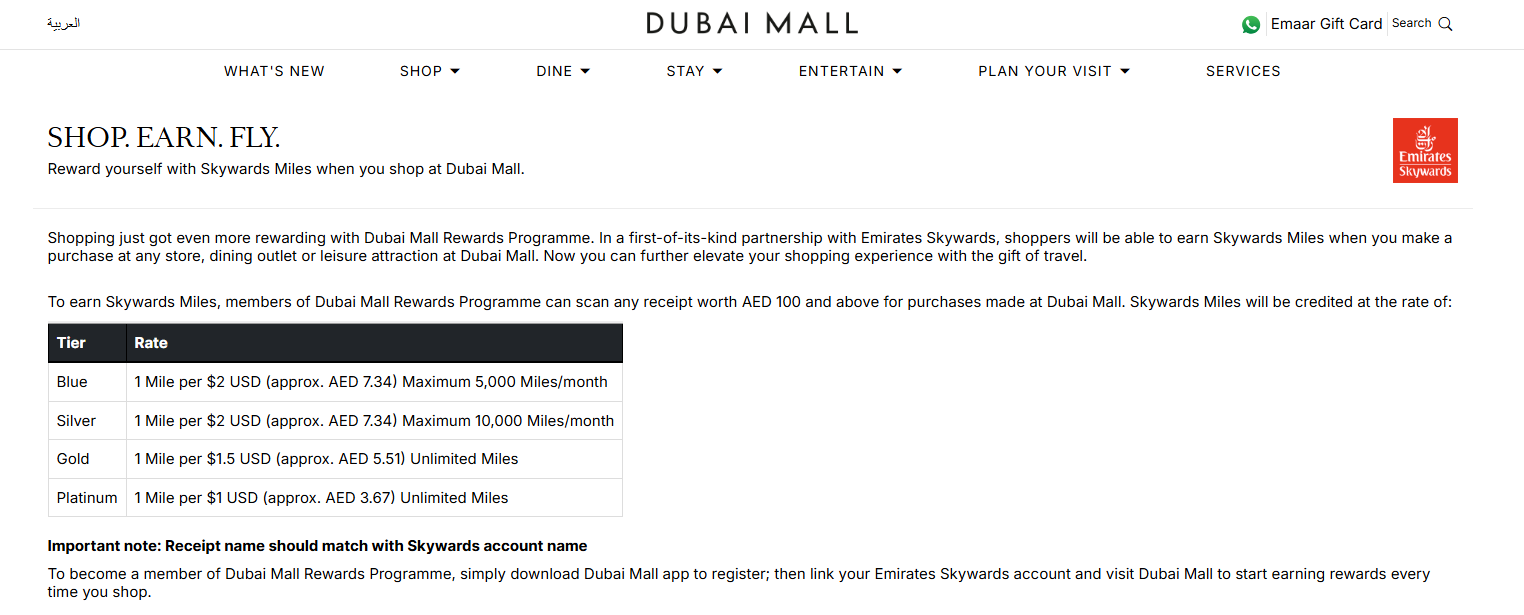
What makes it stand out: The rewards go far beyond the mall. Dubai is a tourist-driven market, and tying loyalty to an airline means a shopper who earns miles today has a reason to come back on their next trip. The reward feels bigger because it connects to something people already care about: travel.
The catch: This model depends on having a strong travel or airline partner, which most malls don't have. It works in Dubai because 95% of tourists visit the mall. In a suburban shopping center, the same approach would fall flat.
2. Westfield Plus (US, UK, Australia)
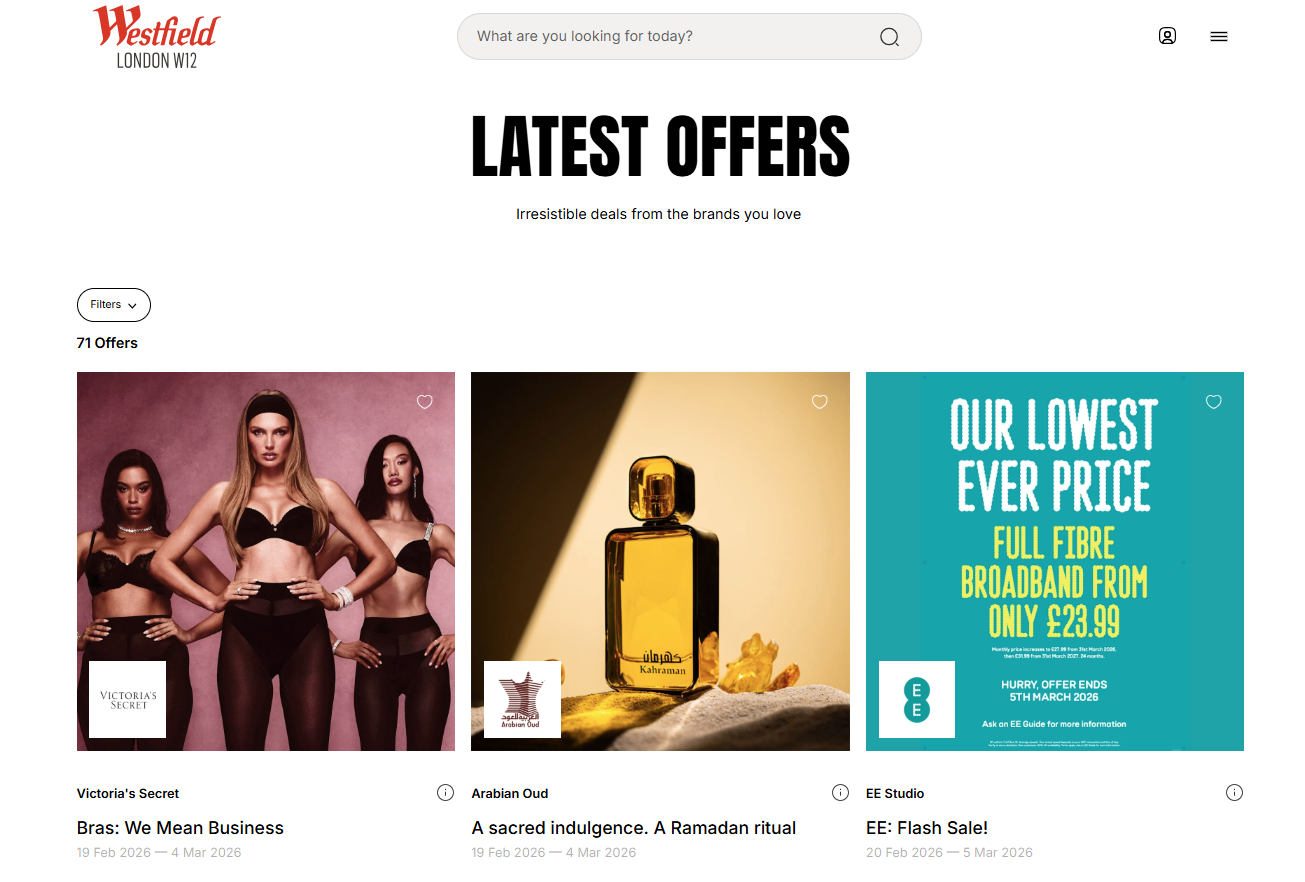
Westfield's bet is friction removal. In the US version, shoppers link their credit cards directly to the program. Every purchase earns points automatically. No scanning, no codes, no extra steps.
The app handles parking too: reserve a spot, get automatic entry via license plate. Around 55% of Westfield shoppers participate, and 45% use the parking and wayfinding features.
Then there are the offers. Westfield curates rotating deals across dining, fashion, and entertainment: 50% off at restaurants, kids-eat-free promotions, seasonal sales at brands like Ted Baker. Not niche perks. Everyday deals people actually use.
What makes it stand out: Invisible earning plus a deal catalog that covers what shoppers spend on most. That combination drives participation.
The catch: Westfield scaled back features after selling its US portfolio. Program longevity depends on corporate strategy, not just design.
3. The Point by SHKP (Hong Kong)
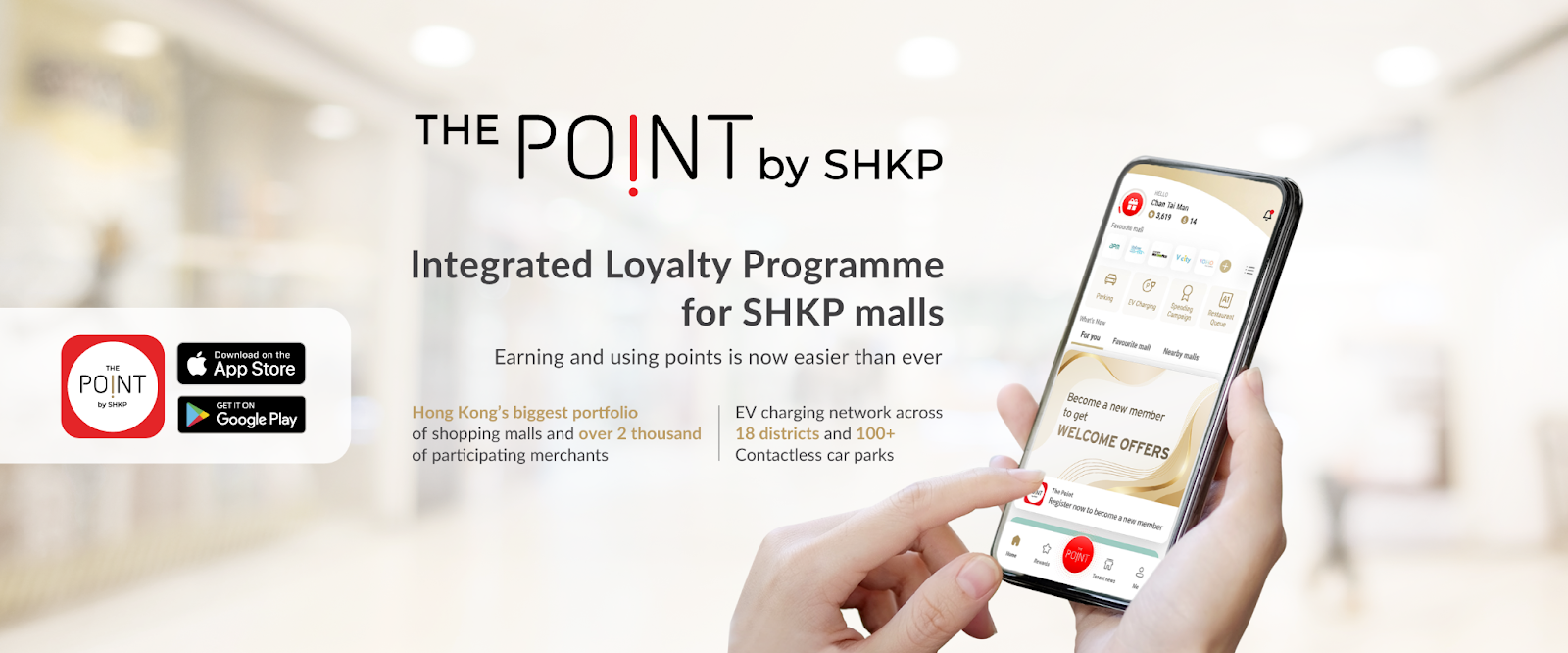
If Dubai Mall bet on travel, SHKP bet on scale. The Point covers 27 malls and over 2,600 merchants across 18 districts in Hong Kong. One currency, one app, one account.
The mechanics are simple. Members earn 1 point per HK$1 spent with an electronic payment method. Points can be converted into Point Dollars (spendable as cash) or redeemed for parking, EV charging, and merchant gifts. Joining is free, with a 500-point welcome bonus and double points during your birthday month.
The program has acquired over 900,000 members. Visit frequency, cross-mall spending, and average spending per member have all gone up since launch.
What makes it stand out: Cross-mall portability. A shopper at Mall A is also a potential visitor for Malls B through Z. That network effect is something single-property operators can't easily replicate, and it gives SHKP a data advantage no individual mall could build on its own.
The catch: This only works if you own multiple properties. Standalone mall operators can't copy the model directly, but the lesson still applies: the bigger the earning network, the stickier the program.
4. ION Orchard ION+ Rewards (Singapore)
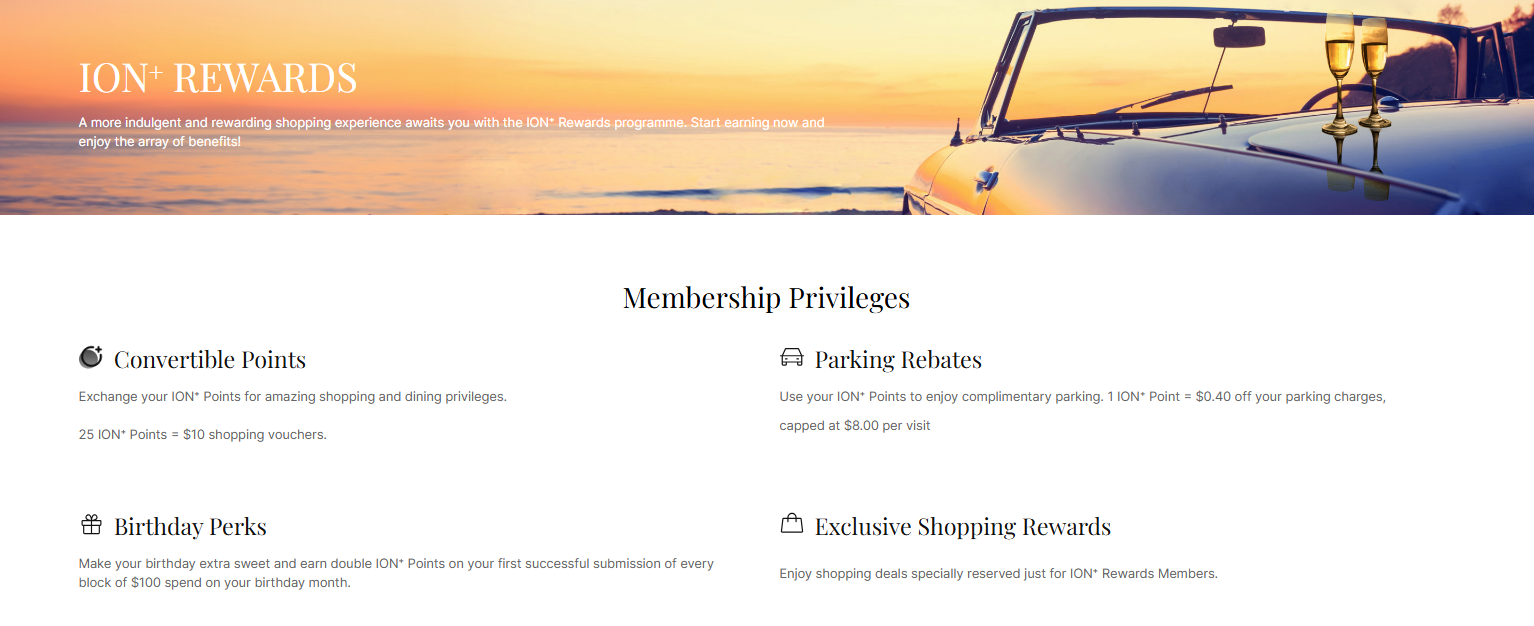
ION Orchard went app-first. Points earned for every S$100 same-day spend, double points on your birthday month, and three standard tiers.
The standout is The 100: an invite-only club capped at exactly 100 members. Benefits include unlimited access to the ION Suite and 6 hours of free parking per visit. You can't buy your way in. You have to outspend everyone else.
The app also works as a lifestyle tool. Book restaurant tables, browse deals, redeem vouchers, and get event invitations.
What makes it stand out: Scarcity as a loyalty mechanic. Capping the top tier at 100 people creates exclusivity that open-ended VIP programs can't match.
The catch: App reviews tell a different story. Rejected receipts, slow processing, and network issues frustrate members. Great program design means nothing if the tech doesn't hold up.
5. VIA Outlets Fashion Club (11 centers, 9 European countries)
VIA Outlets runs the only pan-European mall loyalty program. Shoppers earn credits worth up to 5% of their spend, usable across all 11 centers in nine countries.
The numbers are strong. Over 2.2 million members. Fashion Club members show higher average transaction values, longer dwell times, and above-average return rates.
VIA also shares customer behavior data with brand partners, giving tenants a reason to stay and expand. That data exchange helped drive record brand sales of €1.36 billion in 2023.
What makes it stand out: Cross-border portability. Join in Lisbon, earn in Prague, redeem in Oslo. For outlet shoppers who travel, that's a real hook.
The catch: Some centers still require separate account creation. And as an outlet format, the discount-first positioning may not transfer well to full-price malls.
6. Shukran Rewards by Landmark Group (UAE/GCC)
Where most loyalty programs ask you to accumulate and wait, Shukran flips the model. Earn points at any Landmark Group outlet across the UAE and GCC, and once you hit 500 points (worth AED 25), you can spend them as cash immediately. No membership fees, no renewal costs, no hoops.
What keeps members engaged beyond that first redemption is personalization. The program tracks shopping preferences and delivers discounts tailored to each shopper that don't expire. So the longer you stay, the more relevant the rewards become.
What makes it stand out: A tight earn-and-spend loop that makes the reward feel real from day one. No waiting months before your points mean anything.
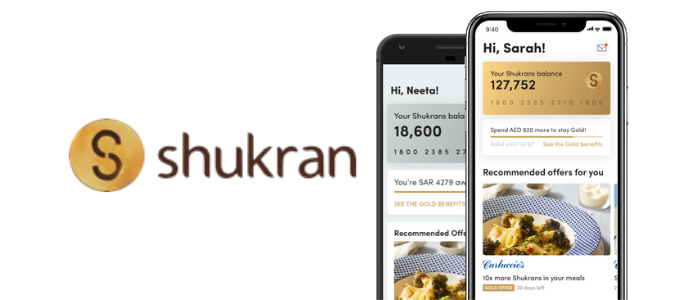
The catch: This works because Landmark Group owns the brands. Independent mall operators would need to fund the cashback themselves or negotiate it with every tenant.
7. Caruso Signature (US)
Most mall loyalty programs reward shopping. Caruso Signature rewards living. The program spans Caruso's entire portfolio of retail, hospitality, and residential properties. Dine at a Caruso restaurant, stay at a Caruso hotel, or live in a Caruso residence, and it all counts.
That matters because other US mall operators have tried loyalty programs and given up. Simon tested one at its Westchester mall in 2014. Westfield had one too. Both are gone. Caruso designed theirs to serve every constituent: shoppers, tenants, residents, and hotel guests. When the program launched, Caruso properties were already back to pre-pandemic foot traffic with increased dwell time.
What makes it stand out: It treats the mall as part of a lifestyle, not just a place to buy things. That wider net creates more earning opportunities and more reasons to stay loyal.
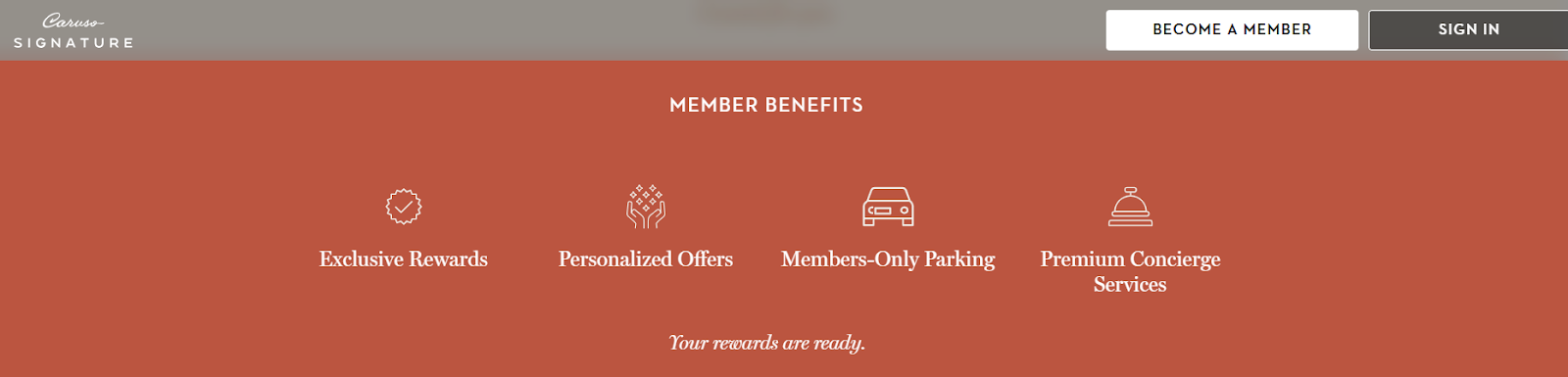
The catch: You need a diversified property portfolio to pull this off. Pure-play mall operators can't replicate the residential and hotel crossover. But the principle still holds: the more touchpoints your program covers, the stickier it gets.
II. How to Build Your Mall Loyalty Program: Step by Step
Knowing what works is one thing. Building it is another. Here's the framework, based on what the programs above actually did.
Step 1: Audit your data gaps
What do you know about your shoppers today? Visit counts? Spend per visit? Nothing? The answer shapes everything. If you're starting from zero, begin with receipt scanning. If you already have some infrastructure, consider card linking or POS integration.
Step 2: Get tenant buy-in first
This is where most mall programs die. Tenants won't participate if they don't see the value. Present the exchange clearly: shared customer data, increased foot traffic, joint promotions. Start with your 10-15 anchor tenants and build from there.
Step 3: Pick your earning model
Receipt scanning has the lowest setup cost but the highest shopper friction. Card linking sits in the middle. POS integration costs the most but creates zero friction. Match the model to your budget and your shoppers' patience.
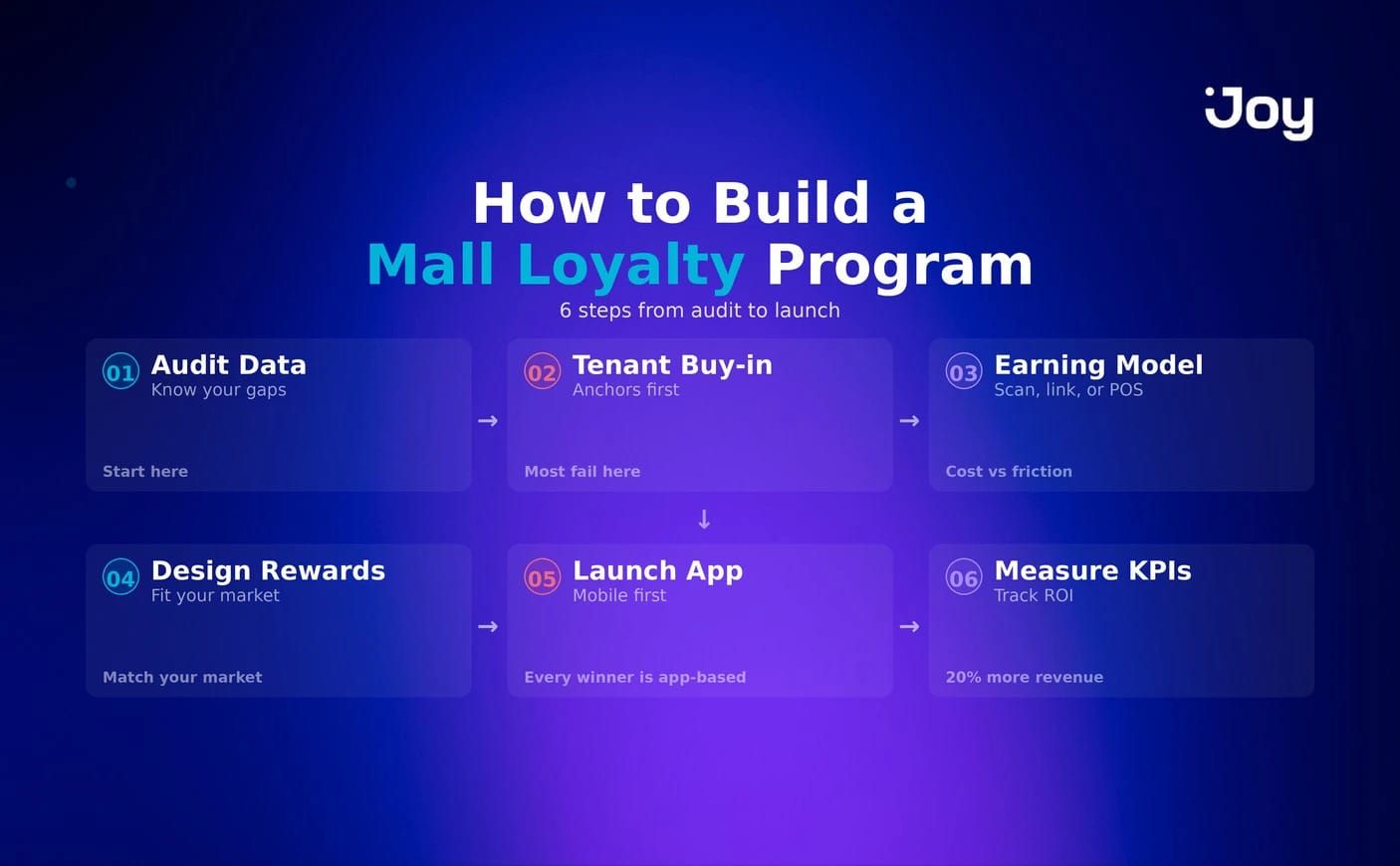
Step 4: Design rewards for your market
Tourist-heavy? Think travel partnerships like Dubai Mall. Luxury-positioned? Think exclusivity like ION's The 100. Family-oriented? Think free parking and kids' activities. Don't copy a program that serves a different audience.
Step 5: Launch with an app, not a card
The app handles points, parking, deals, events, and push notifications. It's also your primary data collection tool. Every successful program in this guide is app-based.
Step 6: Set your KPIs before launch, not after
Track visit frequency, dwell time, cross-store spending, redemption rates, and tenant participation. Record your baseline on all five metrics before the program goes live; without a pre-launch baseline, you can't prove the program is working in six months. That's the measurement mistake that kills ROI justification.
For a detailed walkthrough of setting up a loyalty program, start there. And if you're weighing the investment, understanding your customer retention cost helps frame the math.
III. 5 Common Mistakes (and How the Best Malls Avoid Them)
1. Launching without tenant participation
If shoppers earn at only 20% of stores, the program feels broken. Get anchor tenants on board before you go live. VIA Outlets launched with tenant data-sharing built into the agreement. That's why tenants actively promote Fashion Club rather than ignore it.
2. Making rewards too abstract
"Earn 500 MallBucks" means nothing. Tie points to real value: cash, miles, store credit, parking. Shoppers need to understand what they're earning and what they can do with it immediately. Shukran's AED 25 = 500 points is the clearest earn-and-spend ratio in this list.
3. Ignoring app quality
ION Orchard's program looks great on paper. Rejected receipts and network errors in the app erode trust fast. Test heavily before launch. The program design is only as good as the experience at the point of redemption.
4. Skipping post-visit follow-up
Most programs forget the shopper once they leave. Points expiry reminders, new offers, and personalized pushes keep the loop going between visits. The earn moment and the redeem moment need a bridge, and that bridge is usually a notification that the program never sends.
5. Not sharing data with tenants
Tenants who see no value won't promote your program. Share behavioral data with them. That's why VIA Outlets' tenants actively promote Fashion Club, and why SHKP's cross-mall network keeps growing: every property operator gets data they couldn't generate on their own.
All five come down to one thing: keeping customers engaged after sign-up, not just before it.
IV. The Future of Mall Loyalty: What's Next
The programs winning right now are already experimenting with what comes next.
Gamification beyond points
In-mall scavenger hunts, social media challenges, and treasure hunts that increase dwell time. ION Orchard runs food and heritage trails through its app. More malls will follow.
AI-driven personalization
Using visit data to send individualized offers based on store preferences and timing. Not "here's 10% off everything," but "your favorite coffee shop has a new menu today."
Sustainability rewards
Earning points for EV charging, returning packaging, or choosing eco-friendly options. VIA Outlets is already moving in this direction.
Experiences over discounts
Cooking classes, fitness events, and art installations exclusive to loyalty members. The shift from "spend to earn" to "belong to access" is where customer engagement is heading.
Not all of these will stick. But the malls testing now will be the ones that figure out what works.
V. Build a Loyalty Program That Brings Shoppers Back
The best mall loyalty programs share three things: low friction, real rewards, and a data loop between shoppers, tenants, and operators. The seven programs in this guide prove there's no single right model. But there is a right starting point: understand your market, get your tenants on board, and launch something your shoppers will actually use.
If you're exploring loyalty for your business, Joy Loyalty helps you set up points, tiers, and referral programs that work across online and in-store channels. Book a demo to see how it fits your operation.

Written by
Thomas Nguyen is the CEO & Co-founder of Joy, a loyalty solution for Shopify and eCommerce brands. With years of experience building high-performance Shopify apps, Thomas aims to help merchants grow through customizable and retention-focused tools.
Related reading
 Industry Spotlight
Rent Rewards Programs: The Best Loyalty Programs for the Rental Industry
Rent rewards programs can cut turnover and boost NOI, but not every program fits every property.
 Thomas Nguyen
 Industry Spotlight
CPG Loyalty Programs: How Top 8 Brands Drive Customer Retention
Discover how top CPG brands like Coca-Cola, Pampers, and Vinamilk use innovative loyalty programs to build direct customer relationships, drive repeat purchases, and stay ahead in today’s competitive FMCG market.
Thomas Nguyen Industry Spotlight
Automotive Loyalty Programs: A Comprehensive Guide to Boosting Retention and Growth
An auto loyalty program drives repeat business and offers exclusive benefits such as priority service, free oil changes, and member-only events
Thomas Nguyen Industry Spotlight
Loyalty Program for Retailers: What Top Brands Do Differently
The average consumer belongs to 17 loyalty programs but actively uses only a handful.
Thomas Nguyen Industry Spotlight
Healthcare Loyalty Programs: 8 Examples That Improve Patient Retention
Physicians lose roughly 50% of their patient database over five years. Other industries solved this with loyalty programs. Healthcare is only now catching up.
Thomas Nguyen Industry Spotlight
Pharmacy Loyalty Programs: 4 Real Examples + How to Build One
How CVS, Walgreens, Boots, and Rite Aid built pharmacy loyalty programs that work, plus a 7-step playbook for your own.
Thomas Nguyen