
Healthcare Loyalty Programs: 8 Examples That Improve Patient Retention
Physicians lose roughly 50% of their patient database over five years. Other industries solved this with loyalty programs. Healthcare is only now catching up.

Summarize this post with AI
In healthcare, a 5% increase in patient retention can boost profits by 25-95%. Most practices lose half their patient base over five years. They close that gap with reminders: appointment emails, SMS nudges, and recall campaigns. None of it builds a reason to stay.
Loyalty programs do. Not the punch-card kind. The kind that creates switching costs, generates behavioral data, and turns a passive patient into someone who books before you ask. This article examines eight real healthcare loyalty programs, each chosen because it proves a specific mechanism, and covers the compliance rules that determine whether your program is legal to run before you build anything.
If you run a DTC health or wellness brand on Shopify, these enterprise programs prove the mechanics.
Key Takeaways
- Practices lose ~50% of patients over five years. A 5% retention improvement can drive 25–95% more profit (HBR).
- Fewer than 1 in 20 healthcare practices runs a formal loyalty program. First-mover advantage is still available.
- Trust precedes loyalty. Patients are 2x more likely to switch over a poor front-desk experience than a poor clinical outcome (Accenture, 2024).
- Humana Go365 members spent $116 less per month, had 35% fewer ER visits, and 30% fewer hospitalizations than less-engaged peers.
- The Anti-Kickback Statute covers patient rewards. OIG safe harbor caps: $15/item and $75/year for Medicare/Medicaid patients. Get a compliance review before launching.
I. Types of Healthcare Loyalty Programs
Healthcare loyalty programs take different forms. Here's a quick reference before the examples:
| Type | How It Works | Best For |
|---|---|---|
| Points-based | Earn points for visits, screenings, and refills. Redeem for products or credits. | Clinics, pharmacies |
| Tiered/VIP | Higher tiers unlock priority scheduling, extended consults, and exclusive resources. | High-volume practices |
| Wellness rewards | Reward specific healthy behaviors: checkups, fitness goals, and medication adherence. | Insurers, health systems |
| Paid membership | Monthly or annual fee for perks like free delivery, discounts, and concierge access. | Pharmacies, DTC health |
| Co-branded | Partner with gyms, wellness brands, or pharmacies for cross-category rewards. | Any size practice |
Most real programs blend two or more of these. You'll see that in the examples below.
II. 8 Best Healthcare Loyalty Programs That Improve Patient Retention
Each program below proves one of the four claims from the previous section. These aren't just examples. They're evidence.
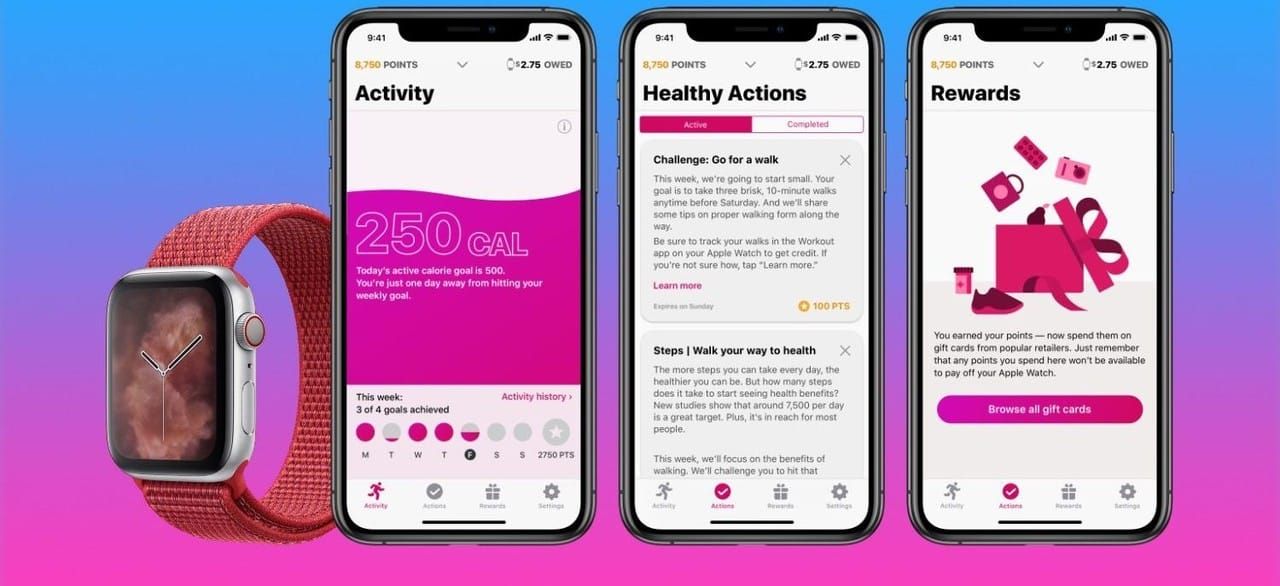
1. Aetna Health Rewards
Proves: loyalty turns passive patients into active participants
Aetna pays members $20 to $100 per completed health activity, such as screenings, annual exams, and health courses. Medicare Advantage members can earn up to $400/year. All eligible members are auto-enrolled.
The shift: An email says, "Schedule your screening." Aetna says, "Schedule your screening and earn $50." Same action. One is a nudge. The other is a choice with a reward attached.
📊 Scale: Over 1,200 provider groups. 2.4 million Medicare Advantage members. Rewards programs are active across multiple state Medicaid systems.
Apply this → Pick one preventive behavior you want more patients to do. Attach a small reward: priority scheduling, a wellness product discount, or a points bonus. Auto-enroll everyone. Remove the sign-up friction.
2. CVS ExtraCare
Proves: loyalty creates switching costs that keep patients coming back
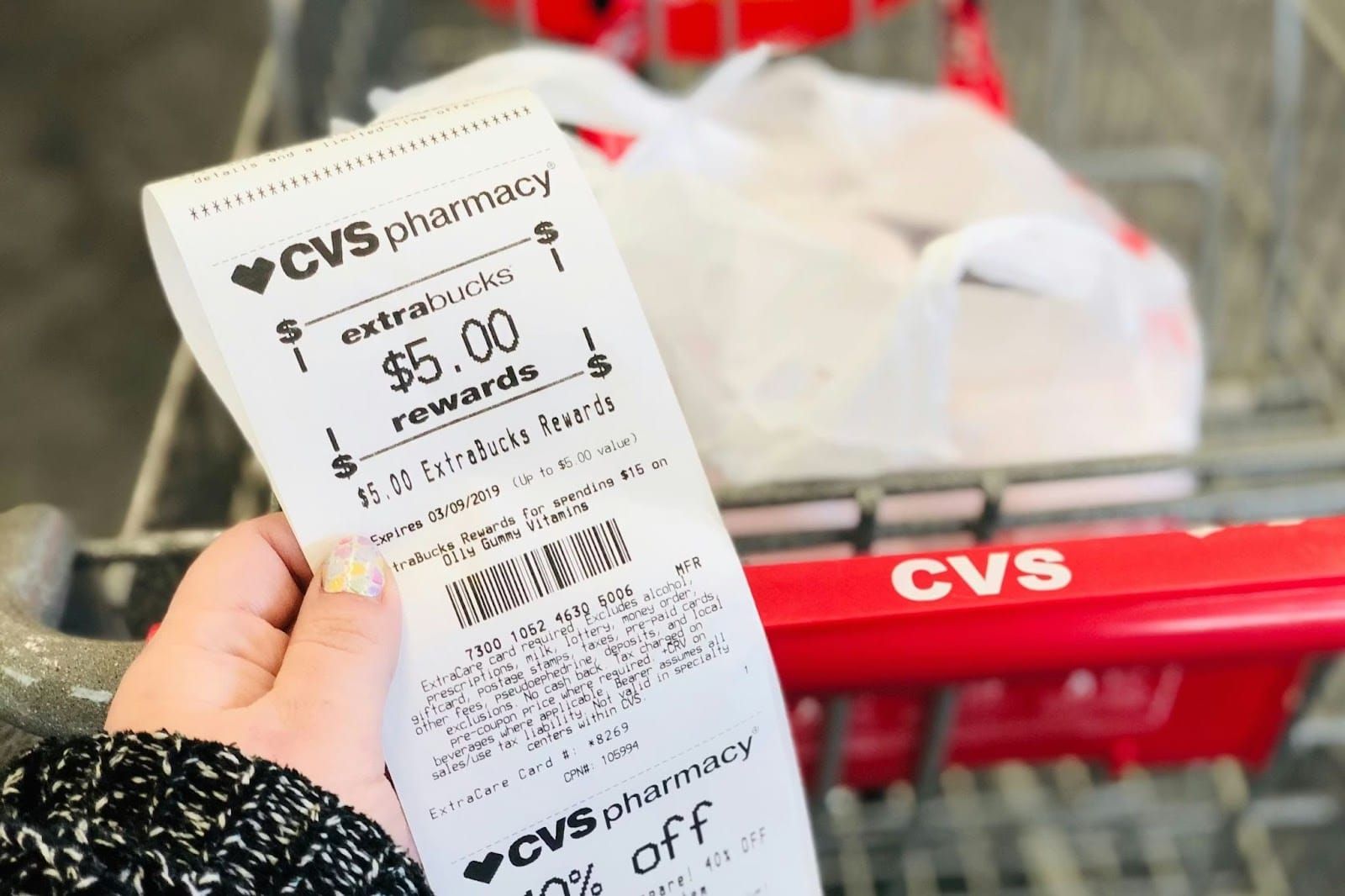
CVS runs a two-tier loyalty system. The free tier gives members personalized deals and ExtraBucks rewards. The paid tier (ExtraCare Plus, $5/month) adds a $10 monthly reward, 20% off CVS Health products, and free delivery. The free program has over 74 million members. The paid tier has more than 6.5 million.
The shift: Every purchase, every refill, every coupon builds a profile tied to CVS. Walking into a Walgreens means starting from zero. That accumulated value is the switching cost, and it's why CVS doesn't need to remind 74 million people to come back.
📊 Scale: The paid tier nets members $60-$72 in annual savings after fees. The free tier captures purchase behavior across pharmacy, wellness, and retail.
Apply this → Even a simple points-for-visits system creates accumulated value. A patient with 500 points at your practice has a reason to book with you rather than the new clinic closer to home. Start free. Add a paid tier later.
3. Kaiser Permanente Thrive
Proves: loyalty scales across every touchpoint in the patient journey
Kaiser doesn't run a traditional points program. It runs an integrated ecosystem in which every touchpoint (doctor visits, lab work, prescriptions, wellness coaching, digital tools) feeds into a single, connected patient experience.
The shift: An email reminds you about an appointment. Kaiser wraps the appointment, follow-up, prescription, and wellness coaching into one experience. The system itself is the loyalty mechanism.
📊 Scale: Largest integrated healthcare system in the U.S. The model works because every touchpoint reinforces the next.
Apply this → The more touchpoints your program covers, the harder it is to leave. If you only reward office visits, you only work at one moment. Add prescription refills, wellness activities, and referrals. Weave yourself into the routine.
4. Ambetter My Health Pays
Proves: loyalty turns passive patients into active participants (in underserved populations)
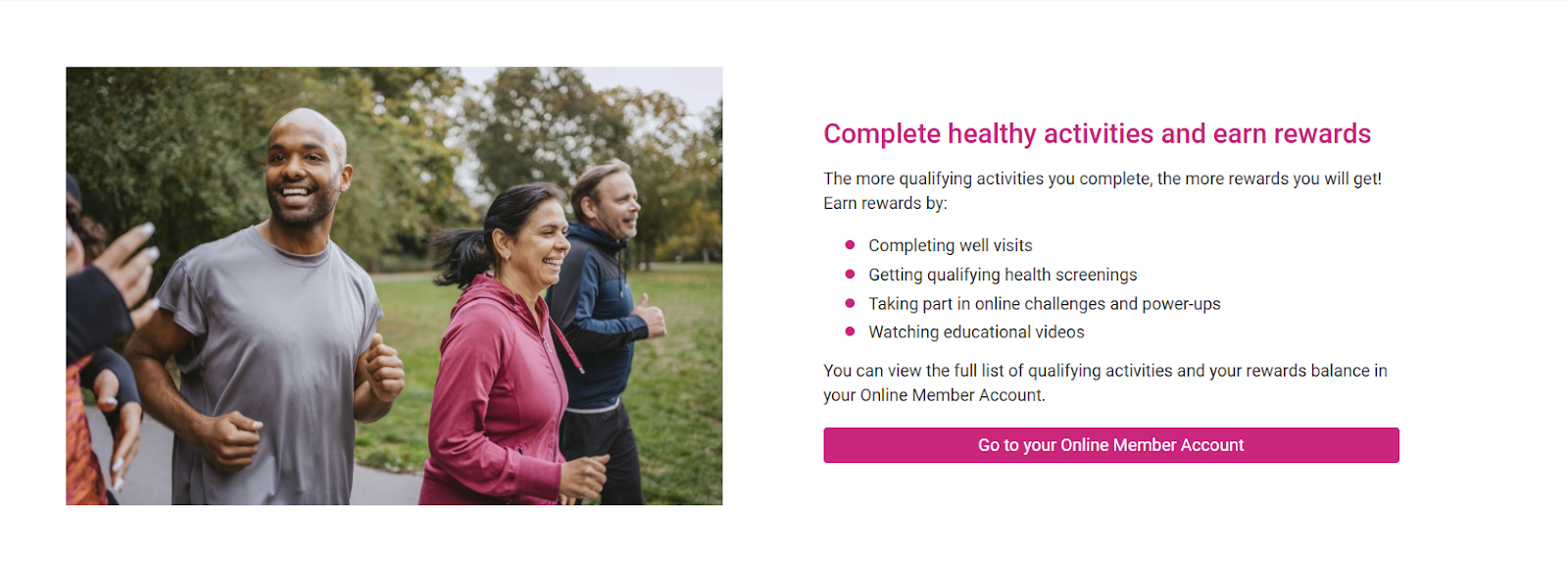
Medicaid members earn points for healthy activities: annual screenings, wellness visits, and preventive care. Points convert to real expenses: premium payments, copays, utilities, phone bills, and transportation.
The shift: An SMS reminder doesn't solve why a Medicaid patient misses appointments. Transportation costs, time off work, competing bills. Ambetter's program turns a wellness visit into money toward a phone bill or bus fare. The reward removes the barrier.
📊 Scale: Active across multiple state Medicaid markets. Targets populations with the lowest baseline engagement rates.
Apply this → Understand what's actually stopping your patients from engaging. Then design rewards that address those barriers. For some, it's convenience (free delivery). For others, it's financial (bill credits). For others, it's time (priority scheduling).
5. SwipeRx
Proves: loyalty generates behavioral data you can't get elsewhere
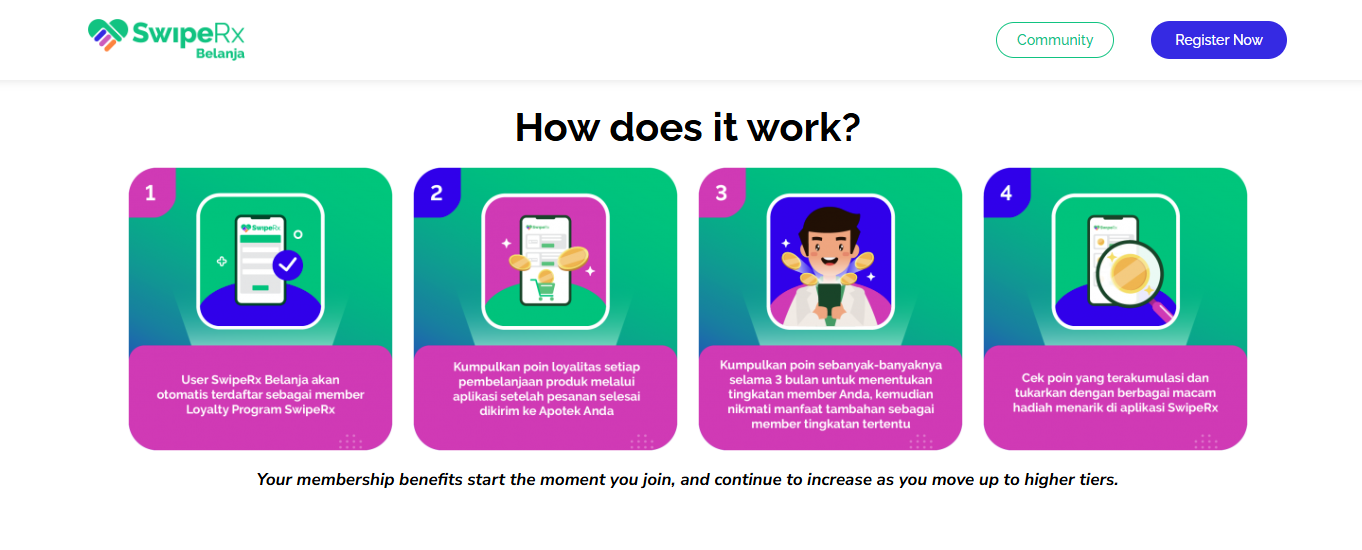
SwipeRx is the largest digital pharmacy network in Southeast Asia. It uses gamification and loyalty mechanics to keep pharmacists engaged with professional development, purchasing, and networking on the platform.
The shift: This isn't patient-facing, and that's the point. SwipeRx knows which training modules pharmacists complete, how often they log in, and what content they share. An email campaign only knows open rates. The loyalty layer turns usage into a behavioral profile.
📊 Scale: 90% retention rate. For context, the average app loses 77% of its daily active users within the first three days.
Apply this → When patients earn points for specific actions (screenings, refills, checkups), you learn which services they value, how often they engage, and where they drop off. That data is more actionable than anything in your EHR.
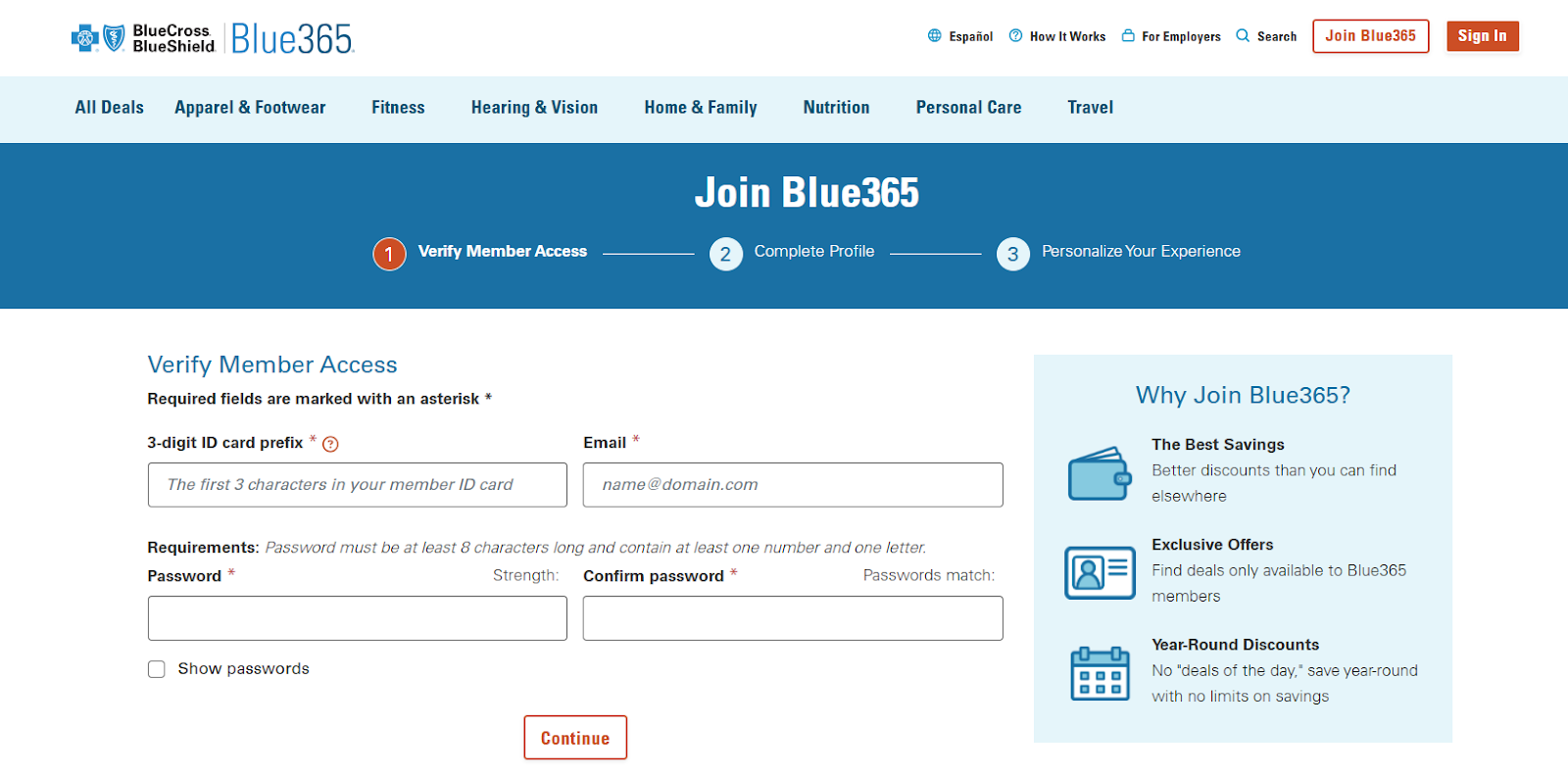
6. Blue365 by Blue Cross Blue Shield
Proves: loyalty scales across touchpoints beyond the clinical setting
Free discount program for BCBS members. Savings on fitness gear, gym memberships, meal services, and health products from national and local retailers.
The shift: Blue365 extends the loyalty relationship outside the doctor's office. A patient's gym membership, meal kit, and vitamins are all tied to their BCBS membership. Email reaches patients when you send a message. Blue365 reaches them every time they work out or buy vitamins.
📊 Scale: Available to BCBS members nationwide. Low cost to BCBS (negotiated partner discounts, not funded). High perceived value to members.
Apply this → Partnerships. A small clinic can partner with a local gym, a nutrition shop, or a wellness brand to offer exclusive discounts to loyalty members. This extends your program's reach without increasing your rewards budget.
7. dacadoo
Proves: loyalty generates behavioral data AND turns passive users into active participants
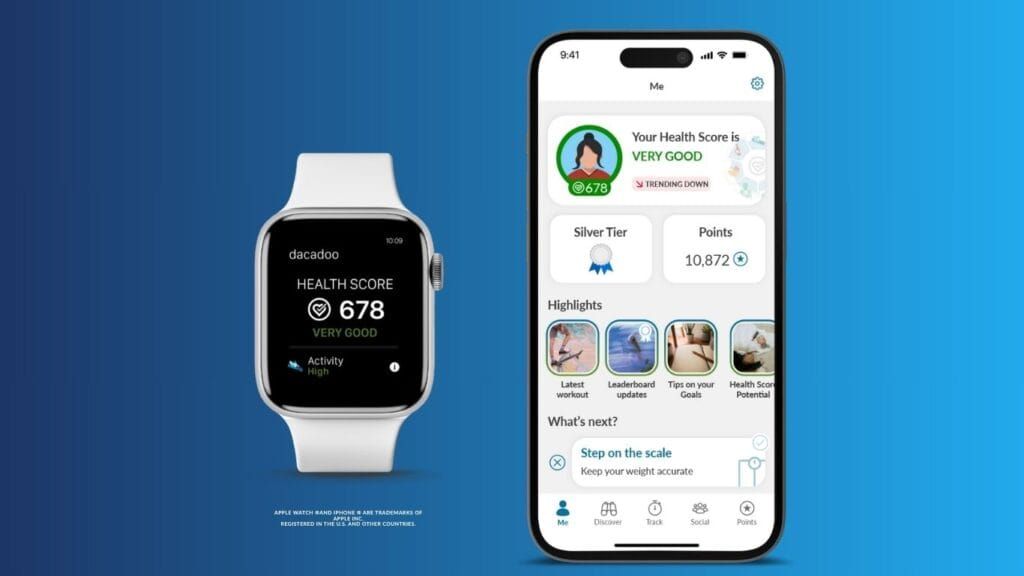
A digital health engagement platform that uses gamification (challenges, streaks, progress tracking) within a health app. Built on a loyalty software engine.
The shift: A push notification can remind someone to exercise. Dacadoo's loyalty layer makes exercising part of a streak they don't want to break. Every interaction generates data: activity levels, nutrition, sleep, and goal completion. The gamification drives the engagement. The engagement drives the data.
📊 Scale: White-label platform used by insurers and health systems globally.
Apply this → For digital-first healthcare (telehealth, health apps, wellness platforms), the product itself can be the loyalty program. Streaks, challenges, and milestones keep users returning without traditional points.
8. myWalgreens
Proves: loyalty creates switching costs through accumulated wellness history
Evolved from the original Balance Rewards program. Combines wellness tracking (healthy activity logging) with pharmacy purchase rewards into a single app experience.
The shift: Patients who track activities in the Walgreens app build a personal wellness history inside that ecosystem. Leaving means losing that history. It's not just points. It's continuity, and people don't abandon continuity easily.
📊 Scale: Walgreens operates 8,500+ locations. The app combines pharmacy, wellness tracking, and retail rewards into one profile.
Apply this → Even simple wellness tracking (steps, check-ins, medication logs) creates history patients don't want to abandon. The longer they participate, the more invested they become. Time is your strongest lock-in.
III. The Retention Problem in Healthcare
Healthcare has a retention problem, and the cost shows up fast. Missed appointments alone are estimated to cost the U.S. healthcare system more than $150 billion each year, according to a PMC-cited analysis.
But reducing no-shows is only part of the equation. Reminder channels like email and SMS can improve attendance, yet they do little to answer a bigger question: why should patients keep choosing your practice over time? Retention is not just about getting patients to show up for the next visit. It is about building an ongoing relationship that gives them a reason to come back.
That challenge matters even more now because patients are already more engaged in their own health decisions. McKinsey’s 2024 wellness research found that 58% of U.S. consumers say they prioritize wellness more now than they did a year ago. Optum’s analysis of health rewards programs also reports that clear financial rewards can increase participation in health activities by up to 73%. In other words, the motivation already exists. A loyalty program gives that motivation structure, turning general intent into repeat action tied to your practice.
IV. Why a Loyalty Program (Not Email, SMS, or Subscriptions)
Email and SMS help patients remember appointments. They do not give them a stronger reason to stay. Subscriptions have a different issue: they ask patients to pay before they fully see the value.
A loyalty program works differently. It builds value over time. Every visit, refill, screening, or wellness check adds up to something patients do not want to lose.
That matters for four reasons:
- It turns passive patients into active ones by rewarding preventive behaviors.
- It provides better behavioral insights than open rates or appointment logs.
- It creates switching costs because points and tier status make leaving feel like a loss.
- It can connect multiple touchpoints, from visits and prescriptions to wellness and digital engagement.
There is one condition: loyalty only works when trust already exists. In Accenture’s 2024 survey of nearly 18,000 people in the U.S., patients were 6x more likely to stay with providers they trust and 2x more likely to switch after a poor front-desk or online experience than after a poor clinical outcome. Build trust first. Loyalty mechanics amplify what is already working. They do not fix what is broken.
That is what makes the opportunity real. Healthcare loyalty programs are still far less common than in retail or hospitality, giving early adopters room to stand out.
The eight programs below are not just examples. They are proof that loyalty can strengthen retention in ways other tools cannot.
V. How to Measure Success: KPIs for Healthcare Loyalty Programs
A loyalty program without metrics is just a rewards giveaway. Here's what to track, split into two categories.
Engagement KPIs
These tell you whether the program is changing patient behavior:
- Patient Retention Rate — Compare members vs. non-members. This is the single most important metric.
- No-Show Rate — Are loyalty members showing up more consistently? Track the gap.
- Adherence Rate — Prescription refills completed on time. Loyalty should move this number.
- Enrollment Rate — What percentage of eligible patients are joining? Low enrollment = friction problem.
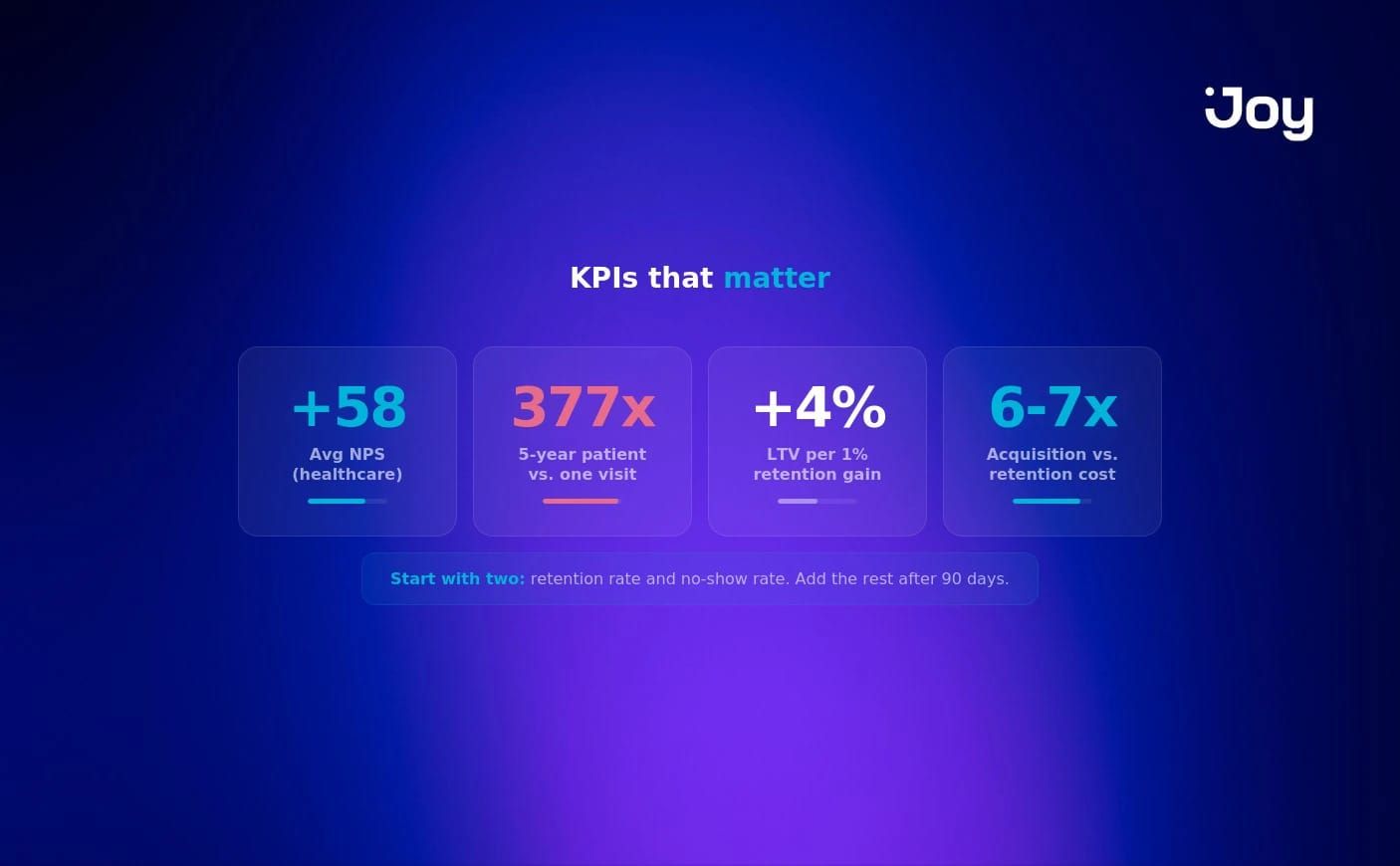
- NPS — The average healthcare NPS is +58. If your members score higher than your non-members, the program is building loyalty, not just distributing rewards.
Financial KPIs
These tell you whether the program pays for itself:
- Patient LTV — A 5+ year patient is 377x more valuable than a one-time visit. Track how membership affects this.
- LTV per 1% Retention Gain — For every 1% rise in retention, patient LTV increases roughly 4%. Small moves compound.
- Acquisition vs. Retention Cost — You already know acquiring costs 6-7x more. Track how much your program reduces that gap.
- Program ROI — Total revenue from loyalty members minus program costs. Simple, but most practices skip it.
Start here: Most small practices don't have analytics infrastructure for all of this on day one. Begin with two: retention rate and no-show rate. Add NPS and LTV after 90 days of data.
VI. The Compliance Minefield: HIPAA and Anti-Kickback Rules
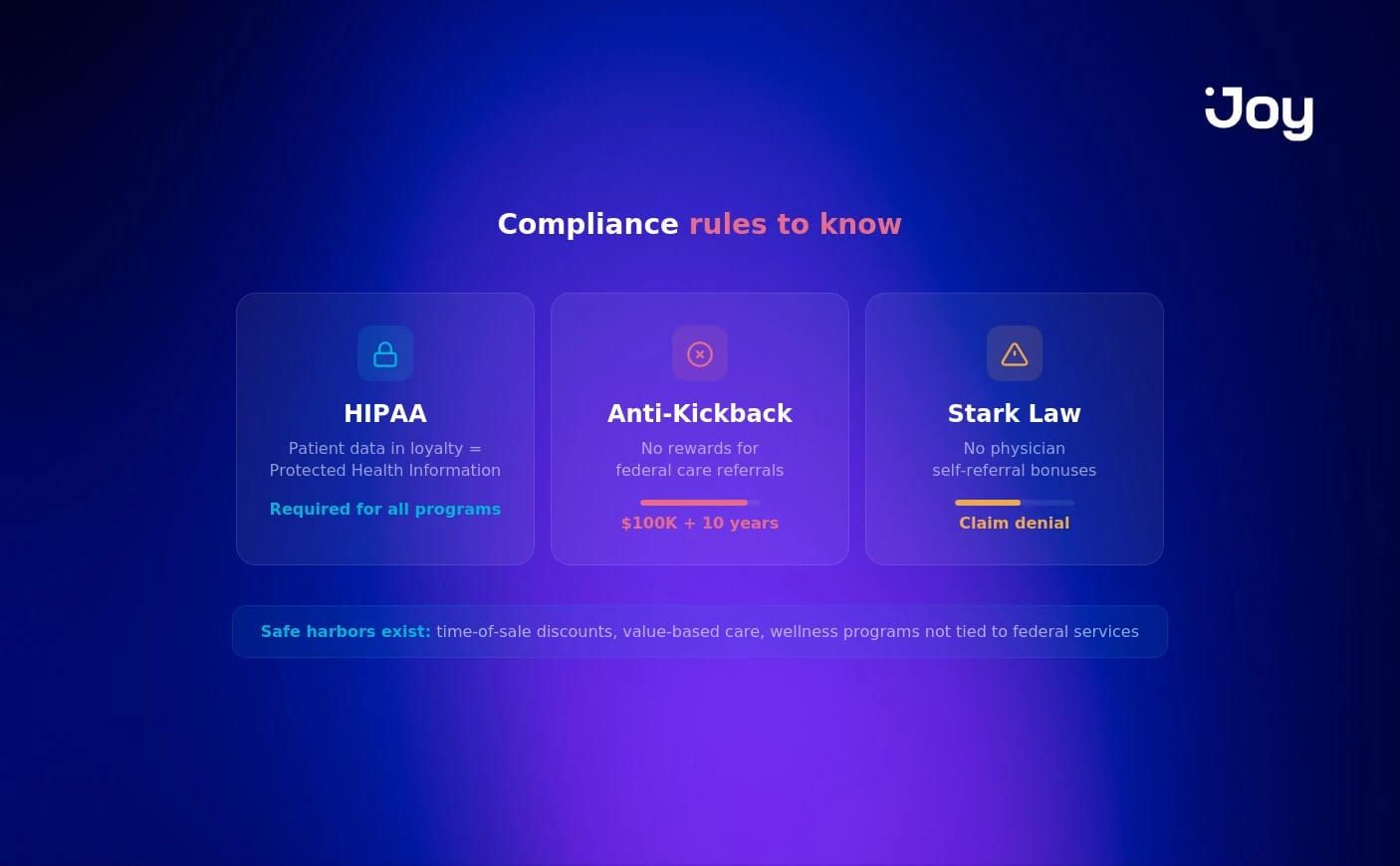
Most articles on healthcare loyalty programs mention compliance in one sentence and move on. That's dangerous. Three federal laws directly affect how you can design and run a rewards program. Here's what each one means in plain language.
HIPAA
If your loyalty program touches patient data (such as visit history, prescriptions, or health behaviors), that data counts as Protected Health Information. You can't use it for personalization or reward tracking without privacy-by-design built into your tech stack. This means encrypted storage, access controls, and clear consent for how patient data is used to feed your program.
Anti-Kickback Statute (AKS)
This is the big one. Federal law prohibits offering anything of value to induce referrals for services paid by Medicare or Medicaid. Violations are felonies: up to $100,000 in fines and 10 years in prison per violation. This applies to patient rewards, too. You cannot routinely waive copays or offer rewards that encourage patients to choose your practice for federally funded care.
Stark Law
Prohibits physician self-referrals to entities with which they have financial relationships. If your loyalty program includes referral bonuses between providers, the Stark Law applies.
What you can do (Safe Harbors)
Not everything is off-limits. These arrangements are generally protected:
- Discounts given at the time of sale
- Value-based care arrangements
- Wellness programs not tied to federally reimbursable services
- Modest reward values with documented compliance review
Practical guidance
Work with a healthcare compliance attorney before launching. Keep reward values modest. Never tie rewards to referrals for federal programs. Document everything.
*Note: This section is intentionally broad, not legal advice. Compliance requirements vary by state and program structure. Before building anything, talk to a lawyer who specializes in healthcare regulatory law.
VII. Building Your Healthcare Loyalty Program: A Practical Starting Point
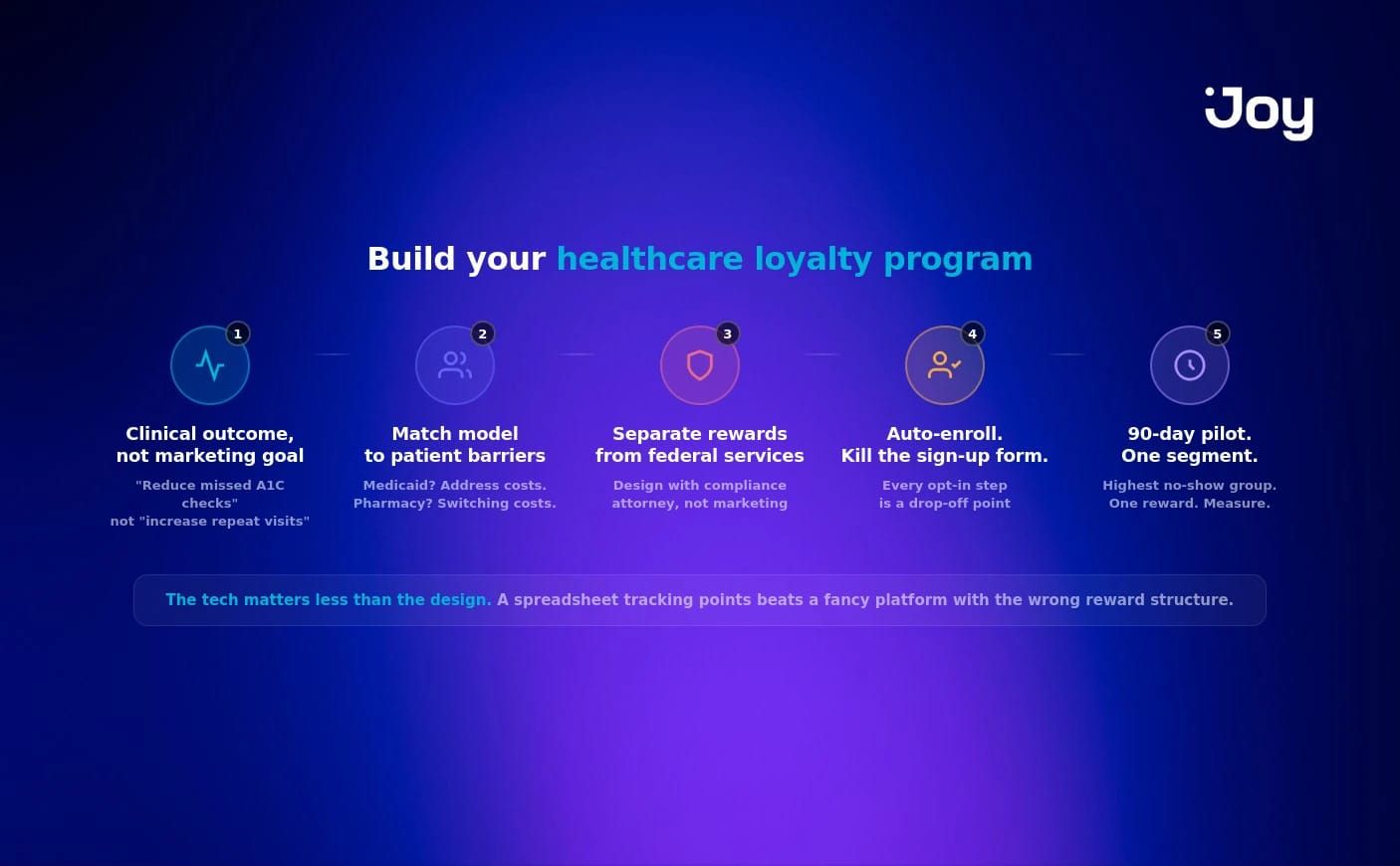
You don't need to build CVS ExtraCare on day one. But you do need to think differently from the retail perspective. Here are five steps to get from "interested" to "planning":
VIII. Start With Retention, Not Rewards
Eight programs, different approaches, same principle: give patients a reason to stay that doesn't depend on a reminder.
Not every healthcare business needs a formal loyalty program. But everyone needs a retention strategy.
Selling health and wellness products online? Joy Loyalty helps DTC health brands build points, tiers, and referral programs inside Shopify. No enterprise budget required.
Pick one behavior. Attach one reward. Start there.

Written by
Thomas Nguyen is the CEO & Co-founder of Joy, a loyalty solution for Shopify and eCommerce brands. With years of experience building high-performance Shopify apps, Thomas aims to help merchants grow through customizable and retention-focused tools.
Related reading
 Industry Spotlight
Driver Loyalty Program: Best Examples and How to Build One That Works
Replacing a driver costs thousands. The typical loyalty program is a cash bonus nobody remembers by the next fuel stop. These six do it differently.
 Thomas Nguyen
 Industry Spotlight
Best Healthy Reward Programs: What Top Brands Do (And How to Build Your Own)
Health customers start strong — then disappear. The products work. The habits don't stick. A rewards program creates the external motivation that keeps them coming back.
Thomas Nguyen Industry Spotlight
10 Best Rental Car Rewards Programs for Business Owners (2026 Guide)
Your sales team rented 47 cars last quarter. How many of those earned a free rental day? Most business owners don't track this and it's costing them.
Thomas Nguyen Industry Spotlight
Best Telecommunication Loyalty Programs: 7 Real Examples and What Makes Them Work
Telecom churn rates run between 20% and 50% annually. The carriers fighting back use loyalty programs that go beyond generic point systems.
Thomas Nguyen Industry Spotlight
Bank Loyalty Programs: How Banks Build Rewards That Actually Keep Customers
Bank customers rarely switch, until they do. The institutions that keep them use loyalty programs tied to spending habits, not generic point systems.
Thomas Nguyen Industry Spotlight
Rent Rewards Programs: The Best Loyalty Programs for the Rental Industry
Rent rewards programs can cut turnover and boost NOI, but not every program fits every property.
Thomas Nguyen