Most loyalty programs are built to feel generous. Enterprise Plus was built to make leaving expensive.
The Enterprise Plus program didn't win by offering more points than Hertz or cheaper rates than Avis. It won by designing three structural mechanics that compound switching costs at every stage of the customer lifecycle. After a targeted relaunch, the program added two million new members. Not through advertising. Through behavioral architecture.
If you're a Shopify brand watching customer acquisition costs climb while repeat purchase rates stall, Enterprise offers a case study worth studying closely. This breakdown covers how the program is structured, what makes it behaviorally different from standard points programs, and which specific elements translate directly to e-commerce, and which ones will hurt your margins if you copy them without adaptation.
Enterprise Plus Loyalty Program Overview: What Makes It Different?
The Enterprise Plus program is structurally simple:
- Members earn one point per dollar spent on qualifying rentals.
- Points redeem for free rental days.
- Status tiers (Silver, Gold, Platinum) advance by rental frequency.
- Higher tiers unlock vehicle upgrades and expedited service.
Reaching that first free rental day requires roughly 400 points (approximately $400 in qualifying spend). That puts the initial reward at the outer edge of reachability for occasional renters, a deliberate design choice: the program isn't built for occasional visitors. It's built to lock in the frequent one.
The earn-and-redeem loop runs in a single direction: Spending → Points → Free rental day → More rentals.
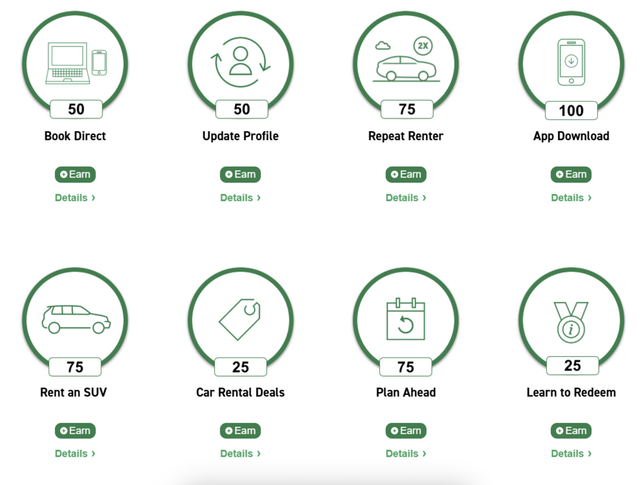
No partner rewards marketplace. No airline mile transfers. No cashback catalog. Every redemption path leads back to another Enterprise booking.
Here is an important thing: that closed loop isn't accidental. Kahneman showed this in Thinking, Fast and Slow: decision-making degrades as the number of options increases. By narrowing redemption to one outcome (a free rental day), Enterprise eliminates the cognitive work of comparing reward options and keeps the value proposition immediate.
Who benefits most?
- Frequent business travelers
- Customers renting multiple times per year
Compared to competitors, Enterprise makes a deliberate trade-off: fewer acquisition hooks from partner integrations, but far deeper switching costs for high-frequency renters. Hertz Gold Plus Rewards and Avis Preferred both offer broader partner ecosystems and airline transfer options. Enterprise doesn't compete on breadth. It competes on depth.
Enterprise's closed-loop design means lower partner acquisition appeal and measurably higher in-ecosystem retention for high-frequency renters.
In the U.S., Enterprise Holdings generated over $35 billion in revenue in FY2023, making it the largest car rental company in the world. Look, scale at that level requires retention efficiency, not promotional noise. The program structure reflects that priority.
Three Structural Differentiators & the Psychology Behind Them
Most loyalty programs fail because they try to win on generosity. Enterprise wins by being structurally difficult to leave.
Here is why it sticks:
Milestones Create Momentum (Goal Gradient Effect)
Enterprise builds its tiers, Silver at 6 rentals, Gold at 12, and Platinum at 24, to keep that finish line in sight.
This structure activates the Goal Gradient Effect. This psychological principle states that as people get closer to a goal, they accelerate their behavior to reach it.
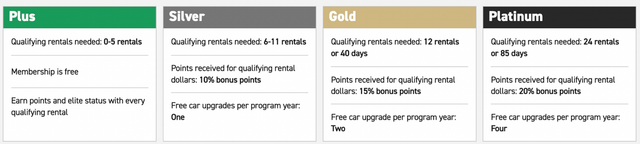
The Endowed Progress Effect compounds this (Nunes and Drèze, Journal of Consumer Research, 2006). If customers are at 10 rentals, they’ll likely book two more just to "unlock" Gold status before the year ends. That early Silver tier, with just 6 rentals, creates an immediate sense of commitment.
- How to Apply This: Introduce reachable early milestones for your customers. If the first reward requires 50 purchases, they’ll quit before they start.
- What to Avoid: Don't delay the first win. If a customer doesn't feel the "glow" of a reward within their first few interactions, they won't stick around for the long haul.
Status Raises the Cost of Leaving
Enterprise tiers include visible status levels and benefits such as priority service and upgrades. This triggers Loss Aversion and the Sunk-Cost Effect. Once a user reaches Platinum status, switching to a competitor feels like "losing" their hard-earned status and the 20% point bonus that comes with it.
According to research published in the Journal of Consumer Research, customers perceive a loss of status as more painful than the gain of a small discount elsewhere.
- How to apply: Make progress highly visible. Progress bars in your account dashboard outperform email notifications for driving incremental purchases toward a tier threshold.
- What to avoid: Flat programs. A customer who spent $10,000 with you and received the same treatment as a customer who spent $100 has no switching cost at all.
Concrete Rewards Outperform Percentage Discounts
Enterprise doesn't say "save ten percent on your next rental." They say "free rental day." The difference matters more than it appears.
Dan Ariely's zero-cost effect (Predictably Irrational, 2008) showed that consumers systematically overvalue "free" relative to discounted alternatives. A free product generates a stronger behavioral response than an equivalent cash discount. Even when the economics are identical.
Vinamilk, a $500M Vietnamese FMCG brand running its program on Joy, found the same effect firsthand. A physical gift costing 50,000 VND to source (roughly $2) delivered four times the perceived value of an equivalent cash discount. Their program achieved a 50 percent redemption rate, one of the highest in the FMCG category, because members experienced rewards as gifts, not margin concessions. That's the whole trick.
For e-commerce, the equivalent rewards are a free product on the fifth order, a free shipping upgrade for the year, or a free month of service. Each triggers the zero-cost response that points-per-dollar programs can't generate.
- How to apply: Frame every reward as an outcome, not a percentage. "Free product" outperforms "10% off" even when the cash value is the same.
- What to avoid: Tiny cashback rewards. A customer who spends $100 and receives $1 back doesn't feel rewarded. They feel the math.
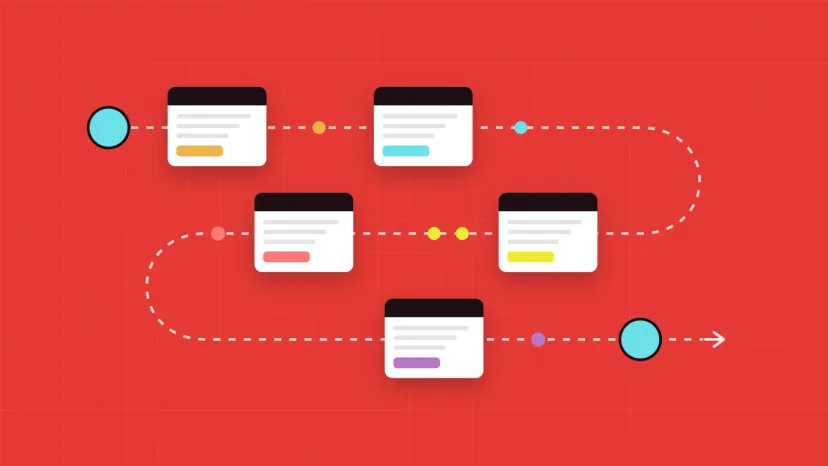
Customer Journey: How Lock-In Forms Stage by Stage
Loyalty doesn't flip on. It compounds: one switching cost at a time.
To really understand why Enterprise Plus works, we need to look at the customer's journey. It starts with a simple transaction and ends with a customer who won't even look at another brand’s website.
Stage 1: Enrollment
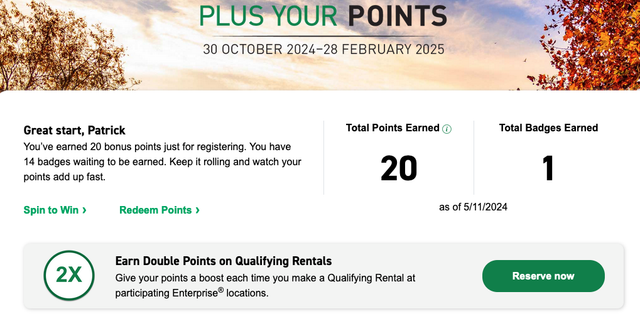
The journey begins at the rental counter or on the checkout page. The offer is simple: "Join for free and skip the long lines."
- Emotional Trigger: Relief. Nobody likes standing in line after a long flight.
- Behavioral Reinforcement: Immediate benefit. By signing up, the customer already feels like a member. The system rewards them instantly with a smoother experience.
- Switching Cost: Still low, but not zero. The customer now has an account. Their details are saved. Booking again with Enterprise becomes easier than starting from scratch somewhere else.
Stage 2: First Tier
Six rentals in, the customer reaches Silver. That's where the architecture starts compounding.
- Emotional Trigger: Pride. They receive an email congratulating them on their new status and a "free upgrade" certificate.
- Behavioral Reinforcement: The Endowed Progress Effect. Now that they have a 10% point bonus, every dollar they spend with a competitor feels like a "waste" of potential earnings.
- Switching Cost: Moderate. If they switch to Hertz now, they go back to being a "nobody" with no bonuses or upgrades.
Stage 3: First Redemption
The customer finally cashes in their points for a completely free rental day during a family weekend trip.
- Emotional Trigger: Joy and Gratitude. There is a specific psychological high that comes from getting a $100 service for $0.
- Behavioral Reinforcement: Proof of value. The program isn't just a marketing gimmick anymore; it provides a real, tangible benefit to their life.
- Switching Cost: High. They have seen the "payout." They are now trained to keep spending to reach that next "free" milestone.
Stage 4: Status Identity
The customer hits Platinum. They get 20% bonus points and four upgrades a year. They don't even check Kayak or Expedia anymore.
- Emotional Trigger: Belonging and Superiority. They feel like a "VIP." When they walk past the regular line and see their name on the priority board, their ego gets a hit of dopamine.
- Behavioral Reinforcement: Habituation. Booking with Enterprise has become the default. It’s no longer a choice; it’s just "what they do."
- Switching Cost: Extreme. To leave now would mean walking away from a 20% "dividend" on every dollar spent. The psychological "loss" of losing Platinum status outweighs almost any price discount a competitor could offer.
So what can we learn from Enterprise Plus?
Each stage adds emotional weight. Each stage increases switching cost.
By the time a competitor offers a slightly lower price, the customer isn’t just comparing numbers. They are comparing progress, identity, and future rewards.
That’s how loyalty wins, even when it’s $5 more expensive.
What e-commerce brands should replicate (in 2026)
Enterprise Plus works because its structure matches its business model.
But not every e-commerce brand has Enterprise’s margins, purchase frequency, or customer lifecycle.
The real question isn’t “Should you copy this?”
It’s “Which parts translate, and which parts could hurt you?”
Milestone-Based Tiering
Don't just give points. Create levels (Bronze, Silver, Gold). This taps into our natural desire for status.
When a customer sees they are "only $40 away from Gold," they will often add an extra item to their cart just to cross the line.
Concrete Reward Framing (Outcome > Percentage)
“Free Rental Day” beats “1,000 points.”
Tangible rewards create emotional impact. The Cashback feels transactional. Free feels memorable.
For e-commerce, you can refer to the free option below to start impressing your customers with memorable experiences.
- Free product
- Free month
- Free express shipping
Closed-Loop Value Creation
Enterprise doesn't have a messy web of transfer partners. Their rewards force the next rental, keeping the Lifetime Value (LTV) entirely inside their ecosystem.
That focus:
- Reinforces repeat demand
- Prevents reward leakage
- Keeps brand top-of-mind
For e-commerce: If retention is the goal, don’t let rewards drive customers to third parties.
Simple "Earn" Logic
Ensure a customer can explain your program in one sentence. If the math requires a calculator (e.g., "$1 = 12.5 points, and 500 points = $3.20"), you have already lost the customer’s interest.
What e-commerce brands should avoid at all costs?
This model is not a universal "cheat code." In the wrong context, it can damage your margins or create "loyalty theater" instead of real retention.
Low Purchase Frequency Businesses
If your customers only buy once a year (think furniture, luxury watches, or high-ticket electronics), milestones feel unreachable.
The Risk: Customers disengage before they ever see a reward. If the gap between purchases is too long, the "Goal Gradient Effect" never kicks in.
Thin Margins + Overgenerous Freebies
Enterprise controls its own fleet costs and pricing. Most e-commerce brands operate with 30–50% margins and are already heavily discounting to acquire customers.
The Risk: If you stack free products, free shipping, and bonus points without strict margin modeling, you get revenue growth but a decline in profit.
Note that loyalty must be modeled on contribution margin, not top-line revenue.
No Operational Experience Advantage
Enterprise’s loyalty works because it’s backed by faster lines and priority service. If your e-commerce backend is messy, shipping is slow, support is poor, or you get "out of stock" emails, loyalty points only amplify the disappointment.
The Reality: Retention amplifies the experience you already have, good or bad.
Tier Inflation & Entitlement Risk
If your "Gold" tier is too easy to reach, it loses its status. Eventually, rewards become a baseline expectation rather than a "gift."
The Risk: Customers may only buy when a bonus multiplier is running. To fix this, cap your tiers intentionally. Make your top tier scarce and genuinely elite.
Over-Reliance on Points
Points create momentum, but brand creates preference. If you only reward the transaction, your customers will leave the second a competitor offers a better "point-per-dollar" ratio.
The Bottom Line: You need both a structural loop to keep them coming back and an emotional connection to keep them from looking elsewhere.
Conclusion
The Enterprise Plus loyalty program is not flashy. It’s not ecosystem-heavy. It doesn’t rely on travel transfer partners or complicated reward math.
And that’s exactly why it works.
Enterprise Rent-A-Car built a system around three simple principles:
- Clear milestones
- Tangible rewards
- A status that increases switching costs
They removed friction. They reduced cognitive load. They made progress visible.
Over time, that simplicity compounds into something powerful: behavioral lock-in.
For e-commerce strategists, the takeaway is practical:
- Design for progress, not points.
- Reward outcomes, not percentages.
- Use tiers to increase switching costs.
- Keep the system simple enough that customers never need to “learn” it.
FAQs
1/ What is the Enterprise Plus loyalty program?
The Enterprise Plus loyalty program is the rewards program offered by Enterprise Rent-A-Car.
Members earn points on qualifying rentals and can redeem those points for free rental days, vehicle upgrades, and other member-only benefits.
2/ How is Enterprise Plus different from Hertz or Avis loyalty programs?
Compared to competitors like:
- Hertz
- Avis
Enterprise’s program is structurally simpler and more closed-loop. It emphasizes free rental days and status progression over large partner ecosystems.
Simplicity is the strategic differentiator.
3/ Can small e-commerce brands really afford a tiered loyalty system?
Yes, but the math must be right. The key is to offer low-marginal-cost rewards.
Instead of giving away expensive inventory, smaller brands can offer "status" perks like early access to new collections, exclusive content, or "skip-the-line" processing for orders.
These provide high perceived value without killing your margins.
4/ Are points or cash-back better for e-commerce?
Points are better. Points feel like a "game" and have a higher perceived value (500 points sounds better than $5). They also keep the value inside your store.
Cash-back is just a discount in disguise; it trains people to be price-sensitive and doesn't build a brand connection.
5/ When should I avoid launching a loyalty program?
Skip it if:
- Your margins are tiny: You’ll end up losing money on every "loyal" sale.
- You sell one-time buys: If you sell mattresses or wedding rings, customers don't buy often enough for points to matter.
- Your service is broken: A loyalty program can’t fix bad shipping or poor quality; it will only highlight the problems faster.