23 Best Referral Program Examples by Industry (And How to Build Your Own)
Most referral roundups stop at the reward. We checked 23 programs against each brand's own page to show what actually makes them work - and how to build your own.
-68d473.webp&w=3840&q=95)
Summarize this post with AI
Most referral roundups show you a reward and a landing page screenshot, then move on. That's not very useful when you're trying to build your own. The reward is the easy part. What's hard is the mechanics underneath: who gets rewarded, when the reward unlocks, and whether the program quietly runs in the background or fizzles after launch week.
So we did this differently. Every example below was checked against the brand's own referral page or help center, not a coupon site. Where a brand doesn't publish its exact reward, we say so instead of guessing. For each one, you'll get the offer, why the mechanics work, and one thing to watch before you copy it.
23 Best Referral Program Examples by Industry
These 23 programs span seven industries. We've grouped them below by where they fit, and for each one we'll call out the offer, why the mechanics work, and what to watch - plus a note wherever a brand keeps its reward private or limits the program by region.
Ecommerce and Retail
-a2759a.webp)
Ecommerce is where referral programs feel most natural, because the reward is a discount on something the customer already wants to buy again.
1. MeUndies
The offer: Get 20% off, get $20 in-store credit.
MeUndies, a direct-to-consumer underwear and basics brand, runs its referral as a clean give-and-get: the friend takes 20% off their first order, and the referrer earns $20 once that order ships and clears a $12 minimum.
Why it works: The $12 minimum quietly blocks the most common abuse - people self-referring with a tiny order to farm credit. The reward is generous enough to share, but gated enough to stay profitable.
Watch out: Store credit only pulls people back if your catalog is broad enough to spend it on. For a single-product store, a straight discount may convert better.
2. Casper
The offer: Give 30% off, get a reward (capped at $599 a year).
Casper, the direct-to-consumer mattress brand, frames its program as a simple trade: the friend gets 30% off, and the referrer earns a gift card, up to $599 in a calendar year.
Why it works: The yearly cap is the part to steal. It keeps the program generous for normal customers while stopping a handful of power-sharers from draining the budget.
Watch out: Thirty percent off a mattress is a big discount. It fits Casper's margins - check yours before matching that number.
3. Stitch Fix
The offer: Friend's styling fee waived, referrer gets around $25 in credit.
Stitch Fix, an online personal styling service, waives the friend's first styling fee and gives the referrer around $25 in credit - but only after the friend checks out their first Fix, not when they sign up.
Why it works: Paying on checkout instead of signup means Stitch Fix only rewards real revenue. Registrations that never convert cost nothing.
Watch out: The credit amount is displayed live on each customer's referral page and can change, so phrase it as "around $25" rather than a fixed promise.
The pattern to steal across ecommerce: a first-order discount for the friend, store credit for the referrer, released only after a minimum order clears. That single rule blocks most of the abuse you'd otherwise see.
SaaS and Software
-4d2ffd.webp)
Software referrals reward the referrer with credit, cash, or account perks, and they almost always wait to confirm the friend sticks around.
4. Dropbox
The offer: Both sides get bonus storage.
Dropbox, the cloud storage service, built one of the most copied programs in tech: refer a friend, and you both get bonus storage. Free accounts earn up to 16 GB, paid accounts up to 32 GB, after the friend installs the desktop app and verifies their email.
Why it works: The reward is the product. More storage makes Dropbox more useful, which makes you want to refer again, and there's no cash cost per referral.
Watch out: This only works when the reward improves the product. A discount can't replicate it — match a product-based reward to a product that scales with usage.
5. Hostinger
The offer: Referrer gets 20% of the order (up to $450), friend gets 20% off.
Hostinger, a web hosting provider, pays the referrer 20% of the order (up to $450) and gives the friend 20% off, with the reward clearing only after the friend passes the 45-day refund window.
Why it works: A percentage of the sale motivates referrers to bring in bigger accounts, not just any signup.
Watch out: This is closer to affiliate marketing than a customer perk. A cash commission attracts a more transactional kind of sharer than store credit does.
6. ActiveCampaign
The offer: Referrer gets a $25–$100 gift card, friend gets $10 in credit.
ActiveCampaign, an email marketing and automation platform, scales the referrer's gift card to the friend's plan - from $25 up to $100 - plus $10 in credit for the friend, paid out after 60 days as a customer.
Why it works: Tying the reward to the plan size nudges referrers toward higher-value customers without any extra rules.
Watch out: Sixty days is a long wait. Set expectations clearly, or referrers may assume the reward never came.
7. GetResponse
The offer: $30 in credit per side (capped at $480 per year).
GetResponse, another email marketing platform, keeps it simple: $30 in credit for each side, released once the friend opens a paid account.
Why it works: Equal, simple, and easy to explain, which matters more than people think. The clearer the offer, the more it gets shared.
Watch out: Credit that can only be applied to future plans suits a subscription, but it won't appeal to anyone considering leaving.
8. Google Workspace
The offer: $8 to $23 per user referred; friends get a first-year discount.
Google Workspace, Google's business productivity suite, pays $8 to $23 per user referred and gives the friend a first-year discount - but the reward only pays after the new customer stays 90 days.
Why it works: Per-user pricing means a single referral of a large team can be worth a lot, which motivates business referrers.
Watch out: Ninety days is the longest hold here. Cash on a three-month delay needs trust - best for brands with an engaged base.
The common thread across SaaS: delay the reward until the friend proves they'll stay. If you sell subscriptions, pay on retention, not signup.
Fintech and Banking
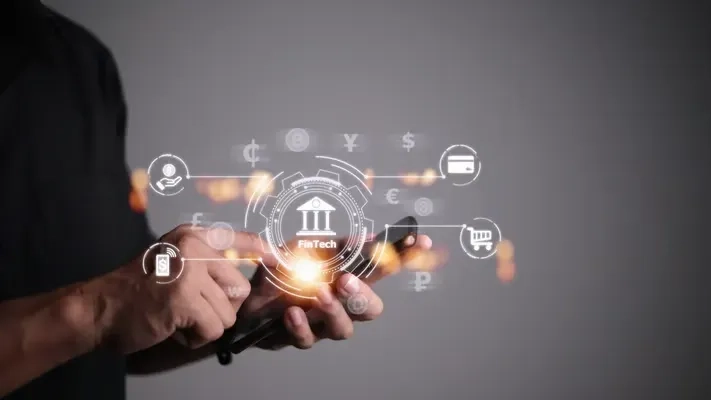
Fintech runs the most aggressive referral programs because a funded account is worth a lot. It also has the strictest triggers, which is exactly why these programs survive fraud.
9. PayPal
The offer: Both sides get 1,000 rewards points (worth about $10).
PayPal, the digital payments platform, gives both sides 1,000 rewards points (worth about $10) once the friend makes a $5+ transaction within 30 days.
Why it works: Points framed as "about $10" feel like a gift without committing to PayPal. The small transaction requirement filters out dead signups.
Watch out: Points aren't cash. Be honest about what they convert to, or customers will feel misled.
10. Venmo
The offer: $5 per referral (up to $50), friend gets $5.
Venmo, PayPal's peer-to-peer payments app, pays $5 per referral (up to $50), with the friend getting $5 too, after they send a $5+ payment within 14 days.
Why it works: Tiny, fast, and tied to the core action of sending money. The 14-day window adds gentle urgency.
Watch out: A $50 cap is low. It keeps costs predictable but won't motivate a true power-referrer - fine, since Venmo grows on volume, not whales.
11. Cash App
The offer: An invitation bonus for both sides.
Cash App, the payments app from Block, gives both sides an invitation bonus once the friend sends $5+ within 14 days of joining.
Why it works: Same logic as Venmo - reward the first real use, not the download.
Watch out: Cash App's bonus amount changes with the promotion. Don't quote a fixed figure; it dates fast.
12. Wealthsimple
The offer: $25 for each side.
Wealthsimple, a Canadian investing app, gives both sides $25 once the friend funds $100 and keeps it parked.
Why it works: The funding requirement guarantees the new account is real and active before anyone gets paid.
Watch out: It's a Canadian program, so the terms and currency won't map directly to other markets.
13. Robinhood
The offer: A surprise stock worth $5 to $200 for each side.
Robinhood, the commission-free investing app, hands each side a surprise stock worth $5 to $200 after the friend opens and links a bank account.
Why it works: The lottery framing makes sharing fun. Almost everyone gets the $5 stock, but the chance of $200 is what people talk about.
Watch out: Mystery rewards only excite if the upside feels real. A "mystery $1 to $2" reward would fall flat.
14. Chime
The offer: Up to $200 for the referrer, $100 for the friend.
Chime, a US online banking app, offers up to $200 to the referrer and $100 to the friend, but only after a qualifying $200+ direct deposit lands within 45 days.
Why it works: The direct-deposit requirement is the tightest filter here — it signals a genuine, active user, not a throwaway account. That's how Chime can afford to offer so much.
Watch out: "Up to $200" depends on the promotion. State the condition, or the headline number, sets up disappointment.
15. Revolut
The offer: A variable reward for the referrer - and nothing for the friend.
Revolut, a digital banking app, rewards only the referrer with a variable amount and gives the friend nothing by default, paying only after the friend verifies their funds and orders a card.
Why it works: Honestly, it doesn't, as well as the rest. It's useful here precisely as a counter-example.
Watch out: This is the only one-sided program in the list. It puts all the social awkwardness on the customer. The other 22 brands went two-sided for a reason - start there.
16. Coinbase
The offer: Crypto for both sides, amount varies by country.
Coinbase, the crypto exchange, rewards both sides in crypto - with amounts that vary by country - once the friend completes a qualifying purchase.
Why it works: Rewarding in crypto aligns the incentive with the product that the friend is there to use.
Watch out: There's no single global number. If you cite an amount, tie it to a specific country, or it'll be wrong somewhere.
The lesson for any store handling money or high-value accounts: gate the reward behind a meaningful action — a deposit, a purchase, a verified card. Never pay on signup alone.
Mobility, Travel, and Apps
-2b7aa4.webp)
Here, the reward usually arrives as credit after a first ride, trip, or sign-up.
17. Uber
The offer: A credit for both the rider and their friend.
Uber, the ride-hailing app, gives a credit to both the rider and their friend, released after the friend completes their first ride.
Why it works: Ride credit costs Uber less than its face value and brings the friend straight into the habit that the product depends on.
Watch out: The amount varies by city and isn't published, so there's no fixed number to quote.
18. Airbnb
The offer: Travel credit for the referrer, a coupon for the friend.
Airbnb, the short-term rental marketplace, gives the referrer travel credit and a coupon to the friend after their first completed stay.
Why it works: Paying on a completed trip, not a booking, means Airbnb only rewards travel that actually happened.
Watch out: The guest program is currently live in only a handful of countries. Check availability before treating it as a model you can join.
19. AllTrails
The offer: A tree planted for you, and one for your friend.
AllTrails, a hiking and outdoor trails app, does something different: a successful referral plants a tree, one for you and one for your friend, once the friend creates an account and installs the app.
Why it works: No cash, no credit, and it still works, because the reward matches what AllTrails' outdoorsy audience already cares about.
Watch out: A mission-based reward only lands if your customers genuinely share the mission. Bolt it onto the wrong brand, and it falls flat.
Telecom, Auto, and Services
Bigger-ticket categories lean on prepaid cards and account credits, with the same first-purchase trigger underneath.
20. T-Mobile
The offer: A virtual prepaid card (recently up to $100, capped at $500 a year) for both sides.
T-Mobile, the wireless carrier, hands out a virtual prepaid card (up to $100 in recent promotions, capped at $500 a year) to both sides once the friend activates a new postpaid line and keeps it for 30 days.
Why it works: A prepaid card spends like cash but keeps T-Mobile in control of costs and timing.
Watch out: The $100 figure is a limited-time promotion, not a permanent rate. Link to the live terms rather than memorizing them.
21. Tesla
The offer: "Tesla Credits" for both sides — no fixed dollar amount.
Tesla, the electric vehicle maker, rewards both sides in "Tesla Credits" rather than a fixed dollar amount, triggered when the friend buys or demo-drives for the first time.
Why it works: Credits keep referrers inside the Tesla ecosystem and cost less than cash.
Watch out: Tesla refreshed this program in early 2026, and it changes often. Always link to the current page instead of quoting a number.
22. Fiverr
The offer: Referrer gets 10% of the friend's first order in credits (up to $100), friend gets 10% off.
Fiverr, the freelance services marketplace, gives the referrer 10% of the friend's first order in credits (up to $100) and the friend 10% off, released after that first order completes.
Why it works: It's the same first-purchase trigger you saw in ecommerce, applied to a services marketplace - the referrer earns more when they bring in bigger buyers.
Watch out: Credits, not cash. Great for repeat buyers, less compelling for a one-time user.
Food and Beverage
-339802.webp)
The smallest reward on this list makes the biggest point about where referral is headed.
23. Scooter's Coffee
The offer: Give $2, get $2.
Scooter's Coffee, a drive-thru coffee chain, runs a "give $2, get $2" referral program that triggers when a friend downloads the app.
Why it works: The reward is tiny, but it lives inside the same app as the Smiles points program - so a referral drops the new customer straight into a loyalty loop instead of handing out a one-time discount.
Watch out: A $2 reward only moves people for a low-price, high-frequency product like coffee. The real lesson isn't the amount - it's the loyalty tie-in, which we'll dig into next.
What Makes a Referral Program Actually Work
Now that you've seen all 23, four patterns separate the programs that drive steady referrals from the ones that stall.
They reward both sides. There's a reason. A one-sided reward asks your customer to spam their friends for personal gain, which feels gross and rarely happens. A two-sided reward turns the same message into a gift: "Here's $20 off, and I get something too." Your customer becomes a generous friend instead of an affiliate.
They tie the reward to a real action. Notice how few of the programs above pay out for a click or a sign-up. Venmo waits for a $5 payment. Chime waits for a direct deposit. Wealthsimple waits for a $100 deposit. This protects you from fraud and from rewarding people who'll never become customers.
They run continuously. The strongest programs aren't launch campaigns. They live inside the product - a tab in the app, a line in the order confirmation, a prompt after a good experience. The referral happens when a customer feels happiest, not when a marketing email reminds them.
They keep sharing effortlessly. A personal link, a code, a tap-to-share button. Every example here removes friction at the share step, because the gap between "I'd recommend this" and "I sent the link" is where most referrals die.
How to Build Your Own Referral Program
You don't need a custom build. With a Shopify loyalty and referral app, you can set this up in an afternoon. Here's the sequence that follows the patterns above.
- Choose a two-sided reward. Give the friend a first-order discount (a percentage or flat amount) and give the referrer store credit or loyalty points. Match the value to your margins - if your average order is $40, a $5–$10 reward on each side usually works.
- Set a trigger tied to a real order. Release the referrer's reward only after the friend's first order ships and clears a small minimum. This one rule blocks most self-referral abuse.
- Add a yearly cap. Borrow Casper's $599 idea at your own scale. A cap keeps a few power-sharers from eating your budget without limiting normal customers.
- Make sharing one tap. Give each customer a personal link and code, and surface it where they're happiest: the order confirmation page, the thank-you email, and their customer account.
- Wire it into your loyalty program. Pay the referrer in points and automatically add the new customer to your points program. Now, the referral starts a relationship rather than ending a transaction.
- Measure three numbers. Track your referral rate (share of new customers who came from a referral), the cost per referred customer, and the repeat-purchase rate of referred customers versus everyone else. Referred customers usually come back more often - if yours don't, your reward or trigger needs tuning.
How to Choose the Right Reward
The "best" reward depends entirely on your business model. A quick guide:
- High average order value? Use a flat cash credit or gift card. A percentage gets expensive fast on a $300 order.
- Low average order, frequent purchases? Loyalty points are ideal — they cost you little and pull customers back.
- One-time or rare purchases? A meaningful flat reward or swag works better than points that the customer will never burn.
- Mission-driven brand? Consider AllTrails' approach. A donation or a planted tree can beat a discount when your customers buy into your values.
- Selling to businesses? Cash or commission, like Hostinger and Google Workspace, tends to motivate B2B referrers more than store credit.
When in doubt, start two-sided with a small flat reward on each side, then adjust once you see real referral data.
In conclusion
Strip away the rewards - the bonus storage, the surprise stock, the planted trees - and the same skeleton shows up in almost every program here. Two-sided rewards so sharing feels like a gift rather than a favor. A trigger tied to a real purchase, so you only pay for customers who count. And a program that lives inside the product, running quietly long after launch week.
The reward is where everyone starts, but it's the smallest decision you'll make. Get the structure right, and a modest $5 reward will outperform a generous one bolted onto a leaky program.
If you push one idea further than the rest, make it the last step on the build list: tie your referral into a loyalty program. A standalone referral buys you a single discounted order. A referral that drops the new customer into your points program buys you a relationship - and turns that customer into your next referrer.
Frequently Asked Questions
What is a referral program, with an example?
A referral program rewards existing customers for referring new customers. For example, Venmo gives you $5 for each friend who signs up through your link and sends a $5+ payment within 14 days, and your friend gets $5 too.
What makes a referral program successful?
Three things: it rewards both the referrer and the friend, ties the payout to a real action (like a first purchase or deposit), and runs continuously within the product rather than as a one-off campaign.
Are one-sided or two-sided rewards better?
Two-sided, in almost every case. Of the 23 programs here, 22 reward both sides. A two-sided reward lets your customer share like they're giving a gift, instead of asking friends to help them earn a bonus.
How do I create a referral program for my Shopify store?
Use a loyalty and referral app to give each customer a unique link, set a two-sided reward, and release the referrer's reward only after the friend's first order clears a minimum. Tie the reward to loyalty points so referred customers stay engaged after the first purchase.
What's the difference between a referral program and a loyalty program?
A referral program rewards customers for referring new customers. A loyalty program rewards customers for their own repeat purchases. They work best together: referral brings the customer in, loyalty keeps them coming back.

Written by
Thomas Nguyen is the CEO & Co-founder of Joy, a loyalty solution for Shopify and eCommerce brands. With years of experience building high-performance Shopify apps, Thomas aims to help merchants grow through customizable and retention-focused tools.
Related reading
 Examples & Inspiration
9 Stunning Referral Landing Page Examples For Your Inspiration
A referral landing page can make or break your word-of-mouth strategy. In this article, we showcase 9 high-converting referral pages from top brands—and show you how to create your own winning version using Joy Loyalty on Shopify.
 Thomas Nguyen
 Examples & Inspiration
Bad Loyalty Programs: 4 Examples of What NOT to Do
Loyalty programs should build customer relationships but when poorly designed, they do the opposite. In this article, we uncover 4 real-world loyalty programs that backfired, frustrating users and damaging brands. Learn what went wrong and how you can avoid the same costly mistakes.
Thomas Nguyen Examples & Inspiration
12 Brand Loyalty Examples: 2026 Strategies for Unshakeable Growth
From Apple's ecosystem to Gymshark's tribe, 12 brand loyalty examples that built unshakeable retention in 2026. Each one breaks down the structural mechanics behind the brand — and which strategies translate to Shopify ecommerce.
Thomas Nguyen Examples & Inspiration
Brand Loyalty and Consumer Behavior: Strategic Case Study & Ecommerce Breakdown (2026)
Brand loyalty and consumer behavior are engineered, not accidental. See how Nike, Sephora, and others reshape buying habits - and how ecommerce brands can copy it.
Thomas Nguyen Examples & Inspiration
Top 10 Loyalty Program Email Examples To Build Relationships
In this article, we’ll show you the 10 best loyalty program email examples and analyze how they can get customers to participate in and engage actively with their loyalty programs
Thomas Nguyen Examples & Inspiration
Top 7 Free Rewards Programs For Inspiration
7 Examples of Free Rewards Programs include 1. Sephora Beauty Insider, 2. Starbucks Rewards, 3. myWalgreens, 4. Target Circle, etc.
Thomas Nguyen