
Brand and Customer Loyalty: The Difference That Determines Whether You Win or Race to the Bottom
Customer loyalty keeps people buying until a better offer arrives. Brand loyalty keeps them buying even when better offers already exist. Most merchants build only the cheaper, more fragile ones - here's the upgrade path.

Summarize this post with AI
Acquiring a new customer costs 5 to 25 times as much as retaining an existing one (Frederick Reichheld, Bain & Company, Harvard Business Review, 2014). Yet most merchants pour their entire retention budget into chasing repeat purchases and still wonder why customers vanish the moment a competitor runs a sale.
The issue isn't loyalty programs or the depth of discounts. Two fundamentally different types of loyalty exist, and most merchants are building only the cheaper, more fragile one. Customer loyalty keeps people buying until a better offer arrives. Brand loyalty keeps them buying even when better offers already exist.
This article defines both, exposes the financial gap between them, and gives you the upgrade path: a practical framework for turning transactional customers into brand advocates.
What Is Customer Loyalty?
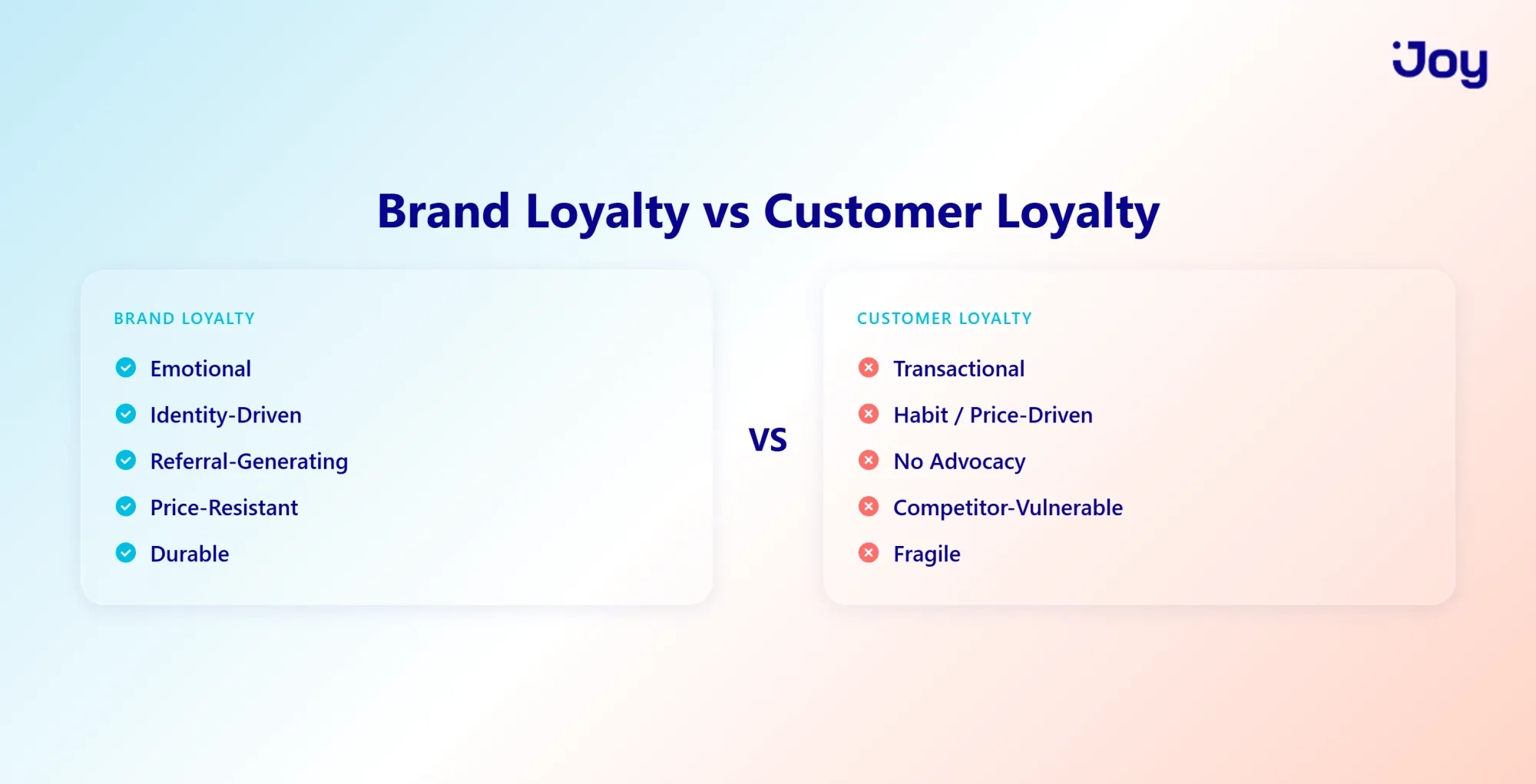
Customer loyalty is transactional and habitual. The customer keeps buying because of price, convenience, or routine, not because they genuinely prefer your brand. If a competitor offers 15% off tomorrow, they're gone.
The traits are predictable: price-sensitive, habit-driven, zero advocacy, and highly vulnerable to competitor offers. These customers return because you're the easiest option right now. They haven't chosen you. They just haven't left yet.
Consider Amazon Prime. Most Prime members stay because of free shipping, speed, and price. They're loyal to the deal, not the brand. Remove those perks and the relationship dissolves overnight.
Customer loyalty is rented. It lasts exactly as long as your value proposition holds a lead.
What Is Brand Loyalty?
Brand loyalty is something fundamentally different. It's emotional and preferential. The customer chooses your brand even when alternatives are cheaper, easier, or more convenient. They identify with the brand. They refer friends without being asked. And they forgive the occasional slip.
The traits tell the story: emotional, identity-driven, referral-generating, price-resistant, and durable. These customers aren't comparing options. They've already decided.
Apple is the clearest example. Apple users stay even at a significant price premium, and many actively recruit others into the ecosystem. They don't buy Apple because it's the cheapest option. They buy Apple because they see themselves as Apple people.
But trust is the foundation of all of this. Brand loyalty doesn't form without consistent trust in product quality, in communication, and in the post-purchase experience. Once that trust breaks, even emotional loyalty erodes fast.
So while customer loyalty depends on staying competitive, brand loyalty depends on staying consistent.
Brand Loyalty vs. Customer Loyalty: The Real Difference
Both types are defined. Now the distinction sharpens: a customer with 10 repeat purchases isn't automatically brand-loyal. They may be convenience-loyal, price-loyal, or simply inertia-loyal. The number of orders isn't the signal. The reason they return is.
Think back to the Amazon versus Apple contrast. On the surface, both show repeat-purchase behavior. Underneath, entirely different motivations drive each one. And that difference determines what happens when a competitor enters the picture.
The loyalty spectrum most merchants miss
What makes this more complex than a simple two-bucket model is that not all repeat buyers fall cleanly into one camp. There's a spectrum, from price-loyal to convenience-loyal to satisfaction-loyal to truly brand-loyal. Each level represents a deeper commitment and a more durable relationship.
Most merchants, though, operate in the price-loyal and convenience-loyal zones without realizing it. That makes their customer base far more vulnerable than their repeat purchase rate suggests.
So the real question isn't whether your customers are loyal. It's what kind of loyalty you've actually built, and what it's worth.
Case Studies: How Brand Loyalty and Customer Loyalty Show Up in the Real World
To truly understand how these engines function, it helps to look at the global giants that have mastered them. While the surface-level products differ, the underlying logic, whether driven by algorithmic convenience or emotional identity, is what dictates their long-term survival.
Case Study 1: Amazon: Customer Loyalty Through Convenience & Ecosystem
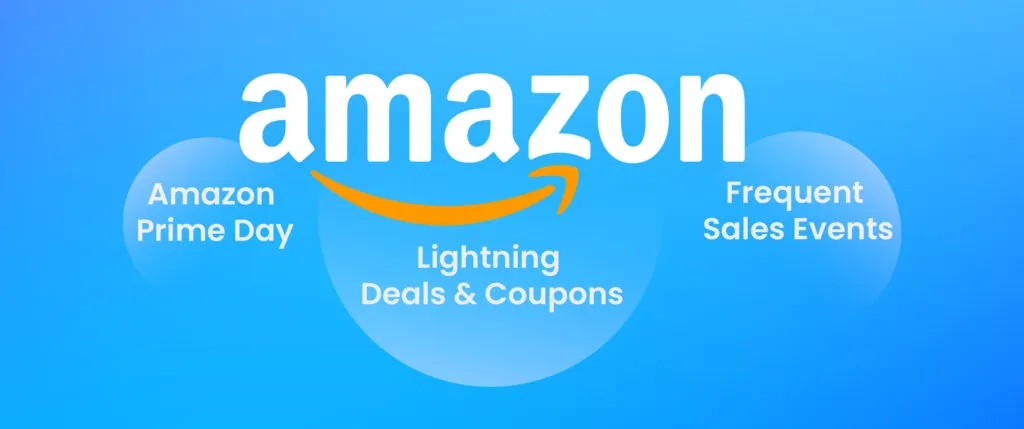
Amazon is the gold standard for customer loyalty, powered by what could be called the "Frictionless Engine". Their goal isn't necessarily to make you "love" the brand, but to make the alternative so inconvenient that you never leave.
According to Consumer Intelligence Research Partners (CIRP), Prime members spent $1,170 per year at Amazon in 2024, compared to $570 for non-members.
Once a customer pays the annual fee, users feel compelled to shop at Amazon to "get their money’s worth".
This feature automates the decision-making process, turning the purchase into a background habit. By removing the "point of friction," Amazon ensures repeat revenue without needing to re-win the customer's heart every month.
Key Insight: Amazon achieves high behavioral lock-in. While customers may not feel a deep emotional bond with the brand, the sheer logistical ease makes switching to a competitor feel like an unnecessary chore.
Case Study 2: Apple: Brand Loyalty Through Identity & Ecosystem Status
If Amazon owns the customer’s habits, Apple owns their identity.
-a68b57.webp)
Apple’s marketing rarely focuses on technical specs; instead, it emphasizes how the product makes users feel. This creates "Status Signaling," in which owning an iPhone is shorthand for being part of an innovative community.
Because the bond is emotional rather than transactional, Apple maintains incredible price elasticity.
In its Q1 2024 results, Apple reported an installed base of over 2.2 billion active devices. This proves that even as prices rise, the "Brand Soul" keeps users from downgrading to cheaper Android alternatives.
Key Insight: Brand loyalty protects margins. Apple doesn't have to compete on price because its customers aren't buying a phone; they are buying an entry ticket into an aspirational lifestyle.
Why Brand Loyalty Is Worth More: The ROI Gap
The difference between customer loyalty and brand loyalty shows up directly in revenue, margins, and growth rate.
Rob Markey of Bain & Company (Harvard Business Review, 2020) measured the gap: loyalty leaders (companies that sustain top-industry NPS rankings for 3+ years) grow revenues roughly 2 times as fast as their industry peers.
Brand-loyal customers do four things that transactional customers don't:
- They buy at full price, with no discount dependency
- They buy more frequently and across more categories
- They refer friends, generating new revenue at near-zero CAC
- They forgive mistakes, reducing churn from the inevitable service failures
And the compounding effect makes this even steeper. Bain & Company's research (HBR, 2014) found that a 5% increase in customer retention can drive a 25% to 95% increase in profits. The variance in that range depends on whether retained customers are truly loyal or just transactionally held. Brand loyalty is what pushes merchants toward the 95% end.
The cost of staying transactional is equally clear. When every retention win requires a discount, margins erode steadily. You're not building a customer base. You're renting one, deal by deal.
What Brand-Loyal Customers Actually Do Differently
The clearest proof of brand loyalty is how customers behave when they have a choice.
Motista research published in Harvard Business Review (2015) makes this concrete. Fully connected customers are 52% more valuable, on average, than those who are just highly satisfied. That finding is based on over 1 billion data points across 400+ brands and 30 industries over 8 years. Not a small sample.
The behavioral differences are striking. Motista's fashion retail data shows brand-loyal customers shop 46% more frequently than average customers, are 2.3x more willing to pay premium prices, and are 1.4x more likely to recommend the brand to others.
That last behavior (recommendation) is the most commercially valuable expression of brand loyalty. A brand-loyal customer who refers one friend has just generated a new customer at effectively zero CAC. And this compounds: every referred customer who also becomes brand-loyal creates another referral engine.
Yet brand loyalty is durable, not unconditional. PwC's Future of Customer Experience Survey (2018) found that 32% of customers will leave a brand they love after just one bad experience. The standard must be maintained.
When to Focus on Customer Loyalty vs Brand Loyalty
In the 2026 strategic roadmap, you cannot simply "do both" with equal intensity from day one.
While customer loyalty builds the foundation of your cash flow, brand loyalty builds the ceiling of your valuation.
The strategic question is not which one is “better.” The real question is which loyalty system your business needs most right now.
Prioritize Customer Loyalty When…
Focusing on the behavioral engine is critical when your primary goal is market penetration and survival. This is the "Utility Phase" of a business.
Below are 3 specific cases when your business needs to focus on customer loyalty:
Case #1: Early-stage brands need to stabilize repeat purchases
As a new entrant, you lack the "trust equity" needed for deep emotional bonds. You must first prove your reliability.
Behavioral systems (subscriptions, rewards, and frictionless checkout) help create repeat purchases before brand equity develops. This reduces the barrier to entry for skeptical prospects.
Case #2: High CAC requires strong retention to protect marketing spend
In industries where acquisition is expensive, such as ecommerce, fintech, or SaaS, customer loyalty mechanisms are necessary to protect marketing efficiency.
The system here is simple: every repeat purchase driven by a loyalty discount or ease of use lowers the effective cost of that customer. You aren't winning their heart yet; you are simply ensuring the initial investment in their acquisition pays off.
Case #3: Consumables products benefit from habit-driven reordering
If you sell high-frequency goods (like household cleaners or basic SaaS tools), your "Value Engine" is convenience.
The goal here is Behavioral Stabilization: making the repeat purchase so automatic via "Subscribe & Save" or "One-Click" models that the customer doesn't even think to look elsewhere.
In 2026, the winner in commodities is rarely the best brand, but the one with the least friction.
Invest in Brand Loyalty When…
While customer loyalty keeps transactions flowing, brand loyalty becomes critical when companies need pricing power and long-term differentiation.
Case #1: Competitive markets and margin pressure demand differentiation
When many competitors offer similar products, convenience alone cannot protect a brand.
In these markets, companies must create meaning, identity, and emotional preference.
For example, Apple has built one of the strongest brand loyalty systems in the world by combining product design, ecosystem integration, and cultural identity. Apple reported over 2 billion active devices globally, strengthening cross-device loyalty and repeat purchasing across its ecosystem.
Because the brand carries emotional value, customers often remain loyal even when cheaper alternatives exist.
Case #2: Long purchase cycles require emotional brand recall
For products bought once every few years (like cars or high-end mattresses), transactional loyalty is impossible because the "habit" never forms.
You must instead build permanent "mental real estate." By investing in brand storytelling and community, you ensure that when the 2029 replacement cycle hits, the "Identity Engine" triggers an automatic preference for your brand over a search-engine alternative.
Case #3: Premium positioning depends on perceived brand value
Luxury and premium brands depend heavily on brand loyalty because their products often cost significantly more than alternatives.
High-net-worth consumers do not want a coupon; they want a sense of belonging. As noted in LVMH’s recent strategic reports, luxury growth is driven by "desirability," which is fueled by brand loyalty and the emotional reward of being associated with a specific status or set of values.
Without emotional attachment or identity signaling, premium pricing becomes difficult to justify.
The Loyalty Upgrade Path: How to Move Customers from Transactional to Brand-Loyal
Most articles treat brand loyalty and customer loyalty as two separate types of customers. The upgrade path reframes them as two stages on a single journey and shows merchants how to engineer the transition.
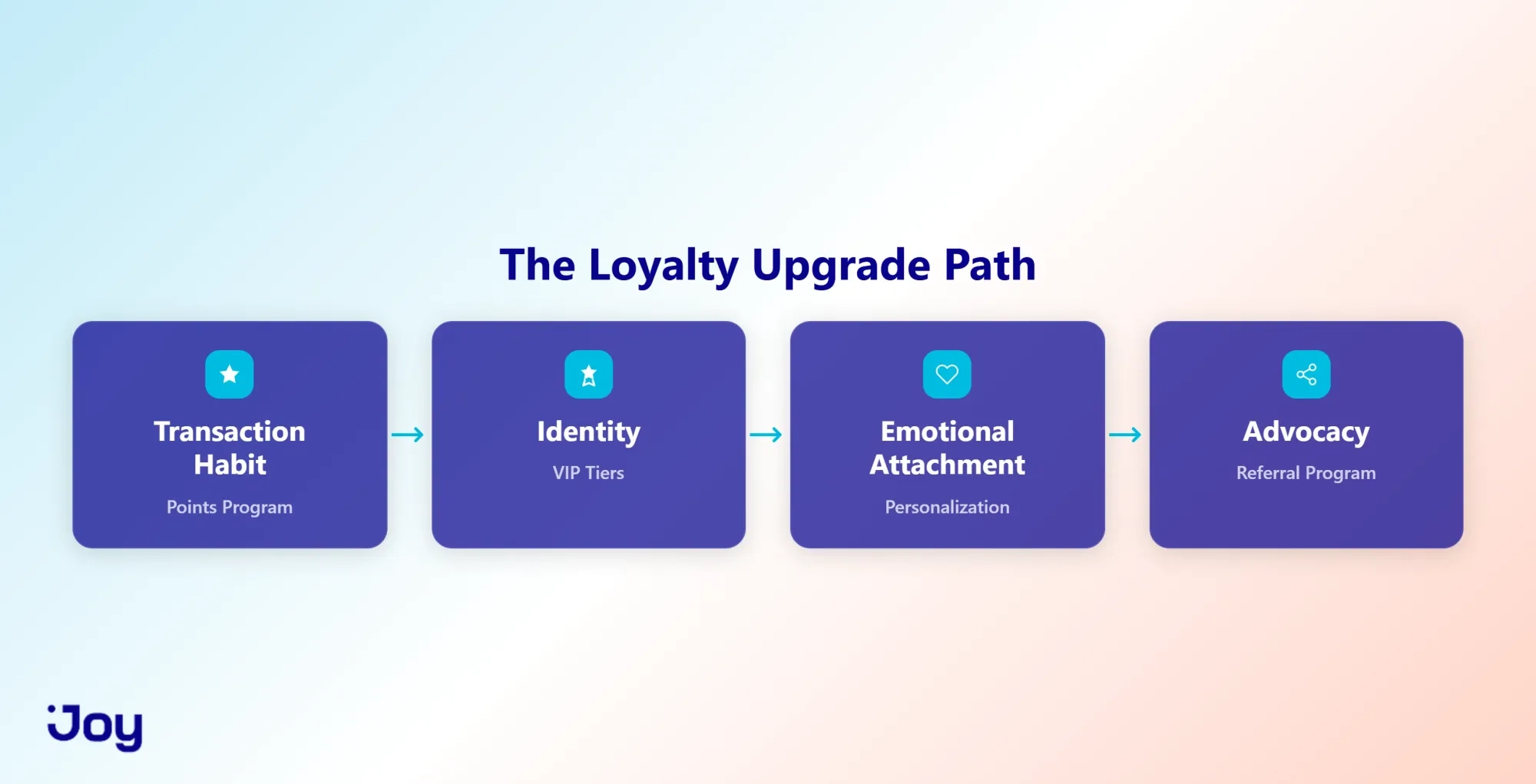
Stage 1: Build the Transaction Habit (Points Program)
Brand loyalty can't be established with a first-time buyer. The entry point is transaction habit: giving customers a structural reason to return that isn't a discount.
A points program is the mechanism. Every purchase earns points toward a reward. The customer returns not because you ran a sale, but because they've got a balance with value attached to it.
Unlike a discount, points create forward momentum. The customer is always partially through the journey to their next reward. That sense of accumulated progress is the foundation of the entire upgrade path. For more on engineering this first stage, see turning one-time buyers into repeat customers.
Stage 2: Assign Identity Through VIP Tiers
The transition from transactional to emotional loyalty happens when a customer stops thinking "I bought from this store" and starts thinking "I am a member of this brand."
VIP tiers engineer this shift. A customer who reaches Silver or Gold status has an identity attached to your brand, and protecting that status requires continued engagement. This is an emotional investment through status, not discounts.
The signal that this stage is working: customers start mentioning their tier. They feel seen. That's the first moment of brand attachment.
Stage 3: Add Emotional Triggers (Personalization + Milestones)
Identity alone isn't enough. Customers deepen their brand loyalty when they feel the brand knows them. Personalization isn't using a first name in an email. It's a reward that reflects their actual buying behavior: a birthday reward, a milestone acknowledgment for their 1-year anniversary, a bonus offer in the product category they actually buy.
PwC's Future of Customer Experience Survey (2018) quantifies the payoff: customers will pay a 16% price premium for superior experience. At this stage, experience includes feeling recognized. The operational cost of a birthday reward is minimal. The emotional impact? Disproportionate.
Stage 4: Activate Advocacy (Referral Program)
A customer who's moved through Stages 1 through 3 is now brand-loyal. The final stage converts that loyalty into an acquisition asset.
The referral program is a structured mechanism: give brand-loyal customers a shareable link, attach a reward to every successful referral, and let their advocacy generate new customers acquired through loyalty rather than ad spend.
This is where brand loyalty compounds. Each referred customer who joins the loyalty program is a potential new brand-loyal customer, restarting the upgrade path from Stage 1. One customer becomes two. Two become five. The math works in your favor for once.
When all four stages work together, the progression from transactional to brand-loyal becomes systematic rather than accidental.
Want to see how the upgrade path works in practice? Explore Joy's loyalty platform.
How to Measure Brand Loyalty vs. Customer Loyalty
The upgrade path shows what to build. Knowing whether it's actually working requires measurement. The repeat purchase rate alone doesn't distinguish between brand-loyal and transactional customers. You need three metrics working together.
| Metric | What It Measures | What It Signals |
|---|---|---|
| Repeat Purchase Rate | Transaction behavior: are they buying again? | Customer loyalty (transactional). Rising RPR is a floor, not a ceiling. |
| Net Promoter Score (NPS) | Emotional commitment: would they recommend you? | Brand loyalty intent. NPS above 50 in ecommerce is strong; above 70 is exceptional. |
| Referral Revenue | Active advocacy: are they generating new customers? | Brand loyalty in action. Track referral link clicks to orders to revenue for the clearest behavioral signal. |
The combination tells the full story:
When RPR is rising, but NPS stays flat, customers are returning transactionally. They're not emotionally committed. The program may be discount-dependent.
When RPR and NPS are both climbing, the loyalty system is building real attachment. The upgrade path is working.
And when RPR, NPS, and referral revenue are all growing together, brand loyalty is fully activated. Your customer base has become an acquisition engine.
Track these monthly. The direction matters more than the absolute number at any single point. For a deeper measurement guide, see customer loyalty analytics.
The Bottom Line
Customer loyalty is rented. It lasts as long as your price or convenience holds. Brand loyalty is owned. It persists when competitors discount, when you have a rough week, and when the market gets crowded.
The gap between a transactional repeat buyer and a brand advocate isn't luck or a great product alone. It's a deliberate system: points that build habit, tiers that build identity, personalization that builds emotional attachment, and referrals that activate advocacy.
Every month without that system is a month where transactional customers remain available to be poached. The merchants who command retention in 2026 are the ones who stopped renting customer loyalty and started owning brand loyalty.
Joy gives merchants the full upgrade path: points, tiers, personalization, referrals. See how it works.
Frequently Asked Questions
What is the difference between brand loyalty and customer loyalty?
Transactional vs. emotional. Customer loyalty means repeat purchases driven by price, habit, or convenience, and it disappears when a better offer shows up. Brand loyalty is preferential: customers choose your brand even when alternatives are cheaper. Brand loyalty produces advocacy and price tolerance. Customer loyalty produces repeat purchases that depend on staying competitive in terms of value.
Can customer loyalty become brand loyalty?
Yes, and that's the loyalty upgrade path. Transaction habit (built through points programs) creates a reason to return. VIP tiers build identity and emotional investment. Personalized rewards and milestone recognition foster a sense of being known. Referral programs activate advocacy. Move a customer through all four stages, and they've shifted from transactional to brand-loyal.
What are examples of brand loyalty vs. customer loyalty?
Apple is the classic example of brand loyalty: customers pay premium prices, self-organize communities, and buy across the full ecosystem without comparing alternatives.
Amazon Prime is the classic example of customer loyalty: members stay for convenience and free shipping, but would switch if a competitor offered a better deal.
Starbucks Rewards sits in between. It starts with transaction habit (points per purchase) and layers in emotional attachment through personalization and status (Gold Card identity).
How do you build brand loyalty for a Shopify store?
Four stages:
(1) Build a transaction habit with a points program that gives customers a reason to return that isn't a discount.
(2) Assign brand identity through VIP tiers with meaningful names and tier-exclusive rewards.
(3) Add emotional triggers (birthday rewards, purchase milestones, category-personalized bonuses) that signal the brand knows the customer.
(4) Activate advocacy with a referral program that converts brand-loyal customers into an acquisition channel.
How do you measure brand loyalty vs. customer loyalty?
Three metrics in combination:
- Repeat Purchase Rate (transactional behavior, signals customer loyalty).
- Net Promoter Score (emotional intent, signals brand loyalty building)
- Referral revenue (advocacy in action, signals brand loyalty fully activated).
Rising RPR, NPS, and referral revenue indicate the loyalty upgrade path is working at every stage.

Written by
Thomas Nguyen is the CEO & Co-founder of Joy, a loyalty solution for Shopify and eCommerce brands. With years of experience building high-performance Shopify apps, Thomas aims to help merchants grow through customizable and retention-focused tools.
Related reading
 Loyalty Strategy
Customer Satisfaction and Brand Loyalty: 2026 Growth Guide
25-35% of satisfied customers still switch silently. This guide explores the gap between customer satisfaction and brand loyalty — and the 4 metrics (NPS, CES, redemption rate, LTV) that turn happy buyers into emotionally connected advocates when acquisition costs are 4× higher.
 Thomas Nguyen
 Loyalty Strategy
Dimensions of Customer Loyalty: Why Discounts Alone Never Create Real Loyalty
Most loyalty programs run the same points-for-purchase mechanic—and customers bounce the moment a competitor offers more. Real loyalty has four dimensions, and brands that activate all four see 2–3× better retention. Here's what they are, and how to spot which one your program is missing.
Thomas Nguyen Loyalty Strategy
How Apple Applies Customer Loyalty: 4 Principles Behind 89% Retention
Apple has 89% customer retention and no points program, no VIP tiers, no rewards. Loyalty comes from four deliberate principles applied across every touchpoint. Here's how each one works, and what results it drives.
Thomas Nguyen Loyalty Strategy
Customer Loyalty Meaning: The Framework Most Brands Miss
89% of executives think customer loyalty is up. Only 39% of consumers agree — a 50-point perception gap (PwC, 2025). The fix starts with knowing what customer loyalty actually means. This guide breaks down the dual nature, 6 types, and a 2x2 matrix to diagnose your brand.
Thomas Nguyen Loyalty Strategy
Brand Loyalty Pyramid: 5 Strategic Levels for 2026 Growth
Not all customers are loyal in the same way. The brand loyalty pyramid maps 5 strategic levels - from price-sensitive switchers to fanatic advocates - using David Aaker's framework. This guide breaks down each tier and the tactics to move customers up the ladder in 2026.
Thomas Nguyen Loyalty Strategy
Customer Loyalty Models Explained: From Framework to Action
Most brands launch loyalty programs on gut instinct — then wonder why members never redeem. A customer loyalty model is the diagnostic framework that fixes that. This guide breaks down 6 proven models and how to pick the right one for your brand.
Thomas Nguyen