
Customer Loyalty Management: Your Guide to Maximizing Repeat Revenue
Customer loyalty management is the system that turns one-time buyers into repeat revenue. This guide covers segmentation, reward design, omnichannel sync, and how to measure ROI — with frameworks you can put to work this quarter.

Summarize this post with AI
Most ecommerce brands launch a loyalty program, watch a few thousand customers sign up, and then... nothing. Points pile up. Redemptions trickle in. Repeat purchase rates barely move. The program isn't broken — it's just unmanaged.
That gap between having a loyalty program and running one is where most repeat revenue quietly leaks out. With acquisition costs climbing and customer lifetime value flat, the brands pulling ahead aren't the ones with the flashiest rewards. They're the ones treating loyalty as an ongoing discipline: picking the right model, segmenting members, designing rewards around real behavior, syncing the experience across channels, and tracking ROI like any other revenue line.
This guide walks through exactly how to do that — the five program types and when to use each, a reward-design framework that goes beyond discounts, how to make loyalty work across online and in-store, and the metrics that prove it's working. Everything here is built to put into practice this quarter, not someday.
What Is Customer Loyalty Management?
Customer loyalty management is the strategic process of designing, launching, and continuously optimizing a loyalty program to maximize repeat purchases, increase customer lifetime value, and reduce churn. It covers everything from choosing your program type and structuring rewards to segmenting customers, tracking ROI, and iterating based on real performance data. In practice, it's the operational discipline that turns one-time buyers into repeat customers who spend more, refer more, and stay longer.
Why Customer Loyalty Management Matters for Your Business
Acquiring a new customer costs 5 to 25 times more than retaining an existing one, per research published in the Harvard Business Review. That single stat explains why so many brands feel crushed between rising acquisition costs and flat customer lifetime value. And yet most loyalty programs still run on autopilot, collecting points with zero strategy behind them.
That's the core problem customer loyalty management solves. Instead of treating loyalty as a passive feature, effective management turns your program into an active revenue engine. Brands that commit to this approach consistently see higher repeat purchase rates, stronger member engagement, and measurable ROI that justifies every dollar invested.
The proof isn't theoretical. MicroPerfumes saw 10x participation growth and 3.4x higher customer lifetime value for loyalty redeemers compared to non-redeemers. Perry Ellis achieved a 25% conversion rate increase through incentive optimization alone. Not outliers. Predictable results of disciplined loyalty program management.
So the question isn't whether customer loyalty management matters. It's how to implement it effectively.
The 5 Program Types in Customer Loyalty Management
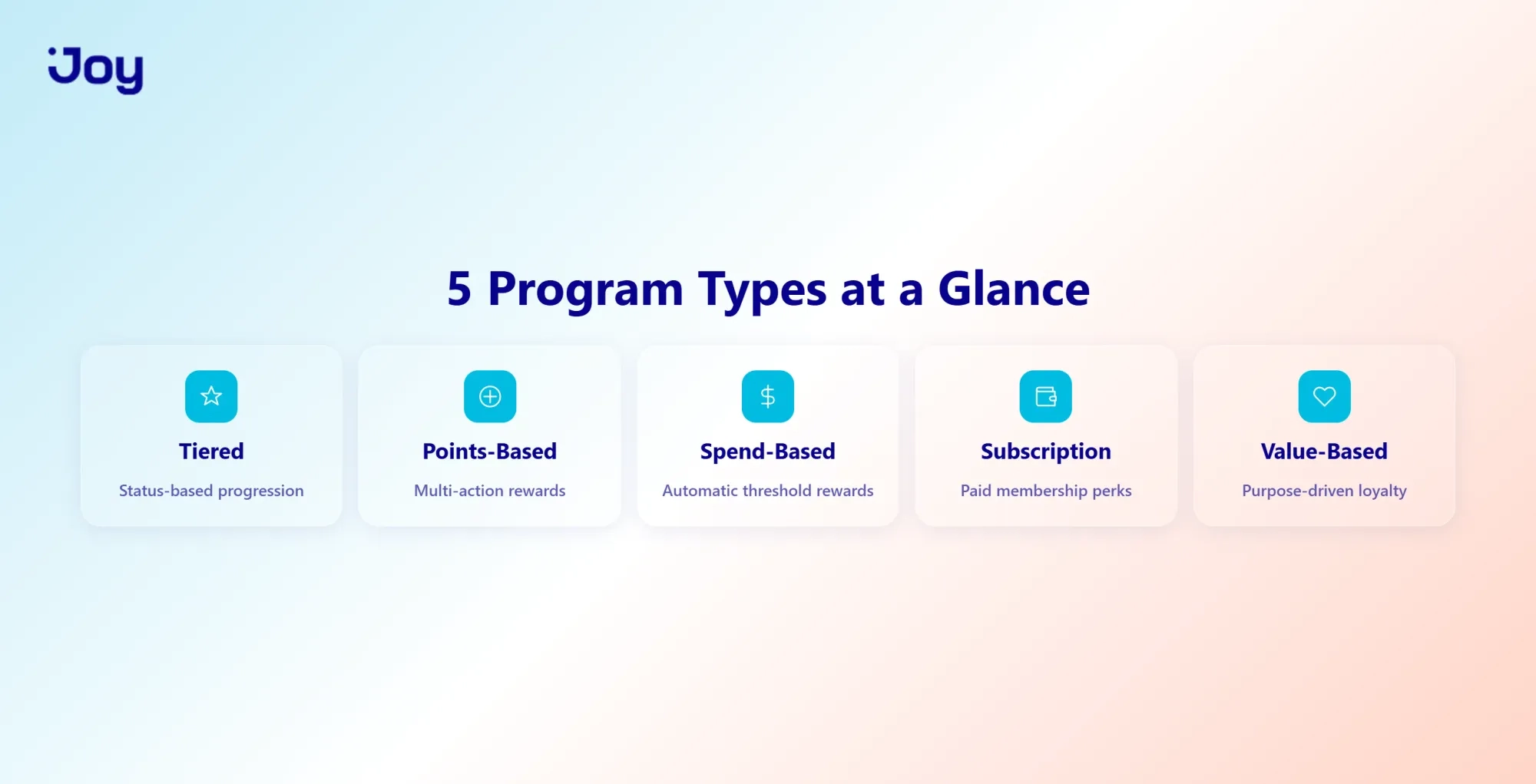
Every loyalty strategy begins with choosing the right program model. Each type serves a different business goal, attracts a different customer behavior, and scales differently as your brand grows. You need to understand these archetypes before building anything on top of them. For a deeper breakdown, see this guide on types of loyalty programs.
Tiered Loyalty Programs: Rewarding Status and Progression
Tiered programs create aspiration. Members start at a base level and unlock progressively better perks as they hit spending or activity milestones. Silver, Gold, Platinum. Starbucks built its entire rewards ecosystem around this model, where members earn stars that unlock higher tiers with increasingly exclusive benefits. The psychological effect is powerful: customers see the next level and actively work toward it, which naturally increases purchase frequency and average order value. For brands with strong VIP loyalty program ambitions, tiers are the foundation.
Points-Based Loyalty: Maximum Flexibility and Scalability
Points-based programs reward members for virtually any action, not just purchases. Members earn loyalty points for reviews, referrals, social shares, email signups, and more. Chipotle uses this model effectively, awarding points per dollar spent that drive repeat purchases through its mobile app. But flexibility is the real advantage here. According to Loyalty360, 75% of customers want rewards for non-transactional activity. Points-based programs unlock exactly that, making them the most adaptable model for brands wanting to incentivize multiple behaviors at once.
Spend-Based Rewards: Automatic Incentives Without Friction
Spend-based programs remove complexity entirely. Members hit a spending threshold and automatically receive a reward. No points to track, no redemption steps to navigate. Gap and Old Navy use this approach, sending automatic reward emails once customers cross a spending milestone. For brands with high transaction frequency and price-sensitive audiences, this model delivers immediate gratification with the lowest possible friction.
Subscription Model Loyalty: Predictable Revenue and Retention
Subscription programs ask members to invest upfront through a monthly or annual fee in exchange for exclusive benefits. Amazon Prime is the definitive example: a flat annual fee unlocks free shipping, video streaming, and an entire perks ecosystem. The "skin in the game" effect drives deeper engagement because members who've paid want to maximize their membership value. This model works best for brands with high average order value and a strong product ecosystem that justifies the commitment.
Value-Based Loyalty Programs: Purpose as Your Differentiator
Value-based programs connect purchases to a cause. Members earn rewards by supporting something they believe in, whether that's planting trees, donating to charity, or funding community initiatives. TOMS pioneered this approach with its one-for-one giving model. For brands with a strong social mission and younger audiences, value-based loyalty builds emotional connection that competitors simply can't replicate.
Across all five types, the key to effective customer loyalty management is flexibility. The strongest programs often blend elements from multiple models, combining tiered progression with points-based earning or layering value-based components on top of subscription benefits. Platforms like Joy give merchants the freedom to choose one model or hybrid-blend without platform constraints, so the program can evolve as the business scales.
Segmentation and Personalization in Customer Loyalty Management
Choosing the right program type is step one. But what separates thriving programs from stagnant ones is how well you segment your members and shape their experience. One-size-fits-all loyalty consistently underperforms because different customers have fundamentally different motivations. Treat them identically and you waste both budget and opportunity.
Identifying Customer Segments: 5 Key Behavioral Cohorts
Behavioral segmentation matters more than demographics for loyalty program management. Five cohorts every program should track:
High-Spenders represent your top 20% by order value. These members respond to VIP treatment, early access to sales, and exclusive products that reinforce their status.
Frequent Purchasers buy every two to four weeks and form the engagement backbone of your program. They respond to milestone celebrations, double-point events, and community recognition.
New Members are in their critical first 30 days. First-month churn averages 18%, so this window demands immediate value through welcome bonuses and early-purchase incentives.
Dormant Members haven't purchased in 90 or more days. They represent your lowest-hanging fruit for quick CLV recovery because they already know your brand and products.
VIP Advocates combine high spending with high engagement. These are your brand ambassadors who drive referral programs and organic word-of-mouth growth.
Segment-Specific Rewards: Tailoring Incentives to Drive Higher CLV
Different segments respond to different motivations, and personalization is what turns that insight into revenue. High-spenders value exclusivity, so give them early access to sales, limited-edition products, and concierge-level support that reinforces their status. Frequent purchasers respond to momentum: double-point weekends and milestone celebrations ("Your 50th order deserves something special") keep them engaged between purchases. New members need quick wins. Offer a welcome bonus they can redeem immediately, followed by an early-purchase incentive within the first 30 days. Dormant members need a compelling reason to return, so deploy a personalized win-back offer with a clear expiration window ("We miss you: 30% off, expires Friday").
The results? They speak for themselves. MicroPerfumes achieved 10x loyalty participation growth and 3.4x higher customer lifetime value by implementing segment-specific reward strategies. Their repeat purchase rate for loyalty members reached 3.5x higher than non-members. These aren't incremental gains. They're the kind of transformation that fundamentally changes a brand's retention economics.
Automating Win-Back Campaigns: Reactivating Dormant Members
Dormant members aren't lost. They're simply inactive, and the right incentive at the right time brings them back. An effective win-back sequence follows a three-touch pattern:
The first email fires at day one of dormancy with a soft re-engagement message and a general reminder of program benefits. Email two arrives at day seven with a personal incentive (something like 30% off plus 100 bonus points with a limited redemption window). The third email at day 14 delivers a last-chance message reminding members what they stand to lose if their VIP status expires.
Automation eliminates the manual work. Modern loyalty platforms flag dormant members automatically, trigger the sequence, and track conversions without requiring any coding. When the member returns, a surprise bonus reinforces the positive experience and restarts the loyalty loop.
Reward Design That Drives Repeat Purchases in Customer Loyalty Management
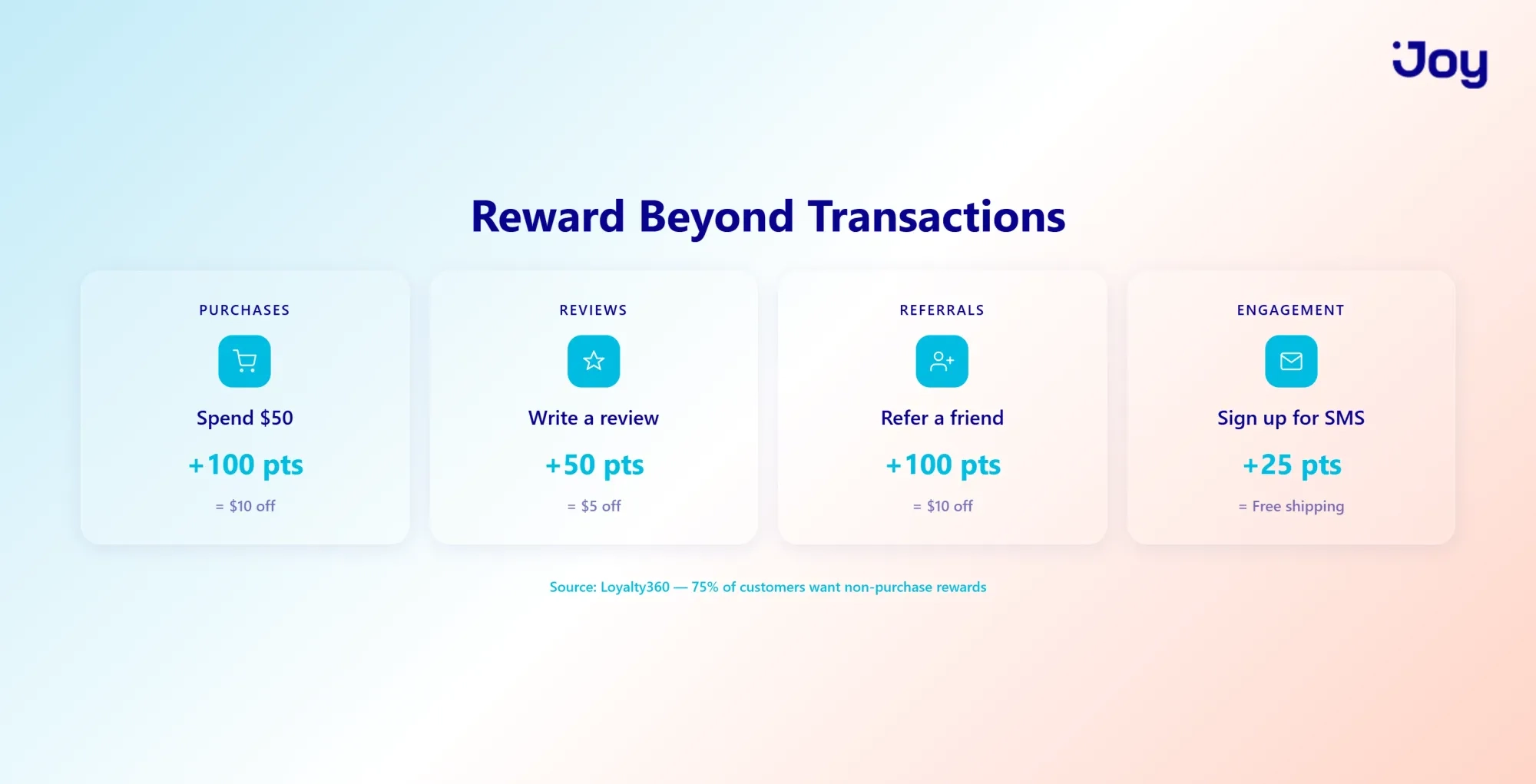
Segmentation tells you who your members are. Reward design determines what keeps them coming back. Most brands only reward purchases, but that single lever leaves enormous value on the table. As noted earlier, 75% of customers want rewards for reviews, referrals, social shares, and other non-purchase actions (Loyalty360). Building a multi-lever reward architecture is what separates good programs from great ones.
Rewarding Actions Beyond Spending: Reviews, Referrals, and Social Proof
Every non-purchase action a member takes multiplies your program's impact. Points for verified product reviews generate social proof. Points for successful referrals cut your customer acquisition cost. Points for social shares and user-generated content create free marketing that reaches audiences you'd never find through paid channels alone.
And the results are measurable. Jane Iredale achieved a 112% increase in review volume by integrating review incentives with their loyalty program. Perry Ellis saw a 25% conversion rate increase through incentive optimization across multiple reward types. With 89% of consumers trusting friends and family recommendations according to Ipsos research, referral rewards remain one of the highest-ROI investments a brand can make.
Multi-Path Redemption: Balancing Quick Wins and Aspirational Goals
Redemption psychology requires two tracks running at the same time. Short-term quick wins (a welcome bonus of 50 points, micro-redemptions where 25 points equals $2 off) keep members engaged month to month. Long-term aspirational goals (VIP tier unlocks at 1,000 points, exclusive products at 5,000 points) keep members loyal year-round. Industry benchmarks show that redemption rates reach 20 to 40% when rewards are visible, attainable, and easy to claim.
Why does the dual-path approach matter so much? Because members who never redeem eventually disengage. Quick wins build the habit. Aspirational goals build the commitment. Together, they maximize total program engagement across every segment.
Time-Limited Incentives and Surprise-and-Delight: Creating Urgency
Static offers lose urgency over time. Limited-time campaigns counter that by creating scarcity. Flash sales with four to twelve-hour windows drive app engagement, especially when paired with countdown timers that make the deadline visible. The optimal campaign window is 24 to 72 hours, running Tuesday through Thursday when open rates peak.
Surprise-and-delight moments work differently. A random 50-point bonus after a purchase, an unexpected tier upgrade when a member is close to qualifying, or a simple "thank you bonus" for high-value purchases. All of these build emotional loyalty. The key is restraint: one to two surprise moments per year keeps them special, while monthly themed campaigns maintain consistent engagement without diminishing returns.
Omnichannel Customer Loyalty Management: Seamless Rewards Across Every Channel
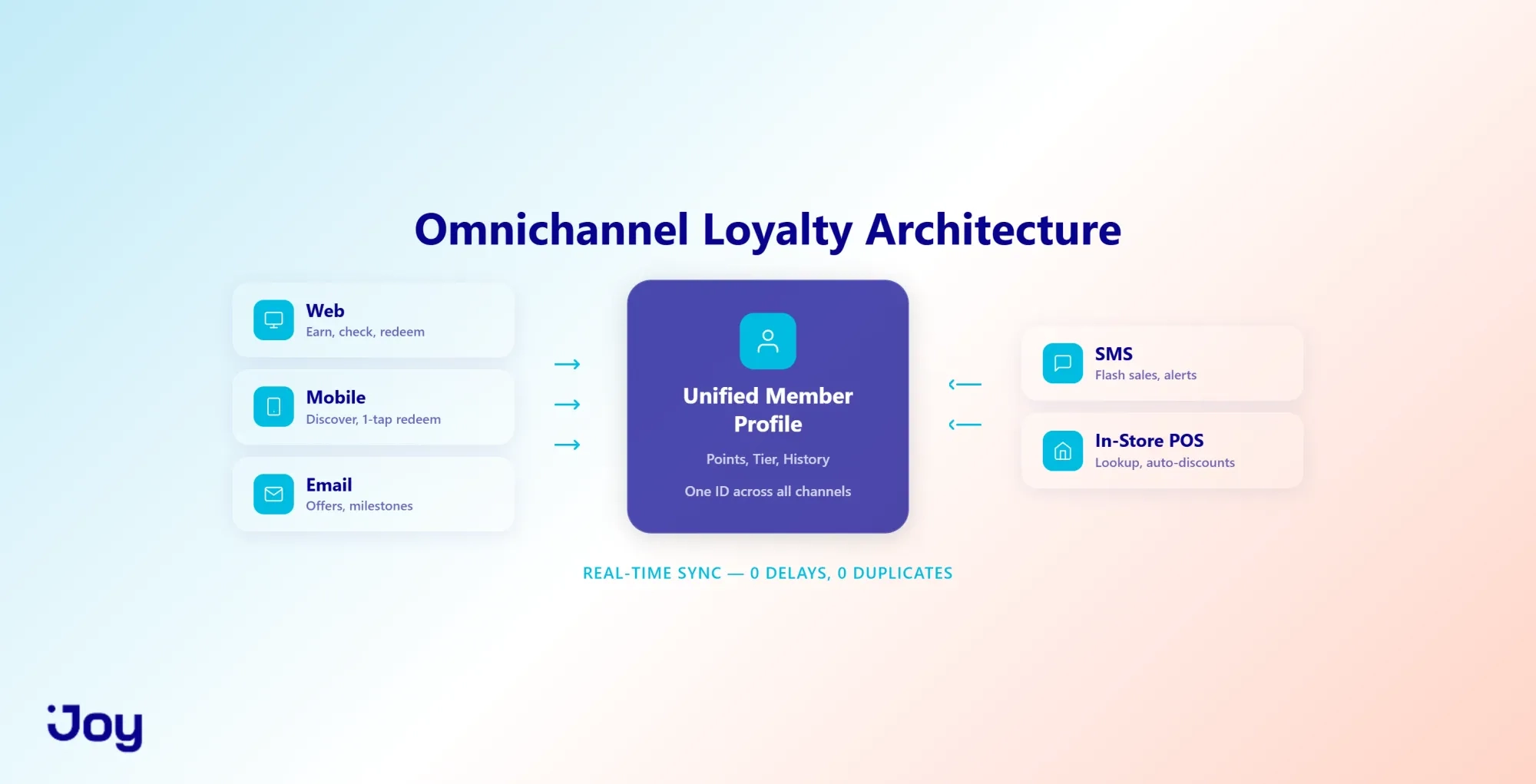
Even the best rewards lose their impact when members can only access them through a single channel. Customers today expect loyalty to follow them everywhere: web, mobile app, email, SMS, and in-store POS. But most brands still operate with data silos and duplicate accounts that fracture the member experience. Omnichannel customer loyalty management solves this by unifying identity, syncing data in real-time, and enabling cross-channel redemption.
Unify Customer Loyalty Identity: One Profile, Every Channel
The problem is straightforward: most brands treat each channel as a separate system. A web loyalty ID, a mobile app ID, and an in-store ID create duplicate accounts, split point balances, and inconsistent tier status. The fix is equally straightforward. One unified customer identity, anchored to a single email or phone number, that makes sure every touchpoint reflects the same member data.
When a member earns 50 points on the web, they see that balance immediately in the mobile app and can redeem it through an in-store coupon. Tier status is consistent everywhere. Purchase history is visible across all channels. Brands with unified customer identity consistently report significantly higher retention rates than those running fragmented, siloed data across channels.
Real-Time Omnichannel Sync: Points Earned Anywhere, Redeemable Everywhere
Real-time sync means points earned on the web appear in the mobile app within seconds. Not hours, not days. This consistency builds trust. If a member sees 50 points on the web but only 25 on mobile, they lose confidence in the entire system.
Each channel also serves a distinct function within the loyalty ecosystem. The web is where members earn points and check balances at checkout. Mobile is the primary discovery channel, and app-based loyalty members consistently show higher retention than those without mobile access. Email delivers personalized offers, milestone alerts, and redemption reminders. SMS creates urgency through flash sales and tier expiration alerts. In-store POS lets staff look up members instantly and apply discounts automatically.
Together, omnichannel programs consistently outperform single-channel programs in repeat purchase rates. The investment in unification pays for itself through reduced churn and increased engagement.
Mobile Apps and Email as Loyalty Hubs: Engagement Without Friction
Mobile is where members check their loyalty status more than any other channel. The ideal habit loop is simple: open app, check balance, see a personalized offer, redeem, and purchase. For this to work, the design requirements are non-negotiable: instant load times, clear point displays, one-tap redemption, and push notifications for time-limited offers.
Email functions as the communication engine that keeps the rest of the system connected. Point update emails, exclusive segment-specific offers, redemption reminders, and re-engagement sequences all run through email. SMS adds urgency with flash sales and tier expiration alerts delivered directly to the member's phone.
The underlying principle across all channels is friction reduction. If it takes five clicks to redeem, members won't bother. One click, and they will. That's the difference between a loyalty program retention rate that grows and one that stagnates.
Analytics and ROI Dashboards in Customer Loyalty Management
A connected omnichannel experience generates data at every touchpoint. The next challenge is translating that data into measurable ROI that justifies your program's existence to leadership. Executives don't fund loyalty programs because they sound like a good idea. They fund them because the numbers prove the value. Effective customer loyalty analytics make that case undeniable.
Key Metrics in Customer Loyalty Management: From LTV to Assisted Orders
Six core metrics form the foundation of every loyalty ROI analysis:
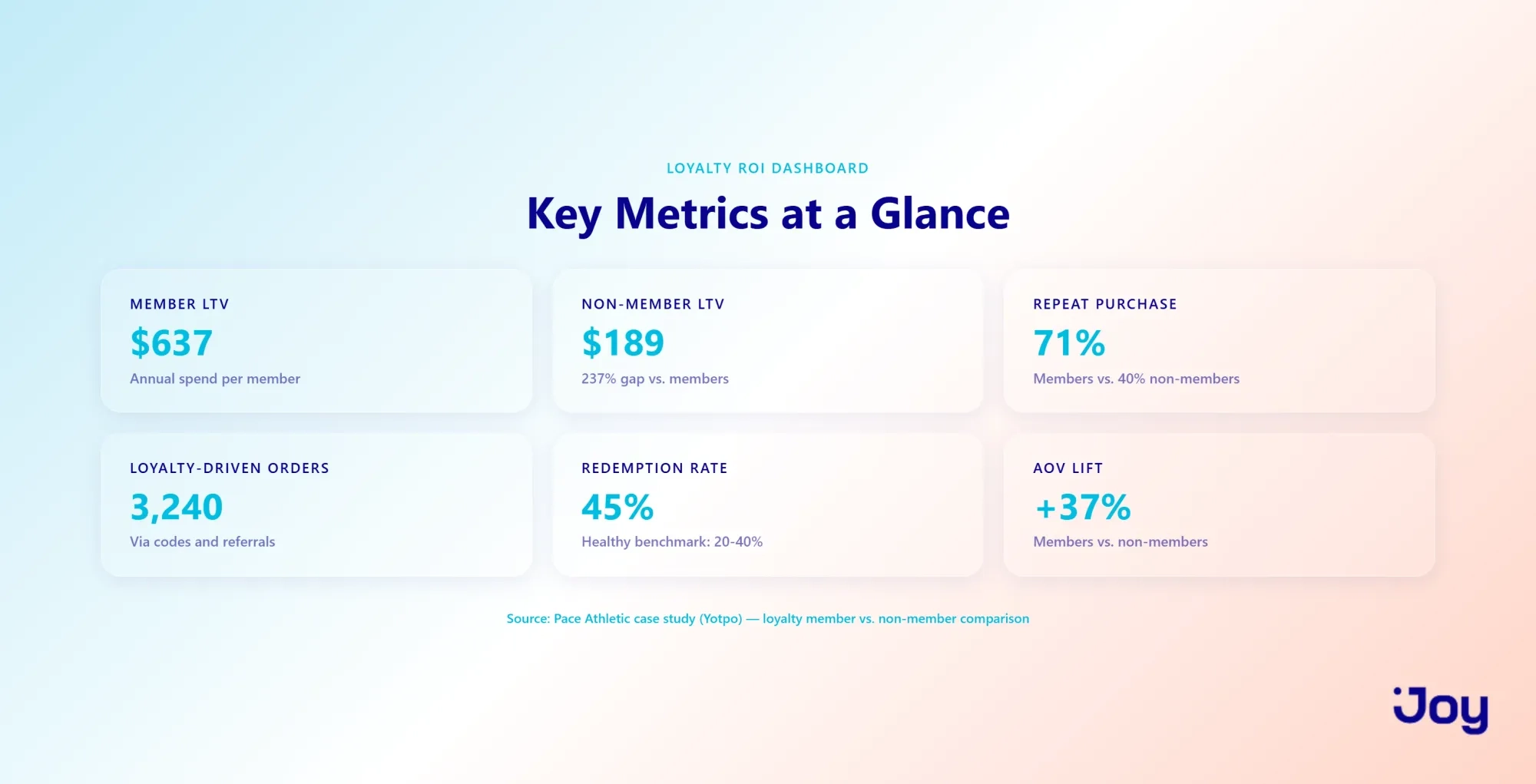
Member LTV measures total revenue from a loyalty member over their lifetime. For Pace Athletic, this was $637 annually. Non-Member LTV is the control group, which for Pace Athletic was $189 (a 237% difference). Repeat Purchase Rate tracks the percentage of members making two or more purchases, with loyalty members at Pace Athletic hitting 71% versus 40% for non-members. Redemption Rate reveals how actively members use their rewards, with healthy programs achieving 20 to 40% when friction is low. AOV Lift quantifies the average order value increase for members versus non-members. And Assisted Orders, which tracks orders placed via loyalty-generated codes and referrals, shows the true revenue impact of your program.
Secondary metrics like CAC payback period, revenue lift percentage, and churn rate by segment provide deeper operational insight. Together, these metrics convert loyalty strategy into concrete revenue results that stakeholders can evaluate.
Building Your Loyalty ROI Dashboard
A dashboard isn't just a report. It's your command center for loyalty optimization. The visual hierarchy should place three north-star KPIs at the top: Member LTV, Repeat Purchase Rate, and Assisted Orders. Supporting metrics like Redemption Rate, AOV Lift, and Churn Rate occupy the middle row. Trend lines showing 30-day progression anchor the bottom.
Review cadence matters just as much as the dashboard itself. Daily spot checks on the top three KPIs catch anomalies early. Weekly trend reviews flag directional shifts. Monthly deep analyses identify which segments are declining, which reward types are underperforming, and where the next optimization test should focus.
Joy's ROI dashboards display member versus non-member LTV side-by-side, track Assisted Orders by campaign, and calculate payback period in real-time. No Excel spreadsheets, no manual reporting. Everything's built in, so merchants spend time acting on insights rather than gathering them.
Proving Loyalty ROI to Leadership
The business case formula is simple: Total Incremental Revenue (Member LTV multiplied by member count) minus Program Cost (platform fees plus marketing plus rewards payout) equals Net ROI. Using Pace Athletic's numbers, 10,000 loyalty members at $637 annual LTV minus $50,000 in program cost equals $6.32 million in net ROI.
Present this to leadership across four slides. First, Member LTV versus Non-Member LTV ($637 versus $189). Second, year-over-year trend showing growth trajectory. Third, segment performance highlighting which cohorts drive the most revenue. Fourth, Assisted Orders showing actual orders driven by the loyalty program.
The key is data, not emotion. "Loyalty members have a 71% repeat purchase rate versus 40% for non-members" wins budget. "Loyalty is important" doesn't. For detailed formulas and frameworks, see this complete guide to loyalty program ROI.
AI and Predictive Analytics in Customer Loyalty Management
Manual analysis and segmentation scale only so far. When your member base grows into the thousands, AI becomes the force multiplier that handles complexity no human team can match. This is where customer loyalty management shifts from reactive to predictive.
Churn Prediction: Identify and Save At-Risk Members
AI churn prediction models identify members at risk of lapsing before they actually leave. The system learns from historical data, analyzing signals like declining purchase frequency, increasing time between orders, dropping redemption rates, and unopened emails. Modern machine learning models achieve high prediction accuracy, identifying which members are likely to churn within the next 30 to 90 days based on behavioral patterns.
Once the model flags a member as high-risk, the system automatically enrolls them into a win-back sequence. No manual intervention required. Brands using churn prediction reduce churn significantly faster than those relying on static campaigns alone. That kind of proactive intervention turns a data-driven loyalty program into a genuine competitive advantage.
Behavioral AI for Loyalty Personalization at Scale
The scaling problem is real. Manual personalization works for 100 members. Not for 10,000. Behavioral AI solves this by learning which reward types each member prefers, then auto-recommending the right incentive at the right time.
The system observes patterns continuously. If Member A always redeems for exclusive products rather than discounts, AI prioritizes exclusive offers for that member. If Segment C consists of high-spenders who value status, AI emphasizes tier progression messaging. If new members in Segment D need quick wins, AI recommends micro-redemptions early in their journey to drive that critical second purchase within 90 days.
As member behavior changes, the model adapts in real-time. But here's the requirement: clean data and ongoing feedback loops. Models need monthly retraining to stay accurate. AI isn't "set and forget." It's an accelerator that still demands strategic oversight.
Continuous Optimization in Customer Loyalty Management
AI accelerates optimization, but technology alone doesn't sustain a loyalty program. Consistent iteration does. The brands that win at customer loyalty management treat their programs as living systems that evolve monthly, not annual set-and-forget initiatives. Programs that stagnate fail for predictable reasons.
Feedback Loops: Listen and Iterate
Members tell you what's working and what's broken if you create the channels to listen. Three feedback mechanisms matter most. Exit surveys reveal why members are leaving: tier thresholds too high, rewards too boring, or redemption too complicated. Post-redemption surveys confirm whether members actually valued the reward they claimed. And Net Promoter Score tracking (anything above 50 is excellent, above 30 is strong) measures overall program health over time.
The formula is simple: feedback leads to hypothesis, hypothesis leads to testing, testing leads to implementation. Monthly aggregation of themes ("30% of exits say rewards are boring") provides the direction. Data confirms whether the fix worked.
Monthly Review Cycles: Spot Trends Early
Every month, review your top six KPIs: Member LTV, Repeat Purchase Rate, Redemption Rate, loyalty-driven orders, Churn Rate, and AOV Lift. If any metric drops more than 10% from last month, flag it and investigate immediately. Break performance down by cohort to identify whether the decline is concentrated in new members, dormant segments, or VIPs.
A 30-minute monthly standup is sufficient. Five minutes reviewing metrics, ten minutes identifying outliers, fifteen minutes planning one to two optimization tests for the next quarter. First Monday of each month, every month. This rhythm catches problems early, long before they compound into Q4 surprises.
A/B Testing: Data-Driven Iteration
Run one to two tests per quarter. Test tier thresholds (is Gold too hard to reach?), reward types (discounts versus exclusive products), email send times, welcome bonus amounts, and redemption friction (one-click versus three-click paths). The framework is consistent: form a hypothesis, split your audience 50/50, run the test for two to four weeks, analyze the results, and implement the winner permanently.
Here's what that looks like in practice. November: 20% drop in referral redemptions. December hypothesis: adding five bonus points will increase referral conversions. Test: 50% receive the bonus, 50% don't. Result: the bonus group converts 15% higher. January: implement permanently. That's how A/B testing turns "maybe it works" into "we know it works."
Start Your Customer Loyalty Management Journey Today
The framework is clear: program type selection, behavioral segmentation, multi-lever reward design, omnichannel delivery, analytics-driven ROI measurement, AI-powered personalization, and continuous optimization through feedback loops and A/B testing. Each layer builds on the one before it, and together they form a customer retention strategy that compounds over time.
If you're implementing for the first time, start with segmentation. It delivers the highest ROI with the lowest complexity. Then layer in omnichannel sync for scale, and add AI-powered personalization as your member base grows.
The most common mistake? Launching a loyalty program and then ignoring it. The brands that win, the ones hitting 264% revenue growth and 3.5x repeat purchase rates, treat loyalty management as an ongoing discipline. Not a one-time project.
Joy handles the infrastructure: segmentation, omnichannel sync, ROI tracking, and Assisted Orders measurement, so you focus on strategy, not setup. Start free on Shopify, no credit card required. Or book a demo to see how it works for your store.
Frequently Asked Questions About Customer Loyalty Management
What is customer loyalty management?
It's the strategic process of designing, launching, and continuously optimizing a loyalty program to maximize repeat purchases, increase customer lifetime value, and reduce churn. It encompasses program type selection, reward design, segmentation, omnichannel delivery, analytics, and ongoing iteration.
How do you measure loyalty program ROI?
(Member LTV multiplied by member count) minus Program Cost equals Net ROI. For context, Pace Athletic's loyalty members spend $637 annually versus $189 for non-members, making the program's value clear and defensible.
What are the main types of loyalty programs?
Five primary types: tiered (status-based progression), points-based (flexible multi-action rewards), spend-based (automatic threshold rewards), subscription (paid membership benefits), and value-based (purpose-driven loyalty). Most successful programs blend elements from multiple types.
How much does a loyalty program cost to run?
Platform fees for Shopify apps range from $0 to $500 or more per month. The real cost includes rewards payout and marketing investment. ROI typically exceeds total cost within 6 to 12 months for well-managed programs.
What metrics should I track for my loyalty program?
Six that matter most: Member LTV, Repeat Purchase Rate, Redemption Rate, AOV Lift, Churn Rate, and loyalty-driven orders (orders placed via referral links or loyalty discount codes). These metrics directly connect loyalty activity to revenue outcomes.
How do I re-engage inactive loyalty members?
A three-touch win-back sequence: soft reminder, personal incentive with expiration, and a last-chance message. Well-executed win-back campaigns convert 15 to 30% of dormant members.
Can smaller Shopify stores benefit from loyalty programs?
Yes. Start with a points-based model (lowest complexity) and add tiers as you scale. Even stores with 100 or more orders per month see measurable repeat purchase lift from a well-managed program.
How often should I update my loyalty program?
Monthly metric reviews, quarterly A/B tests, and an annual strategy refresh. Static programs stagnate. Continuous optimization is what separates growing programs from declining ones.

Written by
Thomas Nguyen is the CEO & Co-founder of Joy, a loyalty solution for Shopify and eCommerce brands. With years of experience building high-performance Shopify apps, Thomas aims to help merchants grow through customizable and retention-focused tools.
Related reading
 Loyalty Strategy
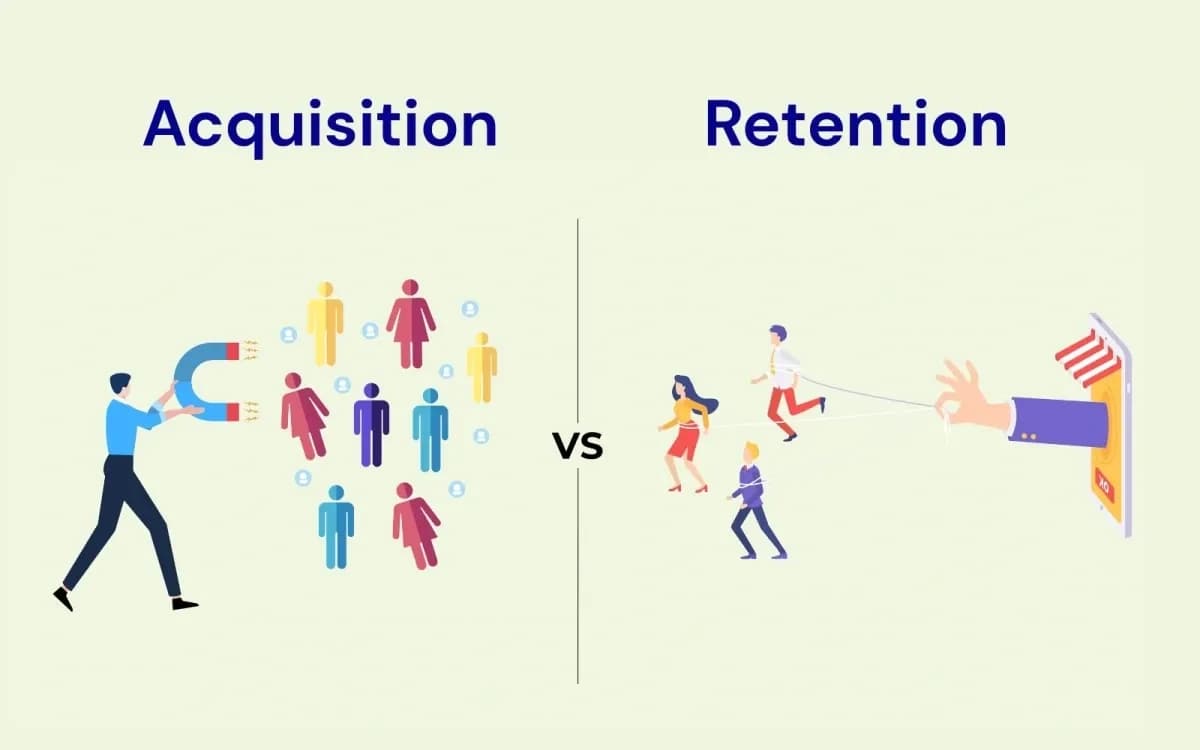
Customer Acquisition vs Retention: Where to Put Your Next Dollar
Customer acquisition and retention aren't a contest. Here's what each really costs, when to prioritize which, and a simple LTV:CAC way to decide your split.
 Thomas Nguyen
 Loyalty Strategy
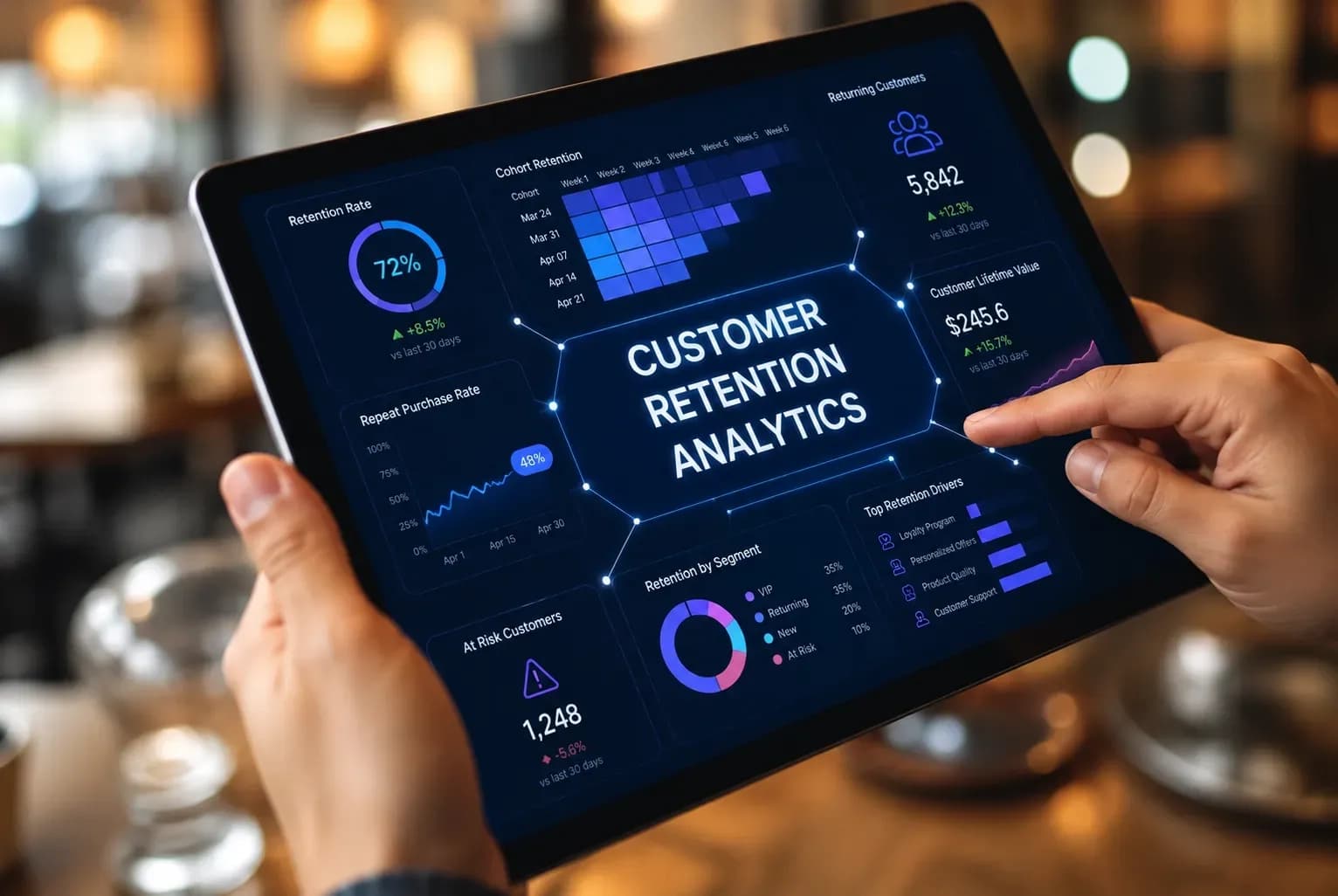
Customer Retention Analytics: Turn Your Data Into Retention Action
Most retention guides stop at the numbers. This one shows how to read your retention data and turn each metric into a concrete loyalty play for your Shopify store.
Thomas Nguyen Loyalty Strategy
How to Measure Customer Loyalty: 8 Metrics That Matter
Nearly half of businesses don't track their retention rate. This guide breaks down 8 customer loyalty metrics — with formulas, ecommerce benchmarks, and how to pick the 3 that actually matter for your store.
Thomas Nguyen Loyalty Strategy
Three Stages of Brand Loyalty: Mastering the 2026 ROI Strategies
From "knowing" your brand to "refusing" any other. The three stages of brand loyalty — Recognition, Preference, Insistence — map how customers actually move from awareness to advocacy. This guide breaks down each stage and the tactics to climb the ladder when acquisition costs are 4× higher.
Thomas Nguyen Loyalty Strategy
Customer Satisfaction and Brand Loyalty: 2026 Growth Guide
25-35% of satisfied customers still switch silently. This guide explores the gap between customer satisfaction and brand loyalty — and the 4 metrics (NPS, CES, redemption rate, LTV) that turn happy buyers into emotionally connected advocates when acquisition costs are 4× higher.
Thomas Nguyen-f9ebcc.webp&w=3840&q=75) Loyalty Strategy
Loyalty StrategyCustomer Engagement and Loyalty: Strategies and How to Measure Them
Customer engagement and loyalty aren’t the same thing. Here’s how they differ, seven strategies that build both, and the metrics that tell you it’s working.
Thomas Nguyen