Coca-Cola Brand Loyalty: 5 Strategies E-commerce Brands Can Use to Boost Retention
Coca-Cola brand loyalty is built on emotion, consistency, and ubiquity - not discounts. See the 5 strategies behind it and how to apply them to ecommerce retention.
Summarize this post with AI
Few brands demonstrate the power of brand loyalty quite like Coca-Cola, which has built it over more than a century. While competitors compete on price or product features, The Coca-Cola Company focused on something deeper: emotional connection, consistent branding, and everyday availability.
These elements turned a simple beverage into a global habit.
For ecommerce brands struggling with retention, Coca-Cola offers a valuable lesson: loyalty isn't built solely on discounts. It is built through a system that strengthens customer attachment over time.
The strategies below break down how that system works and how online brands can apply it.
Why Coca-Cola Built One of the World’s Strongest Brand Loyalty Systems

Coca-Cola’s dominance is not just the result of distribution scale or advertising spend. The company engineered a loyalty system built on identity, habit, and cultural relevance.
Over more than a century, Coca-Cola has focused on shaping how people feel about the brand, not just how often they buy it. This approach created a durable advantage: even under intense competition and strategic mistakes, consumer attachment to Coca-Cola remained resilient.
Understanding this system requires looking beyond the product itself and examining the mechanisms that protect demand over time.
Emotional vs Behavioral Loyalty: Coca-Cola’s True Moat
Brand loyalty is often misunderstood as simple repeat purchasing. In practice, loyalty operates at 2 levels:
- Behavioral loyalty: customers repeatedly buy a product out of habit, convenience, or price.
- Emotional loyalty: customers feel a psychological connection to the brand and actively prefer it.
Most consumer brands operate primarily on behavioral loyalty. If the price increases or a competitor offers a promotion, customers switch easily.
Coca-Cola built something different: emotional attachment on a global scale.
The company has consistently positioned the brand around happiness, sharing, and togetherness, rather than product features. Campaigns such as “Open Happiness” and “Share a Coke” reinforced the idea that Coca-Cola represents moments of connection rather than simply a beverage. According to Coca-Cola’s marketing leadership, the Share a Coke campaign reached over 70 countries and generated significant increases in consumer engagement and sales in multiple markets.
Because the brand sits in the emotional layer of consumer identity, switching to a competitor is not just a rational choice. It feels like abandoning a familiar cultural symbol.
This emotional moat is why Coca-Cola repeatedly ranks among the most valuable global brands, including top placements in the annual global brand rankings published by Interbrand.
Loyalty Under Pressure: The Cola Wars and the New Coke Crisis
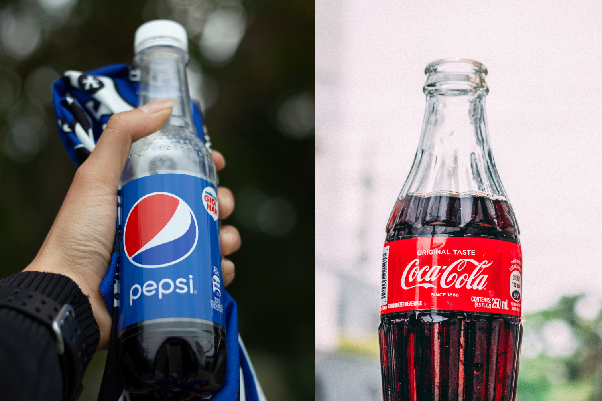
Coca-Cola’s loyalty strength was most evident during the intense competition with PepsiCo in the late 20th century, often referred to as the Cola Wars.
In the 1970s and 1980s, Pepsi launched the famous Pepsi Challenge, a blind taste test campaign in which many participants preferred Pepsi’s sweeter formula. The campaign gained significant attention and contributed to Pepsi’s growing market share in the United States.
From a purely product perspective, this was a serious threat. If taste tests favored Pepsi, Coca-Cola’s position should have weakened quickly.
However, Coca-Cola’s brand loyalty proved far stronger than expected.
In 1985, the company launched "New Coke", changing the formula to beat Pepsi in taste tests. It was a legendary disaster.
However, the backlash actually revealed the depth of Coke’s moat. Protests and thousands of angry phone calls proved that consumers didn't just buy Coke for the liquid; they "owned" the brand as part of their personal identity.
The "New Coke" crisis didn't destroy the company because the emotional anchoring was stronger than the sensory preference. When "Coca-Cola Classic" returned 79 days later, sales surged. The crisis proved that Coke’s loyalty system wasn't built on a flavor profile but on a cultural contract with consumers.
The incident revealed something critical: consumers were not loyal to the taste alone. They were loyal to the brand’s history, symbolism, and cultural meaning.
The New Coke saga taught the world that a brand is a collection of memories, not just a set of attributes. Thus, you cannot "iterate" on a brand's core identity based solely on data if that data ignores the emotional history of the user base.
The next section breaks down the 5 strategic drivers behind that system and how e-commerce brands can apply the same principles to strengthen retention.
5 Strategic Drivers Behind Coca-Cola’s Brand Loyalty
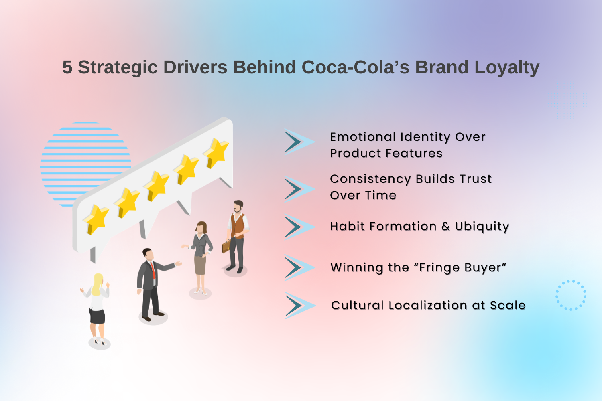
To replicate Coca-Cola’s success, you must look past the sugar and water. The company operates as a meaning-making machine, using a systematic framework to convert a generic commodity into a cultural icon.
Below are the five core drivers that power this engine, along with how to translate them into a modern ecommerce environment.
1. Emotional Identity Over Product Features
Coke rarely markets "flavor profiles." Instead, they market abstractions like "Happiness" and "Connection".
The "Share a Coke" campaign, which swapped the logo for popular first names, resulted in the first increase in U.S. sales in over a decade. By adding the consumer’s name to the product and expanding it to more than 70 countries, Coke moved from being a beverage to a personal social tool.
This works through Self-Congruence Theory, which holds that consumers choose brands that match their ideal self-image. When you buy a Coke, you aren't just buying a drink; you are signaling a desire for joy and community.
Ecommerce Application:
- Identity-Driven Messaging: Stop selling "cotton shirts" and start selling "the confidence of a sustainable lifestyle."
- Personalization Flows: Use post-purchase emails that celebrate the customer’s specific tastes rather than just confirming an order number.
2. Consistency Builds Trust Over Time
Few brands maintain visual consistency as effectively as Coca-Cola. Core elements, such as the red color palette, Spencerian script logo, and contour bottle shape, have remained recognizable for decades.
The contour bottle was introduced in 1915 and later registered as a trademark design, becoming one of the most recognizable packages in the world.
This stability reinforces a simple signal: the brand is reliable and familiar.
Ecommerce Application:
- Visual Guardrails: Ensure your brand colors and font are identical across your PDP (Product Detail Page), SMS, and packaging.
- Avoid Constant Repositioning: Don't chase every aesthetic trend (e.g., "Y2K" one month, "Minimalist" the next). Pick a "forever" aesthetic and stick to it.
3. Habit Formation & Ubiquity
Coke’s goal is to be the "default option." By placing vending machines in offices, gyms, and gas stations, they utilize environmental cues to trigger a purchase before the brain can consider an alternative.
Their 2023 Annual Report emphasizes "Consumer Centricity" through expanded distribution in emerging markets, ensuring the product is physically unavoidable.
This leverages Automaticity. When a product is everywhere, it becomes a "low-involvement" purchase, a decision made by the subconscious brain to save energy.
Ecommerce Application:
- Subscription Models: Use tools like Recharge to turn one-time buyers into "set-and-forget" subscribers.
- Replenishment Reminders: Use predictive analytics to send an SMS exactly when a customer is likely running low on your product.
4. Winning the “Fringe Buyer”
During the Cola Wars, Coca-Cola understood that converting loyal Pepsi drinkers would be difficult. Instead, they targeted "Fringe Buyers" (flexible buyers who usually drink water or tea) to choose a Coke twice a year.
Most market share growth comes from increasing "penetration" (reaching new people) rather than "loyalty" (getting current people to buy more). By targeting the "unconverted," Coke expands its total addressable market rather than fighting for a shrinking pie.
Ecommerce Application:
- Competitor Conquesting: Use Google or Meta ads to target keywords related to your competitors’ weaknesses.
- First Repeat Incentives: Don't just reward your "VIPs"; create aggressive "First Repeat Purchase" incentives to turn one-time buyers into semi-regulars.
5. Cultural Localization at Scale
While the brand maintains a global identity, Coca-Cola adapts its campaigns to local culture.
- In Vietnam, Coke releases special "Tết" (Lunar New Year) packaging featuring swallow birds;
- In the West, they "own" the modern imagery of Santa Claus.
They act as a cultural chameleon, blending into local traditions so they don't feel like an "invading" foreign brand. And this taps into in-group bias.
When a brand participates in a local tradition, it is viewed as a "member of the tribe" rather than a faceless corporation.
Ecommerce Application:
- Geo-Targeted Campaigns: Use Shopify’s localization features to show different hero images based on the user’s region.
- TikTok Shop Localization: Partner with creators who speak the specific slang and understand the cultural nuances of their specific niche or region.
Applying Coca-Cola’s Playbook to Shopify & Klaviyo (3 Steps)
To apply Coca-Cola’s loyalty strategy to ecommerce, the goal is not just to increase sales. The real objective is to build a system that encourages customers to return automatically.
Platforms like Shopify and Klaviyo make this possible by connecting store data with automated marketing. When used correctly, they allow brands to replicate two key elements of Coca-Cola’s model: habit and emotional connection.
Step 1: Audit Your Retention Baseline
Before launching new loyalty tactics, first understand how customers behave after their first purchase. Many ecommerce brands focus heavily on acquisition but ignore what happens afterward.
In an ecommerce context, your audit should focus on 4 core metrics:
- Repeat Purchase Rate (RPR): The percentage of customers who buy again after their first order. According to benchmarks from Shopify, strong e-commerce stores often see 20–30% of customers returning within 90 days.
- Lifetime Value (LTV): The total revenue generated by a customer over time. This shows whether your retention strategy is improving long-term revenue.
- Churn Rate: The percentage of customers who stop buying after their first purchase or subscription cycle. Identifying when customers drop off helps trigger win-back campaigns.
- Net Promoter Score (NPS): This measures customer satisfaction and brand advocacy. While repeat purchases show behavior, NPS reflects emotional attachment to the brand.
These metrics reveal where your retention system is weak before you attempt to fix it.
Step 2: Implement 2 High-Leverage Tactics in 30 Days
Once the audit is complete, you can emulate Coke’s "Personalization" strategy through specific technical implementations.
For instance, Coke won by putting names on bottles; you can win by putting personalized data into your messaging.
Use Klaviyo’s "Predicted Gender" or "Past Product Category" tags to segment your list, then create a "Dynamic Product Recommendation" block in your weekly newsletter.
Instead of showing everyone your best-sellers, show them products that complement their last purchase. This uses the Endowment Effect, in which customers feel greater "ownership" of a brand that seems to "know" them.
Step 3: Measure Impact
Strategy without measurement is just theater. To ensure your "Coke-style" system is actually working, move away from vanity metrics like "Email Opens" and focus on incremental lift.
- GA4 Retention Cohorts: Use Google Analytics 4 to track "User Retention" by cohort. If your personalized flows are working, you should see the "percentage of returning users" curve flatten rather than drop to zero.
- Klaviyo Flow Performance: Don't just look at revenue; look at Revenue Per Recipient (RPR). This ensures you aren't just spamming your list but are providing genuine value. According to Klaviyo's 2023 benchmarks, high-performing replenishment flows often see 10x the RPR of standard bulk campaigns.
- AOV and Repeat Uplift: Monitor if your "Fringe Buyers" are increasing their Average Order Value over time. A successful loyalty system doesn't just keep people buying; it subtly increases the "share of wallet" you hold in their daily routine.
Conclusion: Loyalty Is Built Systematically, Not Tactically
The most important lesson from Coca-Cola is that loyalty is not created by a single campaign or marketing tool. It is a combination of emotional storytelling, consistent brand identity, and habitual availability. These elements transformed a simple beverage into a global cultural symbol.
For ecommerce brands, the same principles apply:
- Loyalty is long-term brand equity, not just repeat purchases.
- Emotional identity reduces churn because customers feel connected to the brand.
- Incentives and loyalty programs amplify brand strength, but they cannot replace it.
In the long run, the brands that win are not the ones offering the biggest discounts. They are the ones that become part of their customers’ routines and identity, just as Coca-Cola has done for generations.
FAQs
Why is Coca-Cola considered a loyalty leader?
The Coca-Cola Company is widely seen as a loyalty leader because it has built emotional attachment, not just repeat purchases. Instead of focusing solely on taste or price, Coca-Cola consistently markets ideas such as happiness, sharing, and social connection.
The core system behind this loyalty is simple: strong identity + consistent branding + everyday availability.
How did the Cola Wars influence brand loyalty?
During the famous Pepsi Challenge taste tests in the 1970s and 1980s, many participants preferred Pepsi in blind comparisons. However, Coca-Cola still retained a strong market share.
This revealed an important insight: loyalty was driven by brand identity, not just product taste. Consumers stayed loyal because Coca-Cola represented something familiar and cultural.
What can ecommerce brands learn from Coca-Cola?
Ecommerce brands can learn that loyalty comes from systems, not promotions.
Three key principles stand out:
- Build emotional identity so customers connect with the brand
- Maintain consistent branding across website, email, and social channels
- Encourage repeat behavior through subscriptions, reminders, or easy reorders
These mechanisms help turn occasional buyers into habitual customers.

Written by
Thomas Nguyen is the CEO & Co-founder of Joy, a loyalty solution for Shopify and eCommerce brands. With years of experience building high-performance Shopify apps, Thomas aims to help merchants grow through customizable and retention-focused tools.
Related reading
-be8365.webp&w=3840&q=75) Examples & Inspiration
Examples & Inspiration15 Loyalty Program Email Examples (With Copy-Paste Templates)
15 loyalty program emails your store should send, each with a copy-paste template, subject line ideas, and the exact trigger that sends it. Plus a metrics cheat sheet and how to automate the whole thing with Shopify Flow.
 Thomas Nguyen
 Examples & Inspiration
Hilton Honors 2026 Review: The Easiest Path to VIP Status?
The Hilton loyalty scheme just made elite status far easier to reach. See how Hilton Honors tiers, points sweet spots, and perks stack up for 2026 travelers.
Thomas Nguyen Examples & Inspiration
Avis Preferred 2026 Guide: Skip the Line & Earn Free Days
The Avis loyalty program (Avis Preferred) lets you skip the counter and earn free rental days. See how the tiers, points math, and status shortcuts work in 2026.
Thomas Nguyen Examples & Inspiration
JCPenney Rewards Analysis 2026: The Strategic Mechanics of "CashPass"
The JCPenney rewards program turns points into a branded "CashPass" currency. See how its earn rates, stacking, and 45-day expiry are engineered to drive sales.
Thomas Nguyen Examples & Inspiration
World of Hyatt Guide 2026: Tiers, Rewards & Sweet Spots
The Hyatt loyalty program (World of Hyatt) offers the best value per point in travel. See how to earn free nights, unlock elite tiers, and find the top sweet spots.
Thomas Nguyen Examples & Inspiration
American Airlines Loyalty program: $30B secret + Retention tricks
The American Airlines loyalty program is a $30B engine, not a perk. See how AAdvantage turns points into status, partners, and a retention flywheel you can copy.
Thomas Nguyen