
Walmart Loyalty Program Explained: 2026 Strategy Guide
Walmart's loyalty isn't a points game — it's infrastructure. See how the Walmart loyalty program turns subscription, cashback, and retail media into profit.
Summarize this post with AI
This breakdown isn’t just about the Walmart loyalty program. It’s a roadmap for ecommerce brands rethinking loyalty in an era shaped by retail media, subscription ecosystems, and first-party data wars.
Walmart didn’t build loyalty as a gamified points program.
It built it as a value amplifier layered on top of logistics, advertising, and everyday price leadership.
If you’re designing loyalty in 2026, this is less about perks and more about infrastructure.
What Is Walmart’s Loyalty Program?
Walmart’s loyalty ecosystem isn’t a single program. It’s a layered system built around:
- Walmart+ (subscription membership)
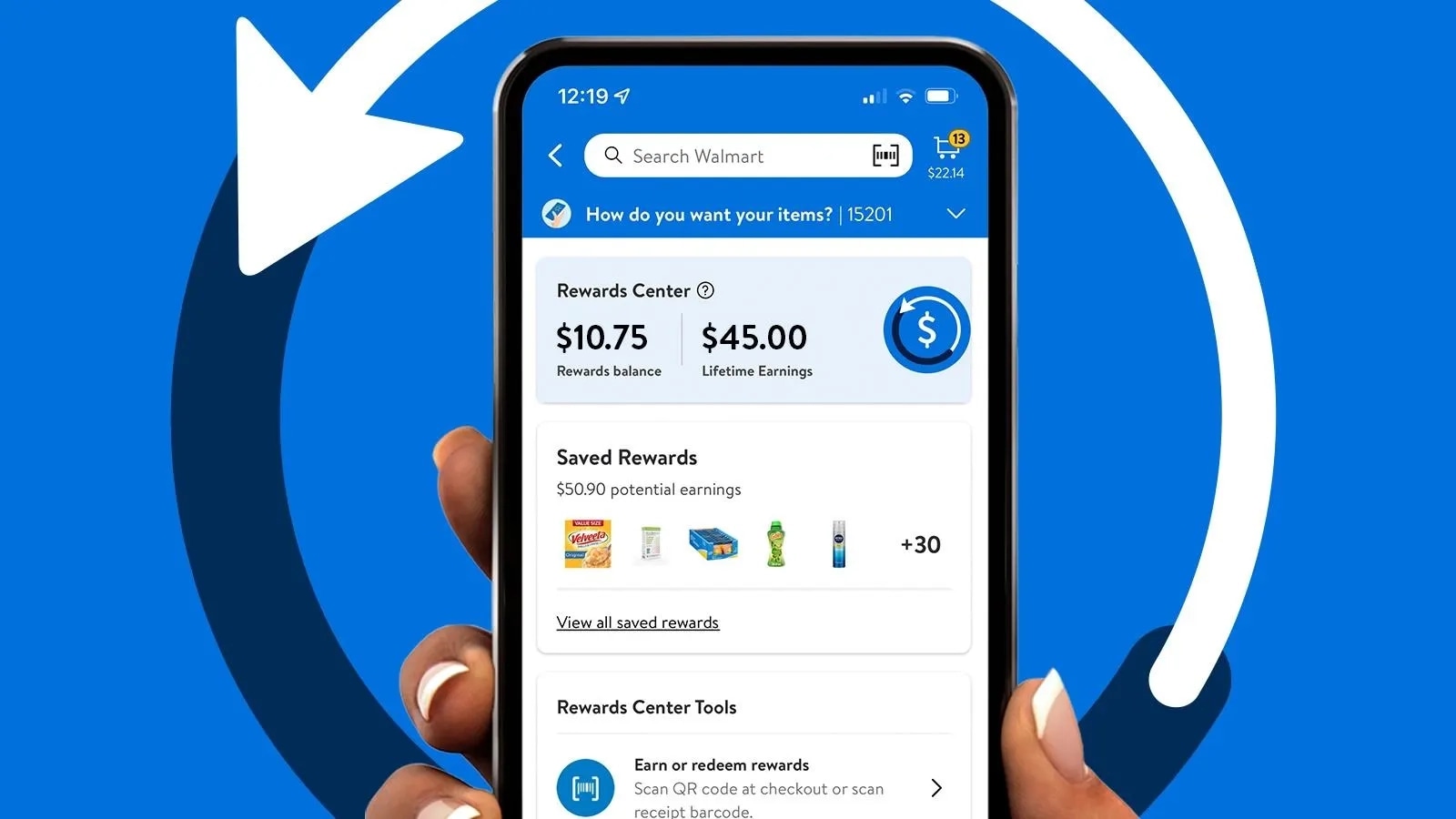
- Walmart Cash (cashback mechanism)
- Historical credit-card–linked rewards
Subscription increases retention. Cashback increases participation. Retail media monetizes data. Together, they create a scalable growth engine.
As of January 2026, Walmart+ reached 28.4 million members, up 12% year-over-year.
Walmart Rewards Comparison
Unlike airline or gamified DTC models, Walmart deliberately removes friction.
There are no aspirational tiers, no progress ladders, and no complex conversion formulas. The design prioritizes clarity and accessibility at a mass scale.
Core Value Proposition & Target Customer
Walmart’s loyalty structure mirrors its brand positioning: everyday value, operational efficiency, and broad accessibility.
The model targets four primary customer segments.
- High-frequency shoppers: Groceries, essentials, weekly replenishment. Frequency justifies subscription economics.
- Price-sensitive households: Cashback and fuel discounts reinforce “everyday low price” positioning.
- Omnichannel customers: Buy online, pick up in-store. Seamless app integration reduces friction.
- Mobile-first behavior: App engagement drives data capture, offer delivery, and cross-category visibility.
This is not loyalty built on aspiration. It is loyalty built on habit and economic efficiency.
How Walmart’s Loyalty Ecosystem Works (And Why It Drives Growth)
Walmart’s system works because each component reinforces the others. Subscription increases retention. Cashback increases participation. Retail media monetizes data. Together, they create a scalable growth engine.
Membership as the Core Retention Engine
Walmart+ operates as the structural anchor of the ecosystem. By introducing a paid annual or monthly membership, Walmart converts loyalty from a promotional tool into a recurring revenue model.
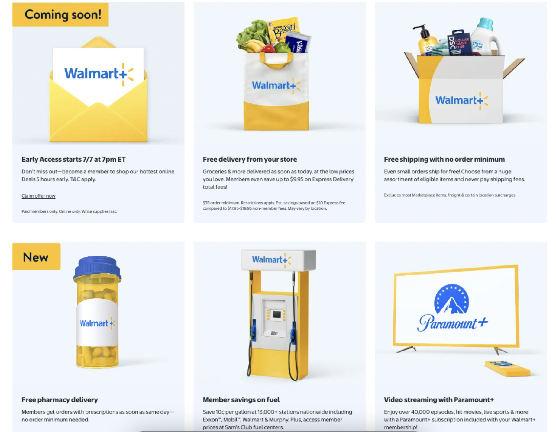
Subscription changes customer psychology in subtle but powerful ways. Once a member pays upfront, the incentive shifts toward maximizing perceived value. That dynamic increases purchase consolidation, strengthens share of wallet, and reduces the likelihood of switching to competitors for marginal price differences.
The model does not rely on emotional attachment. It relies on economic commitment reinforced by convenience.
Cashback Instead of Points
Rather than using abstract point systems, Walmart emphasizes Walmart Cash, a direct cashback mechanism that translates clearly into monetary value.
This approach reduces cognitive friction. Customers immediately understand what they are earning and how it can be applied. There are no tier thresholds to calculate and no redemption puzzles to solve.
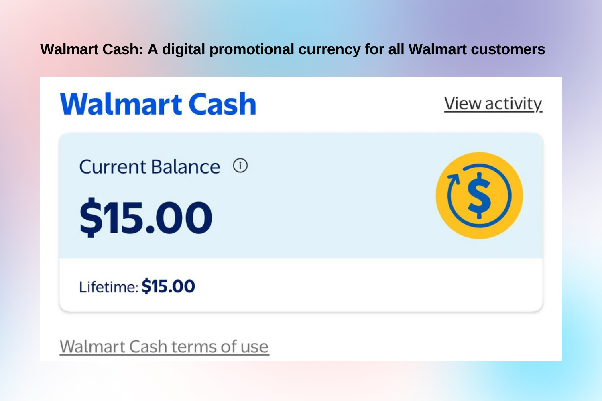
While gamified systems can drive engagement for certain audiences, Walmart’s mass-market strategy favors simplicity. The goal is broad adoption, not behavioral gaming.
In this context, clarity becomes a competitive advantage.
Omnichannel Integration
Walmart’s loyalty ecosystem extends across in-store purchases, ecommerce, mobile app engagement, and fuel partnerships. This omnichannel integration increases touchpoints while maintaining a unified customer identity.
An important layer sits behind the scenes: Walmart Connect, the company’s retail media network. Loyalty data enhances ad targeting accuracy, allowing suppliers to run more efficient campaigns within Walmart’s ecosystem.
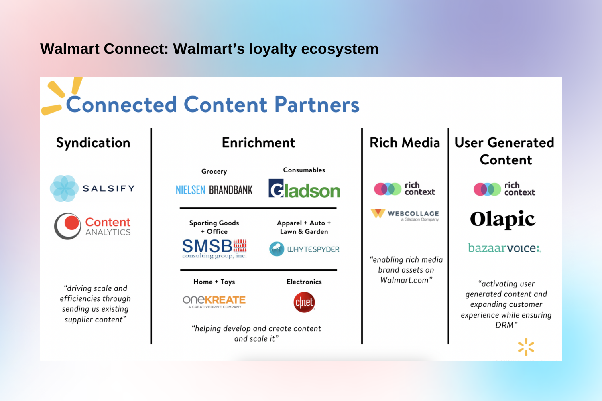
As transactions increase, targeting improves. As targeting improves, advertising performance strengthens. That advertising revenue then reinforces overall profitability.
Loyalty, in this model, is not simply a reward mechanism. It is a data acquisition infrastructure that supports monetization beyond retail margins.
The Data Flywheel Strategy
Walmart’s structural loop can be summarized as:
Acquire → Engage → Personalize → Monetize → Retain
- Acquire via value positioning and subscription trial
- Engage through app usage and cashback incentives
- Personalize using first-party purchase data
- Monetize through supplier-funded retail media
- Retain via recurring value and habit formation
Each stage strengthens the next. The flywheel compounds over time, particularly at scale.
The Economics Behind Walmart’s Loyalty Model
The Walmart loyalty program is economically engineered. Its impact extends beyond retention metrics into margin structure and advertising monetization.
Subscription Unit Economics
Membership fees generate predictable recurring revenue. When customer frequency increases and fulfillment costs are controlled, the subscription can become margin-accretive rather than margin-dilutive.
The economic logic depends on scale. High order volume spreads logistics costs, while increased basket size improves contribution margin.
Over time, subscription can improve the overall LTV/CAC ratio by increasing lifetime value faster than acquisition expense rises.
However, this math only works with operational efficiency and strong demand density.
Retail Media as a Hidden Monetization Layer
Retail media significantly alters the economics of loyalty. Through Walmart Connect, brands pay for sponsored placements and targeted visibility inside Walmart’s digital properties.
Because loyalty data improves targeting precision, suppliers see stronger campaign performance.
That encourages higher advertising spend, creating a secondary revenue stream linked directly to customer engagement.
From the customer’s perspective, loyalty provides savings and convenience. But from the company’s perspective, it enhances monetizable data assets.
Loyalty’s Impact on LTV vs CAC
Subscription participation increases frequency and reduces churn risk. Cashback incentives encourage incremental spend without introducing complex reward liabilities.
Together, these elements improve customer lifetime value.
Meanwhile, predictable subscription revenue partially offsets acquisition cost, stabilizing marketing efficiency over time.
In this structure, loyalty is not merely defensive retention. It becomes an economic lever.
Is Walmart Loyalty Program Worth It in 2026?
Positioning clarity helps answer this question.
Compared to Amazon and Target:
- Walmart = value & accessibility
- Amazon = convenience + entertainment ecosystem
- Target = savings + brand affinity
Each model reinforces its parent brand’s identity.
But Walmart competes on price efficiency, not lifestyle.
Where Walmart’s Loyalty Model Has Strategic Limitations
Walmart’s loyalty design has constraints.
- No gamified tiers or experiential rewards
- Emotional attachment is weaker than lifestyle brands
- Primarily financial incentives
- Limited aspirational appeal
- Membership cost may deter low-frequency shoppers
These trade-offs are intentional. Walmart optimizes for mass participation and operational leverage rather than prestige.
Risk for Ecommerce Brands Copying This Model Blindly
For smaller ecommerce brands, copying this structure without matching its scale can create pressure.
- If purchase frequency is low, subscription economics weaken.
- If logistics infrastructure is inefficient, free delivery erodes margin.
- If there is no retail media layer, the data flywheel loses its monetization engine.
Without structural alignment, the model becomes expensive rather than strategic.
What E-commerce Brands Can Learn (Without Blindly Copying It)
Walmart did not build loyalty by launching a flashy points system. It built a system where loyalty supports distribution power, pricing strategy, media reach, and digital infrastructure.
Most e-commerce brands cannot replicate Walmart’s scale, but they can study its architecture. The goal is to understand how loyalty strengthens the company’s core advantage and reinforces repeat behavior at scale.
Loyalty Is an Ecosystem, Not a Discount Program
Walmart integrates loyalty with logistics, media, and mobile engagement. The lesson is not to replicate features but to connect loyalty with your strongest operational advantage.
For some brands, that may be content or community. For others, partnerships or subscription replenishment.
Simplicity Often Outperforms Complexity
Cashback clarity reduces friction and increases adoption. Complex point architectures can create confusion, especially outside niche enthusiast segments.
If mass appeal is the goal, clarity wins.
Use Loyalty to Strengthen a Data Engine
Loyalty programs accelerate first-party data collection. That data should power personalization, cross-sell logic, and potentially partner monetization.
The long-term asset is not the reward currency. It is the behavioral insight.
Align Loyalty With Brand Positioning
Walmart’s loyalty reinforces everyday low prices. It does not attempt to reposition the brand as exclusive or aspirational.
Your loyalty strategy must amplify your core promise, not contradict it.
Subscription Loyalty Is a Strategic Commitment
Subscription models work best when purchase frequency is high, and fulfillment operations are optimized. They struggle when repurchase cycles are long or engagement is sporadic.
Introducing paid membership is not a tactical experiment. It reshapes customer expectations and operational obligations.
Conclusion
Walmart’s loyalty system demonstrates how subscription, cashback simplicity, omnichannel integration, and retail media can reinforce one another inside a single ecosystem.
The Walmart loyalty program does not rely on status psychology or aspirational rewards. Instead, it compounds value through frequency, data capture, and more efficient monetization.
For e-commerce brands, the central lesson is structural alignment.
Loyalty should strengthen your economic model, not complicate it.
- If your advantage is scale and logistics, build like Walmart.
- If your advantage is brand identity or exclusivity, build differently.
The goal is not to imitate Walmart. It is to design loyalty that fits your strategic foundation.
FAQs
Is Walmart+ worth it?
For high-frequency shoppers who regularly use grocery delivery, fuel discounts, and app-based ordering, yes. The value compounds with usage frequency.
How does Walmart Cash work?
Walmart Cash is a cashback mechanism earned through promotions, offers, or eligible purchases. It converts directly into dollar value and can be applied to future transactions.
Does Walmart have a points system?
No. Walmart prioritizes cashback over points. There are no gamified tiers or status ladders in its primary loyalty structure.
How does Walmart+ compare to Amazon Prime?
Compared to Amazon Prime, Walmart+ focuses more on price efficiency and grocery integration, while Prime emphasizes convenience, fast shipping, and a deeper entertainment ecosystem.
Can ecommerce brands replicate Walmart’s model?
Partially. Brands can adopt subscription mechanics, clarify cashback terms, and implement data-driven personalization. But without scale, logistics strength, and media monetization, the full model won’t translate effectively.

Written by
Thomas Nguyen is the CEO & Co-founder of Joy, a loyalty solution for Shopify and eCommerce brands. With years of experience building high-performance Shopify apps, Thomas aims to help merchants grow through customizable and retention-focused tools.
Related reading
 Examples & Inspiration
American Airlines Loyalty program: $30B secret + Retention tricks
The American Airlines loyalty program is a $30B engine, not a perk. See how AAdvantage turns points into status, partners, and a retention flywheel you can copy.
 Thomas Nguyen
 Examples & Inspiration
Avis Preferred 2026 Guide: Skip the Line & Earn Free Days
The Avis loyalty program (Avis Preferred) lets you skip the counter and earn free rental days. See how the tiers, points math, and status shortcuts work in 2026.
Thomas Nguyen Examples & Inspiration
Nike Loyalty Program: How Free Membership Drives 3x Spending
300M members, 3x spending, zero points or tiers. Nike Membership threw out the loyalty playbook and proved experience beats transactions. This breakdown covers all 7 pillars — and shows what Shopify brands can actually steal at their own scale.
Thomas Nguyen Examples & Inspiration
Hilton Honors 2026 Review: The Easiest Path to VIP Status?
The Hilton loyalty scheme just made elite status far easier to reach. See how Hilton Honors tiers, points sweet spots, and perks stack up for 2026 travelers.
Thomas Nguyen Examples & Inspiration
JCPenney Rewards Analysis 2026: The Strategic Mechanics of "CashPass"
The JCPenney rewards program turns points into a branded "CashPass" currency. See how its earn rates, stacking, and 45-day expiry are engineered to drive sales.
Thomas Nguyen Examples & Inspiration
IKEA Loyalty Program: How 170M Members Drive 50% of Revenue
IKEA Family has 170M members driving 50% of revenue — with zero tiers and a flat structure. After 73 years, the 2025 points refresh adds a new layer. This breakdown covers how it works, the emotional-loyalty playbook, hub-and-spoke architecture, and what Shopify brands can steal.
Thomas Nguyen