
Lufthansa loyalty scheme: Case study and strategic breakdown for e-commerce (2026)
What can an airline teach your store about retention? See how the Lufthansa loyalty scheme builds status, monetizes miles, and turns loyalty into infrastructure.
Summarize this post with AI
Most e-commerce loyalty programs fail for one simple reason: they reward transactions, not behavior.
The Lufthansa loyalty scheme proves the opposite. What began as a traditional frequent flyer program has evolved into a cross-industry engagement infrastructure that shapes how members travel, shop, and spend each day.
In this case study, you’ll see:
- How the program evolved from flight rewards into a coalition ecosystem
- The behavioral psychology that drives dominance
- A plug-and-play framework that ecommerce brands can apply immediately
If you want to move beyond transactional points and design loyalty as infrastructure, this breakdown will show you how.
Lufthansa Loyalty Scheme Overview: The Structural Foundations
The real power of Miles & More isn’t just in how it works. It’s in how it scales.
Lufthansa didn’t build loyalty as a marketing campaign. They built it as an economic engine.
Let’s unpack how.
From Frequent Flyer Program to Coalition Ecosystem
Lufthansa launched Miles & More in 1990 as a traditional frequent flyer program. At that time, the logic was simple: fly more, earn more miles.
Over the years, Miles & More expanded beyond flights. It became a multi-brand coalition ecosystem that now includes:
- 30+ airline partners
- Hotels
- Car rental companies
- Retail portals
- Financial institutions
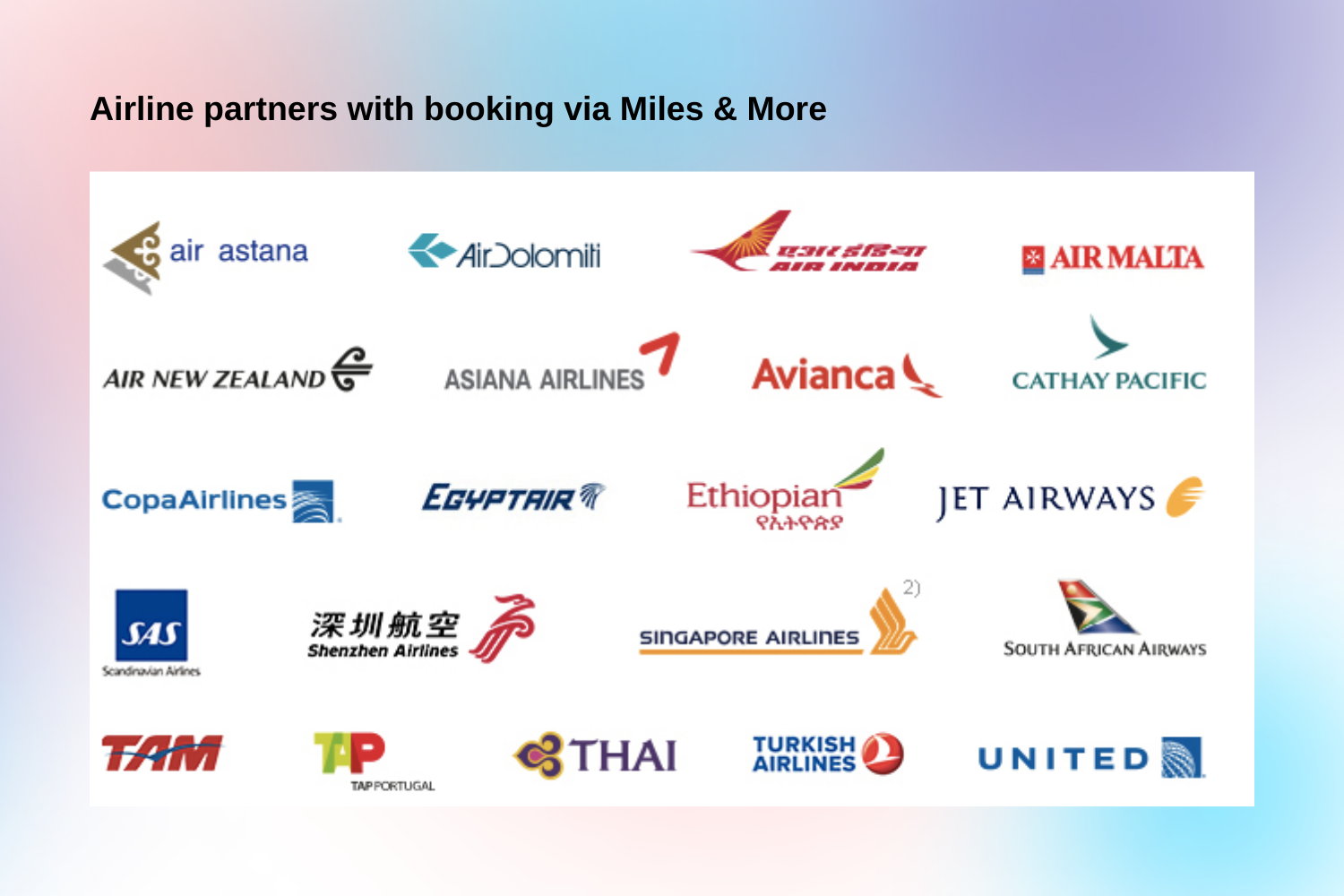
The program shifted from flight frequency to everyday engagement frequency. Now, they no longer wait for the customer to book a trip; they capture value when the customer buys a coffee, books a hotel, or uses a co-branded credit card.
For e-commerce, the lesson is about interconnectivity. If your loyalty program only rewards the "purchase," you are a vending machine. If you reward the "lifestyle" (reviews, social shares, partner spend), you are an ecosystem.
Core Mechanics That Power the System
At the heart of Miles & More are two separate currencies:
- Award miles – used for redemptions like flights and upgrades
- Status (qualifying) points – used to unlock elite tiers
This separation is powerful. One currency rewards activity. The other rewards commitment.
That dual system creates 2 psychological loops:
- “I want to redeem something soon.”
- “I don’t want to lose my status.”
Add in expiration rules and dynamic pricing, and the program encourages continuous engagement without constant discounting.
From a strategic perspective, this is very different from typical e-commerce loyalty programs.
That’s why Lufthansa airline loyalty programs often feel more “serious” and sticky.
How Lufthansa Engineered a Scalable Loyalty Engine
Now we move from structure to strategy.
The real power of Miles & More isn’t just in how it works. It’s in how it scales.
Lufthansa didn’t build loyalty as a marketing campaign. They built it as an economic engine.
Let’s unpack how.
H3: The Coalition Model: Turning Loyalty into a B2B Revenue Stream
The "secret" to Lufthansa’s scale is that it doesn't just give miles away, they sells them. Many brands add partners simply to give customers more places to shop, but Lufthansa uses its partners to monetize the currency itself.
As a central bank, Lufthansa sells miles in bulk to co-branded credit card issuers, retail stores, and financial institutions.
According to Lufthansa Group’s 2023 Financial Report, the loyalty segment generates significant revenue from external sales, creating a steady income stream that is independent of the number of planes in the air.
Flights are infrequent for most people, occurring only a few times a year. However, credit card transactions and retail shopping are daily habits.
By embedding miles into everyday actions, Lufthansa keeps its brand relevant while earning revenue from partners for every mile issued.
The E-commerce Insight: If your loyalty program only activates on your own checkout page, your growth is capped by your sales cycle. Partnerships allow you to increase engagement frequency without touching your own inventory.
Reward Economics: High Perceived Value, Low Marginal Cost
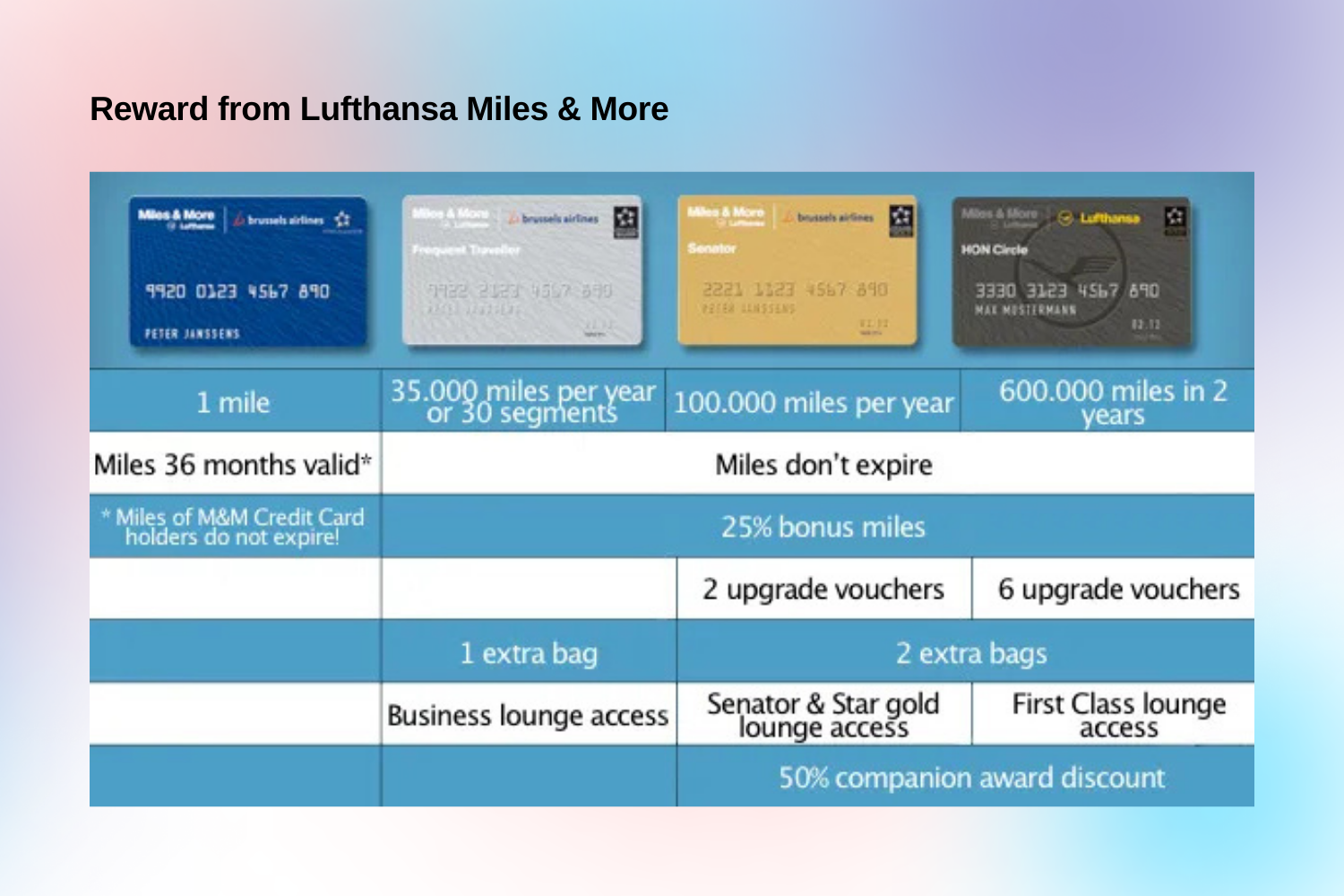
A loyalty program only scales if the cost of rewards is predictable and stays below the revenue coming in. Lufthansa’s advantage lies in its "Inventory Economics": the ability to provide a reward that looks expensive to the customer but costs the company very little.
An unsold business-class seat has almost zero value once the plane takes off.
By offering these "perishable" seats as rewards, Lufthansa provides a multi-thousand-dollar value to the member. However, the actual cost to the airline is just the price of a meal and a small amount of extra fuel, as noted in analyses of airline loyalty profitability.
For e-commerce, the move is practical. Replace percentage discounts with experiential perks. Use exclusivity and access instead of price cuts. Let partners help fund rewards.
Loyalty as a Standalone Asset Class
In many airline groups, loyalty divisions are valued independently from the airline itself. Investors often treat them as predictable, cash-generating businesses.
Miles sold to banks generate recurring, relatively stable revenue streams. Those contracts can span years. That predictability increases the financial value of the loyalty division.
At this point, loyalty is no longer a marketing tactic.
It becomes:
- A revenue stream
- A cash flow stabilizer
- A strategic asset on the balance sheet
Instead of asking, “How much does our loyalty program cost?”Airlines ask, “How much enterprise value does our loyalty platform create?”
For e-commerce brands, this shift in mindset is critical.
If loyalty is treated as a promotion tool, it will always feel expensive.If it is treated as infrastructure, it can become leverage.
Lufthansa engineered loyalty as a scalable economic system, not a campaign. That is why it grows with the business instead of draining it.
And that’s the difference between a points program and a loyalty engine.
The Behavioral Psychology Behind Lufthansa Loyalty Scheme Dominance
Structure and economics explain how Lufthansa scales. Psychology explains why it sticks.
Airline loyalty works because it taps into identity, progress, and aspiration, not just points.
Status Signaling and Identity Attachment
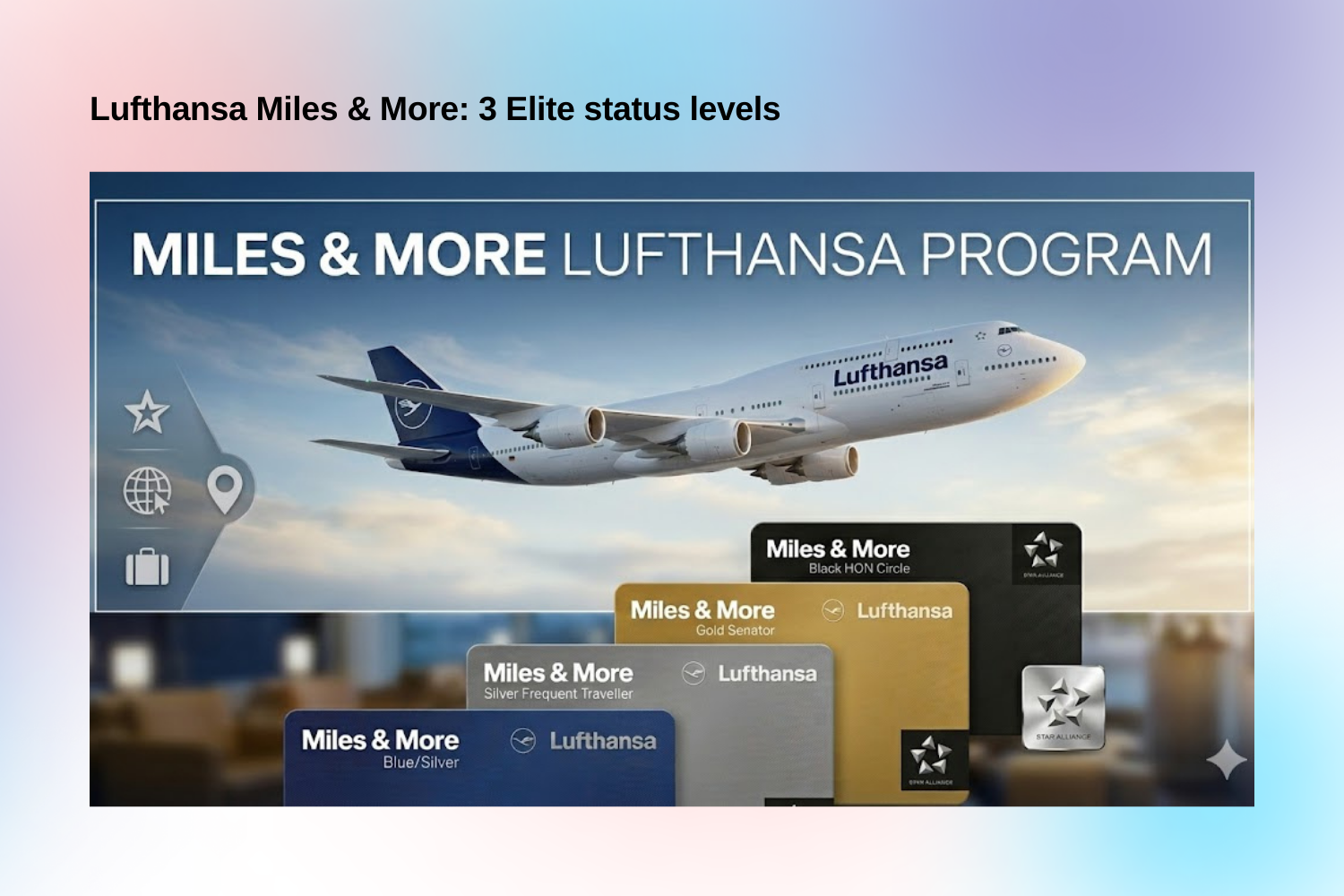
Elite tiers are more than benefit bundles. They become part of a member’s identity.
When someone reaches Frequent Traveler, Senator, or HON Circle in Miles & More, they are not just unlocking perks. They are entering a status group.
Priority boarding, lounge access, and dedicated service lines are symbolic signals. They create recognition in public settings. That recognition reinforces loyalty in a way discounts never can.
Over time, members stop thinking, “Is this the cheapest option?”They start thinking, “This is my airline.”
That emotional lock-in goes far beyond transactional logic.
For e-commerce brands, this is a key shift. If your program only offers cashback, customers compare you on price. If your program offers status, customers compare you on identity.
Progress Tracking and Loss Aversion
Airline programs also use progress to drive behavior.
Clear tier thresholds create momentum. Members can see how close they are to the next level. That visible progress encourages additional purchases to “cross the line.”
There is also loss aversion. If status must be requalified each year, members fear losing it. That fear drives re-engagement, especially near the end of qualification windows.
Time-bound qualification cycles create urgency without discounts. The pressure comes from status preservation, not price reduction.
For e-commerce brands, progress bars and tier cycles can create a similar sense of motivation. When customers feel close to something meaningful, they act.
Aspirational Reward Anchoring
Airline rewards are rarely framed as savings. They are framed as experiences.
Business-class upgrades and premium cabins represent something aspirational. Even if the monetary value is calculable, the emotional value feels much higher.
That gap is powerful.
Rewards feel luxurious, not discounted. Members chase an upgrade experience, not a small rebate.
The implication for e-commerce is clear:
Status and aspiration outperform simple cashback psychology.
- If your rewards feel special, customers engage for emotional reasons.
- If they feel like coupons, customers engage only when it’s convenient.
Airlines understood this early. That is why their loyalty programs dominate long-term retention.
Strategic Lessons: What E-commerce Brands Can Learn from Lufthansa
By now, it’s clear that Miles & More is not just a rewards program. It’s a long-term value engine.
To make this practical, let’s compare it directly with a typical e-commerce loyalty setup.
Strategic Comparison: Lufthansa vs Key Competitor
Lufthansa’s advantage lies in three structural choices:
- It separates status from spend-based rewards.
- It monetizes loyalty through partners.
- It builds emotional attachment through identity and recognition.
British Airways shows that airline status models are effective but may rely more heavily on flight activity.
The takeaway for e-commerce brands is clear:
If you rely only on discounts, you are competing on price. If you build status or ecosystem value, you compete on structure.
Airline loyalty programs are engineered to create long-term value. Many e-commerce programs are still engineered for short-term promotions.
What E-commerce Brands Can Learn from Lufthansa
Now let’s translate this into action.
Lesson 1: Build Status, Not Just Points
Points alone create transactional behavior. Status creates identity attachment.
When customers feel recognized, they stay loyal beyond rational price comparison. Introduce tiers that signal progression and privilege, not just cashback.
Lesson 2: Expand Beyond Your Core Product
Lufthansa increased engagement by allowing members to earn miles through hotels, retail, and financial services.
E-commerce brands can do the same by forming partnerships with complementary brands. This increases engagement frequency without requiring customers to buy more of the same product.
Lesson 3: Reward Behavior That Increases LTV
Tier thresholds are not random. They guide behavior.
Instead of rewarding only spending, reward actions that increase long-term value:
- Subscription enrollment
- Referrals
- Bundled purchases
- Community participation
Design your loyalty system to intentionally shape behavior.
Lesson 4: Design for Long-Term Engagement, Not Short-Term Discounts
Discount-led programs erode margins and train customers to wait.
Aspirational perks, early access, exclusive drops, and recognition create habit without constant price reductions.
Lufthansa rewards status and experience more than immediate savings.
That’s a powerful shift.
Lesson 5: Turn Loyalty into a Revenue Stream
Airlines sell miles to banks and partners. Loyalty generates predictable cash flow.
While ecommerce brands may not sell points at that scale, they can:
- Develop co-branded partnerships
- Introduce paid membership layers
- Secure partner-funded rewards
The goal is to move loyalty from cost center to strategic asset.
H3: What Ecommerce Brands Should NOT Copy
Not everything transfers perfectly.
- Avoid overcomplicated qualification systems that confuse customers.
- Be careful with excessive breakage assumptions; long-term trust matters more than short-term margin tricks.
- Make elite tiers aspirational but achievable, or motivation drops.
- And don’t overload your ecosystem with too many partners, which can dilute brand focus.
The lesson is not to copy Lufthansa line by line.
The lesson is to understand the structural logic behind why it works and apply that logic at your scale.
When loyalty becomes infrastructure rather than a promotion, retention stops being reactive and becomes strategic.
E-commerce Implementation Framework: Applying the Lufthansa Model
Now let’s make this practical.
You don’t need to be an airline to think like one. What you need is a structured system that rewards the right behaviors, builds status, and protects margin.
Here’s a simple 5-step framework you can apply.
Step 1: Define High-Value Behaviors
Before launching tiers or perks, get clear on one thing:
What behaviors actually increase LTV in your business?
For most ecommerce brands, that includes:
- Repeat purchases within 60–90 days
- Higher AOV (bundles, subscriptions)
- Referrals
- UGC or reviews
- App adoption or SMS opt-in
Instead of giving 1 point per $1 across everything, weight behaviors strategically.
Example:
- 2x points for bundles
- 3x points for subscription renewals
- Bonus points for 2nd purchase within 45 days
This shifts loyalty from passive accumulation to strategic behavior design.
Airlines reward distance, cabin class, and loyalty frequency. You should reward behaviors that compound revenue.
Step 2: Design a 3-Tier Status Ladder
Status creates emotional lock-in. Points alone don’t.
Start simple with three tiers:
- Silver – 10,000 points
- Gold – 50,000 points
- Platinum – 200,000 points
But the real power is not in the thresholds. It’s in the perks.
Move beyond discounts. Add:
- Early access to drops
- Free expedited shipping
- Dedicated support line
- Birthday or anniversary surprise
- Invite-only launches
Make each tier feel like a step into a more exclusive circle.
Keep qualification windows (e.g., 12 months). That creates urgency and momentum, just like airline requalification cycles.
Step 3: Introduce Aspirational Rewards
Discounts feel transactional. Aspirational rewards feel earned.
Instead of:
- “$10 off”
- “5% cashback”
Try:
- Limited-edition product access
- VIP event invites (virtual or offline)
- Behind-the-scenes content
- Free customization
- Members-only bundles
The key idea is this: the psychological value should exceed the marginal cost.
Airlines use business-class upgrades because the perceived value is huge while the marginal cost is controlled. Ecommerce brands can do the same with exclusivity and access.
Make rewards feel premium, not promotional.
Step 4: Add Strategic Brand Partnerships
One reason airline programs scale is that partners buy into the ecosystem.
You can replicate this on a smaller scale.
Look for:
- Complementary DTC brands
- Lifestyle brands that share your audience
- Subscription services
- Fintech or wallet integrations
Examples:
- Earn points when buying from a partner brand
- Redeem points across both stores
- Co-branded limited drops
This expands earning opportunities beyond your core product.
It also opens a new lever: partner-funded rewards.
Instead of fully subsidizing loyalty yourself, you create shared value.
Step 5: Measure Loyalty-Driven LTV
If you don’t measure it properly, loyalty turns into a cost center.
Track loyalty like an asset, not a campaign.
Core KPI Table:
Before scaling your program, ask:
- Are high-value rewards tied to high-margin products?
- Is discount exposure capped?
- Are tiers behavior-based, not just spend-based?
- Are partner rewards co-funded?
- Is breakage monitored but not relied upon?
Airlines design loyalty to generate revenue first and reward second. Many ecommerce brands do the opposite.
Flip that mindset.
Final Thoughts
If you zoom out, the biggest lesson is structural.
Coalition ecosystems often outperform single-brand programs because they expand earning opportunities.
More earning moments mean more engagement. More engagement means stronger retention. That flywheel is hard to beat with a standalone “earn 1 point per $1” model.
Second, status psychology is more powerful than discounting. Discounts train customers to wait. Status trains customers to strive. One compressed margin. The other builds identity and emotional lock-in.
Third, loyalty can be engineered as a revenue engine. In airline models like Lufthansa’s Miles & More, loyalty is not just a marketing cost. It generates partner revenue, financial float, and predictable cash flow. That mindset shift is critical.
For e-commerce brands, the real evolution is this: move from transactional rewards to strategic retention systems.
Stop asking, “What discount should we offer?”Start asking, “What behaviors increase lifetime value, and how do we build status around them?”
When loyalty becomes infrastructure rather than a promotion, your growth becomes more stable and more defensible.
FAQs
How does the Lufthansa loyalty scheme work?
Members earn award miles when they fly with Lufthansa and its partners, or when they spend with retail, hotel, and financial partners. Those miles can be redeemed for flights, upgrades, and other rewards.
At the same time, members earn separate status points that determine tier level. Higher tiers unlock privileges like lounge access, priority boarding, and exclusive benefits.
This dual system separates spending power from status progression.
What’s the difference between award miles and status points?
Award miles are the currency you redeem for rewards.
Status points (or qualifying points) determine your elite tier.
One is transactional value. The other drives long-term engagement and identity. Airlines separate them to control costs while still motivating high-frequency behavior.
Can ecommerce brands replicate airline loyalty?
Not fully, but strategically, yes.
Ecommerce can replicate status tiers, behavior-based rewards, aspirational perks, and partner ecosystems. The principle matters more than the format.
What are the best partnerships for ecommerce “miles” models?
Look for complementary brands that share your audience but don’t compete directly. Good categories include:
- Beauty + wellness
- Apparel + accessories
- DTC + subscription services
- Retail + fintech or wallets
The goal is to increase earning occasions without increasing discount pressure. Partnerships should expand engagement and, ideally, share the cost of rewards.
Design it intentionally, measure it financially, and treat loyalty like a strategic asset, not a coupon engine.

Written by
Thomas Nguyen is the CEO & Co-founder of Joy, a loyalty solution for Shopify and eCommerce brands. With years of experience building high-performance Shopify apps, Thomas aims to help merchants grow through customizable and retention-focused tools.
Related reading
 Examples & Inspiration
Hilton Honors 2026 Review: The Easiest Path to VIP Status?
The Hilton loyalty scheme just made elite status far easier to reach. See how Hilton Honors tiers, points sweet spots, and perks stack up for 2026 travelers.
 Thomas Nguyen
 Examples & Inspiration
World of Hyatt Guide 2026: Tiers, Rewards & Sweet Spots
The Hyatt loyalty program (World of Hyatt) offers the best value per point in travel. See how to earn free nights, unlock elite tiers, and find the top sweet spots.
Thomas Nguyen Examples & Inspiration
Gymshark Loyalty Program: XP, Tiers & Rewards Breakdown
After 13 years without one, Gymshark just launched its first loyalty program — powered by XP, workouts, and a 4-tier progression system. This breakdown covers the mechanics, the gaming psychology, the manual-opt-in strategy, and what Shopify brands can actually replicate.
Thomas Nguyen Examples & Inspiration
Walmart Loyalty Program Explained: 2026 Strategy Guide
Walmart's loyalty isn't a points game — it's infrastructure. See how the Walmart loyalty program turns subscription, cashback, and retail media into profit.
Thomas Nguyen Examples & Inspiration
Sephora Loyalty Program: How Beauty Insider Built the Gold Standard in Customer Retention
Sephora's Beauty Insider has 45M members in North America alone — more than Canada's population. This breakdown covers the three-tier structure, experiential rewards, gamification, and what Shopify brands can actually copy.
Thomas Nguyen Examples & Inspiration
Taco Bell Rewards Program: Complete Guide to Tiers, Points & Maximizing Value (2026 Update)
What can a fast-food chain teach ecommerce about retention? See how the Taco Bell Rewards program turns points into habit, frequency, and higher LTV.
Thomas Nguyen