
Taco Bell Rewards Program: Complete Guide to Tiers, Points & Maximizing Value (2026 Update)
What can a fast-food chain teach ecommerce about retention? See how the Taco Bell Rewards program turns points into habit, frequency, and higher LTV.
Summarize this post with AI
What can a fast-food Taco chain teach e-commerce brands about retention?
More than you think.
The Taco Bell Rewards Program isn’t just about free tacos. It’s a carefully designed system built to increase visit frequency, strengthen customer habits, and turn mobile users into loyal fans.
If you’re running an e-commerce brand, the real question isn’t how many points customers earn. It’s how loyalty can drive frequency, improve lifetime value, and build first-party data at scale.
In this breakdown, you’ll see exactly:
- How Taco Bell structures its tiers, reduces redemption friction, and outperforms traditional discount-based programs
- The practical lessons you can adapt for your own retention strategy.
Scroll down. The tactics are more transferable than you expect.
What is the Taco Bell rewards program?
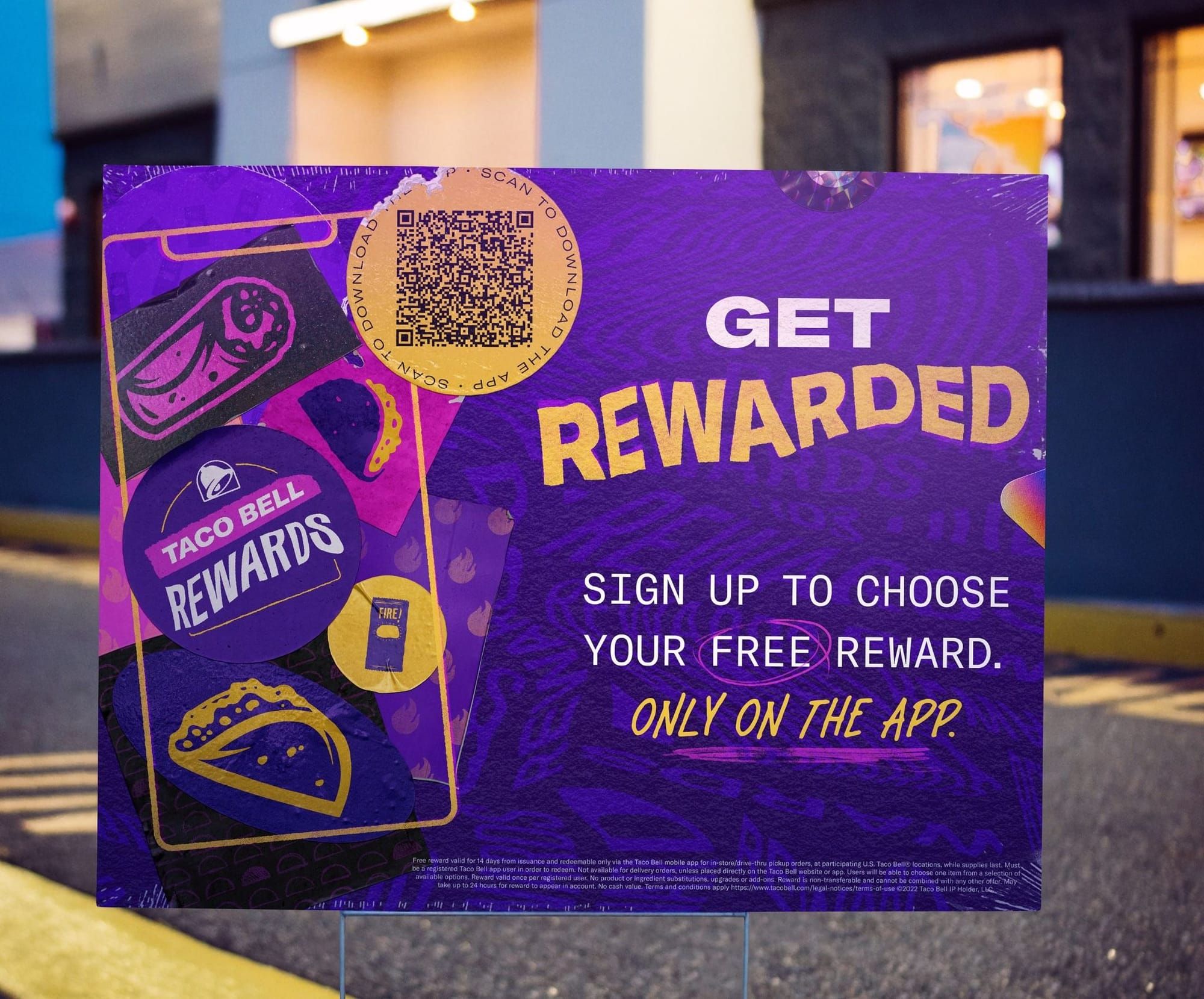
The modern version of Taco Bell Rewards launched nationwide in July 2020 through the Taco Bell mobile app.
The redesign focused on three changes:
- Mobile-first enrollment – Signup happens through the Taco Bell app.
- Automatic points tracking – No physical card required.
- Tier-based rewards – Customers move from Hot to Fire based on annual points.
The timing was strategic. In 2020, digital ordering and app engagement became critical to QSR growth. Taco Bell used loyalty to shift transactions into its owned app ecosystem, where margins are higher, and data collection is stronger.
Taco Bell’s loyalty program is simple:
- Earning rate: 10 points per $1 spent
- Reward threshold: 250 points = one reward
- Redemption: Points can be redeemed for menu items within the app
- Tier upgrade: 2,000 points within a calendar year to reach Fire status
This structure creates a clear math equation:
- Spend $25 → earn 250 points → unlock 1 reward
- Spend $200/year → reach 2,000 points → unlock Fire tier
The earning system is linear and easy to understand. This simplicity reduces friction and increases participation.
Hot vs. Fire: The psychology behind how Taco Bell rewards tiers work
The Taco Bell Rewards program uses a two-tier structure: Hot and Fire.
The system is simple on the surface. The impact comes from how it shapes behavior.
According to Taco Bell’s official rewards page, members earn 10 points per $1 spent, and reaching 2,000 points in a calendar year unlocks Fire status.
The Fire tier is not only about better rewards. It activates three proven behavioral drivers: status, progress, and identity.
- Status signaling: “Fire” sounds powerful. It creates identity, not just savings.
- Progress motivation: The app shows your points building up. Watching progress makes you want to keep going.
- Loss aversion: Fire status resets each year. Once you earn it, you don’t want to lose it.
Important: Taco Bell doesn’t focus heavily on discounts. It focuses on identity and momentum.
Instead of saying, “Spend more to save more,” it says, “Stay hot. Get to Fire.”
That emotional framing keeps customers engaged and scrolling back into the app.
Competitive Benchmark: Where Taco Bell Rewards Wins, and Where It Doesn’t
A loyalty program cannot be evaluated in isolation. Its effectiveness depends on how it compares structurally to competitors in the same frequency-driven category.
Below is a simplified benchmarking table based on publicly available program structures.
From the comparison table, we can identify that:
- Chipotle focuses on simplicity but lacks strong tier differentiation. The program is transactional, not identity-driven.
- McDonald’s emphasizes targeted offers inside its app ecosystem. The strength is data-driven personalization rather than tier-based identity.
Each model works for its audience. Taco Bell simply leans harder into frequency and engagement.
H3: Where Taco Bell outperforms when compared to Chipotle, McDonald's
The primary differentiator for Taco Bell is "Redemption Velocity." Unlike Chipotle, which often requires a high spend threshold to reach a "Free Entrée," Taco Bell allows users to redeem for smaller, high-margin items (like a Bean Burrito or Cinnamon Twists) much sooner.
This creates a psychological "win" early in the customer journey, thereby reducing churn among new app users.
Furthermore, Taco Bell’s Fire Tier provides an 11% point boost, a direct "interest rate" increase on your spending that is rare in the McDonald’s or Dunkin’ ecosystems.
Pros and Cons of the Taco Bell rewards program
Every loyalty architecture has trade-offs. To maintain a comprehensive view, we must look at the "hidden costs" of the Taco Bell model.
Overall, Taco Bell’s Rewards program succeeds because it treats loyalty as currency rather than a coupon. By framing the points as an investment account, where "Fire Tier" status represents an interest rate hike, they have moved the customer from a "price-shopper" to a "brand-investor."
3 reasons why the Taco Bell rewards program is so effective: Lessons for E-commerce brands
The Taco Bell Rewards program is ineffective because it gives away free food. It is effective because it is engineered for repeat behavior.
Below are 3 structural reasons it works, and what e-commerce brands can logically adapt.
1. Designed for Frequency, Not Just Spend
The program is engineered to increase visit frequency rather than maximize single transactions.
Members earn 10 points per $1 spent, and Fire status requires 2,000 points annually (≈$200 yearly spend). That equals roughly $17 per month, an achievable habit threshold.
This structure encourages:
- Multiple small visits
- Consistent app ordering
- Ongoing engagement across the year
Redemption thresholds are also relatively low (e.g., rewards unlock at a few hundred points). This reduces waiting time and creates short feedback loops.
E-commerce lesson:
Behavioral research confirms that shorter reward cycles increase engagement by reinforcing behavior more quickly. If rewards require months of accumulation before any benefit appears, motivation declines. Instant or near-term rewards outperform long-term point hoarding.
However, e-commerce brands selling high-ticket, low-frequency products (e.g., furniture, electronics) cannot replicate this 1:1. Their purchase cycles are longer. Instead of visit frequency, they should optimize for:
- Replenishment cycles
- Subscription loops
- Content engagement between purchases
2. Mobile-First Loyalty Experience
Taco Bell integrates loyalty directly into the ordering environment.
The program is app-based. Ordering, earning, redeeming, and tracking progress happen in one interface. There is no separation between transaction and loyalty.
This matters because mobile ordering reduces friction. According to Yum! Brands, digital sales across its brands surpassed $17 billion in 2020, more than doubling year over year.
E-commerce lesson:
Loyalty must live where transactions happen. If your program sits in a hidden dashboard, it cannot influence behavior.
But not all e-commerce businesses have high app penetration. For browser-first brands, adaptation may include:
- Email-based milestone reminders
- Account-level progress bars
- Post-purchase gamified flows
The principle is channel integration, not “build an app at all costs.”
3. Gamification Without Complexity
The program uses gamification but avoids confusion.
- Two tiers: Hot and Fire
- Clear upgrade rule: 2,000 points annually
- Fixed earn rate: 10 points per $1
There is no confusing multiplier math. Customers can calculate progress instantly.
Research shows that overly complex loyalty structures reduce participation rates because customers cannot easily estimate value. And clarity increases perceived attainability. The tier naming (“Hot” → “Fire”) also reinforces brand identity. The upgrade feels like an advancement, not accounting.
E-commerce lesson:
Loyalty should feel like a game, not a spreadsheet.
Identity-based tiers (e.g., Insider, VIP, Elite) often outperform pure rebate systems because they build emotional attachment.
Why e-commerce can’t copy this 1:1 (and what to adapt instead)
Taco Bell operates in a high-frequency, low-ticket environment. That changes everything.
Some e-commerce categories won’t benefit from a direct copy of this model:
- Brands with infrequent purchase cycles (e.g., furniture, luxury goods)
- Delivery-only users where shipping costs distort margins
- High-return industries where reward economics become unstable
A customer buying a sofa once a year won’t respond to a “visit frequency” model.
Instead, ecommerce brands should adapt the principles:
- Reward engagement behaviors (reviews, referrals, app usage)
- Use shorter promotional windows
- Create visible progress tracking
- Tie tiers to meaningful perks (early drops, VIP support, exclusive access)
Adapting the logic builds credibility. Copying the mechanics blindly increases churn.
Conclusion
The Taco Bell Rewards Program stands out because it keeps things simple — but strategic.
It doesn’t rely on massive discounts. It doesn’t overwhelm customers with complicated rules. Instead, it builds a tight loop:
- Earn points easily.
- Redeem quickly.
- Feel progress.
- Come back again.
The tier names create identity. The fast unlocks create momentum. The app becomes the center of the experience. All of it works together to increase frequency and deepen engagement.
That’s why this program performs. It’s not just about free food. It’s about behavior design.
For e-commerce brands, the lesson is clear. If your loyalty program only reduces price, it won’t change habits. But if it encourages repeat behavior simply and emotionally, retention improves naturally.
If you’re building or optimizing your own program, study how loyalty ties into CRMa sense of , owned data, and repeat purchase strategy. That’s where long-term growth lives.
FAQs
How does the Taco Bell Rewards program increase customer retention?
The Taco Bell Rewards program increases retention by encouraging repeat visits, not just bigger orders.
Points add up quickly, and rewards unlock fast. That short cycle keeps customers coming back. The app also sends reminders and bonus offers, which pull users back before they forget about the brand.
What makes Taco Bell’s loyalty program different from traditional discount-based programs?
Traditional programs focus on coupons and price cuts.
Taco Bell focuses on identity and habit. Instead of constant discounts, it offers status tiers like “Hot” and “Fire.”
The goal isn’t just to save money. It’s to make customers feel a sense of progress and belonging.
Why is the Fire tier set at 2,000 points per year?
At 10 points per $1, 2000 points equals about $200 in annual spend. That usually means visiting once or twice a month.
It’s a realistic target that pushes steady behavior without feeling unreachable. The number is designed to build consistency, not pressure.
What psychological triggers does Taco Bell use in its loyalty design?
It uses progress tracking, status signaling, and loss aversion.
Members see their points grow, which motivates them to act. Fire tier creates identity. And since tiers reset yearly, people work to maintain their status. These small triggers build a habit over time.
Can e-commerce brands replicate Taco Bell’s frequency-based loyalty model?
Yes, but with adjustments. E-commerce brands can shorten reward cycles, simplify point systems, and create identity-based tiers.
The key idea is encouraging repeat behavior. Even small increases in purchase frequency can lift lifetime value.
What types of e-commerce businesses should avoid copying Taco Bell’s strategy?
Brands with low purchase frequency or very high average order values should be careful.
Furniture, luxury goods, or one-time purchase categories won’t benefit from visit-based logic. In those cases, it’s better to reward engagement, referrals, or long-term membership instead of frequent transactions.

Written by
Thomas Nguyen is the CEO & Co-founder of Joy, a loyalty solution for Shopify and eCommerce brands. With years of experience building high-performance Shopify apps, Thomas aims to help merchants grow through customizable and retention-focused tools.
Related reading
 Examples & Inspiration
Sephora Loyalty Program: How Beauty Insider Built the Gold Standard in Customer Retention
Sephora's Beauty Insider has 45M members in North America alone — more than Canada's population. This breakdown covers the three-tier structure, experiential rewards, gamification, and what Shopify brands can actually copy.
 Thomas Nguyen
 Examples & Inspiration
Starbucks Loyalty Program: Complete Breakdown of the 2026 Rewards Overhaul
Starbucks Rewards members spend 2.5-3x more than non-members — 35.5M members driving $13B in annual revenue. This 2026 breakdown covers Green/Gold/Reserve tiers, earning mechanics, gamification, the backlash, and what Shopify merchants can actually replicate.
Thomas Nguyen Examples & Inspiration
Gymshark Loyalty Program: XP, Tiers & Rewards Breakdown
After 13 years without one, Gymshark just launched its first loyalty program — powered by XP, workouts, and a 4-tier progression system. This breakdown covers the mechanics, the gaming psychology, the manual-opt-in strategy, and what Shopify brands can actually replicate.
Thomas Nguyen Examples & Inspiration
Lufthansa loyalty scheme: Case study and strategic breakdown for e-commerce (2026)
What can an airline teach your store about retention? See how the Lufthansa loyalty scheme builds status, monetizes miles, and turns loyalty into infrastructure.
Thomas Nguyen Examples & Inspiration
McDonald’s Loyalty Program: A Strategic Case Study on Digital Retention
Decode the McDonald's loyalty program: the exact retention mechanics and software tools that turn anonymous buyers into repeat customers for your Shopify store.
Thomas Nguyen Examples & Inspiration
Hilton Honors 2026 Review: The Easiest Path to VIP Status?
The Hilton loyalty scheme just made elite status far easier to reach. See how Hilton Honors tiers, points sweet spots, and perks stack up for 2026 travelers.
Thomas Nguyen