
How Nectar loyalty scheme wins loyalty 2026 (And what to copy)
What can the UK's biggest coalition program teach your store? See how the Nectar loyalty scheme turns scale, shared data, and partner funding into retention.
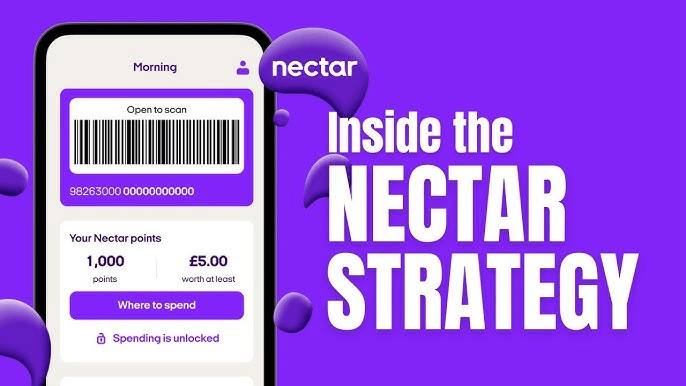
Summarize this post with AI
The Nectar loyalty scheme is not just a points card. It’s one of the UK’s largest coalition loyalty ecosystems, quietly influencing how millions of people shop across brands.
From the outside, it looks simple. Earn points. Spend points. Done.
But behind the scenes, it runs on three powerful pillars: scale, shared data, and partner-funded economics.
Instead of one brand funding loyalty alone, multiple brands contribute to the same system. That increases earning frequency, spreads cost, and expands customer insight.
This guide is not about collecting more points. It’s about understanding why this model works, and whether it makes sense for your ecommerce business.
The Nectar Blueprint: Architecture of a Multi-Brand Engine
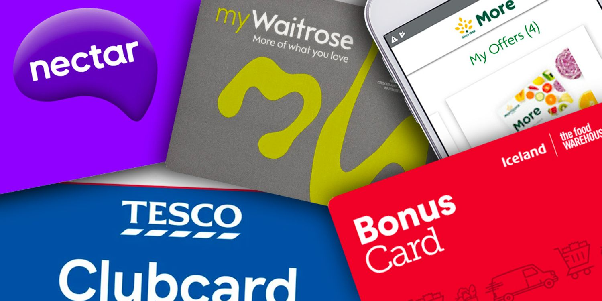
When people talk about Nectar’s success, they focus on the numbers: over 18 million collectors and £250 million in value given back to customers annually. But scale is the outcome. The real story is the architecture behind it.
Nectar is not just a rewards scheme. It’s a multi-brand behavioral engine designed to:
- Increase purchase frequency
- Stabilize financial exposure
- Build trust at scale
If you run an e-commerce brand (or manage multiple sub-brands), this blueprint matters. Because it shows how loyalty becomes infrastructure, not just a marketing campaign.
Let’s break it down.
The Velocity Engine: Why earn-frequency beats basket size for habit formation
Many retailers focus on increasing basket size: encouraging one large weekly purchase. This limits engagement to roughly 52 key interactions per year.
Nectar focuses on increasing earning frequency instead.
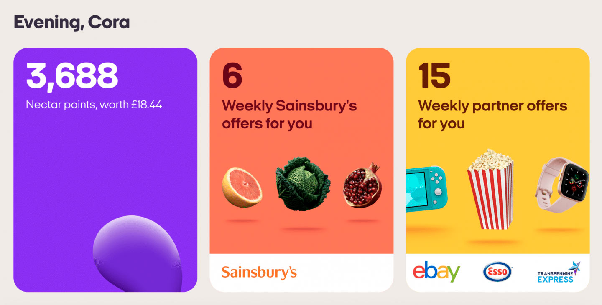
Because members can earn points across grocery, fuel, travel, and general merchandise, they accumulate points multiple times per week. Each earning event reinforces the habit loop.
Habit research shows that repeated actions, not large one-time rewards, drive automatic behavior. When customers earn points across categories, they are more likely to check the app before purchasing. The brand becomes a default layer across spending decisions.
According to Sainsbury’s 2023/24 Annual Report, Nectar now has over 16 million digitized users, with Nectar-participating sales growing as shoppers seek value across categories.
For e-commerce brands, the lesson is clear: 5 small earning moments per week create stronger behavioral lock-in than 1 large discount once a month.
This means expanding earning touchpoints (subscriptions, referrals, content engagement, partner rewards) often drives retention more effectively than increasing discount depth.
The Yield Management of Points: How deferred redemption and "breakage" stabilize cash flow
Points are a form of private currency. Nectar’s brilliance lies in managing the "float", the time between when a point is earned and when it is spent.
This structure creates 2 financial advantages:
1. Deferred redemption = predictable liability
Under accounting standards (specifically IFRS 15), when you earn a point, the company marks it as "deferred revenue." This means they hold onto the value until you redeem it.
Because millions of users follow predictable patterns (like saving points for a big Christmas shop), the company can forecast exactly when money will leave the system, making cash flow management much smoother.
2. Breakage = built-in stabilization
In any loyalty system, a percentage of points will eventually expire or be forgotten. This is called breakage. In a multi-brand ecosystem like Nectar, even though points are easy to use, a small portion always "vanishes" from the books.
This effectively lowers the program's actual cost, providing a natural financial cushion for the brand.
The 2026 Security Standard: Brief on Spend Lock and trust-building
As loyalty points become easier to spend, they become more susceptible to fraud.
Nectar has introduced features such as Spend Lock, which allow members to freeze their points balance in the app to prevent unauthorized redemption.
Redemption systems increasingly rely on dynamic QR codes rather than static barcodes, reducing cloning risk.
In the current landscape, security is no longer a backend concern; it’s a marketing strength. Users gravitate toward platforms where their "digital wallet" feels protected.
For e-commerce brands building loyalty infrastructure in 2026 and beyond, this is the new baseline:
- Two-factor authentication for redemptions
- Redemption notifications
- Optional “lock” controls
What structurally differentiates the Nectar loyalty scheme from typical e-commerce programs
The Nectar loyalty scheme is not simply a supermarket rewards card. It is a multi-partner data and redemption network.
To see the structural difference, compare it with Tesco Clubcard and other loyalty program examples alongside a standard Shopify-style e-commerce points system.
| Dimension | Nectar | Tesco Clubcard | Shopify-Style Points |
|---|---|---|---|
| Model Type | Multi-partner coalition | Single-retailer ecosystem | Single-brand program |
| Transaction Visibility | Cross-brand, cross-category | Primarily Tesco-owned categories | Only your store data |
| Behavioral Insight Depth | Multi-industry (grocery, fuel, travel, etc.) | Retail-focused | SKU-level only |
| Targeting Capability | Broad, lifestyle-level | Category-level | Purchase-history only |
| Anti-Churn Levers | Earn everywhere, redeem flexibly | Strong in-store loop | Discount-driven |
Breaking the Data Silo: Why cross-category visibility is the ultimate "Anti-Churn" weapon
Most e-commerce brands suffer from Data Blindness. They know when a customer buys a pair of shoes, but they don't know if that customer just bought a car, moved house, or started shopping for baby clothes elsewhere.
Nectar sees "The Whole Human." If a shopper stops buying premium meat at Sainsbury’s but starts spending more at Argos on home-office gear, Nectar knows they aren't "churning", they are just shifting their budget.
Because Nectar tracks 16 million+ digitized users across brands like British Airways and Esso, they can predict life changes (like a holiday or a new job) before the customer even makes a grocery purchase related to it.
According to Sainsbury’s FY 2024/25 results, their "Next Level" strategy, fueled by Nectar data, delivered a 7.2% increase in retail operating profit, largely by using these insights to target 9,000+ personalized "Nectar Prices."
Action Takeaway: Ask yourself: Are you operating in a data silo? If your loyalty data only tells you what people buy from you, you are guessing at their loyalty. Partners or "coalition-style" data sharing can reveal why customers leave before they actually go.
Emotional Flexibility: Why "Choice of Reward" creates higher perceived value than 5% cashback
In 2026, loyalty is moving from math to psychology. While a flat 5% cashback is easy to calculate, it often feels like a sterile transaction rather than a reward.
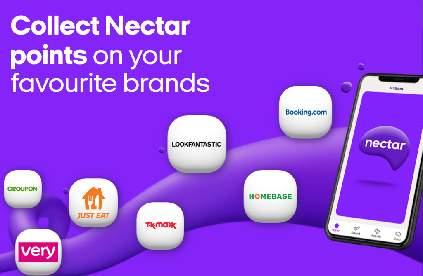
Nectar allows you to spend points on a coffee at Caffè Nero, a flight with BA, or a toy at Argos. This "Choice-Based Reward" system makes the points feel like a gift. Research shows that 70% of emotionally engaged consumers spend up to 2 times as much as those with low engagement.
Additionally, because you can earn points at eBay and Esso and spend them at Sainsbury’s, the "goal" feels closer. This reduces Loyalty Fatigue, the feeling that you'll never earn enough for a meaningful reward.
Flexible systems create "mini-wins" that keep the brain’s dopamine loop active.
Action Takeaway: Audit whether your loyalty value feels flexible or transactional. If your only reward is a discount on your own products, you aren't building loyalty; you're just subsidizing the next sale.
Strategic Verdict: Replicate, Partner, or Avoid?
Not every business should try to be the next Nectar. Depending on your brand’s price point and how often customers buy from you, a multi-brand "points" strategy could either be a goldmine or a massive mistake.
The “Brand Dilution” Trap: When coalition models fail (Premium & Niche brands)
For premium and niche brands, joining a massive multi-brand engine like Nectar can actually hurt your business. This is known as Brand Dilution.
A study by Deloitte indicates that while loyalty programs generally increase spend, "status-based" rewards (like VIP access) outperform "monetary-based" rewards (like points) for luxury consumers by a wide margin.
It also mentions that luxury loyalty must focus on "emotional engagement" and "elevated experiences" rather than simple transactions.
For example, Premium brands (like Apple, Rolex, or boutique luxury labels) rely on being "exclusive." If a customer can earn points on a luxury watch and spend them on a pint of milk at a supermarket, the "prestige" of the luxury brand drops.
The Verdict: If your brand relies on high margins and exclusivity, avoid points-based coalitions. Instead, build a private "inner circle" program that offers early access or white-glove service.
The “Frequency” Litmus Test: Does your purchase cycle support a points model?
The biggest technical failure in loyalty is the "Dead Points" syndrome. This happens when a customer earns points but never earns enough to buy anything.
If a customer buys a mattress once every 8 years, a points program is useless. They will lose their login details long before they earn a "free pillow." For low-frequency items, the effort required to track points outweighs the reward. This leads to "loyalty fatigue," where the program is viewed as a nuisance rather than a benefit.
If your product's natural buying cycle is longer than 12 months, your redemption rate will likely crash, rendering the program an expensive waste of data storage.
3 Strategic Lessons E-commerce Brands Can Apply Today
You don’t need a coalition scale to apply the principles behind Nectar.
Here’s what translates directly.
Lesson 1: Design for “Share of Wallet,” not just “Share of Category.”
Most e-commerce owners get stuck in a "category bubble." If you sell coffee, you’re constantly thinking about how to get someone to buy your beans instead of the competitor's.
But Nectar thinks bigger.
They want to know where else you’re spending money so they can be there, too.
Even if you’re single-brand, you can think broader:
- Expand complementary categories
- Build subscription ecosystems
- Partner with adjacent brands
Retention improves when your brand becomes part of routine spending, not occasional need.
Lesson 2: Replace “Static Points” with “Dynamic Boosters” (Personalization)
Static earn rates feel safe. But over time, they become invisible.
If customers always earn “1 point per $1,” there is no urgency. No momentum. No reason to pay attention this week instead of next month.
Nectar uses what they call "Your Nectar Prices" - personalized, time-sensitive "drops" that refresh every Friday.
This creates a "use it or lose it" momentum that keeps users opening the app. According to Sainsbury’s 2025 data, this strategy alone generated over 17 billion personalized discounts last year.
Instead of:
- “Earn 1 point per $1 forever.”
Think:
- “Double points this weekend.”
- “3x points on your most-viewed category.”
- “Bonus if you complete 2 purchases this month.”
These "boosters" create a sense of progress. They turn a transaction into a game, and games are much harder to walk away from than a simple math equation.
Lesson 3: Treat Loyalty as a Zero-Party Data Strategy
If your loyalty program only rewards transactions, you are leaving value on the table.
The smarter approach is to use loyalty to collect intentional data. Not creepy tracking. Not guesswork. But information customers willingly share in exchange for value.
This can include:
- Style or product preferences
- Budget range
- Future purchase intent
When customers choose to tell you these things, you build zero-party data. That data improves targeting, personalization, and lifetime value modeling. It also makes your campaigns more efficient because you are speaking to real intent rather than assumptions.
Over time, that insight becomes more powerful than any discount you could offer.
Conclusion
The Nectar loyalty scheme works because three forces reinforce each other:
- Scale increases data depth
- Data improves targeting precision
- Better targeting strengthens economics
It’s a flywheel.
Coalition models reduce individual cost pressure by sharing funding and distributing liability. But they also reduce control over the brand narrative, the customer environment, and the reward structure.
In-house loyalty models do the opposite.
They increase control, protect positioning, and keep customer ownership centralized. But they limit scale, cross-category insight, and shared economics.
Neither model is universally superior.
The real strategic question is:
Are you optimizing for ecosystem leverage or brand independence?
Choose intentionally. Because loyalty architecture shapes not just retention, but long-term strategic direction.
FAQs
Is Nectar a coalition loyalty scheme?
Yes. Nectar operates as a multi-partner coalition program where customers can earn and redeem points across multiple participating brands rather than a single retailer.
Is coalition loyalty better than standalone e-commerce loyalty?
It depends on your business model.
Coalitions offer:
- Shared reward funding
- Broader behavioral insight
- Reduced individual risk
Standalone programs offer:
- Full brand control
- Clear positioning
- Direct customer ownership
The better model aligns with your brand strategy and purchase frequency.
Why don’t most e-commerce brands join coalitions?
Common reasons include:
- Fear of brand dilution
- Reduced control over customer experience
- Limited access to suitable coalition networks
- Integration complexity
For many DTC brands, independence is part of their value proposition.
What KPIs should e-commerce brands track when testing loyalty partnerships?
Focus on:
- Purchase frequency uplift
- Customer lifetime value (CLV) growth
- Incremental revenue vs. reward cost
- Redemption rate and breakage
- Partner-driven acquisition rate
Measure behavioral change, not just points issued.
How do coalition programs manage reward liability at scale?
They rely on:
- Shared funding across partners
- Deferred redemption timing
- Forecasted breakage rates
- Structured accounting models
At scale, predictability improves. And predictability turns loyalty from a marketing expense into a managed economic system.

Written by
Thomas Nguyen is the CEO & Co-founder of Joy, a loyalty solution for Shopify and eCommerce brands. With years of experience building high-performance Shopify apps, Thomas aims to help merchants grow through customizable and retention-focused tools.
Related reading
 Examples & Inspiration
World of Hyatt Guide 2026: Tiers, Rewards & Sweet Spots
The Hyatt loyalty program (World of Hyatt) offers the best value per point in travel. See how to earn free nights, unlock elite tiers, and find the top sweet spots.
 Thomas Nguyen
 Examples & Inspiration
Coca-Cola Brand Loyalty: 5 Strategies E-commerce Brands Can Use to Boost Retention
Coca-Cola brand loyalty is built on emotion, consistency, and ubiquity - not discounts. See the 5 strategies behind it and how to apply them to ecommerce retention.
Thomas Nguyen Examples & Inspiration
Avis Preferred 2026 Guide: Skip the Line & Earn Free Days
The Avis loyalty program (Avis Preferred) lets you skip the counter and earn free rental days. See how the tiers, points math, and status shortcuts work in 2026.
Thomas Nguyen Examples & Inspiration
Walmart Loyalty Program Explained: 2026 Strategy Guide
Walmart's loyalty isn't a points game — it's infrastructure. See how the Walmart loyalty program turns subscription, cashback, and retail media into profit.
Thomas Nguyen Examples & Inspiration
IKEA Loyalty Program: How 170M Members Drive 50% of Revenue
IKEA Family has 170M members driving 50% of revenue — with zero tiers and a flat structure. After 73 years, the 2025 points refresh adds a new layer. This breakdown covers how it works, the emotional-loyalty playbook, hub-and-spoke architecture, and what Shopify brands can steal.
Thomas Nguyen Examples & Inspiration
JCPenney Rewards Analysis 2026: The Strategic Mechanics of "CashPass"
The JCPenney rewards program turns points into a branded "CashPass" currency. See how its earn rates, stacking, and 45-day expiry are engineered to drive sales.
Thomas Nguyen