Brand Loyalty Pyramid: 5 Strategic Levels for 2026 Growth
Not all customers are loyal in the same way. The brand loyalty pyramid maps 5 strategic levels - from price-sensitive switchers to fanatic advocates - using David Aaker's framework. This guide breaks down each tier and the tactics to move customers up the ladder in 2026.

Summarize this post with AI
Brand loyalty pyramid implementation is the most effective way to stop losing money on expensive customer acquisition. We see a landscape where Facebook Ads costs have jumped nearly 300% in a single year, making traditional marketing less sustainable.
This dramatic shift requires a move toward the brand loyalty pyramid to turn casual visitors into vocal advocates who drive organic growth. We use this framework to map Consumer Behavior across five levels of commitment, helping us identify exactly where a customer sits in our Marketing Funnel.
By focusing on the top of the ladder, we can increase Brand Equity and insulate our margins from market volatility. Our goal for 2026 is to move beyond simple transactions. We want to build an Emotional Connection that makes your brand the only choice in a crowded market.
What is the Brand Loyalty Pyramid?
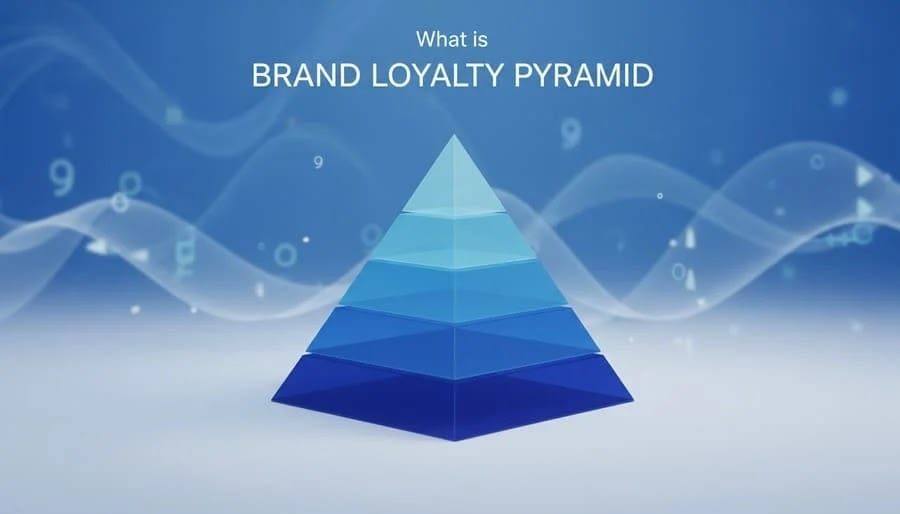
Navigating the competitive landscape of modern commerce requires more than just a great product; it requires a deep understanding of why people stay. The brand loyalty pyramid is a strategic framework that categorizes a customer base into five hierarchical levels based on their degree of loyalty and commitment to a specific brand.
This model, pioneered by David Aaker, serves as the primary component for measuring Brand Equity by analyzing how likely a person is to switch to a competitor. While variations like the Keller CBBE model focus more on brand identity and resonance, the brand loyalty pyramid focuses on the behavioral strength of the relationship.
For example, a Shopify merchant using Joy Loyalty might see a 20% lift in repeat orders by targeting "Switchers" with specific rewards. Ultimately, the meaning of this pyramid is to provide a roadmap for scaling Customer Lifetime Value (CLV) by moving users from Transactional Loyalty to Brand Advocacy.
This foundational understanding allows us to stop treating all customers as a single group. By using Customer Segmentation, we can see that a buyer driven by Inertia needs a different message than one driven by Fanaticism. We must treat the ladder as a progressive journey.
Each step up the pyramid represents a decrease in Price Sensitivity and an increase in brand health. As we look toward the 2026 market, the brands that survive will be those that treat this model as a living strategy.
The next section will break down the specific characteristics of each tier. This helps us audit our current performance and identify where we are losing the most value.
5 Levels of the Aaker Brand Loyalty Pyramid
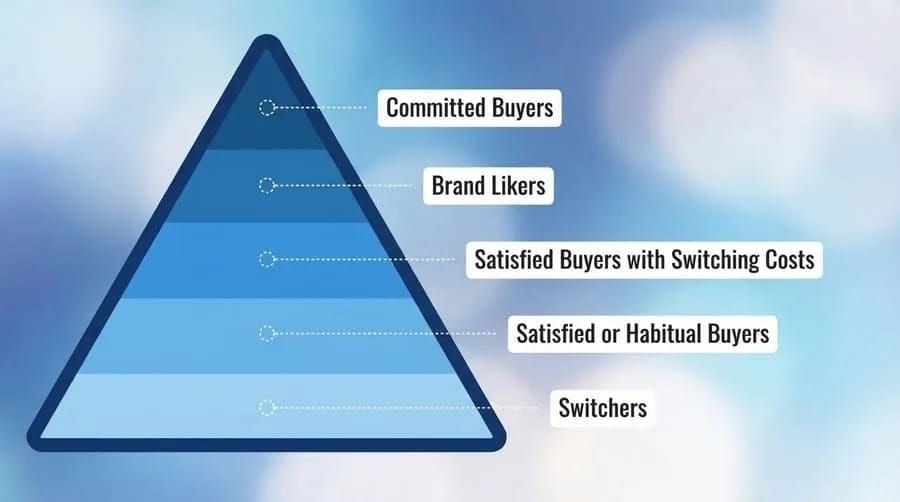
We cannot improve what we do not measure, so we must define the specific behaviors associated with each tier of the brand loyalty pyramid. Each level represents a different psychological state and a different level of risk for the business. As we move from the base to the apex, the User Experience becomes more personal and less about the price tag.
Level 1: Switchers and Price-Sensitive Buyers
The bottom of the brand loyalty pyramid consists of buyers who have zero brand attachment and make decisions based solely on the lowest price or immediate availability. These individuals are often Discount Seekers who use tools to find the cheapest option every time they shop. They view products as commodities.
There is no Brand Trust here because the relationship is purely mercenary. If a competitor drops their price by ten cents, these buyers will leave instantly. For a Shopify store, these users represent a high Churn risk. We often see high traffic from this group during BFCM sales, but they rarely return for full-price purchases.
Level 2: Satisfied and Habitual Buyers
Moving up the brand loyalty pyramid, we find the habitual buyers who continue to purchase because it is the path of least resistance. These customers experience Habitual Buying patterns driven by Inertia rather than true preference. They are generally satisfied with the product, but they lack an Emotional Connection.
They buy from us because our store is the first result, or they already have an account saved. They are not actively looking for a change, but they are not "locked in." If a new brand offers a slightly better User Experience or a more convenient app, they might drift away without much thought.
Level 3: Satisfied Buyers with Switching Costs
At the third level of the brand loyalty pyramid, customers begin to feel "locked in" due to Switching Costs that make leaving unattractive. These costs are not always financial; they can be Technical Barriers or the time required to learn a new system.
For instance, a customer might stay with a skincare brand because they have already earned enough points for a free bottle next month. This is where Transactional Loyalty starts to provide a safety net for the merchant. The customer may be satisfied, but the main reason they stay is that it would be too much effort to start over with a competitor.
Level 4: Brand Likers and Enthusiasts
This level marks the critical transition from rational logic to emotional feeling within the brand loyalty pyramid. These customers truly "like" the brand and associate it with their personal identity or lifestyle. They have a high Brand Affinity and often follow the brand on social media to see new updates.
At this stage, Consumer Behavior is driven by the feeling of being part of something. They are less likely to compare prices because they trust the brand to deliver a specific quality. We see these enthusiasts leaving positive Customer Feedback and defending the brand in comment sections.
Level 5: Committed Buyers and Brand Advocates
The pinnacle of the brand loyalty pyramid is occupied by your most valuable assets: the advocates. These individuals display Fanaticism and are proud to be associated with your label. They do not just buy your products; they actively participate in Brand Advocacy by referring friends and family.
They have the highest Net Promoter Score and serve as a volunteer marketing force. For these buyers, the brand is a core part of their life. They are immune to competitor pricing and will wait for your products to be back in stock rather than buying an alternative.
Understanding these levels helps us see where our marketing budget is being wasted on temporary "Switchers" versus long-term growth. Now, let's look at how to scale this pyramid effectively.
Strategic Implementation: Climbing the Pyramid
Moving customers up the brand loyalty pyramid requires a deliberate and multi-faceted strategy. It is not enough to simply have a loyalty program; that program must be integrated into every touchpoint of the customer journey.
Omnichannel Integration
A truly effective loyalty strategy must be seamless across all sales channels. Customers should be able to earn and redeem rewards whether they are shopping online or at physical POS locations. This unified experience ensures that loyalty is tied to the brand, not just a specific platform.
Membership Tiers and Milestone Rewards
To motivate customers to climb the pyramid, brands should implement tiered membership structures. As customers spend more and progress to higher tiers, they should unlock increasingly valuable benefits, such as:
- Automatic discounts on every order.
- Free shipping on all orders above a certain threshold.
- Entry rewards to celebrate reaching a new tier.
- Birthday rewards that grow larger with each tier.
- Exclusive access to new or sample products.
Diversified Earning Missions
Loyalty should not just be about spending money. By rewarding other forms of engagement, brands can build a deeper Emotional Connection. Earning missions can include actions like writing product reviews or following the brand on social media. This keeps the brand top-of-mind and encourages repeated interaction.
[High Churn Risk] Scaling the Pyramid to Retain "Switchers"
The broadest part of the brand loyalty pyramid is also the most volatile. To scale a Direct-to-Consumer (DTC) brand in 2026, we must move these "Switchers" toward Level 3 immediately. We do this by creating Engagement-based Rewards that build artificial Switching Costs.
- Create Anchors: Issue points instantly upon account creation, so leaving feels like a loss. For example, Allbirds issued 150 Million Won in loyalty points to encourage existing customers to adopt their new program. This "points waiting for you" strategy guarantees immediate engagement.
- Personalization: Use data to bypass the "Habitual" stage and move straight to "Liking" through differentiated rewards based on tiers. Differentiated birthday rewards and exclusive tier-based perks motivate customers to remain active.
- Omnichannel Ease: Ensure points are earned across online and POS touchpoints to reduce friction and unify the experience.
Churn Mitigation is your primary goal at the base of the brand loyalty pyramid. We use retention analytics to identify when a customer is stuck in Level 2 and trigger a special gift or VIP offer. By providing long-term value, we ensure the Customer Retention Rate remains healthy even as ad costs fluctuate.
This transition ensures your brand stays protected from competitors who only compete on price. Next, we will discuss how to measure this progress using specific data.
Measuring Success: Metrics to Map the Loyalty Ladder

We must use both qualitative and quantitative data to track how customers move up the brand loyalty pyramid. Relying on total sales alone is a mistake, as it does not show the "why" behind the purchase. We need to know if a sale came from a Discount Seeker or a Brand Advocate.
Qualitative Insights through Net Promoter Score (NPS)
NPS is the best tool for identifying where customers sit on the brand loyalty pyramid. We use it to separate your promoters from your detractors.
- Promoters: These are your Level 5 Brand Advocacy drivers who refer new business.
- Detractors: These are your Level 1 "Switchers" who are likely to leave.
- Feedback: Use regular surveys, like post-purchase surveys, to understand the Brand Perception and improve the User Experience.
Quantitative Validation with Cohort Analysis
We use Shopify Analytics to track the velocity of your brand loyalty pyramid. This helps us see how fast a customer moves from their first purchase to their fifth.
- AOV Growth: Track if the Average Order Value (AOV) rises as a customer spends more time with the brand. AOV Bundles and volume discounts can help drive this growth.
- Purchase Frequency: Monitor how often a group returns to buy. Joy Subscriptions can be a powerful tool to increase this frequency by encouraging "subscribe and save" behavior.
- Redemption Rate: A high point redemption rate proves customers are engaged with your loyalty ladder. Successful programs often see redemption rates of 50% or even as high as 78%.
Conclusions
The brand loyalty pyramid is the most effective way to visualize and execute a growth strategy for 2026. We must recognize that "Switchers" require different incentives than "Committed Buyers" to keep the business healthy. By using the Aaker model, we can stop overspending on people who will never be loyal.
Instead, we can invest in building Brand Trust and Emotional Connection with those who have the potential to become advocates. Transitioning your audience up this ladder ensures that your brand remains insulated from the rising costs of digital advertising. It turns your customer base into a competitive advantage that no rival can easily buy.
Frequently Asked Questions (FAQs)
What is the difference between Aaker and Keller’s loyalty pyramids?
David Aaker's model focuses on the behavioral commitment and the risk of switching. It is a tool for managing Brand Equity. Keller’s model (CBBE) is more about the customer’s mental journey, focusing on brand identity, meaning, and resonance.
How do I move a "Habitual Buyer" to a "Brand Liker"?
You must move beyond convenience and provide emotional value. Use Customer Segmentation to send personalized rewards. Surprising a customer with a "thank you" gift can break the cycle of Inertia and start an Emotional Connection.
Can a brand survive with only "Satisfied Buyers"?
It is possible, but very risky. Without Switching Costs, these buyers will leave if a competitor offers a better price or more convenience. A brand is much safer when it has a core group of Level 5 Brand Advocates.
How does a loyalty program influence the pyramid?
A loyalty program creates Level 3 Switching Costs. By giving points and rewards, you give the customer a reason to stay, even if they are just "satisfied." It provides the data needed to move them toward Level 4 and 5.
What is the ROI of moving customers up the pyramid?
The ROI is massive because Level 5 advocates have the highest Average Order Value and the lowest acquisition cost. They provide free marketing through referrals, which reduces your overall ad spend and boosts Brand Equity.

Written by
Thomas Nguyen is the CEO & Co-founder of Joy, a loyalty solution for Shopify and eCommerce brands. With years of experience building high-performance Shopify apps, Thomas aims to help merchants grow through customizable and retention-focused tools.
Related reading
 Loyalty Strategy
Three Stages of Brand Loyalty: Mastering the 2026 ROI Strategies
From "knowing" your brand to "refusing" any other. The three stages of brand loyalty — Recognition, Preference, Insistence — map how customers actually move from awareness to advocacy. This guide breaks down each stage and the tactics to climb the ladder when acquisition costs are 4× higher.
 Thomas Nguyen
 Loyalty Strategy
Customer Loyalty Meaning: The Framework Most Brands Miss
89% of executives think customer loyalty is up. Only 39% of consumers agree — a 50-point perception gap (PwC, 2025). The fix starts with knowing what customer loyalty actually means. This guide breaks down the dual nature, 6 types, and a 2x2 matrix to diagnose your brand.
Thomas Nguyen Loyalty Strategy
Customer Satisfaction and Brand Loyalty: 2026 Growth Guide
25-35% of satisfied customers still switch silently. This guide explores the gap between customer satisfaction and brand loyalty — and the 4 metrics (NPS, CES, redemption rate, LTV) that turn happy buyers into emotionally connected advocates when acquisition costs are 4× higher.
Thomas Nguyen Loyalty Strategy
The Impact of Social Media Marketing on Brand Loyalty: 7 Key Insights
Likes don't equal loyalty. This guide breaks down how social media marketing actually builds brand loyalty — through two-way communication, user-generated proof, omnichannel touchpoints, influencer collaboration, and measurable ROI. 7 key insights for Shopify merchants in 2026.
Thomas Nguyen Loyalty Strategy
Dimensions of Customer Loyalty: Why Discounts Alone Never Create Real Loyalty
Most loyalty programs run the same points-for-purchase mechanic—and customers bounce the moment a competitor offers more. Real loyalty has four dimensions, and brands that activate all four see 2–3× better retention. Here's what they are, and how to spot which one your program is missing.
Thomas Nguyen Loyalty Strategy
Brand and Customer Loyalty: The Difference That Determines Whether You Win or Race to the Bottom
Customer loyalty keeps people buying until a better offer arrives. Brand loyalty keeps them buying even when better offers already exist. Most merchants build only the cheaper, more fragile ones - here's the upgrade path.
Thomas Nguyen