
BFCM Retention: Only 13% of New Buyers Place a Second Order
Only 13% of the new customers a store wins over BFCM come back for a second order. That is Tresl's BFCM 2022 measurement, inverted.
Summarize this post with AI
Black Friday Cyber Monday (BFCM) presents a paradox. Shoppers spent a record $44.2 billion online during Cyber Week 2025 — the five days from Thanksgiving through Cyber Monday, US online retail, measured by Adobe Analytics. Yet of the new customers those stores won over the weekend, only 13% came back to shop again — Tresl's analysis of BFCM 2022. Flip that figure over and 87% of your hardest-won Black Friday shoppers never return. Same measurement, read from the other side, and it counts shoppers, not merchants.
This is not a failure of sales volume, but a failure of strategy and profitability. Most are caught in a "BFCM sugar rush"—a temporary revenue spike that masks the harsh reality of unsustainable customer acquisition costs, eroded margins, and dismal repeat purchase rates. The fundamental problem is a widespread obsession with acquisition over retention, a financially broken model.
This analysis, based on our firsthand experience working with thousands of Shopify merchants, dissects the flawed economics of the traditional BFCM approach and provides a comprehensive blueprint for transforming the event from a costly gamble into a powerful engine for building lasting customer relationships and sustainable, profitable growth.
Key Takeaways
- Only 13% of the new customers a store wins over BFCM come back for a second order (Tresl, BFCM 2022 data). The 87% failure rate quoted everywhere is that same measurement inverted, and it describes shoppers, not merchants.
- Most merchants are caught in a "BFCM sugar rush": a temporary revenue spike masking unsustainable acquisition costs and eroded margins.
- The fundamental problem is obsession with acquisition over retention, a financially broken model.
- Shoppers spent $44.2 billion online during Cyber Week 2025 (Adobe Analytics), but a 13% repeat rate means most of that revenue never comes back.
- This analysis provides a blueprint for transforming BFCM from a costly gamble into a lasting customer retention engine, with the BFCM 2026 countdown dates to run it on.
Updated 12 October 2026. Replaced an aggregator mobile figure with Salesforce and Adobe, re-dated the playbook to the BFCM 2026 weekend, and split this page from our BFCM retention plan so the two stop covering the same ground.
The Flawed Unit Economics of a Traditional BFCM

The most critical error merchants make is prioritizing new customer acquisition at any cost. This strategy is fundamentally unsustainable. Foundational business research shows it can cost anywhere from 5 to 25 times more to acquire a new customer than to retain an existing one. During BFCM's hyper-competitive environment, this cost skyrockets.
Across recent BFCM seasons, the unit economics have been brutally clear:
- Skyrocketing Customer Acquisition Cost (CAC): Ad costs on major platforms soared by over 30%, making paid acquisition intensely unprofitable for many.
- Deep Margin Erosion: Average discount rates hit 21%, more than double the yearly average of 9%.
- Low Customer Lifetime Value (CLV): A mere 13% of new BFCM shoppers returned for a second purchase (Tresl, BFCM 2022 data — the same measurement as the 87% above, counted the other way), meaning the vast majority were one-time, low-margin buyers.

When you combine high CAC with deep discounts for customers who will not return, the equation results in a negative ROI. The strategy isn't just inefficient; it's a direct path to unprofitable growth.
The Seven Deadly Sins of BFCM

Each of those seven failures is a symptom of the same thing: an acquisition-first strategy that treats the weekend as the finish line. Naming them is the first step toward a retention-driven approach.
1. Strategic Suicide: The Perils of Blanket Discounting
Offering deep, site-wide discounts is a race to the bottom that destroys profit margins and trains customers to only buy on sale. Instead of indiscriminate cuts, a retention-focused strategy deploys margin-protecting rewards, like exclusive access for top-tier members or "buy more, get more" offers that increase AOV.
2. Failing the Mobile Mandate: A Friction-Filled Experience
Mobile drove 70% of online orders during Cyber Week 2025, globally and in the US, according to Salesforce's Cyber Week press release, while Adobe expects mobile to carry 63% of US Cyber Week spend in 2026, up from 61.6% in 2025. Mobile wins a larger share of orders than of money, which is a basket problem rather than a traffic problem, and it points straight at the end-to-end mobile journey: the loyalty program UI, the reward application step and a one-click checkout.
3. The High Cost of Poor Forecasting
Inaccurate demand forecasting creates two expensive problems: frustrating stockouts that kill sales or costly overstocking that forces deeper markdowns post-holiday. Merchants using sophisticated data strategies see 40% better inventory turnover. A loyalty program provides rich first-party data on your most predictable customers, enabling far more accurate forecasting.
4. Competing in the Red Ocean: The Folly of Last-Minute Marketing
Launching campaigns on BFCM weekend means entering a "red ocean" of intense competition. Strategic merchants, with experts advising to start planning as early as August, create their own "blue ocean" by launching early with a VIP early access campaign for loyalty members.
5. Technical Debt Comes Due: When Your Site Becomes a Liability
A website that crashes or slows under peak traffic is a direct loss of revenue and brand trust. Ensuring your site and all third-party apps are built on an enterprise-grade infrastructure is non-negotiable.
6. The Transaction Trap: Ignoring the Customer Journey's Most Critical Phase
The post-purchase period is where retention is either won or lost. With only 13% of new BFCM shoppers returning for a second order (Tresl, BFCM 2022 data — the 87% failure rate counted the other way), a robust post-purchase engagement strategy, focused on onboarding new members into your loyalty program, is critical.
7. The Anonymity Epidemic: Treating Every Customer the Same
Sending generic offers is profoundly inefficient. A customer relationship platform transforms anonymous transactions into unified profiles, allowing you to create personalized rewards that resonate and convert.
The Superior Economics of a Retention-Driven BFCM

The contrast between the two models is stark. A retention-driven strategy yields superior economics by focusing on CLV, not just a single transaction.
As research from Bain & Company demonstrates, a mere 5% increase in customer retention can boost profits by 25-95%. This transforms BFCM from an expense into a strategic investment.
This page is the diagnosis. If you already accept the problem and want the sequence of work, our three-stage plan for earning back BFCM ad costs sets out what to do in each window.
The Retention-First BFCM Playbook

The three-stage playbook below reframes BFCM as a core business initiative rather than a marketing campaign. Set it against the BFCM 2026 calendar: Thanksgiving falls on Thursday 26 November 2026, Black Friday on Friday 27 November, Cyber Monday on Monday 30 November. Every date range below counts back from that weekend.
Stage 1: Building Your Strategic Moat (16-30 October 2026, four to six weeks out)
- Grant VIP Early Access: Reward your best customers, generate early, high-margin revenue, and reinforce the exclusivity of your brand. This is your primary defense against the noise and margin erosion of the BFCM weekend.
- Launch a Points-Boosting Campaign: Let members earn points for non-transactional actions — following your social accounts, writing a review, completing a profile — so they arrive at BFCM with a balance worth redeeming.
Stage 2: Executing with Precision and Personalization (26-30 November 2026, Thanksgiving through Cyber Monday)
- Incentivize Social Sharing: Turn customers into advocates by rewarding them for sharing their purchases on social media. This generates authentic user-generated content and high-trust referrals.
- Use Smart Redemption at Checkout: Integrate your loyalty program's redemption options directly into the cart. Reminding a customer, "You have $15 available!" is a powerful, experience-enhancing conversion lever.
Stage 3: Capitalizing on Your Investment (1-14 December 2026, the two weeks after)
- Onboard New Members Immediately: Enroll every BFCM buyer into the loyalty program at the point of purchase, then send a "Welcome to the Club" campaign within 48 hours that spells out their point balance, their perks and their status.
- Launch Exclusive Member Drops: In the weeks after BFCM, release one new product or collection to loyalty members first. It gives the points they just earned something worth spending on, at full margin.
- Activate Your Referral Program: Turn your newly acquired customers into a growth engine by incentivizing them to refer friends. This transforms a one-time acquisition cost into a sustainable, customer-driven acquisition channel.
The Path Forward: From a Four-Day Event to a Year-Round Growth Engine
Losing 87% of your new BFCM customers after a single order is a choice, not an inevitability. It is the outcome of an outdated strategy that prioritizes fleeting transactions over lasting relationships. Those who thrive are those who use BFCM as a strategic opportunity to build their community and invest in retention. They measure success not by short-term revenue spikes, but by long-term growth in repeat purchase rates and Customer Lifetime Value.
By shifting your focus from the costly pursuit of one-time buyers to the profitable cultivation of brand advocates, you can transform BFCM from a high-stakes gamble into a foundational pillar for sustainable, year-round growth.

Written by
Thomas Nguyen is the CEO & Co-founder of Joy, a loyalty solution for Shopify and eCommerce brands. With years of experience building high-performance Shopify apps, Thomas aims to help merchants grow through customizable and retention-focused tools.
Related reading
 Loyalty Strategy
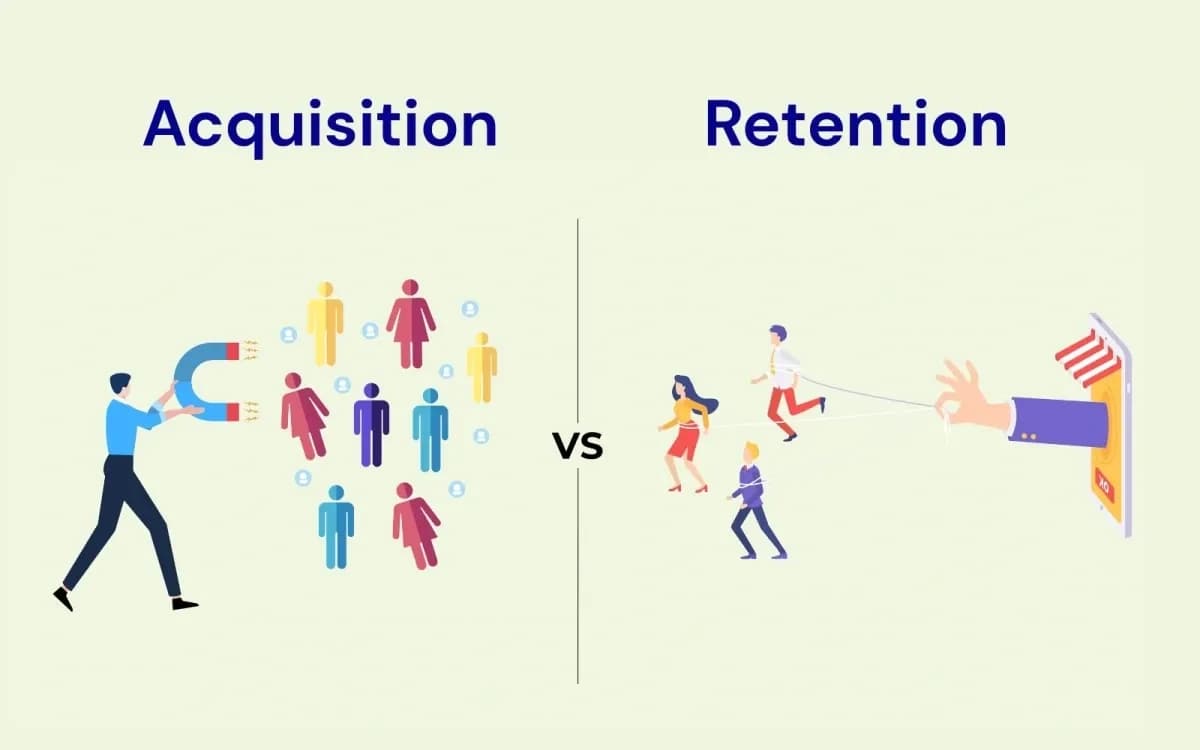
Customer Acquisition vs Retention: Where to Put Your Next Dollar
Customer acquisition and retention aren't a contest. Here's what each really costs, when to prioritize which, and a simple LTV:CAC way to decide your split.
 Thomas Nguyen
 Loyalty Strategy
Customer Retention Cost: Formula & Strategies to Optimize It
Customer retention is often cheaper than acquisition, but are you managing your costs effectively? Learn how to calculate retention costs and optimize your strategy without overspending.
Thomas Nguyen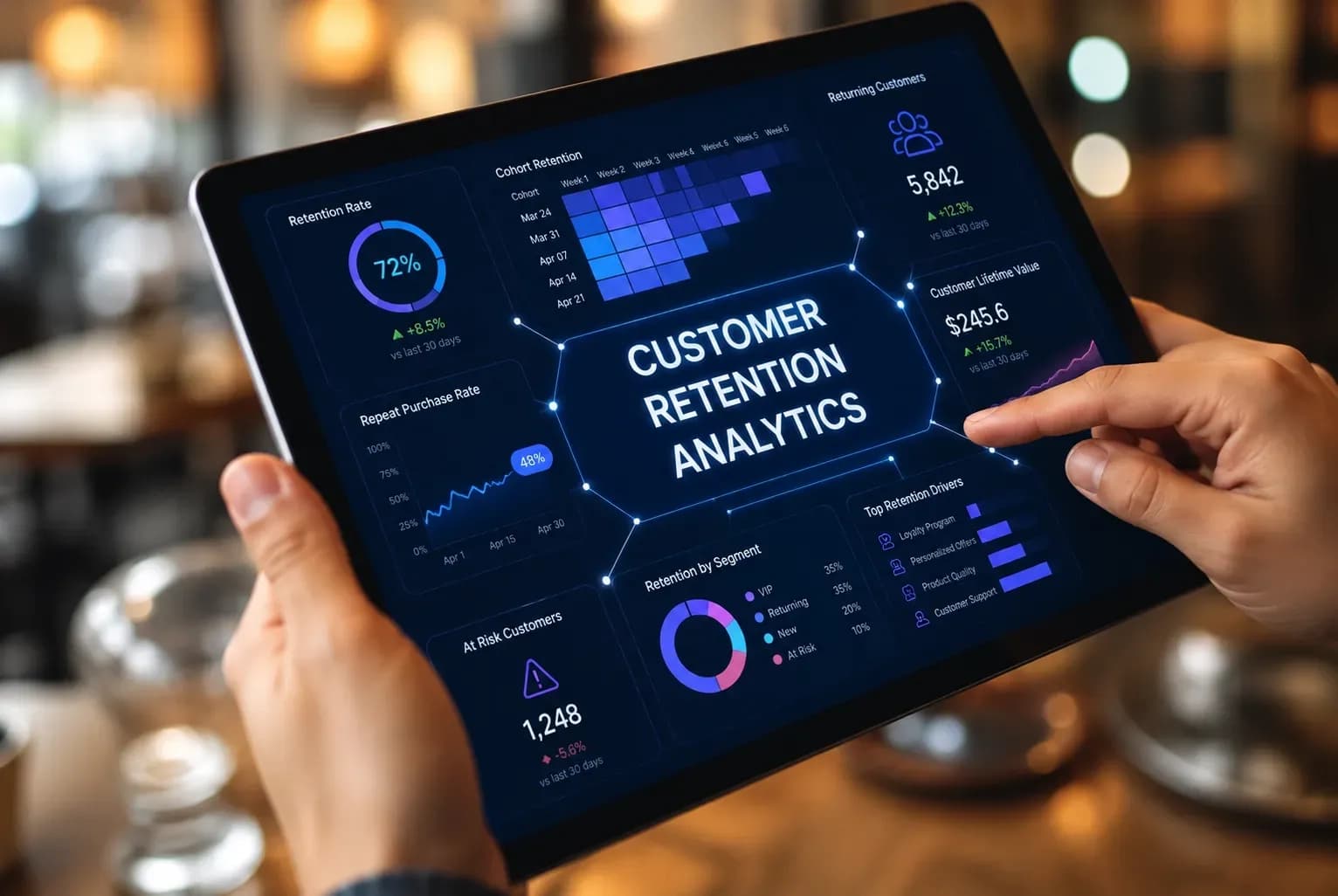 Loyalty Strategy
Customer Retention Analytics: Turn Your Data Into Retention Action
Most retention guides stop at the numbers. This one shows how to read your retention data and turn each metric into a concrete loyalty play for your Shopify store.
Thomas Nguyen Loyalty Strategy
How to set up customer retention automation (without a big team)
A step-by-step guide to automating customer retention across the customer lifecycle, from onboarding to win-back.
Thomas Nguyen Loyalty Strategy
Customer retention benchmarks for ecommerce: What's a good rate?
A clear-eyed look at ecommerce retention benchmarks: the one number worth trusting, why most by-industry tables mislead, and how to benchmark against yourself.
Thomas Nguyen Loyalty Strategy
Advantages of Customer Loyalty: 7 Data-Backed Benefits for Ecommerce Growth
Customer loyalty isn't a feeling — it's a financial asset that compounds. A 5% retention bump drives 25–95% more profit; emotionally connected customers deliver 306% higher LTV. This guide covers all 7 data-backed advantages and the 3 mistakes that kill programs before the compounding kicks in.
Thomas Nguyen