
Customer Acquisition vs Retention: Where to Put Your Next Dollar
Customer acquisition and retention aren't a contest. Here's what each really costs, when to prioritize which, and a simple LTV:CAC way to decide your split.
Summarize this post with AI
Most articles on this topic want to crown a winner. The honest answer is that acquisition and retention aren't a contest, because you can't keep customers you never acquired, and you can't grow on acquisition alone if everyone leaves after one order. The useful question isn't which matters more. It's which one deserves your next dollar, right now, given where your business actually is.
This guide breaks down what acquisition and retention each really cost, the signals that tell you which to lean on, a simple way to decide using your own numbers, and the part most guides skip: how the two quietly feed each other.
Acquisition vs Retention: The Short Answer
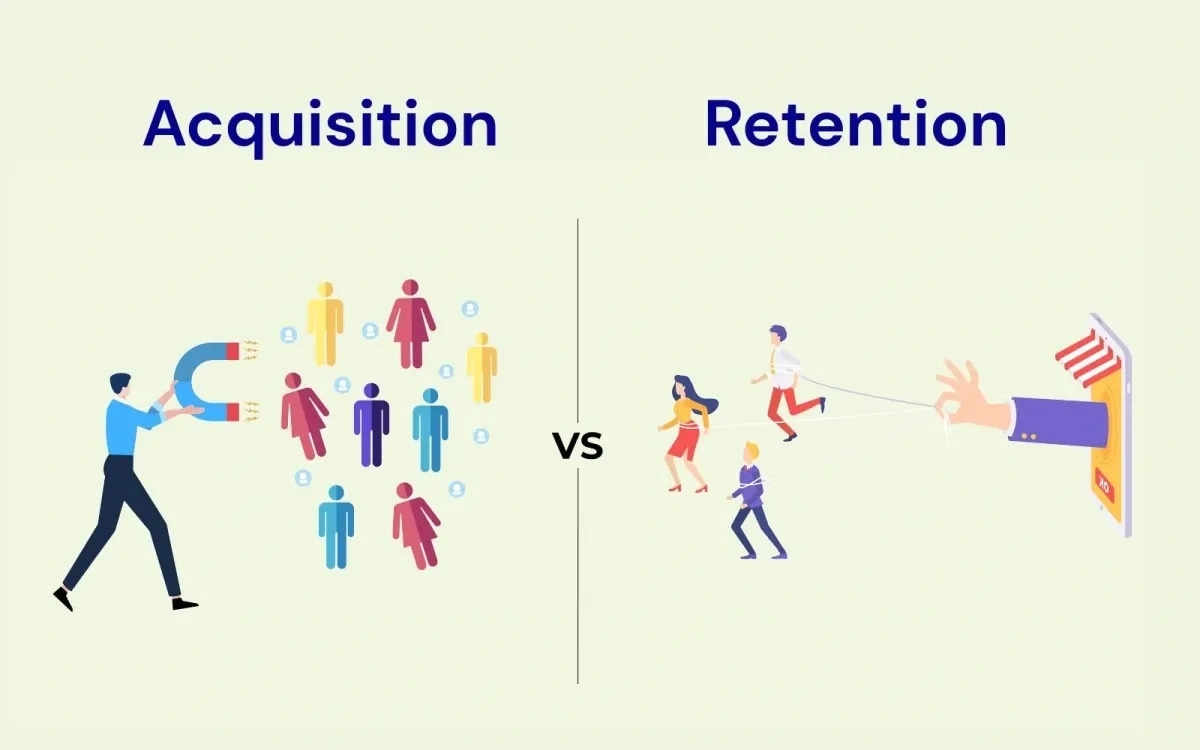
Customer acquisition is the work of turning a stranger into a first-time buyer through ads, content, SEO, and everything else that brings new people to your store. Customer retention is about turning that first-time buyer into a second, third, and tenth-time buyer through the experience, communication, and rewards that happen after the sale.
You need both. The reason this question even comes up is that they compete for the same finite budget, and most stores quietly over-invest in one side. The most common imbalance is pouring almost everything into acquisition while treating retention as an afterthought, which works right up until rising ad costs make that math stop adding up.
So the real decision is a question of balance, and balance depends on your stage. A brand-new store with no customers to retain has a very different answer than an established one watching its acquisition costs climb. The rest of this guide is about finding your answer.
What Acquisition Really Costs Right Now
In LocaliQ's 2025 Search Advertising Benchmarks, drawn from more than 16,000 campaigns running between April 2024 and March 2025, the average cost per click climbed almost 13 percent year over year and rose across 87 percent of industries. For many direct-to-consumer stores, that kind of climb means the first order barely covers the cost of winning it.
That's the part worth sitting with. When the first sale roughly breaks even, your acquisition spend isn't really buying profit. It's buying a chance at profit, and that profit only shows up if the customer comes back. A store that acquires beautifully but retains poorly is essentially renting customers at a loss.
None of this makes acquisition optional. New customers are the raw material, everything else is built from. It just means acquisition is best understood as the first payment in a longer relationship, not a transaction that has to pay for itself on day one.
What Retention Really Returns
Retention works on the opposite economics. The cost of selling to someone who already knows and trusts you is far lower than reaching a stranger, because there's no ad auction to win and no skepticism to overcome. Each repeat order also tends to carry more margin, since you've already absorbed the acquisition cost on the first one.
The catch is that loyalty is getting harder to earn. In SAP Emarsys' Customer Loyalty Index 2025, which surveyed more than 10,000 consumers, "true loyalty," meaning buying from a brand purely because you love it, fell to 29 percent, down five points from 2024. In the same research, 83 percent of consumers said they don't feel brands value their loyalty. Retention is more valuable than ever, in other words, precisely because it's no longer automatic.
That's also why retention isn't free. It takes real work in email, post-purchase experience, and rewards. But the spend tends to compound rather than reset with each campaign, which is the opposite of how acquisition behaves. (For the full cost breakdown, see our guide to customer retention cost.)
The Real Differences (Beyond Cost)
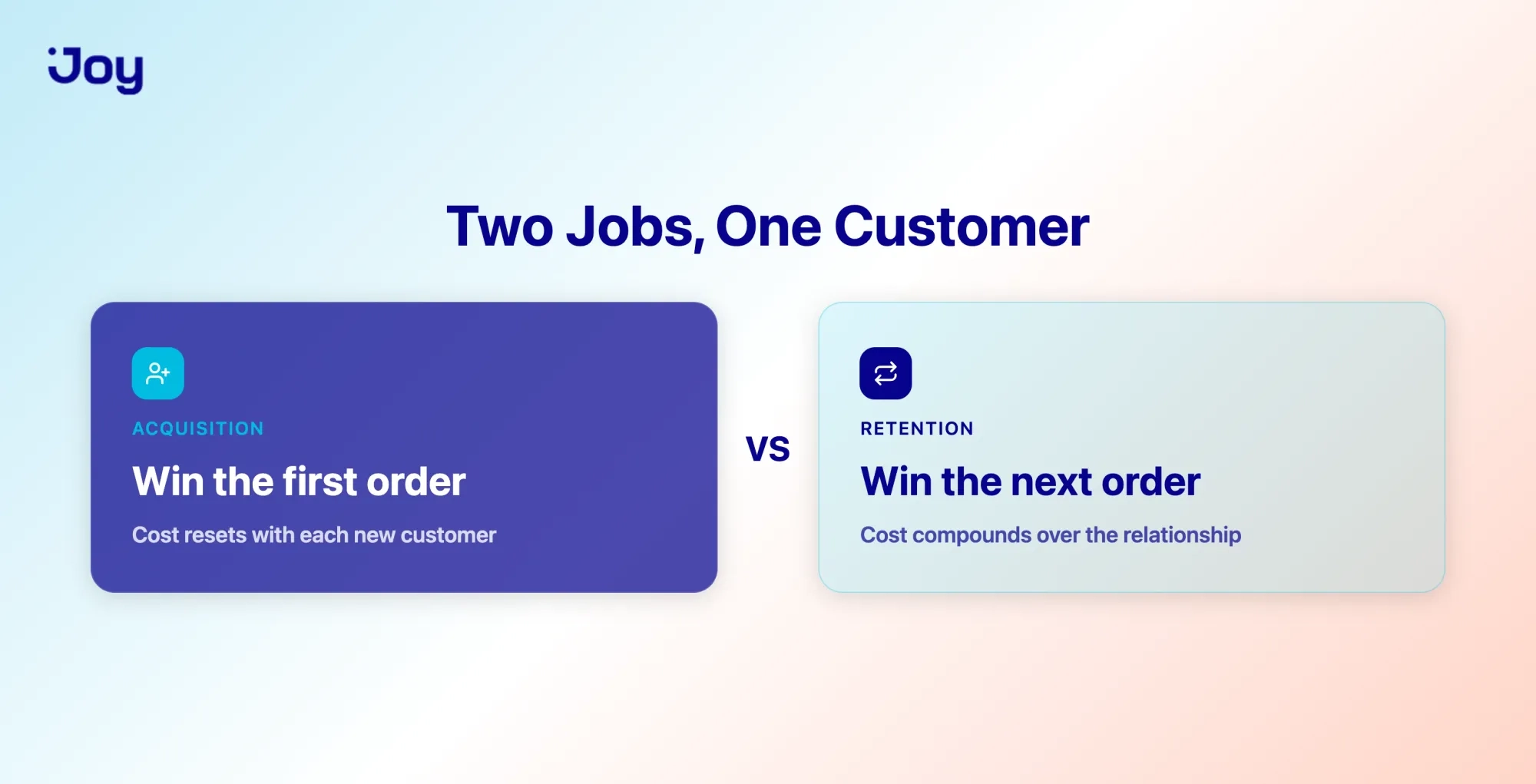
Cost is the headline difference, but it isn't the only one. The two jobs pull on different tools, timelines, and metrics:
| Goal | Win the first order | Win the next order |
|---|---|---|
| Main channels | Paid ads, SEO, social, influencers | Email, SMS, loyalty, post-purchase content |
| Cost behavior | Resets with each new customer | Compounds over the relationship |
| Core metric | Customer acquisition cost (CAC) | Repeat purchase rate, lifetime value (LTV) |
| Payoff timing | Immediate (one sale) | Gradual (many sales) |
| Best when | You're building a customer base | You already have one to grow |
Read down that last row, and the strategic point becomes clear. These aren't two ways of doing the same job. There are two jobs, and which one is urgent depends entirely on whether you have a customer base yet.
Which One to Prioritize Right Now
There's no universal answer here, only signals. Read your own situation against the two lists below, and lean toward whichever one describes you.
When Acquisition Should Be Your Priority
This is the part most loyalty-focused guides skip, because they sell retention. But sometimes acquisition genuinely deserves the larger share:
- You haven't found product-market fit yet. If you don't know whether people want the product, retention tactics are premature. You need more buyers to learn first.
- You're a new store with almost no customer base. You can't retain customers you don't have. Early on, acquisition is the strategy.
- You're entering a new market or launching a new line. Both reset you to a near-acquisition footing, regardless of how mature the rest of your business is.
- You sell something people genuinely buy once. Mattresses, engagement rings, and similar one-time purchases have a natural ceiling on retention. Acquisition and referrals carry a greater share of the load.
If two or more of these describe you, retention isn't your bottleneck yet, and pushing it hard would be solving the wrong problem.
When to Shift Toward Retention
The signals flip as you mature. Lean toward retention when:
- Your acquisition costs are climbing, and each new customer is getting harder to win profitably.
- Your repeat purchase rate has stalled, meaning you're filling a leaky bucket faster than you're patching it.
- You have a real base of past customers who could buy again, but mostly aren't.
- You only break even after the second or third order, which makes that second order the difference between profit and loss.
The more of these you recognize, the more every dollar of retention work is worth relative to chasing another expensive first-time buyer.
How to Actually Decide: The LTV:CAC Framework
Those signals tell you which way to lean. To put a number on it, look at the ratio between what a customer costs to acquire and what they're worth over time: LTV:CAC.
Customer lifetime value (LTV) is the total gross profit you expect from a customer across their whole relationship with you. Customer acquisition cost (CAC) is what you spend, on average, to win one. The ratio between them is the clearest single indicator of whether your growth is healthy.
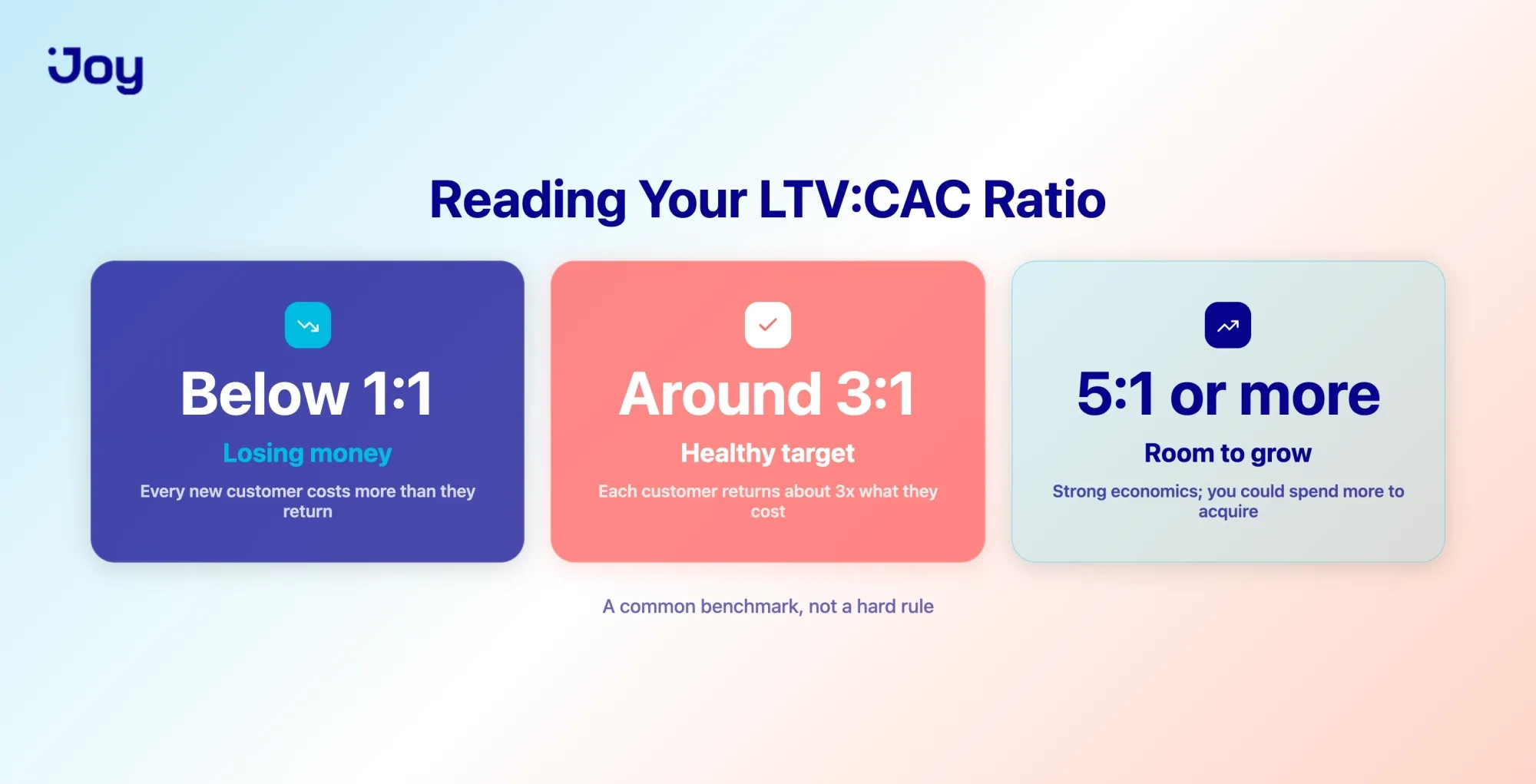
A widely used benchmark looks like this:
- A ratio below 1:1 means you lose money on every customer you acquire. Something is broken, and more ad spend makes it worse, not better.
- Around 3:1 is the common target for a healthy, sustainable business. Each customer returns roughly three times what it cost to win them.
- 5:1 or higher can actually signal under-investment in acquisition. Your economics are so strong that you could probably afford to grow faster.
To make that concrete: say it costs you $40 to win a customer who goes on to deliver $130 in gross profit over their lifetime. That's a 3.25:1 ratio, comfortably within the healthy range. Drop the lifetime profit to $70, and you're at 1.75:1, a sign customers aren't coming back often enough to justify what you spend to get them.
Pair the ratio with a second guardrail: payback period, or how many months it takes a customer to repay their own acquisition cost. Under 12 months is a common rule of thumb, and many ecommerce stores aim for 3 to 6.
Here's how to read it together. If your ratio is below 3:1, your problem is usually retention, because a low LTV means customers aren't coming back enough to justify the cost. If your ratio is well above 5:1 and your payback is fast, you likely have room to spend more on acquisition. The framework doesn't just compare the two. It tells you which lever to pull.
One caveat worth stating plainly: LTV is an estimate, and a shaky one for a young store without much purchase history to base it on. Early on, lean on the qualitative signals from the section above more than a precise ratio. The numbers get trustworthy once you have enough repeat orders to see a real pattern.
The Part Most Guides Miss: Retention Makes Acquisition Cheaper
The acquisition-versus-retention framing has a blind spot. It treats them as separate buckets when, in practice, strong retention quietly lowers your acquisition costs.
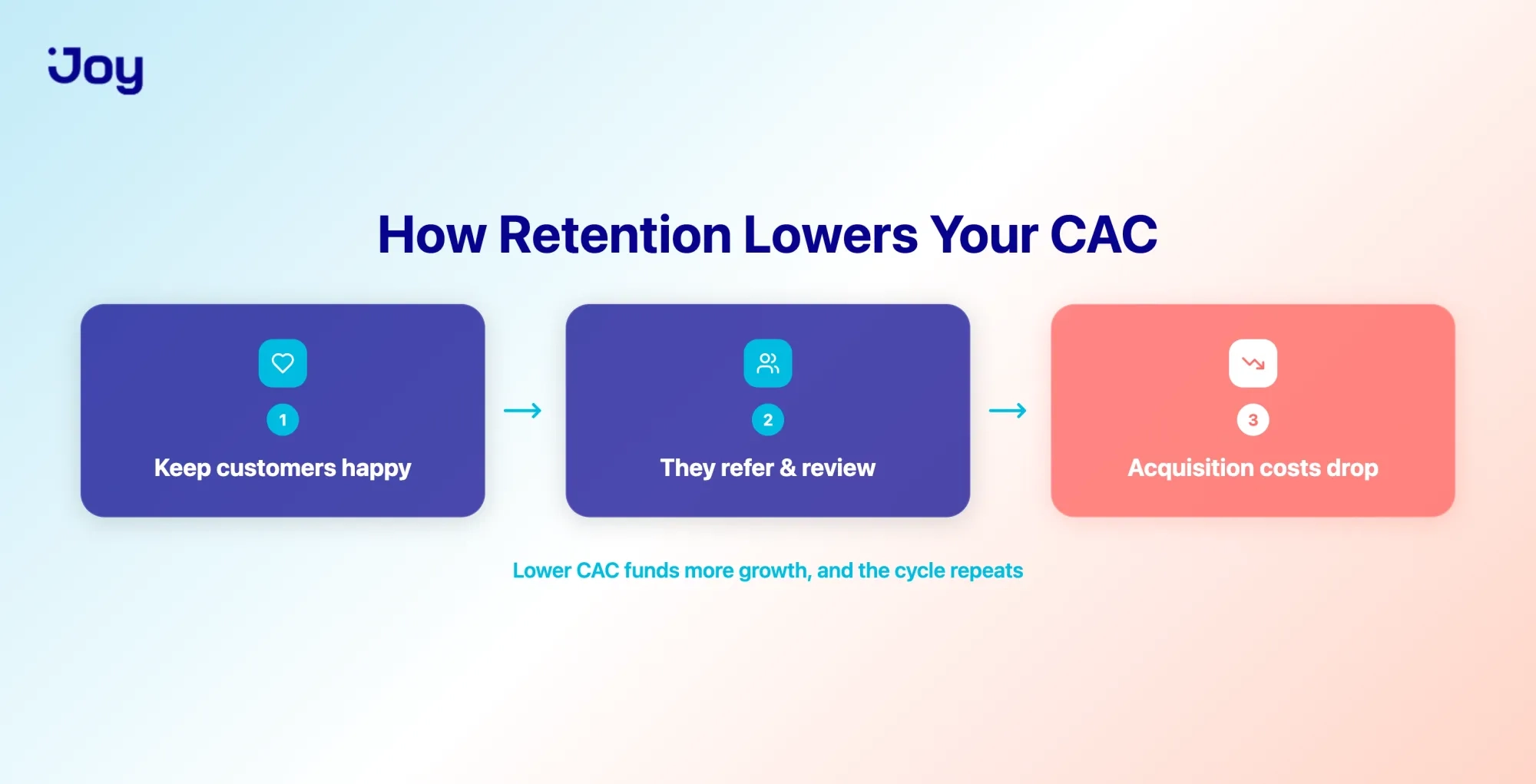
It works through a few connected loops. Customers who stick around and stay happy refer their friends, and referred customers cost far less to acquire than paid ones. They're also more likely to buy.
In PwC's 2024 Voice of the Consumer survey of 20,662 shoppers across 31 countries, 49 percent said they turn to recommendations from family and friends when discovering new brands, ahead of most paid channels. That word of mouth is something only your retained customers can generate.
Retention feeds acquisition in quieter ways, too. Returning customers leave reviews and photos that make your paid ads convert better. They raise your average lifetime value, which in turn lets you afford to bid more for new customers than competitors who burn through one-time buyers. A loyal base, in other words, isn't just cheaper to sell to. It actively subsidizes the cost of growth. (If you want to see how brands turn that loop into a structured program, our guide to referral program examples breaks down two dozen of them.)
This is why the smartest answer to "acquisition or retention" is usually "improve retention so your acquisition works harder."
Balancing Both: A Simple Way to Think About It
You don't need a rigid percentage split. You need a stage-aware habit:
- Early stage, no real base: weight toward acquisition. Spend just enough on retention to capture and email the customers you do win, so you're not starting from zero later.
- Growing, with rising CAC: rebalance toward retention. Your acquisition engine works, so the bigger opportunity now is getting more out of each customer it brings in.
- Mature, with a large base: run both as a loop. Use retention to fund and feed acquisition through referrals, reviews, and higher lifetime value.
The throughline is simple. Acquisition and retention aren't rivals fighting over a budget. There are two stages of a customer relationship, and the businesses that grow profitably are the ones that stop treating them as separate.
Acquisition and Retention Aren't a Choice
The brands that win this debate are the ones that stop treating it as a debate. Acquisition brings people in. Retention decides whether they were worth bringing in. And done well, retention loops back to make the next round of acquisition cheaper.
So the next time you're deciding where your marketing dollar should go, don't ask which matters more. Look at your stage and your LTV:CAC ratio, and let those point you to the lever that's actually holding your growth back. If that lever turns out to be retention, our guide to ecommerce customer retention is a good next step.
Frequently Asked Questions
Is retention really cheaper than acquisition?
Generally, yes, because selling to someone who already trusts you skips the ad auction and the skepticism a stranger brings. The popular "five times cheaper" figure comes from 1990s research, so treat it as a direction rather than a precise number. What matters is your own LTV:CAC ratio.
Should a brand-new store focus on acquisition or retention?
Acquisition, mostly. You can't retain customers you don't have yet, so early on the priority is building a base and finding product-market fit. Just capture those first customers' emails so you can retain them later.
What's a healthy LTV:CAC ratio?
Around 3:1 is the common target, meaning a customer is worth about 3 times what it costs to acquire them. Below 1:1, you're losing money on each customer. Above 5:1 can mean you're under-investing in growth and could afford to acquire more aggressively.
Can you grow on retention alone?
No. Retention multiplies the value of customers you already have, but it can't create new ones. Even retention-led brands need a steady flow of new customers, which is exactly why the two work best as a loop rather than a choice.

Written by
Thomas Nguyen is the CEO & Co-founder of Joy, a loyalty solution for Shopify and eCommerce brands. With years of experience building high-performance Shopify apps, Thomas aims to help merchants grow through customizable and retention-focused tools.
Related reading
 Loyalty Strategy
BFCM Retention: Only 13% of New Buyers Place a Second Order
Only 13% of the new customers a store wins over BFCM come back for a second order. That is Tresl's BFCM 2022 measurement, inverted.
 Thomas Nguyen
 Loyalty Strategy
Customer retention benchmarks for ecommerce: What's a good rate?
A clear-eyed look at ecommerce retention benchmarks: the one number worth trusting, why most by-industry tables mislead, and how to benchmark against yourself.
Thomas Nguyen Loyalty Strategy
Repeat Customer Rate: Formula, Benchmarks, and What Good Looks Like
Two formulas, one worked example, Bluecore's published benchmarks, and the exact place in your Shopify admin where repeat customer rate already lives.
Thomas Nguyen Loyalty Strategy
6 Key Factors That Affect Customer Loyalty
Loyalty isn't luck or a good Black Friday sale — it's built on six specific, measurable factors. This guide breaks down each one: why it matters, how to measure it, and how to put it into action, with examples from brands that got it right.
Thomas Nguyen Loyalty Strategy
Advantages of Customer Loyalty: 7 Data-Backed Benefits for Ecommerce Growth
Customer loyalty isn't a feeling — it's a financial asset that compounds. A 5% retention bump drives 25–95% more profit; emotionally connected customers deliver 306% higher LTV. This guide covers all 7 data-backed advantages and the 3 mistakes that kill programs before the compounding kicks in.
Thomas Nguyen Loyalty Strategy
Customer Retention Goals: 5 Targets to Set (and How to Hit Them)
A goal-first guide to customer retention: the five targets worth setting, how to make each one SMART, and the strategy that hits it.
Thomas Nguyen