12 Best Referral Program Software for 2026 (Compared by Use Case, Price & Features)
A side-by-side look at 12 referral program tools, sorted by what they're actually best for, with real starting prices and honest tradeoffs.

Summarize this post with AI
Most "best referral software" lists rank a dozen tools and stop there. The harder question is which one fits your business, because what triggers a reward isn't the same for everyone. An ecommerce store rewards a purchase. A SaaS company rewards a signup. A B2B team rewards a closed deal. Pick the wrong category and even a great tool won't fit.
The effort is worth it. In PwC's 2024 Voice of the Consumer survey of 20,662 shoppers across 31 countries, 49% said they turn to recommendations from family and friends when discovering new brands, ahead of most paid channels. A referral program turns that everyday word of mouth into something you can track and reward.
So instead of ranking these twelve tools 1 through 12, we've sorted them by what each one is genuinely good at, with verified starting prices from June 2026 and the trade-offs worth knowing before you commit. Skim the comparison table first, then jump to the tools built for how you sell.
Quick comparison
One catch to watch: several tools add a commission on referred sales on top of the monthly fee, and the cheaper plans often cap the number of advocates or orders. So the headline price rarely tells the whole story. Always check the cap, not just the number.
How we sorted these tools
We looked at six things that tend to decide whether a referral program actually gets off the ground:
- Setup effort - can a marketer launch without a developer?
- Integrations - does it connect to your store, CRM, or email tool?
- Reward flexibility - cash, store credit, gift cards, points, or all of them?
- Fraud prevention - does it catch self-referrals and fake signups?
- Pricing honesty - is the real cost visible, or hidden behind "contact sales"?
- Support - is there help when a campaign breaks mid-launch?
No single tool wins on all six. The notes below call out where each one is strong and where it asks you to compromise.
The 12 best referral program software
Here's each tool, what it's built for, and where it falls short.
1. Joy - Best for flexible loyalty and referrals on Shopify
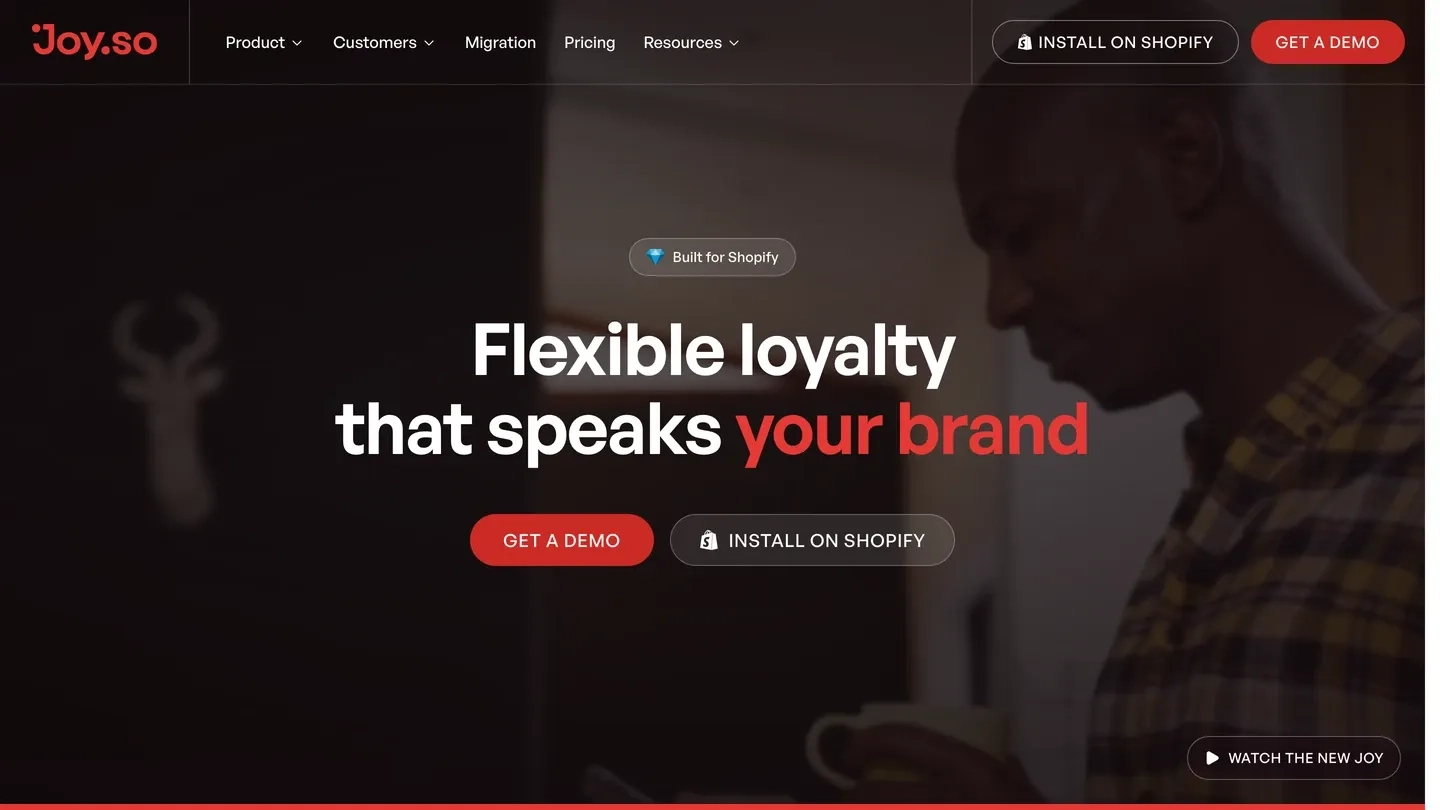
Joy is a flexible retention platform for Shopify that combines loyalty rewards and referrals into a single system. Customers can earn points, redeem rewards, and refer friends from the same account.
What sets Joy apart is its flexible rule engine. You can tailor referral rewards by customer segment, offer VIPs higher incentives, give new customers store credit instead of discounts, or create different rules for specific products, all without writing code.
Key features:
- Built-in referral program paired with points and VIP tiers
- Rule engine to set reward logic by customer segment
- Anti-cheat controls to block self-referrals and fraud (similar emails, same IP or browser, paid-order-only rewards, referral limits per VIP tier)
- Assisted Orders metric tracking referral and loyalty revenue in one view
- 30+ integrations (Klaviyo, Gorgias, Shopify Flow, POS, Hydrogen)
- REST API and headless support on the top plan
Pros:
- Loyalty and referrals in one dashboard
- Flexible reward rules per customer segment
- Cheapest entry point of any combined tool here
- A genuine free plan
Cons:
- Built for Shopify only
- More than you need if you want referrals without a loyalty program
Pricing: Free Starter plan covering 250 monthly orders. Paid plans run $29/mo (Essential, points + referrals, 500 monthly orders), $129/mo (Advanced, adds VIP tiers, memberships, and POS), and $499/mo (Ultimate, adds REST API, headless support, and multi-store).
Note: If you want a standalone referral tool with no loyalty side, or you're B2B or SaaS without an ecommerce store, a dedicated referral platform further down this list will fit better.
Verdict: The most flexible way to run referrals and loyalty together on Shopify, and the cheapest combined option to start.
2. Friendbuy - Best for high-volume DTC brands
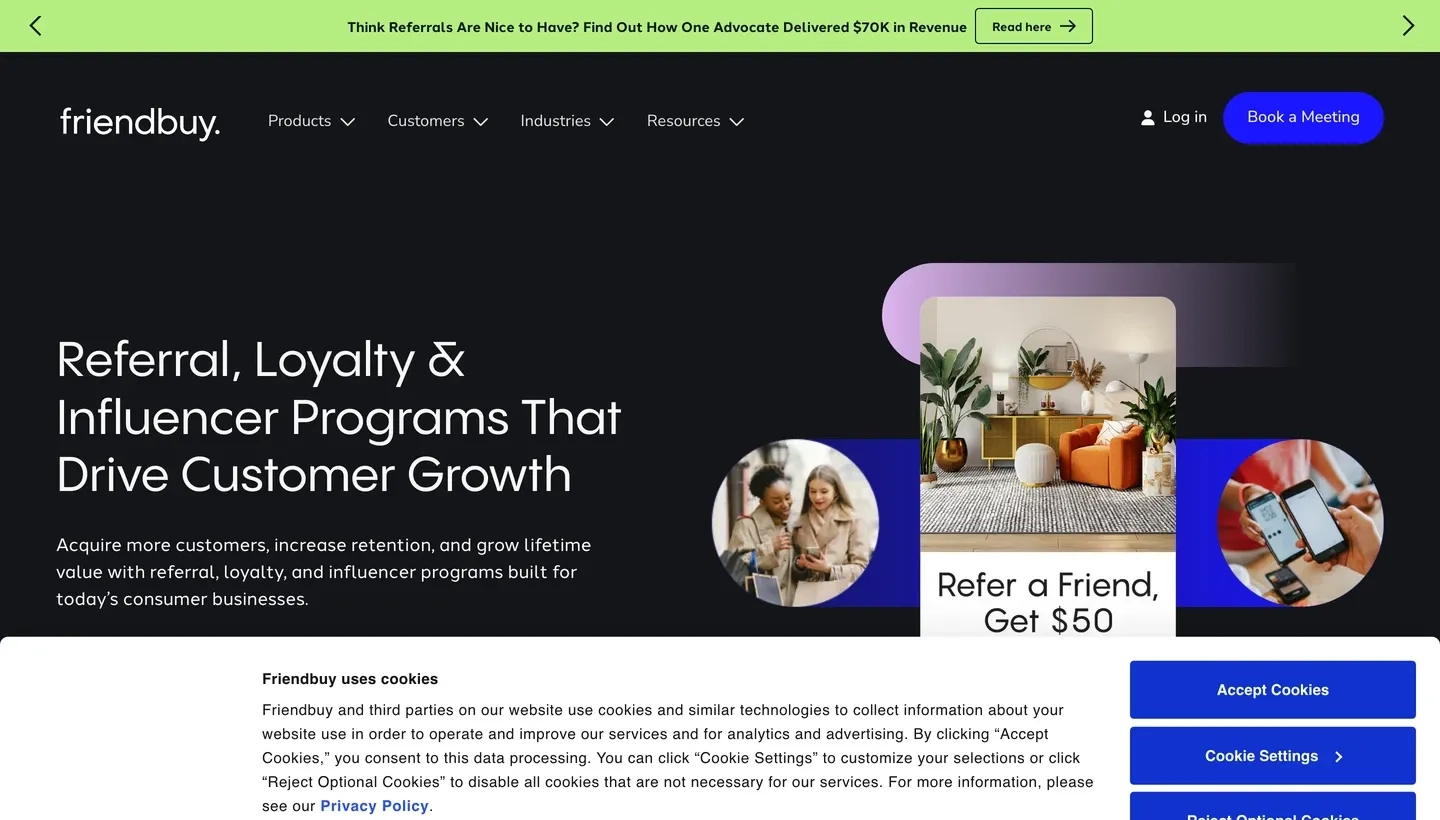
Friendbuy leans toward larger direct-to-consumer brands that want referral, loyalty, and affiliate programs running from a single platform. You can drop branded referral widgets anywhere on your site or app.
Key features:
- Referral, loyalty, and affiliate programs in one platform
- Branded widgets are placeable anywhere on your site or app
- A/B testing for offers and creative
- Integrations with Shopify, BigCommerce, and Klaviyo
Pros:
- Several program types in one platform
- Solid A/B testing
- No per-sale success fee
Cons:
- Quote-only pricing makes upfront comparison hard
- Better suited to scale
Pricing: Custom, quote-based. Reported entry sits around $249/mo and scales to enterprise, usually on an annual contract.
Note: Most cost-effective once you have real referral volume to justify the commitment.
Verdict: A strong fit for high-volume DTC brands that want testing depth and multiple program types in one tool.
3. Referral Rock - Best for B2B and service businesses
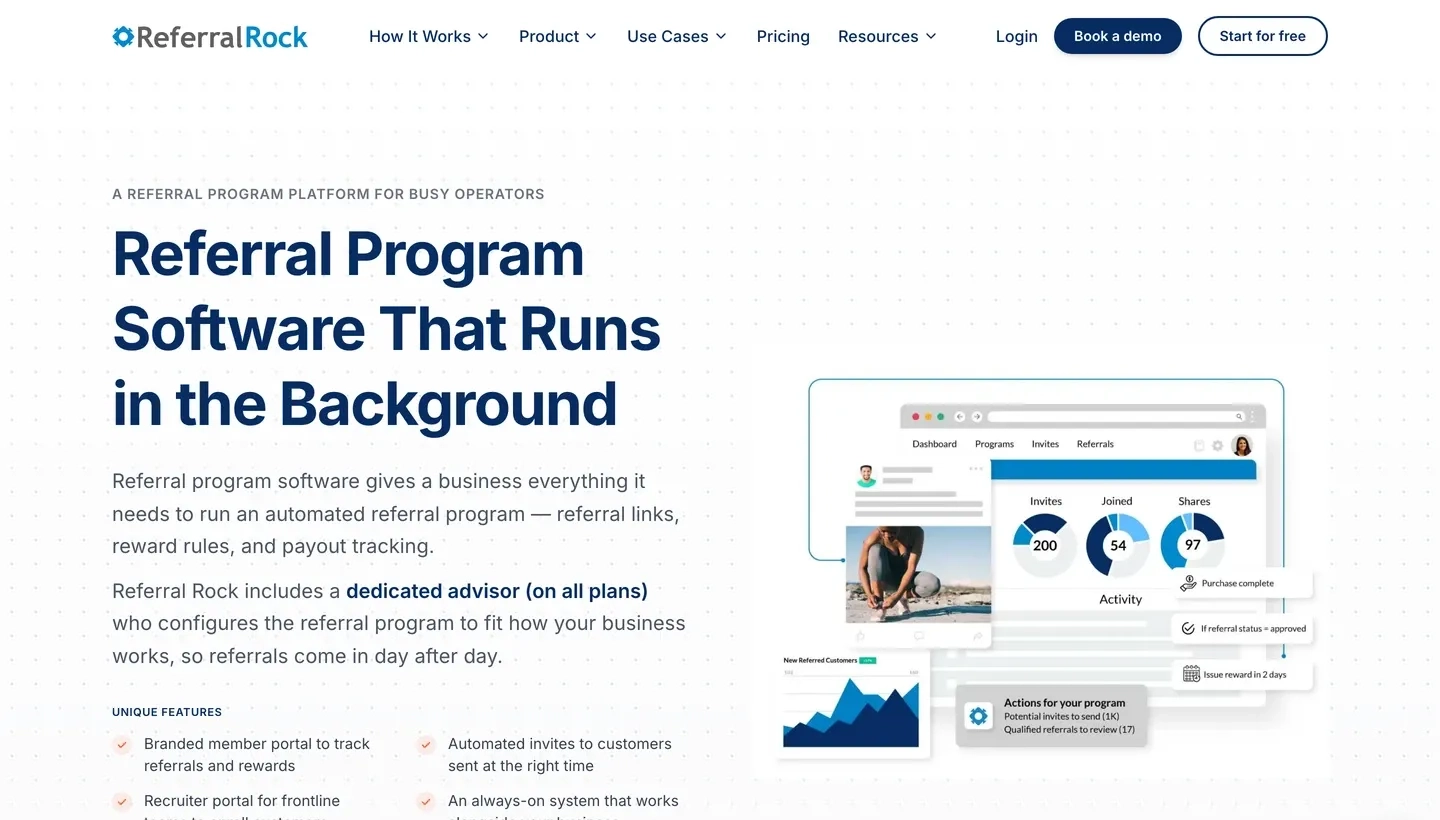
Most referral tools assume ecommerce. Referral Rock is one of the few that works well for B2B, professional services, and SaaS, where there's no "add to cart" moment to trigger a reward.
Key features:
- Built for B2B, services, and SaaS referral flows
- CRM integrations with HubSpot and Salesforce
- Referrals tied to your pipeline and deals, not just clicks
- Turnkey program builder
Pros:
- Rare strong B2B fit
- CRM link connects referrals to revenue
- Lower price than many turnkey tools
Cons:
- More setup decisions than a plug-and-play ecommerce tool
Pricing: From $175/mo, which is lower than several other turnkey tools on this list.
Note: Expect to spend more time configuring it than you would with an e-commerce-only tool.
Verdict: The pick when your sales cycle is long, and referrals need to land in your CRM.
4. Referral Factory - Best no-code option for any business
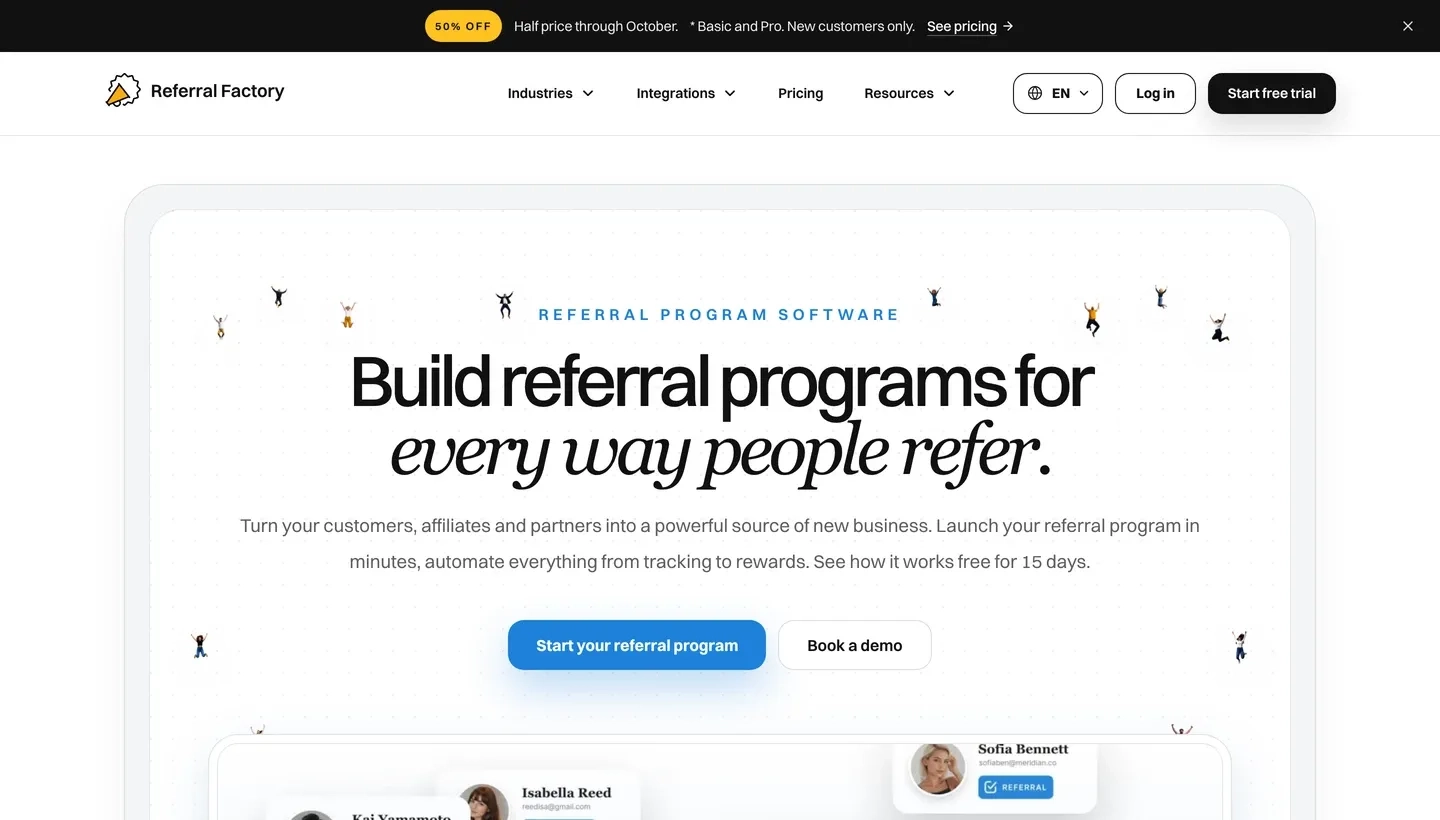
Referral Factory is built so a marketer can launch a program without writing code, with a template-based builder that works across industries, rather than assuming you run an ecommerce store.
Key features:
- No-code, template-based campaign builder
- More than 200 reward options
- Integrations with HubSpot, Stripe, Salesforce, and others
- Works across industries, not just ecommerce
Pros:
- No developer needed
- Wide reward options
- Flexible across industries
Cons:
- The large template and reward library means more choices to sort through
Pricing: Basic $200/mo (20,000 users) and Pro $400/mo (40,000 users), both with a 15-day free trial, up to Enterprise at $1,000/mo (100,000+ users, no free trial).
Note: Budget some time to narrow the template choices before your first campaign goes live.
Verdict: The easiest no-code option if you want flexibility without being tied to ecommerce.
5. GrowSurf - Best for SaaS and subscriptions
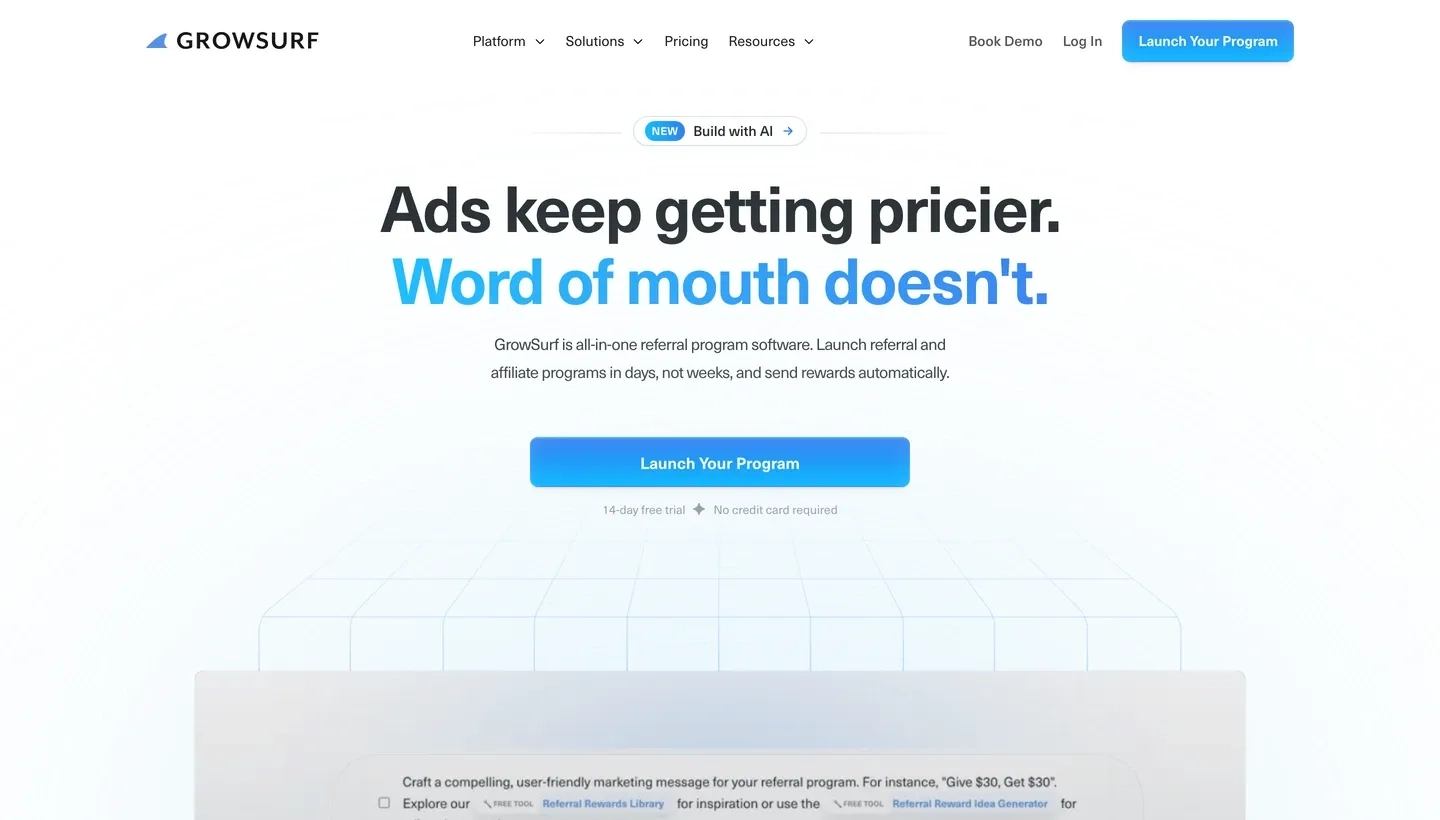
GrowSurf is purpose-built for SaaS referral programs. Post-purchase flows don't fit subscription products, so it provides embeddable widgets and webhooks that live inside your product, triggering on signups and subscription events rather than on one-time orders.
Key features:
- Built for SaaS and subscription referral flows
- Embeddable widgets and webhooks inside your product
- Triggers on signups and subscription events
- Developer-friendly setup
Pros:
- Purpose-built for SaaS
- Integrates into product onboarding
Cons:
- Pricier entry than ecommerce-first tools
- Overkill for a simple store
Pricing: From $125/mo (Startup, up to 2,500 participants, billed yearly), then $314/mo (Business, up to 10,000), with custom pricing above and a 14-day free trial.
Note: It earns that cost mainly when referrals plug directly into your product experience.
Verdict: The closest fit for software companies that want referrals baked into onboarding.
6. Yotpo - Best for combining loyalty and referrals
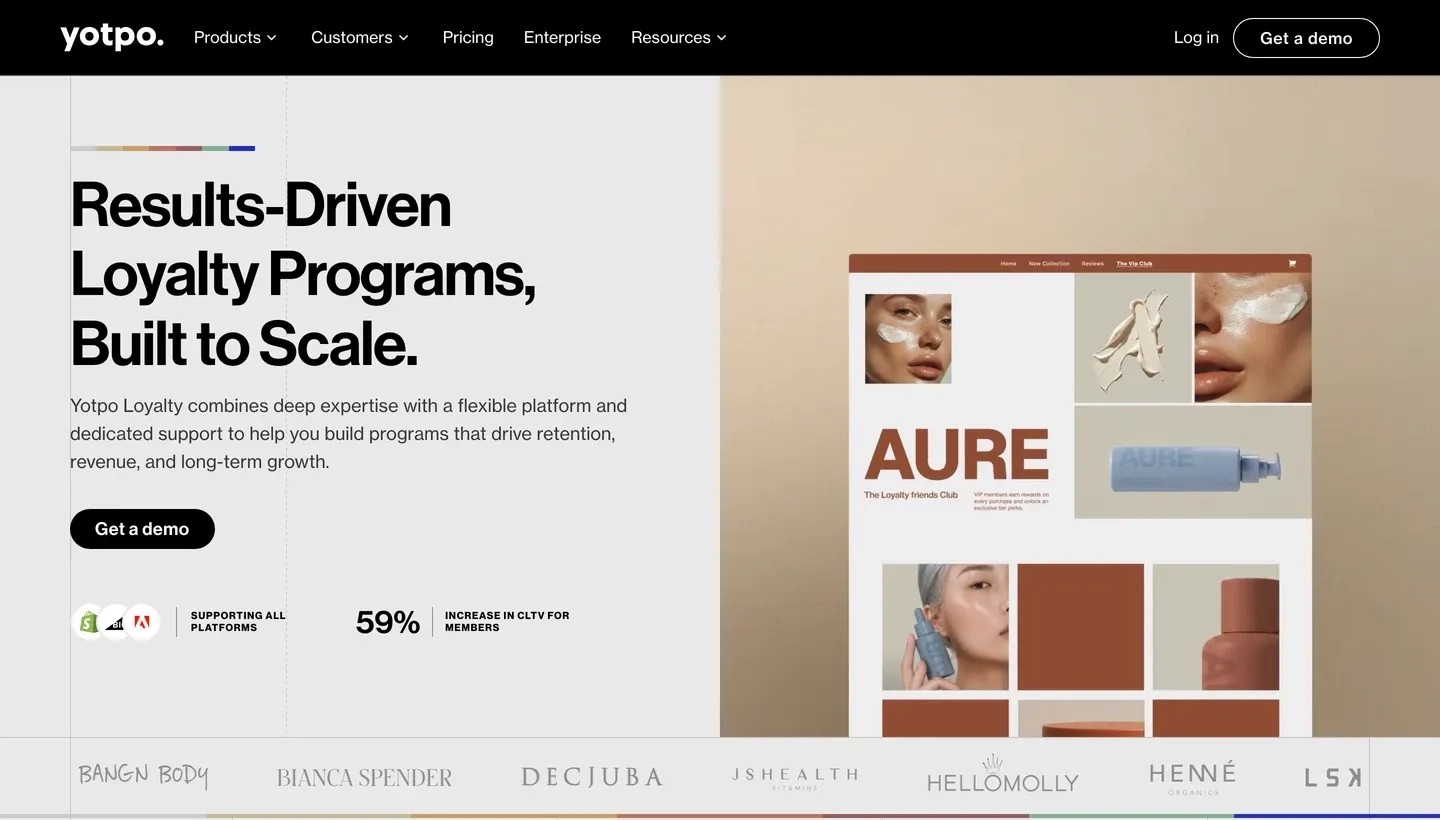
Yotpo Loyalty & Referrals handles both points-based loyalty and referrals in one platform, rather than stitching two tools together.
Key features:
- Loyalty and referrals on one platform
- Deep integrations: Shopify, BigCommerce, Adobe Commerce, Salesforce Commerce Cloud
- Automatic tracking and reward of referred purchases
- Free plan to start
Pros:
- Combined loyalty and referrals
- Deep platform integrations
- Useful free tier
Cons:
- Significant jump to paid once you cross the order cap
Pricing: Free plan to start. Pro is $199/mo (at 500 monthly orders; the price scales with your order volume), and Premium is custom-quoted. Orders past your plan limit add a small per-order fee.
Note: Great for testing on the free plan, but model the paid cost against your real order volume.
Verdict: A solid all-in-one for ecommerce brands already invested in the Yotpo ecosystem.
7. LoyaltyLion - Best for Shopify loyalty with referrals attached
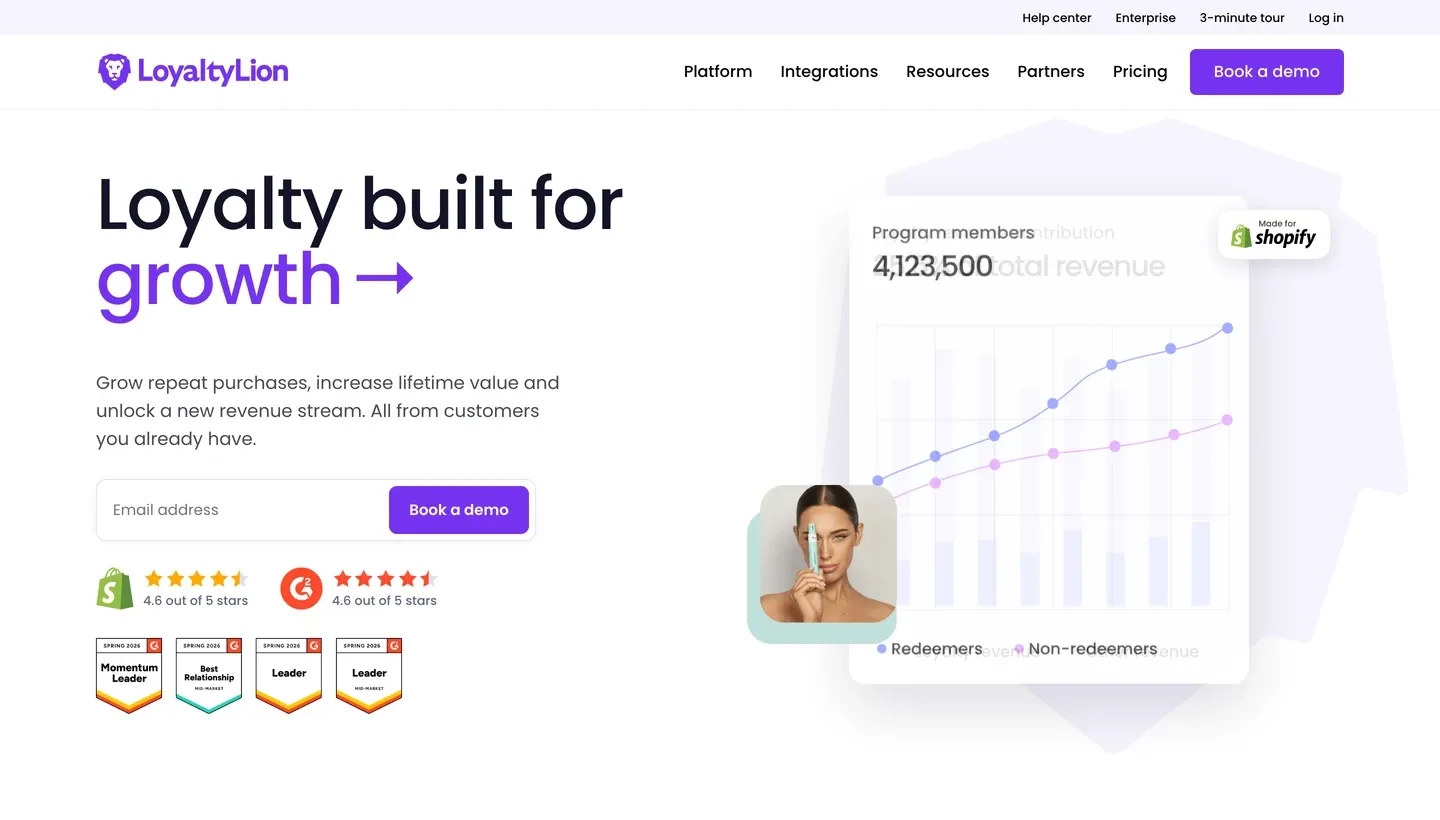
Like Yotpo, LoyaltyLion treats referrals as part of a broader loyalty program rather than a standalone feature. It's popular with Shopify merchants and takes a UK- and EU-focused approach.
Key features:
- Referrals within a full loyalty program
- VIP tiers are included in the base paid plan
- Strong Shopify integration, UK/EU focus
- Loyalty analytics
Pros:
- VIP tiers from the base tier
- Mature loyalty platform
Cons:
- More than you need if you only want referrals
- Annual contracts
Pricing: From $199/mo on the Classic plan, with an order cap. Plans run on annual contracts.
Note: Best value when referrals are one piece of a full retention program, not a standalone need.
Verdict: A good Shopify choice if loyalty is your main goal and referrals are a bonus.
8. Talkable - Best for testing and optimization
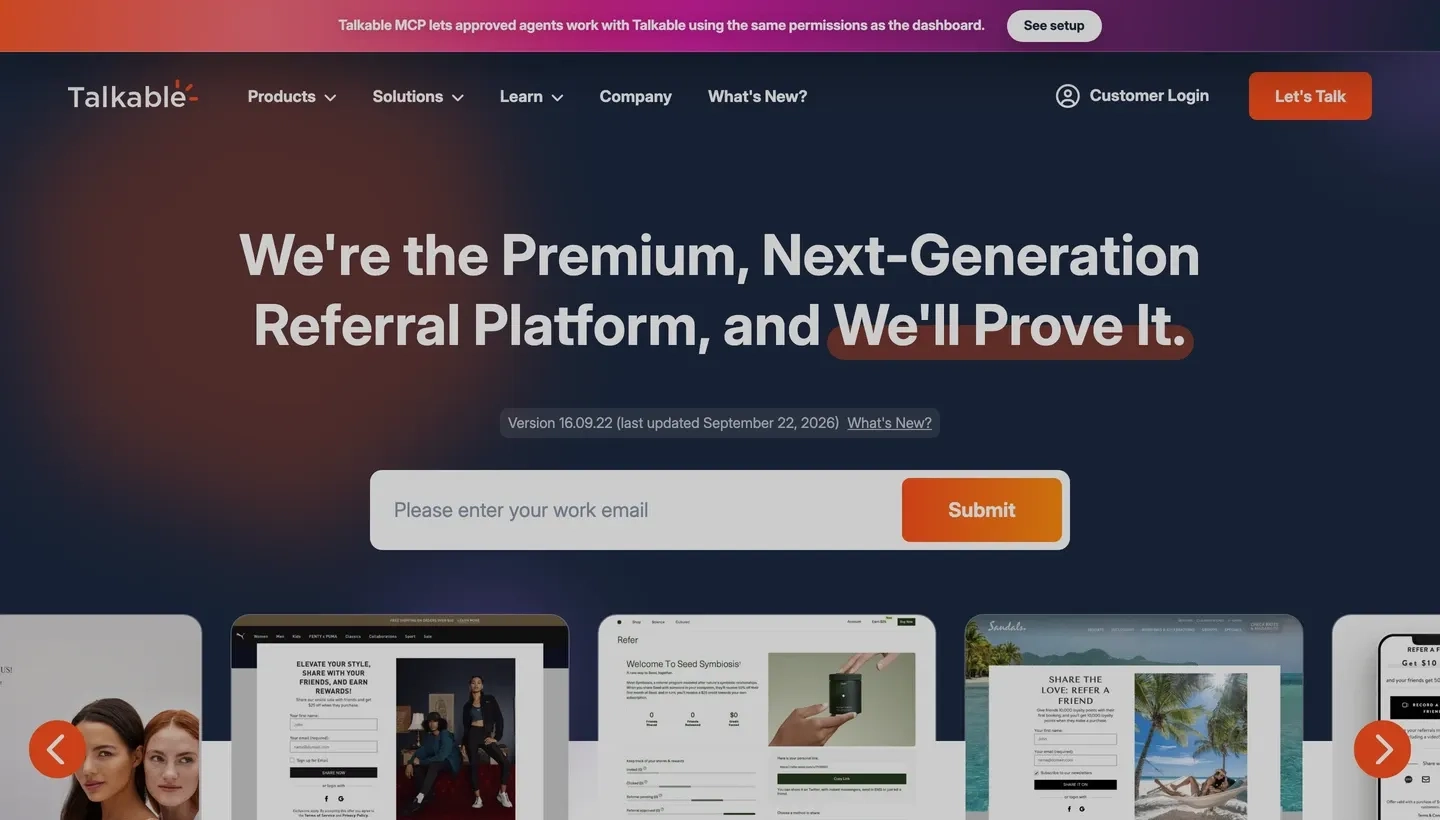
Talkable is built for teams that treat referrals as an ongoing experiment, with deep A/B testing and segmentation at its core.
Key features:
- A/B testing across offers, creative, and user flows
- Segmentation by purchase history, order value, or tier
- Different rewards shown to different customer segments
Pros:
- Deep optimization and testing
- Strong segmentation
Cons:
- Needs real traffic to make testing meaningful
- Quote-only pricing
Pricing: Custom, quote-based. There's a self-service option for smaller campaigns, but published monthly pricing isn't available.
Note: The testing depth pays off for mid-size and larger brands, less so for a store just starting out.
Verdict: The pick for brands with the volume to optimize referrals continuously.
9. Viral Loops - Best for startups on a budget
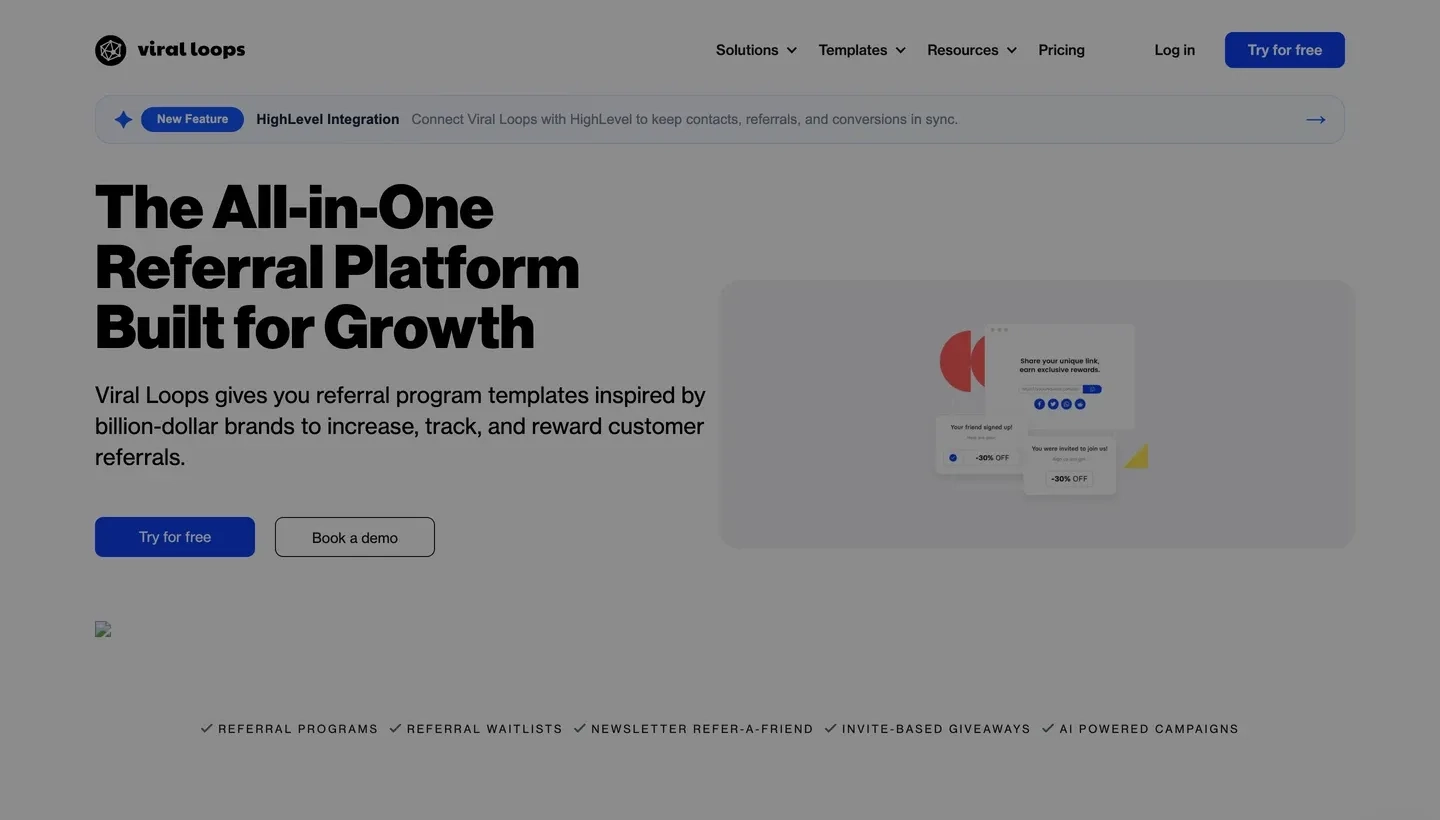
Viral Loops is one of the more affordable ways to launch a referral or waitlist campaign, using templates modeled on well-known campaigns so you start from a proven structure instead of a blank page.
Key features:
- Templates based on proven, well-known campaigns
- Referral and waitlist campaign types
- Low entry price for early-stage teams
Pros:
- Affordable entry
- Proven templates
- 14-day free trial
Cons:
- Per-advocate pricing climbs as you grow
Pricing: From $35/mo (Start-up, up to 1,000 participants, billed annually), up to $279/mo (Power, up to 25,000). The 14-day trial is limited to 10 participants, and there's no free plan.
Note: Model the cost at your expected scale before you commit.
Verdict: A low-risk way for startups to test whether referrals work at all.
10. ReferralHero - Best for AI-assisted campaigns
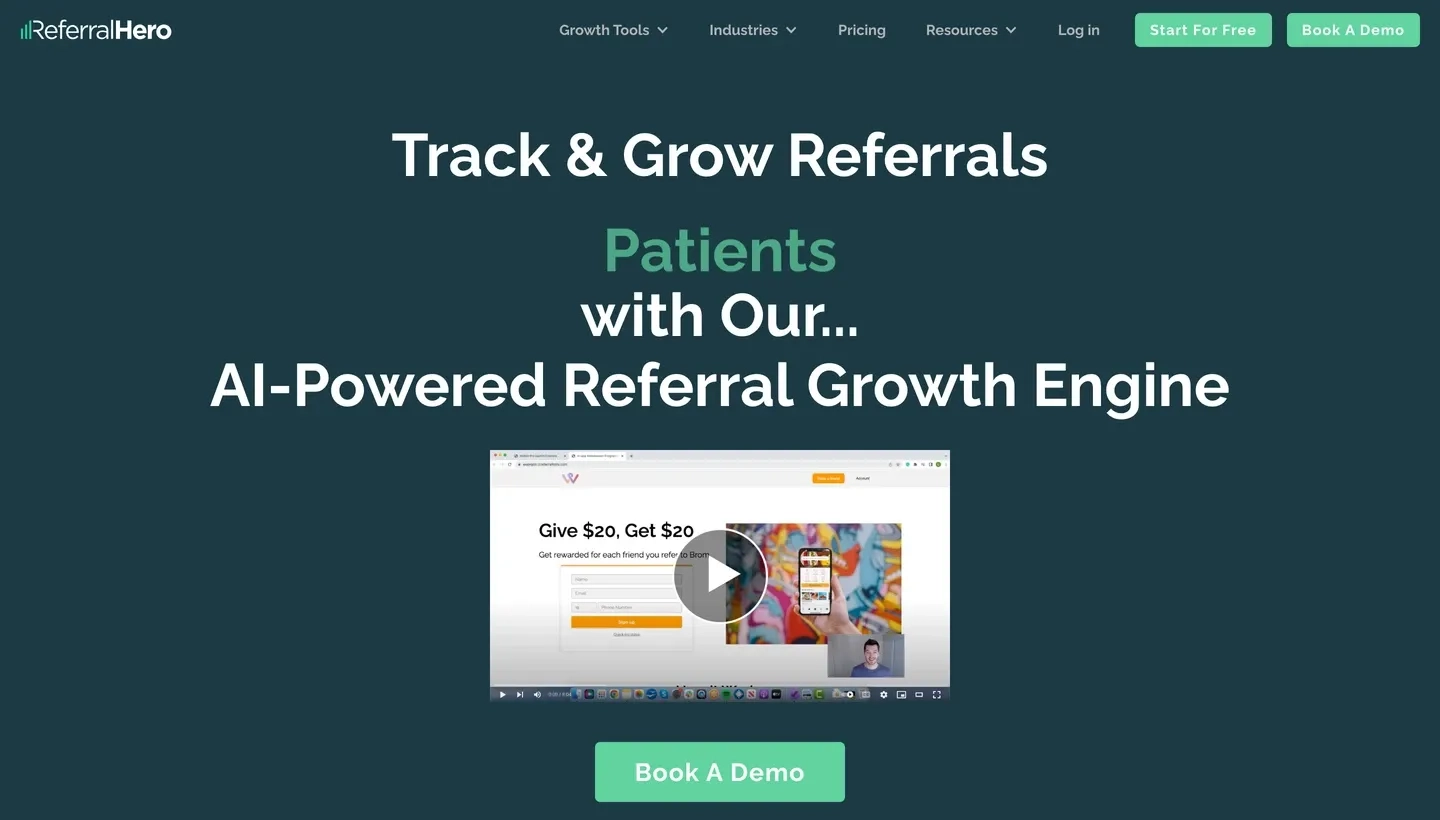
ReferralHero covers referral, affiliate, waitlist, and contest campaigns, with AI features layered in to help build and optimize them. It also offers a done-for-you tier where its team builds and manages the program for you.
Key features:
- Referral, affiliate, waitlist, and contest campaigns in one tool
- AI-assisted campaign build and optimization
- Optional done-for-you service, built and managed by their team
- 500+ integrations on the Pro plan
Pros:
- Multiple campaign types in one place
- Optional fully-managed (done-for-you) tier
- 7-day free trial
Cons:
- No free plan, and a higher entry price than other startup-friendly tools
Pricing: Basic at $249/mo (1,000 subscribers, one campaign) and Pro at $399/mo (unlimited subscribers and campaigns, 500+ integrations), plus a custom Pro + Done-For-You tier. 7-day free trial; no free plan.
Note: Best if you want several campaign types under one roof, or if you want a team to run the program for you.
Verdict: A capable AI-assisted generalist, strongest if you want a done-for-you option, though it starts pricier than other small-team tools.
11. Extole - Best for enterprise
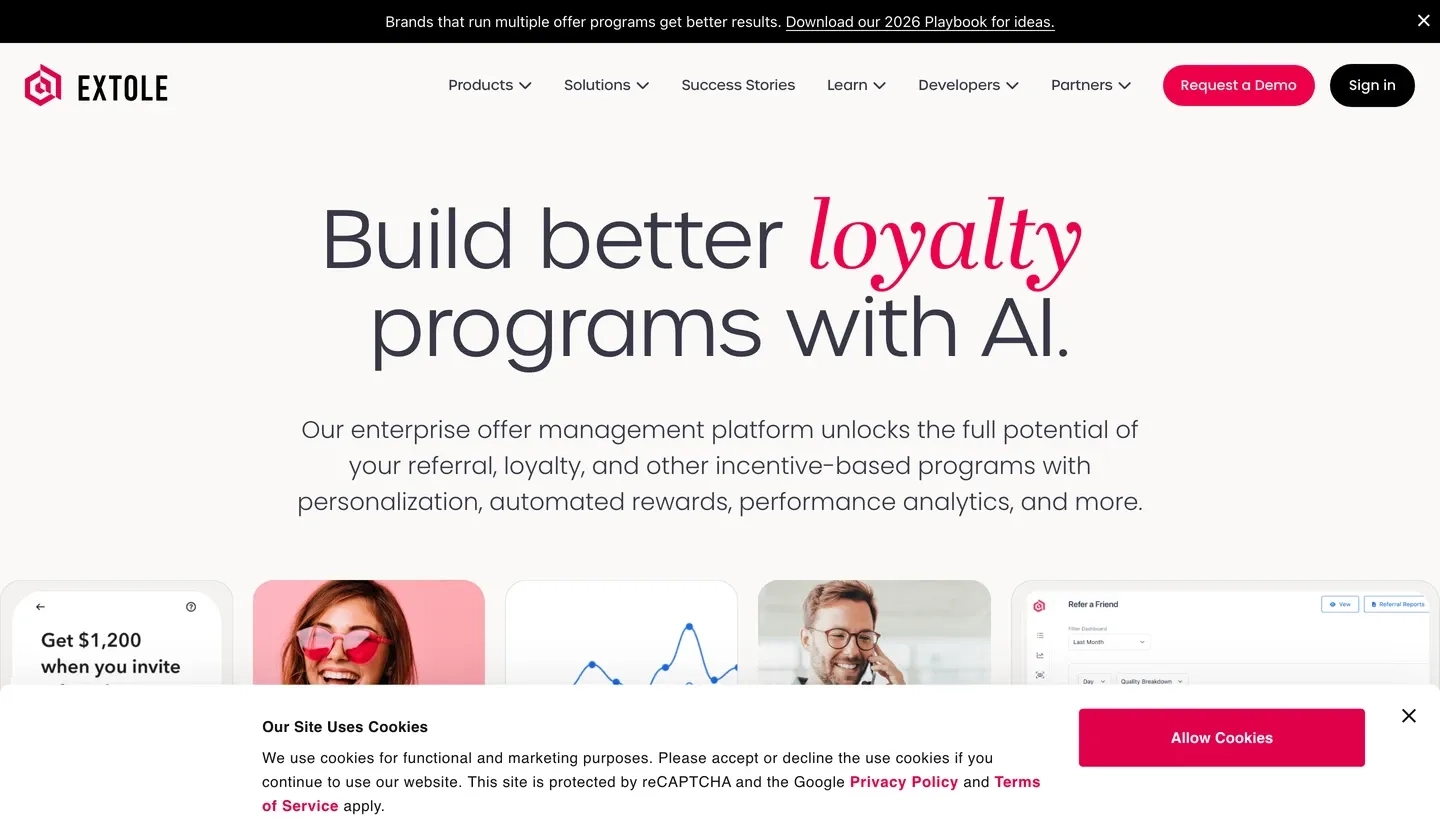
Extole is aimed at large brands that need a referral program built to enterprise requirements: security, support, and scale. It's not a tool you spin up over a weekend, and the pricing reflects that.
Key features:
- Enterprise-grade referral infrastructure
- Security, support, and scale for large brands
- Custom program design
Pros:
- Built for enterprise scale and support
Cons:
- No free trial
- High cost
- Not a quick launch
Pricing: Not published publicly; widely reported to start around $1,750/mo, with no free trial.
Note: Evaluation happens through demos and sales conversations, not a self-serve trial.
Verdict: A fit when referrals are a serious, budgeted channel at enterprise scale.
12. impact.com - Best for enterprise plus affiliate
impact.com bundles customer referral with a broader partnership and affiliate platform, keeping attribution in one place for companies that run several partner programs.
Key features:
- Referral within a wider partnership and affiliate platform
- Unified attribution across programs
- Enterprise-grade partner management
Pros:
- One system for referral and affiliate
- Centralized attribution
Cons:
- A lot of platforms if all you need is a customer referral program
Pricing: Custom, quote-based.
Note: The value shows up when referral is one part of a wider partnerships strategy.
Verdict: Best for enterprises already running affiliate programs that want referrals in the same system.
Best referral software by use case
If you'd rather start from your situation than from a tool, here's the short version.
For ecommerce and Shopify stores: ReferralCandy for a fast, focused referral-only launch; Joy, Yotpo, or LoyaltyLion if you want loyalty and referrals in one place (Joy starts at $29/mo, Yotpo and LoyaltyLion at $199/mo).
For B2B and services: Referral Rock, mainly for the CRM integration that ties referrals to your pipeline.
For SaaS and subscriptions: GrowSurf, since it's built around signups and subscription events instead of one-time orders.
For small businesses and startups: Viral Loops or ReferralHero are both affordable enough to test the channel without much risk. Referral Factory, if you want no-code flexibility beyond just ecommerce.
For enterprise: Extole, or impact.com, if you also run affiliate programs.
How to choose the right one
Run through these questions before you commit:
- What triggers a reward in your business? A purchase (ecommerce), a signup (SaaS), or a closed deal (B2B)? This narrows the list faster than anything else.
- Do you need referrals alone, or loyalty too? If you want both, a combined platform like Yotpo or LoyaltyLion saves you from running two tools.
- What does it need to connect to? Your store, your CRM, your email tool. Check the integration exists before you fall for the features.
- Flat fee or success fee? If you expect strong referral revenue, a flat fee often costs less than a percentage of sales.
- Can you launch without a developer? No-code builders matter if your team is small.
- Is there a trial? A free trial lets you test the real setup before paying. Some enterprise tools skip it, so factor that into your timeline.
There's no single best tool here, only the one that matches how you sell and what you can support. Start with question one, and the list gets short quickly.
A final thought
The tools above all do the core job: track referrals, reward advocates, and report on what's working. The real difference is fit. Match the tool to your trigger event, your existing stack, and your budget, and the shortlist almost picks itself.
If you're on Shopify, it's also worth asking whether referrals should stand alone or be part of a points-and-rewards program. The combination tends to pay off: in Antavo's Global Customer Loyalty Report 2025, 83% of program owners who track ROI reported a positive return. Tools like Joy track both referrals and loyalty in one place, so referral revenue and repeat-purchase revenue roll into a single Assisted Orders view instead of living across two dashboards and two sets of customer data.
Curious what that looks like? See how referrals and loyalty work together in Joy.
Frequently asked questions
What's the best referral software for a small business?
Viral Loops is the cheapest entry at $35/mo billed annually; ReferralHero's lowest plan is $249/mo, so Viral Loops is the low-risk way to test referrals. Referral Factory is worth a look if you want a no-code builder that isn't tied to ecommerce.
Is there a free referral program software?
Joy offers a free plan that's genuinely useful for getting started. Fully free, full-featured options are rare, since referral software involves real tracking and fraud-prevention infrastructure.
How do referral programs work?
A customer gets a unique referral link, shares it with friends, and the software tracks any resulting signups or purchases. When a referral qualifies, both the advocate and the new customer usually receive a reward. The platform handles tracking, fraud checks, and reward delivery automatically.
What's the best referral app for Shopify?
ReferralCandy is the most focused Shopify referral tool. If you want referrals as part of a loyalty program, Yotpo and LoyaltyLion both integrate deeply with Shopify and combine the two.
Do these tools prevent referral fraud?
Most modern platforms include fraud prevention to catch self-referrals and fake signups, though the depth varies. If fraud is a real concern for your business, ask specifically how each tool flags and blocks suspicious activity during your trial or demo.

Written by
Thomas Nguyen is the CEO & Co-founder of Joy, a loyalty solution for Shopify and eCommerce brands. With years of experience building high-performance Shopify apps, Thomas aims to help merchants grow through customizable and retention-focused tools.
Related reading
 Shopify apps
Best Shopify Membership Apps: Appstle $19, No Member Fee
Appstle charges $19 with no per-member fee. Inveterate publishes no price at all. Seven apps and what each pricing panel does not say.
 Thomas Nguyen
 How-to Guide
BFCM Readiness: Shopify Tests Checkout, Nobody Tests Your Widget
Shopify scale-tests checkout at 80,000 a minute. The risk you own is the storefront, measured on the signed-in path.
Thomas Nguyen Shopify apps
Postscript Pricing: Free to Install Means $49 a Month
Free to install carries a $49 monthly minimum, then $0.009 per SMS plus carrier fees the listing never puts a number on.
Thomas Nguyen How-to Guide
What Does a Discounted Order Earn? Four Apps, Four Answers
A $100 jacket at 40% off: does it earn 100 points or 60? Four loyalty apps, four answers, and one test that settles it.
Thomas Nguyen Shopify apps
Smile.io Pricing: The $999 Plan Is Not on the App Store
The listing stops at Growth $199. smile.io adds Plus at $999 billed annually, and the crossover sits near 6,500 monthly orders.
Thomas Nguyen Shopify apps
Klaviyo Pricing: $20 on the App Store, $150 at 10,000
The Shopify listing stops at $20 for 500 contacts. Klaviyo's own slider reads $150 at 10,000 active profiles and keeps going to 150,000.
Thomas Nguyen