How Much Does a Loyalty Program Cost? A Detailed Breakdown
Loyalty programs cost $2,500–$4,500 in month one and $7,720–$15,320 in year one. Full 2026 breakdown of software, rewards, setup and hidden costs.

Summarize this post with AI
As of 2026, a loyalty program costs most e-commerce brands $2,500–$4,500 in the first month and $7,700–$15,300 in year one. That breaks down to $470–$985 per month in recurring costs — software, reward fulfillment, and marketing — plus $2,050–$3,500 for one-time setup and staff training. Software is the smallest line item: platforms range from $0 to $499 per month, and free tiers like Joy’s Starter plan remove it entirely. Reward margin, staff time, and fraud prevention are what actually decide whether the program pays for itself.
The figures below use live 2026 platform pricing and keep recurring costs separate from one-time costs, so you can budget month one and year one independently.
Key Takeaways
- Loyalty program costs scale with business size. A small-to-medium store spends about $2,522.50 in month one and $7,720 in year one; a large store about $4,485 in month one and $15,320 in year one.
- Monthly costs cover software subscription, reward fulfilment and marketing. One-time costs cover setup, program design and staff training.
- Software is the smallest line item. Joy's Starter plan is free for 250 orders a month and paid plans run $29–$499 — against $2,050–$3,500 in setup and training you pay on any platform.
- The biggest hidden cost isn't software. It's poorly designed rewards that give away margin without driving repeat purchases.
- Measure ROI against customer lifetime value, not program cost. A well-run program pays for itself through retention.
How much does a loyalty program cost?
The cost of a loyalty program isn’t one-size-fits-all; it depends on the size and scope of your operation. Here, I will show you the overall cost structure of the loyalty program, divided into two main categories: small-to-medium businesses and large businesses.
| Cost | Small-to-medium store (<2,000 orders) | Large store (>7,000 orders) |
|---|---|---|
| Recurring (per month) | $472.50 | $985 |
| One-time setup | $2,050 | $3,500 |
| First-month total | $2,522.50 | $4,485 |
| Year-one total | $7,720 | $15,320 |
Don’t worry if you find the above cost information ambiguous, since this is just the summary of the total cost that you need to pay. Remember to read till the end, as I am going to break down the loyalty program cost calculation details below.
What does each loyalty program cost line item actually cover?
Building on the overview of the cost of a loyalty program above, I’m now going to present a detailed cost breakdown for small-to-medium business loyalty programs handling under 2,000 orders and contrast it with the expenses faced by large businesses processing over 7,000 orders.
Along with the analysis, I will include an example of the fees you will need to pay when using the Joy Rewards & Loyalty Program app during your loyalty program setup.
| Cost item | Small-to-medium (<2,000 orders) | Large (>7,000 orders) | What Joy charges |
|---|---|---|---|
| Loyalty software | $60 / mo | $60 / mo | $0 (Starter) – $499 / mo (Ultimate) |
| POS extension | $250 / mo | $500 / mo | Included in Advanced ($129 / mo) and Ultimate |
| Initial setup | $550 one-time | $1,000 one-time | $0 — no setup fee |
| Order / overage fees | $37.50 (1,500 orders) | $175 (7,000 orders) | $15 / $10 / $5 per 100 orders over quota |
| Marketing & promotion | $125 / mo | $250 / mo | Core campaign tools included |
| Staff training | $1,500 one-time | $2,500 one-time | $0 — onboarding and migration included |
| Year-one total | $7,720 | $15,320 | From $0 on Starter |
Joy pricing as of 2026. Industry figures are blended averages across major Shopify loyalty platforms.
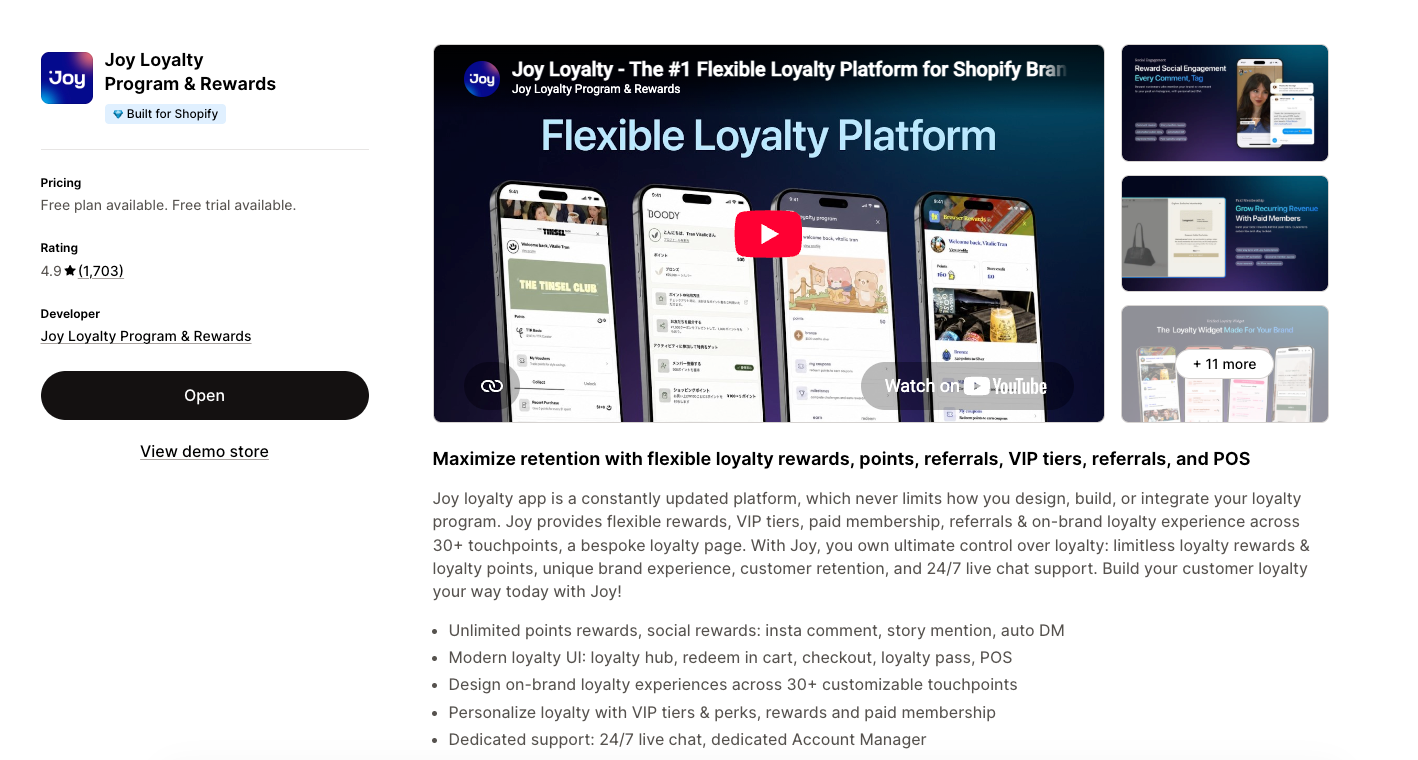
The Joy app is a customer loyalty program designed to help businesses drive growth through customer engagement. The app is designed to help businesses increase repeat purchases, customer lifetime value, and referrals. The app also aims to help businesses collect valuable customer data, differentiate themselves from competitors, and drive engagement and customer experience.
How much does a loyalty program cost for a small store with under 2,000 orders?

- Basic Loyalty Software ($60/month): Includes core features like point tracking, reward redemption, and basic analytics, typically with limited customization options.
Example: Joy’s Essential plan is $29 per month and includes 500 free orders. Joy also offers a free Starter plan that covers 250 orders per month at $0. Both undercut the $45–$75 per month typical of basic loyalty software.
- POS Extension ($250/month): Covers integration with existing point-of-sale systems, allowing for seamless in-store and online point accrual and redemption.
Example: Joy bundles the Shopify POS loyalty extension into its Advanced plan ($129 per month) at no extra charge, rather than billing it as a $0–$ 500-per-month add-on. That keeps in-store and online loyalty on one bill.
- Initial Setup Costs ($550 one-time): Encompasses program design, basic branding, and initial configuration of the loyalty software.
Example: Joy charges no setup fee on any plan. Free migration of points, tiers, and reward history is included on the Advanced plan and above, offsetting the typical $100–$1,000 initial cost once you’re there.
- Additional Order Fees ($37.50 for 1,500 orders): Transaction fees, typically 2-3% per order, cover payment processing and loyalty point allocation.
Example: Joy’s Essential plan charges $15 per 100 orders beyond its 500-order allowance, in line with the industry average of 2–3% per transaction. Moving up to Advanced drops that to $10 per 100 orders on a 2,000-order allowance.
| Joy plan | Monthly fee | Free orders / mo | Extra orders | POS extension |
|---|---|---|---|---|
| Starter | $0 | 250 | — | Not included |
| Essential | $29 | 500 | +$15 / 100 orders | Not included |
| Advanced | $129 | 2,000 | +$10 / 100 orders | Included |
| Ultimate | $499 | 7,000 | +$5 / 100 orders | Included |
Joy pricing as of 2026. No setup fee, free migration, 14-day trial on paid plans and a 30-day refund. All prices USD.
- Marketing and Promotion ($125/month): Includes email campaigns, social media posts, and in-store signage to promote the program to customers.
Example: Joy includes basic marketing features in its plan, potentially saving businesses the typical $0-$250 per month for separate marketing tools. This integrated approach can be more cost-effective for small-to-medium businesses.
- Staff Training ($1,500 one-time): Covers initial training sessions for employees on program mechanics, customer service, and basic troubleshooting.
Example: While Joy doesn’t explicitly mention training costs, its user-friendly interface may reduce the need for extensive training, potentially saving on the typical $500-$2,500 one-time cost.
How much does a loyalty program cost for a large store with over 7,000 orders?

- Basic Loyalty Software ($60/month): Similar to small-to-medium businesses, but includes more advanced features like segmentation and multi-tier rewards.
Example: Joy’s Ultimate plan is $499 per month and includes 7,000 free orders, headless and multi-store support, and API access. Comparable enterprise loyalty suites run into thousands per month.
- POS Extension ($500/month): More comprehensive integration, potentially covering multiple locations and more complex inventory systems.
Example: Joy’s Ultimate plan includes the POS extension at no additional fee, compared to the $0–$500 per month typically charged for a separate POS integration.
- Initial Setup Costs ($1,000 one-time): Includes more extensive program design, custom branding, and potentially API integrations with existing systems.
Example: Joy’s Ultimate plan includes onboarding, custom workflow setup, and free migration, offsetting the $1,000+ setup cost typical of large-scale programs.
- Additional Order Fees ($175 for 7,000 orders): A similar percentage to that for small-to-medium businesses, but higher volume increases the total cost.
Example: Joy charges $5 per 100 additional orders on the Ultimate plan — a third of the Essential rate. The overage rate falls as the plan tier rises, so the cost per order drops as volume grows.
- Marketing and Promotion ($250/month): Covers more extensive marketing efforts, potentially including targeted ads and more sophisticated email campaigns.
Example: Joy’s Ultimate plan includes advanced campaign and segmentation tools, removing the need for a separate marketing spend line for the loyalty program itself.
- Staff Training ($2,500 one-time): Includes more comprehensive training, potentially covering multiple locations and more advanced program features.
Example: Joy includes white-glove onboarding and free migration on Advanced and Ultimate plans, which cuts both the training bill and the time to launch.
What hidden costs do loyalty programs have?
From what I’ve seen, setting up a loyalty program involves more than just the initial investment in technology and incentives; there are underlying costs that can be overlooked. I think it’s best to have a complete picture of all potential expenses before launching a program. Therefore, I’ll be outlining some of the often-unseen costs associated with loyalty programs so you can make informed decisions.

- Data analytics tools can set you back anywhere from $100 to $1,000 per month, depending on how deep you want to dive into customer behavior.
- Fraud prevention measures might cost you around $50 to $200 monthly, which I think is worth it to protect your program from abuse.
- Customer support for loyalty-related issues could run you about $1,000 to $5,000 per month if you need dedicated staff.
- Unexpected IT infrastructure upgrades to handle increased data load might hit you with a one-time cost of $5,000 to $20,000 – trust me, it’s a nasty surprise when it happens.
- Legal compliance costs for data protection can sneak up on you, potentially costing $2,000 to $10,000 annually, especially if you’re dealing with international customers.
How can you reduce loyalty program costs?
Keeping loyalty program costs under control is crucial for ensuring a good return on investment. I’m going to share some practical tips that I’ve picked up to save money on your loyalty program.
- Start simple and scale up later: I think it’s a good idea to begin with a basic program and add more features as you grow. This way, you don’t overspend on fancy software or complicated rewards you might not even need at first. It’s like learning to ride a bike – you start with training wheels.
- Choose rewards strategically: Instead of giving away expensive items, consider offering things that don’t cost you much, like early access to sales, exclusive content, or free shipping. In my view, these kinds of perks can be just as appealing to customers and good for your business.
- Leverage existing resources: Don’t rush out and buy a bunch of new tools if you don’t have to. See if you can use your current CRM, email marketing platform, or even your point-of-sale system to manage some aspects of your loyalty program. Using what you already have is a great way to save money.
- Focus on automation: Setting up automated emails for things like welcome messages, birthday rewards, or point balance updates can save you a lot of time and effort. I’ve found that automation is a real lifesaver for small businesses because it frees up your time to focus on other important things.
- Track your program’s performance closely: Keep a close eye on which rewards are redeemed most often and which marketing efforts drive the most sign-ups. This data will help you optimize your program and ensure you’re not wasting money on what isn’t working. It’s like checking the map on a road trip; you want to make sure you’re on the right track.
How long does it take a loyalty program to pay for itself?
Most e-commerce loyalty programs achieve positive ROI within 6 to 12 months. At a year-one cost of $7,720, a small store needs roughly $644 in incremental monthly revenue to break even — about 13 extra orders a month at a $50 average order value. Programs that are still underwater after 12 months are almost always over-rewarding: discounts too deep or points issued for actions that never convert to purchases.
Should you build a custom loyalty program or use a platform?
Use a platform unless loyalty is your product. A custom loyalty build runs $10,000–$500,000 up front plus permanent engineering ownership, against $0–$499 a month for ready-made software that already handles points, tiers, referrals, POS, and fraud prevention. At the top of that range, a custom build costs more than 80 years of a $499/month platform. Building only makes sense when your loyalty logic is a genuine competitive differentiator that no platform can express — for most Shopify brands, it is not.
Is a loyalty program worth the cost?
This article has outlined the various costs associated with creating a loyalty program, from software and technology to rewards and marketing. My advice is to carefully weigh these costs against the potential benefits of increased customer loyalty and repeat business, as this analysis will help you determine whether a loyalty program is a worthwhile investment for your business.
FAQs
How much does it cost to have a loyalty program?
Most e-commerce loyalty programs cost $2,500–$4,500 in the first month and $7,720–$15,320 in year one. Software is only $0–$499 per month; the rest is setup, reward fulfilment, marketing and staff training.
How to calculate loyalty program cost?
Add four numbers: software subscription plus order overage fees, reward liability (typically 2–5% of revenue), marketing spend, and one-time setup and training. Multiply the recurring items by 12 and add the one-time items to get a year-one figure.
How do you budget for a loyalty program?
Budget 2–5% of annual revenue, split roughly 70% reward liability and 30% software and operations. A store doing $500,000 a year should plan $10,000–$25,000 annually.
Do you have to pay for loyalty programs?
Usually yes — most platforms charge $29–$499 per month. Free tiers exist: Joy's Starter plan covers 250 orders a month at $0 with no setup fee.
How much do companies spend on loyalty programs?
Companies typically spend 2–5% of annual revenue on loyalty programs. For a $1 million store that is $20,000–$50,000 a year, most of it reward liability rather than software.
How long does it take a loyalty program to pay for itself?
Six to twelve months for most e-commerce brands. At a year-one cost of $7,720, a small store breaks even on about $644 in extra monthly revenue — roughly 13 additional orders at a $50 average order value.
Is a free loyalty program worth it?
Yes for stores under about 250 orders a month. Free tiers like Joy's Starter plan include points, rewards and referrals at $0, so the only real cost is reward margin. Paid plans start to pay off when you need VIP tiers, POS redemption, or more than 250 orders a month.
How much is 10,000 loyalty points?
At the standard 100-points-per-dollar redemption rate, 10,000 loyalty points are worth about $100. Most Shopify programs set redemption between $50 and $100 per 10,000 points. The issuing rate matters more than the balance: earning 1 point per $1 spent means a customer spent roughly $10,000 to accumulate it.

Written by
Thomas Nguyen is the CEO & Co-founder of Joy, a loyalty solution for Shopify and eCommerce brands. With years of experience building high-performance Shopify apps, Thomas aims to help merchants grow through customizable and retention-focused tools.
Related reading
 Loyalty Strategy
Three Stages of Brand Loyalty: Mastering the 2026 ROI Strategies
From "knowing" your brand to "refusing" any other. The three stages of brand loyalty — Recognition, Preference, Insistence — map how customers actually move from awareness to advocacy. This guide breaks down each stage and the tactics to climb the ladder when acquisition costs are 4× higher.
 Thomas Nguyen
 Loyalty Strategy
Customer Retention Analytics: Turn Your Data Into Retention Action
Most retention guides stop at the numbers. This one shows how to read your retention data and turn each metric into a concrete loyalty play for your Shopify store.
Thomas Nguyen Loyalty Strategy
How to Measure Customer Loyalty: 8 Metrics That Matter
Nearly half of businesses don't track their retention rate. This guide breaks down 8 customer loyalty metrics — with formulas, ecommerce benchmarks, and how to pick the 3 that actually matter for your store.
Thomas Nguyen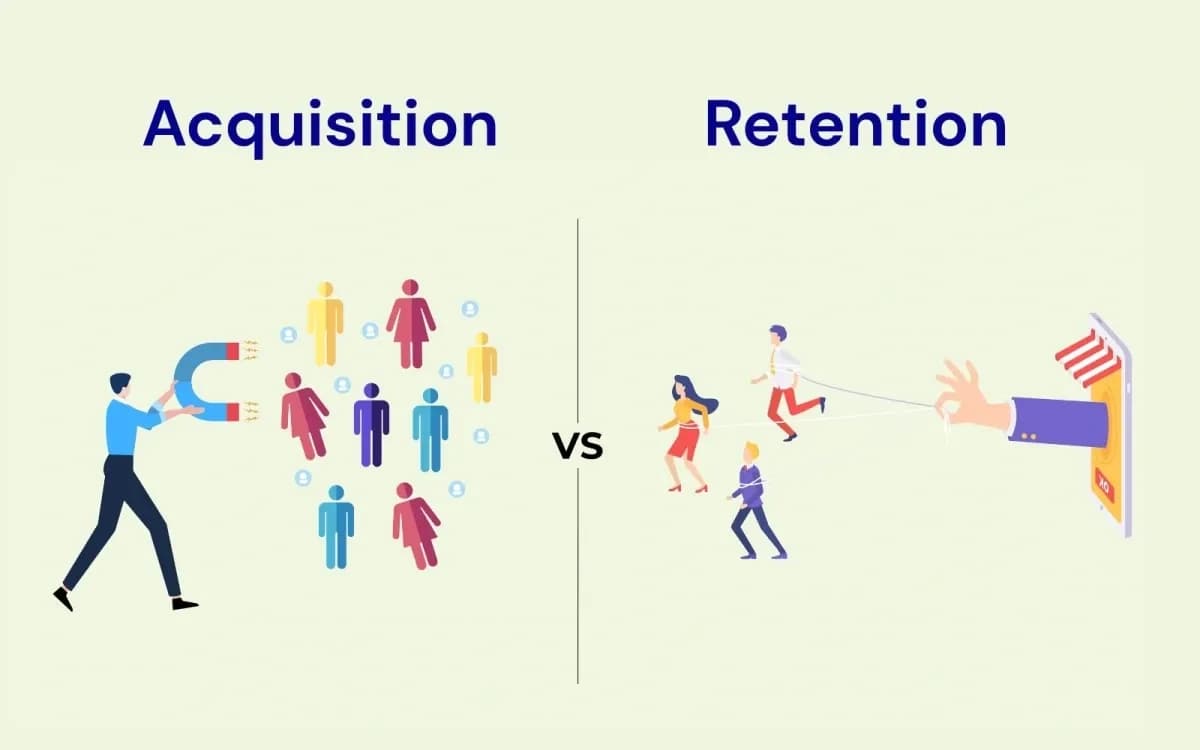 Loyalty Strategy
Customer Acquisition vs Retention: Where to Put Your Next Dollar
Customer acquisition and retention aren't a contest. Here's what each really costs, when to prioritize which, and a simple LTV:CAC way to decide your split.
Thomas Nguyen-f9ebcc.webp&w=3840&q=75) Loyalty Strategy
Loyalty StrategyCustomer Engagement and Loyalty: Strategies and How to Measure Them
Customer engagement and loyalty aren’t the same thing. Here’s how they differ, seven strategies that build both, and the metrics that tell you it’s working.
Thomas Nguyen Loyalty Strategy
Customer Satisfaction and Brand Loyalty: 2026 Growth Guide
25-35% of satisfied customers still switch silently. This guide explores the gap between customer satisfaction and brand loyalty — and the 4 metrics (NPS, CES, redemption rate, LTV) that turn happy buyers into emotionally connected advocates when acquisition costs are 4× higher.
Thomas Nguyen